
Einaudi Center for International Studies
Tracking Digital Surveillance and Repression
September 5, 2024
12:00 pm
Uris Hall, G08
Insights from the Research of the Citizen Lab
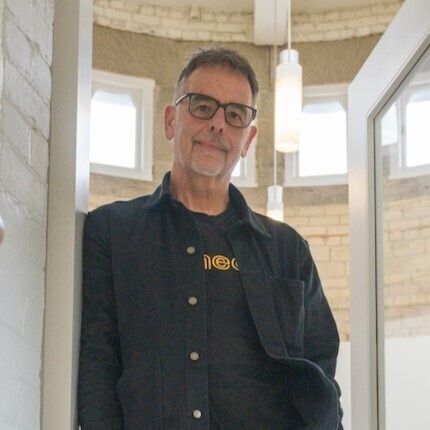
In this presentation, Ronald J. Deibert, University of Toronto, will provide an overview of the Citizen Lab’s research with a special focus on case studies around mercenary surveillance and digital transnational repression. In particular, he will discuss the real-world impacts and unique ethical issues involving the type of mixed methods digital accountability research they have developed.
About the Speaker
Ronald J. Deibert is Professor of Political Science and Director of the Citizen Lab at the Munk School of Global Affairs & Public Policy, University of Toronto. The Citizen Lab undertakes mixed-methods research on global security, digital technologies, and human rights. The Citizen Lab’s reports routinely make world news, including front-page coverage in the New York Times, Washington Post, the Financial Times, and other major outlets. Deibert is the author of Black Code: Surveillance, Privacy, and the Dark Side of the Internet (Random House: 2013) and RESET: Reclaiming the Internet for Civil Society (House of Anansi, 2020). In 2013, he was appointed to the Order of Ontario. He was awarded the Queen Elizabeth II Diamond Jubilee medal for being “among the first to recognize and take measures to mitigate growing threats to communications rights, openness and security worldwide.” In 2022, he was appointed Officer of the Order of Canada.
Host:
Cornell Brooks School Tech Policy Institute
Co-Host:
Reppy Institute for Peace and Conflict Studies
Additional Information
Program
Einaudi Center for International Studies
Reppy Institute for Peace and Conflict Studies
Palestine/Israel Studies: Carving Out a New Intellectual Space
September 3, 2024
5:00 pm
Goldwin Smith Hall, G64 Kaufmann Auditorium
Additional Information
Program
Einaudi Center for International Studies
Southwest Asia and North Africa Program
Global Hubs Grant Launches AI Collaboration

Call for Proposals Open Now
Isabel Perera (IES) and international partners are investigating AI's impact on workplaces. Apply now for the next round of Hubs seed grants.
Additional Information
Global Hubs Info Session: Joint Seed Grants with Zhejiang University (China)

September 12, 2024
9:00 am
The Cornell China Center, through Global Cornell and its Global Hubs initiative, is offering faculty research grants for collaboration with Zhejiang University (ZJU).
Global Hubs collaborative research seed grants bring together Cornell and partner institution faculty to develop joint projects with the potential to create new or expanded research partnerships and cutting-edge scholarship with academic and societal impact. These international seed grants provide initial financial support for early-stage research projects or capacity-building efforts to create and sustain long-term collaborations and secure external funding.
Please join us on September 12, 9:00 a.m. EDT (updated time) for a joint info session to learn more about the ZJU-Cornell grant opportunity. A short presentation will be followed by time for Q&A.
Up to four (4) research proposals will be funded.
Each successful proposal may receive up to $20,000 from Cornell (for Cornell expenses) and up to CNY 150,000 from ZJU (for ZJU expenses), with each university funding its own side of the project budget it its own currency.
Application deadline: October 4, 11:59 p.m. EDT
Project duration: January 1–December 31, 2025
Register for the Info Session for Cornell faculty on Zoom.The grant RFA and application links will be provided here shortly when available.
Learn about additional seed grants available with other Global Hubs partners.
Additional Information
Program
Einaudi Center for International Studies
East Asia Program
International Fair Aug. 28
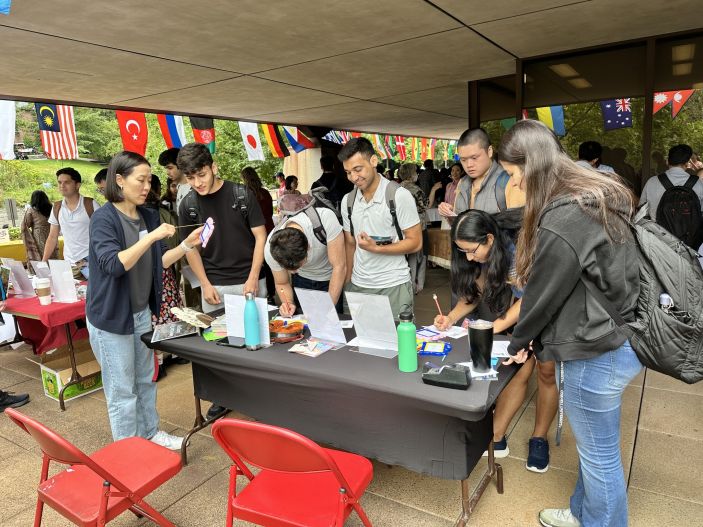
Einaudi Sparks Global Curiosity
Don't miss this year’s International Fair on Aug. 28 from 11 a.m. to 1:30 p.m. on Uris Hall Terrace.
Additional Information
Seema Golestaneh, "Poetry, Jihad, and the Communal Self in Afghan Resistance Literature of the 1980s and 1990s" ICM New Conversation

October 21, 2024
4:45 pm
A. D. White House, Guerlac Room
Description:
In Afghanistan, poetry operates as a common idiom, appearing frequently in everyday speech by those who have and have not received formal education. In this talk, I explore the idea of a communal self that emerges through the composition of poetry in the service of jihad as seen in Afghan resistance literatures written during the 1980s war with the Soviets. This is evidenced partially through the publication of anonymized poetry and the obfuscation of the authorial voice. I argue that when poetry is composed on behalf of jihad, it is no longer written only by and for the self, but becomes part of a broader campaign, therein gesturing to something larger.
Biography
Seema Golestaneh is Associate Professor in the Department of Near Eastern Studies at Cornell. Her research, situated at the nexus of anthropology and religious studies, is focused on expressions of contemporary Islamic thought in the Persian-speaking world, with particularly interest in how metaphysical experiences make themselves known in the socio-material realm via aesthetics and epistemology. Her forthcoming book, Unknowing and the Everyday: Sufism and Knowledge in Iran, examines the social and material life of gnosis (ma’arifat) for disparate Sufi communities in Iran. Essentially an anthropology of the imagination, my work also relies heavily on textual ethnography and analysis, emphasizing the importance of hermeneutics within the Iranian socio-theological sphere. Prof. Golestenah is currently at work on a project tentatively entitled Utopia Lost?:Afghan Theories of Radical Poetics and Islamic Governance. Drawing largely from archival materials and oral histories, Utopia Lost investigates the dreams and aspirations of Afghan intellectuals in the late 1980s and 1990s for forms of government that did not come to pass.
Additional Information
Program
Einaudi Center for International Studies
South Asia Program
Fostering Global Democracy: Freedom and Responsibility

September 13, 2024
9:00 am
Willard Straight Hall
Please join us for the Cornell Brooks School Center on Global Democracy's inaugural event:
Fostering Global Democracy: Freedom and Responsibility
REGISTER HERE
9:00 am – 9:30 am Coffee Reception - Willard Straight Hall
9:30 am – 11:00 am Welcome and Keynote Conversation - Willard Straight Hall
Opening remarks by Michael I. Kotlikoff, interim president, Cornell University, and Colleen L. Barry, dean, Jeb E. Brooks School of Public Policy.
Keynote Conversation with Ron Daniels, president of Johns Hopkins University, about his book What Universities Owe Democracy. Moderated by Rachel Beatty Riedl, Peggy Koenig ’78 director, Brooks School Center on Global Democracy.
11:30 am - 4:15 pm Panel Discussions – Statler Hotel
Welcome: Kenneth Roberts – Cornell University, Einaudi Center faculty fellow, Democratic Threats and Resilience
11:30 am – 12:45 pm Global Democracy and Fundamental Freedoms (Statler Amphitheater)
Chair: Suzanne Mettler - Cornell UniversityThomas Garrett – Cornell University, Brooks Faculty and Einaudi Center Lund Practitioner in ResidenceFelix Maradiaga - Nicaragua Freedom FoundationElene Panchulidze - European Partnership for Democracy Kate Wright – University of Edinburgh
12:45 pm - 1:30 pm Lunch (Taylor Room A&B)
1:30 pm – 2:45 pm Global Democracy and the Danger of Insecurity (Statler Amphitheater)
Chair: Gustavo Flores-Macías - Cornell UniversityRichard Youngs - Carnegie Endowment for International Peace Joseph Sany – US Institute of PeaceJennifer Dresden – Protect Democracy, Violence and Democracy Impact TrackerSabrina Karim - Cornell University
2:45 pm – 3:00 pm Coffee break (Conference foyer)
3:00 pm – 4:15 pm Global Democracy and Effective Governance (Statler Amphitheater)
Chair: Jamila Michener - Cornell UniversityAmbassador Michelle Gavin - Council on Foreign RelationsLinda Stern - National Democratic InstituteJavier Sajuria – Queen Mary University of LondonVineeta Vijayaraghavan – Leadership NowDAA Lesley Warner – USAID, Democracy Rights and Governance Bureau4:15 pm – 5:30 pm Reception - Statler Hotel (Pennsylvania Room)
Additional Information
Program
Einaudi Center for International Studies
Rethinking Migration: The Shared Journeys of People and Birds

September 19, 2024
2:00 pm
Climate and environmental changes profoundly influence the movement of people, birds, and other species across the globe. The news is replete with stories of human migration, often portraying it as a crisis. Yet despite changes in movement patterns over recent decades, migration has been a natural phenomenon for millennia.
Let’s take the politics out of migration and pause to understand why birds and people migrate and what similarities and differences exist between their migration patterns. Let’s also consider what individuals, communities, and policymakers can do to rethink migration and develop sustainable solutions that recognize that we live in an interdependent world. Globally, we need solutions that benefit the planet and humans alike.
Additional Information
Program
Einaudi Center for International Studies
Migrations Program
Borders / Frontieres
August 29, 2024
7:00 pm
Willard Straight Hall Theatre
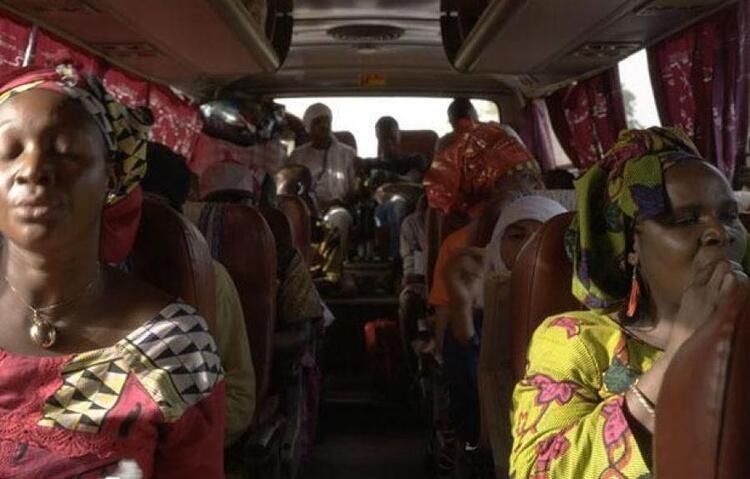
On a bus en route from Dakar, Senegal, to Lagos, Nigeria, three women must band together as they navigate the risks that come with traveling alone while female, fighting back against threats of violence, sexual harassment, and government corruption at each border crossing. This inspiring drama from Burkinab director, Apolline Traor, pays tribute to the bravery of West African women asserting their independence in a patriarchal society.
Free admission. Sponsored by the Institute for African Development (IAD) at the Mario Einaudi Center for International Studies and supported by IAD's Undergraduate International Studies and Foreign Languages (UISFL) Grant from the U.S. Department of Education.
Film website: https://www.diffa.tv/frontieres-91-2016-burkina-faso-france/
Additional Information
Program
Einaudi Center for International Studies
Institute for African Development
Killing Precisely

October 31, 2024
12:00 pm
Uris Hall, G08
A History of Drones and Precision Warfare
Since 2012, the global proliferation of drones has increased by 96.3 percent. Inspired by the American pioneering of ‘pin-point’ precision strike and remote-control technologies during the early 2000s and 2010s, a total of 118 nation-states have now developed a military drone program (2024). These drones are transforming the character of war around the globe, from Ukraine to Yemen and most notably with the Houthis over the Red Sea. Yet, how did drones and precision technologies rise up to become the ‘go-to’ weapons of nation-states and increasingly violent non-state actors?
In this talk, James Patton Rogers (Executive Director of the Cornell Brooks Tech Policy Institute, Cornell University), will take us back to 1917 and the origins of this quest for ‘precision’ in war within American strategic thought. Along the way, he will outline how precision developed throughout the 20th Century and highlight what the contemporary proliferation of precision weapons and drones means for the future of international security.
About the Speaker
James Patton Rogers is the Executive Director of the Cornell Brooks Tech Policy Institute at Cornell University and the NATO Country Director of the Full Spectrum Drone Warfare project, supported by NATO SPS. An expert on drones, disruptive technologies, and the history of weaponry and strategy, James has worked with the UN Security Council, UNOCT, and UNCTC (amongst others). He is the author of ‘Precision: A History of American Warfare’ (Manchester, 2023).
Host
Reppy Institute for Peace and Conflict Studies
Additional Information
Program
Einaudi Center for International Studies
Reppy Institute for Peace and Conflict Studies