
Einaudi Center for International Studies
Weighty Futures: The changing place of sumo in neo-liberal Japan
November 11, 2024
5:00 pm
Goldwin Smith Hall, 64
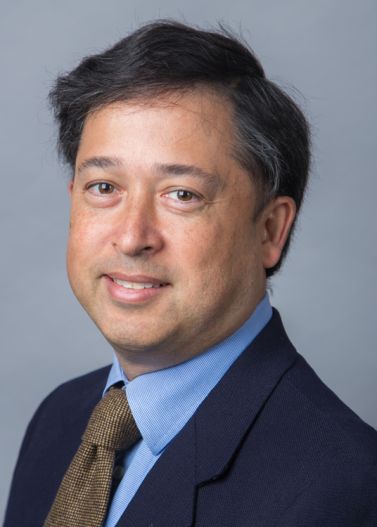
Speaker: R. Kenji Tierney Anthropology, SUNY New Paltz
Introduced by Jane Marie Law, Asian Studies, Cornell
What is the place of sumo in the 21st century? Rather than an "unchanging tradition," sumo acts as a mirror to the changing social conditions in Japanese society. Occupying a contenious role within the overlapping cultural spaces of tradition and sport, debates around the bodies, public morality, and globalization become articulated through scandals and moral panics surrounding the wrestlers, their conduct, and their futures. This talk looks at bodies, food, and scandals to explore these issues.
Additional Information
Program
Einaudi Center for International Studies
East Asia Program
Ghosts of the Future: National Museums and the Politics of Historical Time in Cambodge and Siam
November 7, 2024
12:15 pm
Kahin Center
Gatty Lecture Series
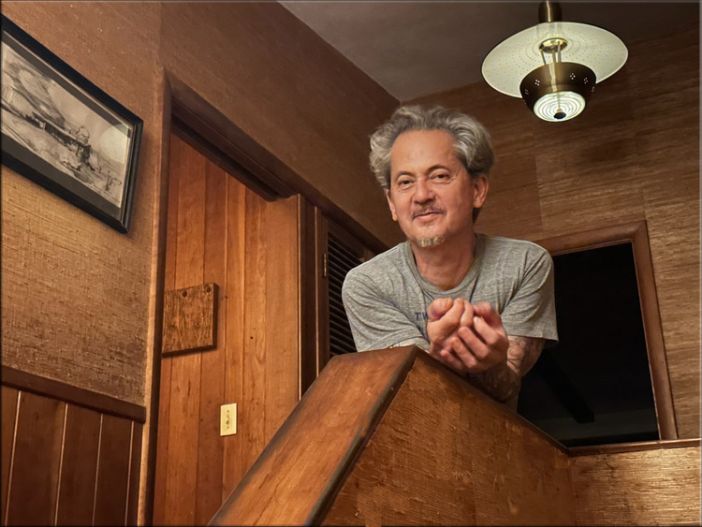
Join us for a talk by Lawrence Chua, Associate Professor at the School of Architecture at Syracuse University, who will discuss the colonial museum practices.
This Gatty Lecture will take place at the The Kahin Center, 640 Stewart Ave. Lunch will be served. For questions, contact seapgatty@cornell.edu.
About the Talk
This lecture examines the conjoined genealogies of the Musée Albert Sarraut (Phnom Penh, 1920) and the National Museum of Bangkok (1927). The architecture of both museums embraced conflicting temporalities: their ground plans sought to map out the respective times and spaces of Cambodge and Siam while their façades drew on local historicist idioms to make claims about cultural purity. Embedded within two sometimes competitive, sometimes cooperative imperial projects, both withdrew heterogeneous sacred images from the realm of religious practice and embedded them within a new economy of image production and a new culture of public exhibition. As instruments in the colonial production of difference, the two museums thus fulfilled three major roles: they spatialized a history of Siam and Cambodge as two distinct states, both threatened by disappearance; they exhibited the antiquities of these states to a racialized public as evidence of that race’s unique origins; and they were part of a new economic and educational system that sought to transform “worldmaking” into a rationalized form of production that reduced powerful tools of imagining to objets d’art and imbued them with a serial identity.
About the Speaker
Lawrence Chua is the author of Bangkok Utopia: Modern Architecture and Buddhist Felicities, 1910-1973. His scholarship on the history of Asian architecture and the built environment has been published in the Journal of the Society of Architectural Historians, Journal of Urban History, Architectural Histories, South East Asia Research, อ่าน, October, and Platform. He is a founding member of the queer artist of color-led arts organization, Denniston Hill and serves on the editorial boards of the Journal of the Society of Architectural Historians and positions: asia critique. He is also co-editor of the book series "ArchAsia" for Hong Kong University Press. He has been the recipient of a Marie Sklodowska-Curie Research Fellowship at the Freiburg Institute of Advanced Studies as well as research fellowships at the Getty Center, the Center for Southeast Asian Studies at Kyoto University, the International Institute of Asian Studies at Leiden University, and the Center for Khmer Studies. He has taught at Chulalongkorn University, New York University, and Hamilton College. He is currently associate professor in the School of Architecture, Syracuse University.
Additional Information
Program
Einaudi Center for International Studies
Southeast Asia Program
Exonerative Accounts and the Circulation of Labels: Examples from Indonesian Political Talk
October 31, 2024
12:15 pm
Kahin Center
Gatty Lecture Series
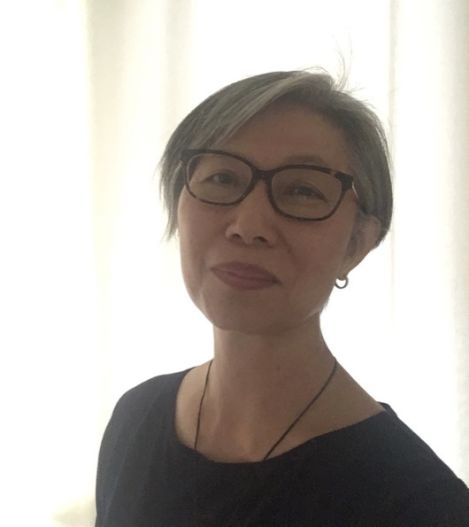
Join us for a talk by Dwi Noverini Djenar, Associate Professor and Chair of the Indonesian Studies Department at The University of Sydney, who will discuss the exonerative accounts in political discourse.
This Gatty Lecture will take place at the The Kahin Center, 640 Stewart Ave. Lunch will be served. For questions, contact seapgatty@cornell.edu.
This talk is co-sponsored by the Departments of Linguistics and Government.
About the Talk
Studies on accounts within the conversation analytic and interactional linguistic traditions have pointed out the difficulties in approaching exonerative accounts as categories within a taxonomy or as speech acts. These studies suggest, for example, that there is no determinable family of exonerations, that any level of a category can be realized in a myriad of ways, and that any word or expression can be the candidate of the category, and as such exonerations cannot be nailed down to certain words or expressions. Analysts suggest instead to view exonerations as explanations given when people are in some trouble or facing some kind of accusation, and that it is through examining their place in sequence that we can understand how exonerative effects are produced. In this talk, I discuss such effects by considering a succession of speech events that take the form of political interviews. In such events talk is normatively oriented to the public and participants contribute relative to their roles as interviewer and interviewee. While divergences from the norm may not lead to serious social consequences, the reverse may also occur, where an interview may become an occasion for contesting moral norms. Implicated within such an occasion are not only the participants from whose turns at talk exonerations emerge but also the audience who participate in moral negotiation by commenting on what has been said – including through labeling – and circulating their comments beyond the event. The Indonesian interviews studied here show that adopting a third-person’ perspective in referring to oneself and inviting others to participate in the exonerative talk are among the neutralization techniques adopted by participants. A methodological implication from the study is that structural analysis (i.e., based on sequence) needs to be complemented by a reflexive-semiotic perspective to better reflect the participation framework within political interviews.
About the Speaker
Novi Djenar is an Associate Professor in Indonesian Studies at the University of Sydney. Her research interests lie in questions related to the way language facilitates understanding of sociocultural and political ideas, including ideas about self-other relations, identity, and style. Novi has published in the areas of discourse and pragmatics, sociolinguistics, and grammar, focusing on Indonesian. Her book Style and Intersubjectivity in Youth Interaction (with M. Ewing and H. Manns) approaches the study of youth interaction through the concept of sociability. Her current research draws on the semiotic-reflexive approach for analyzing self-addressee reference (developed with Jack Sidnell in Signs of Deference, Signs of Demeanour: Interlocutor Reference and Self-Other Relations Across Southeast Asian Speech Communities) to examine how Indonesians argue and give explanations in public.
Additional Information
Program
Einaudi Center for International Studies
Southeast Asia Program
River Works and Dai Viet’s State-Building at the Transition to the Little Ice Age
October 24, 2024
12:15 pm
Kahin Center
Gatty Lecture Series
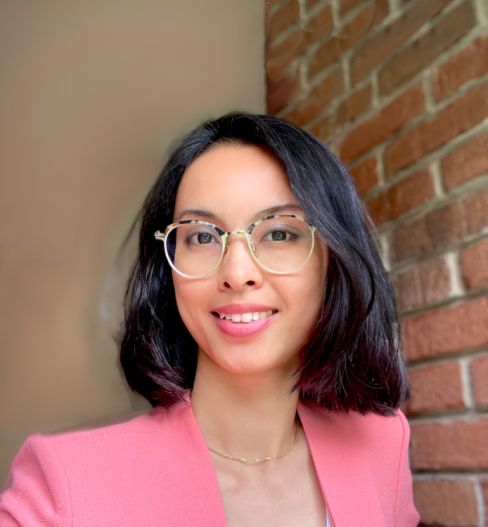
Join us for a talk by Dr. Hieu Phung, Assistant Professor of Vietnamese and Southeast Asian History at the Asian Languages and Cultures Department at Rutgers-New Brunswick University, who will discuss state-building in the Red River region.
This Gatty Lecture will take place at the The Kahin Center, 640 Stewart Ave. This talk is co-sponsored by the Department of History. Lunch will be served. For questions, contact seapgatty@cornell.edu.
About the Talk
The Red River is not the most impressive in Southeast Asia, but it has a richly recorded hydrosocial profile. Its lower basin has been occupied not only by a large population but also by the centuries-old political center of the Vietnamese since the eleventh century. Like Angkor in the Lower Mekong and Pagan in the Middle Ayeyarwady, early Vietnamese states established their political centers in the Red River’s mid-river region. By the fifteenth century, however, as the loci of power in other river basins moved towards the coast, the new leaders of Dai Viet, the Le dynasty, sustained the mid-river center and used it to extend their influence over the uplands, the coast, and nearby smaller river basins. This talk explores the relationship between large rivers and state-building by analyzing the evolution of the Red River dike system. As all rivers in monsoonal Asia are seasonal, building a state dependent on river resources requires effective policies concerning weather and climate dynamics. The Le sponsorship of river embankments continued a flood control strategy that had emerged several centuries earlier at the peak of the Medieval Climate Anomaly. This commitment also embraced a new perception of dike building. It matched the state’s expansionist policy on reclamation and rice production as the climate became drier during the transition to the Little Ice Age. The Red River dikes have been maintained for centuries but their impacts on the environmental, social, and cultural systems have constantly shifted.
About the Speaker
Hieu Phung (Assistant Professor, Rutgers-New Brunswick) is an environmental historian who investigates the impacts of local culture and statecraft on the preindustrial environment, especially on water and climate. Her research delves into the history of Vietnam and Southeast Asia during the transition from the Medieval Climate Anomaly (c. 800/950–1250/1300) to the Little Ice Age (c. 1300–1850). Her study of environmental history also involves the analysis of space, maps, and texts to uncover the construction of premodern geographic knowledge. She has written about the rivers and climate history of premodern Vietnam and Southeast Asia and is currently working on her book, Heavenly Drought: Natural Anomalies and State-Building in Dai Viet, Eleventh to Sixteenth Centuries.
Additional Information
Program
Einaudi Center for International Studies
Southeast Asia Program
Desiring Distinctions: Totalizing Images and Coercions of Community in Multiracial, Multilingual Singapore
January 30, 2025
12:15 pm
Kahin Center
Gatty Lecture Series
This talk has been rescheduled from October 17, 2024 to January 30, 2025.
Join us for a talk by Joshua Babcock, Assistant Professor of Anthropology at Brown University, who will discuss the raciolinguistic distinctiveness and national identity in Singapore.
This Gatty Lecture will take place at the The Kahin Center, 640 Stewart Ave. Lunch will be served. For questions, contact seapgatty@cornell.edu.
This talk is co-sponsored by the Department of Science & Technology Studies.
About the Talk
What distinctions are desirable? What do distinctions desire? This talk revisits W.J.T. Mitchell’s famous provocation in “What do pictures want?” (2005), ethnographically exploring the infrastructures of experience (Gilmore 2023) that shape the felt necessity of and desires for raciolinguistic distinctiveness (Babcock 2023; Rosa and Flores 2017; Lo and Chun 2020) in Singapore in the aftermath of “Asian Values,” multiply institutionalized “Mother Tongue” pedagogies, and the global rise of place-branding regimes. Against arguments of cruel optimism—a desire for things that are obstacles to one’s flourishing (Berlant 2011)—and Singaporeanness-as-absence (Chua 1998), I show how racial community gets performed, policed, and blocked through everyday communicative activity amid three-dimensional fictions (Watson 2011) of multiracial-multilingualism as national identity. I elaborate a desire-based framework (Tuck and Yang 2014) that moves beyond totalizing images and foregrounds the horizons toward which people in Singapore strive even when working through totalizing images—acts of striving that imagine new horizons beyond the coercive community ideals that uphold and are upheld by genres of postcolonial capitalism (Naruse 2023) in the island city-state and beyond.
About the Speaker
Joshua Babcock is an Assistant Professor of Anthropology and affiliate faculty in the programs in Linguistics and STS at Brown University. His current book project, Image and the Total Utopia: Desiring Distinctions in Multiracial, Multilingual Singapore explores how technology, language, and race co-naturalize one another across scales to shape the conditions of possibility for belonging to the image of Singapore. In his emerging work, he studies the Singapore Sling, U.S. school board politics (with Ilana Gershon), and a ghost town called Singapore, Michigan. Josh is also the Communications Director for the General Anthropology Division of the American Anthropological Association.
Additional Information
Program
Einaudi Center for International Studies
Southeast Asia Program
In the Place of Constitutions: The Question of Political Legitimacy in Thailand

October 3, 2024
12:15 pm
Kahin Center
Gatty Lecture Series
Join us for a talk by Daena Funahashi, Assistant Professor of Anthropology at the University of California-Berkeley, who will discuss constitutional change and political legitimacy in Thailand.
This Gatty Lecture will take place at the The Kahin Center, 640 Stewart Ave. Lunch will be served. For questions, contact seapgatty@cornell.edu.
About the Talk
In 2017 Thailand launched yet another constitution – its twentieth in less than a century. Contra a common perspective among political scientists that the cycle of coups followed by constitution writing in Thailand points to a “failure” of democracy, I examine this cycle as one that successfully renders political legitimacy visible as the vanishing point of politics. As I see it, what the century of Thai political conflict teaches us is that the problem of legitimacy is one that cannot and should not be laid to rest. Based on ethnographic and archival work I began in 2011, I argue in this talk that legitimacy is a question most animated at moments when old notions are toppled, and the new codifications of legitimacy are yet to emerge. Here, I put forth an idea of legitimacy as that which emerges through being toppled, rather than on being constituted.
About the Speaker
Daena Funahashi is a political and economic anthropologist interested in examining the interstice between speech and speechlessness, between what is possible to make legible and what resists articulation. She has written on issues of scientific authority, political legitimacy, and democracy in Thailand. Beyond Southeast Asia, she is the author of Untimely Sacrifices: Work and Death in Finland (Cornell University Press, 2023). In it, Funahashi brings classic anthropological scholarship on exchange and sacrifice to bear on contemporary concerns with labor, labor’s attritional force such as burnout, and the future of state welfare. She is a member of the Center for Southeast Asia Studies (CSEAS) and The Program in Critical Theory at the University of California, Berkeley.
Additional Information
Program
Southeast Asia Program
Einaudi Center for International Studies
Writing a Story of Southeast Asia
September 26, 2024
12:15 pm
Kahin Center
Gatty Lecture Series
Join us for a talk by Eric C. Thompson, Associate Professor at the Department of Sociology & Anthropology at the National University of Singapore, who will discuss the writing of a book The Story of Southeast Asia.
This Gatty Lecture will take place at the The Kahin Center, 640 Stewart Ave. Lunch will be served. For questions, contact seapgatty@cornell.edu.
About the Talk
In this talk, the author discusses the writing of The Story of Southeast Asia (NUS Press, 2024). The book is a historical anthropology of the region and its people. While using a historical-chronological structure, it outlines a series of themes that have created the region as we know it today: migration and settlement, trade and industry, state building (and state avoidance), adoption of popular religions, gender and kinship relationships, contested sovereignty, and modernity. Although written in a clear narrative language with a broad (popular, undergraduate) audience in mind, the book touches on many ongoing debates in Southeast Asian studies and other disciplines and makes arguments (mostly implicit or in passim) for the framing of these debates (e.g. around periodization, agency, identity, and gender/kinship). The author will discuss several of these (and invites discussion of others): What were the motivations of writing the book and the positionality of the author? Why attend to an exceptionally longue durée? What are the “strange parallels” between the adoption and spread of Theravada, Islam, Confucianism, and Christianity in the region? How does Southeast Asia make us rethink the relationship between modernity and gender relations? How can we (and should we) put colonialism in its place? And of course, what in the heck was Sriwijaya?
About the Speaker
Eric C. Thompson is an Associate Professor in the Department of Sociology and Anthropology at the National University of Singapore. He holds a PhD in sociocultural anthropology from the University of Washington and was a postdoctoral fellow at the Center for Southeast Asian Studies, University of California Los Angeles. He is the author of Unsettling Absences: Urbanism in Rural Malaysia (2007) and The Story of Southeast Asia (2024), co-author of Awareness and Attitudes toward ASEAN (2007) and Do Young People Know ASEAN? (2016), and co-editor Southeast Asian Anthropologies (2019) and Asian Smallholders: Persistence and Transformation (2019) among other publications.
Additional Information
Program
Einaudi Center for International Studies
Southeast Asia Program
The Buddhist Women’s Special Marriage and Succession Act: Laws of Intimacy and Segregation in Transregional Perspective
September 19, 2024
12:15 pm
Kahin Center
Gatty Lecture Series
Join us for a talk by Chie Ikeya, Associate Professor of History, Director of the Institute for Research on Women, and Co-Director of Global Asias at Rutgers University in New Brunswick, who will discuss the marriage laws in Southeast Asia.
This Gatty Lecture will take place at the The Kahin Center, 640 Stewart Ave. It is co-sponsored by the Department of History. Lunch will be served. For questions, contact seapgatty@cornell.edu.
About the Talk
First debated in the legislature in 1927 when Burma, also known as Myanmar, was a province of British India, the Buddhist Women’s Special Marriage and Succession Act (1954) has been praised as the first and only law in existence to protect the rights specific to Buddhist women. In 2015, the Act was revised as one of four controversial laws euphemistically known as “National Race and Religion Protection Laws.” I trace the history and afterlife of this legislation and compare it to British, Dutch, and Japanese colonial laws on mixed marriage; the anti-miscegenation laws of the U.S.; national marriage laws throughout Asia; and the anti-conversion laws in India that have been enacted in the name of religious freedom. Across these disparate contexts, I argue, marriage laws have functioned to alienate Asian migrants and settlers as perpetual, unassimilable foreigners. They have served to protect the “purity” of the ruling/majority group by empowering state and social control of women’s sexual, reproductive, and property rights in the name of protecting women. I suggest that a transregional analysis of the legal regulation of intermarriage and conversion illuminates connections in the historical articulations of law, race, religion, and gender that have enforced inequalities across imperial and national divides. It brings into sharp focus the segregationist and patriarchal tendencies of nations and regions, such as Burma and Southeast Asia, long identified with racial and religious pluralism and female autonomy, thereby unsettling the segregation of area studies itself.
About the Speaker
Chie Ikeya is Associate Professor of History, Director of the Institute for Research on Women, and Co-Director of the Global Asias Initiative at Rutgers University, New Brunswick. She is the author of two monographs, InterAsian Intimacies across Race, Religion, and Colonialism (Cornell University Press, September 2024) and Refiguring Women, Colonialism, and Modernity in Burma (University of Hawai’i Press, 2011). Her research has been funded by several institutions including the Japan Foundation, Mellon Foundation, National Endowment for the Humanities, and Toyota Foundation.
Additional Information
Program
Einaudi Center for International Studies
Southeast Asia Program
Training Data: Notes on the Computerization of Southeast Asia
September 5, 2024
12:15 pm
Kahin Center
Gatty Lecture Series
Join us for a talk by Shaoling Ma, Associate Professor of Asian Studies at Cornell University, who will discuss the computerization of Southeast Asia.
This Gatty Lecture will take place at the The Kahin Center, 640 Stewart Ave. Lunch will be served. For questions, contact seapgatty@cornell.edu.
About the Talk
There has been no comprehensive history of computerization in Southeast Asia between the 1950s and the 1980s, and my talk will offer some explanations as to why this is not a bad thing. To tell a history of computerization in any geopolitical region is to simultaneously conceive of the computerization of the region, that is, of how the classification, imaging, and prediction of human-natural-and-machine systems increasingly shape actionable and optimizable knowledge of its peoples, and natural and built environments. In the case of Southeast Asia, a critical assessment of such a history shows how accounts written during this period cast the region as the receiving end of foreign hardware technologies and know-how, or as a resource frontier for the collection of environmental, demographic, agricultural, industrial, and other “raw” data, is still only a story half-told. At stake is to go further in grasping how such developmentalist histories inadvertently and invaluably theorize the roles that political states, economies, and cultures play in the growing, global perception of software as hardware- and machine-independent, an ideology that made it possible to position local Southeast Asian communities as part of a computational, planetary order. Conceived as preliminary notes—referencing the “training data” in my title—drawn from what can only be a non-totalizing project, this talk will highlight select computer applications in the fields of education and consulting, environmental sensing, and agricultural and land informatics. By examining how universities, states, and consultancy firms rationalize software development as national self-reliance; how a 1977 Final Report on Computer Processing of Remote Sensing Data prepared by the Asian Institute of Technology for the Committee for Coordination of Investigations of the Lower Mekong Basin interpret and retrain data from LANDSAT satellite imageries; and the language of modern, informatics management in the Malaysian Rubber Industries Development Authority’s implementation of a computer support system, I hope to show how these anecdotes, partial and eclectic as they are, paradoxically commit to thinking of Southeast Asia on a large, abstract, and reflexive scale.
About the Speaker
Shaoling Ma is an interdisciplinary scholar and critical theorist of global Chinese history, literature, and media in the Department of Asian Studies at Cornell University. She is the author of The Stone and the Wireless: Mediating China, 1861-1906 (Duke UP, 2021), and is currently working on a second book manuscript on a theory and cultural history of computational environments in East and Southeast Asia. She serves as Book Review Editor (film/media studies/drama) for MCLC: Modern Chinese Literature and Culture.
Additional Information
Program
Einaudi Center for International Studies
Southeast Asia Program
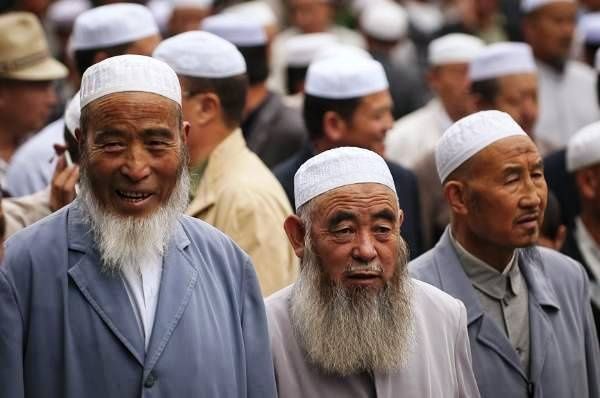
The World’s Largest Stateless People, and the Rhetoric of Victim-Blaming Muslims in Myanmar (Burma)
December 5, 2024
4:30 pm
Uris Hall, G08
Talk by Al Haj Khalifah U Aye Lwin (Religions for Peace Myanmar, Masjid Sujud Shah Utica NY)
Myanmar has a track record of forging unity in multiplicity, and Muslims have been an integral part of Myanmar society since the Pagan dynasty. Rohingyas were, in fact, prominent citizens, just like other Myanmar Muslims from different origins. They were recognized as full-fledged Myanmar citizens even by the military before the coup. However, when the entire nation started to oppose despotic military dictatorship, the junta projected Islam as a danger to Burmese nationalism. Myanmar Muslims became soft targets and easy prey. Rohingyas were the hardest hit among the Myanmar Muslims. Their citizenship was stripped off, and tens of thousands of them were hounded out of the country. Genocide and ethnic cleansing were the order of the day. Rohingyas are targeted as a danger to Burmese Buddhist nationalism by the military, and native, often pious Myanmar Buddhists who have (often) been brainwashed and indoctrinated to hate them. Multifaith leaders in Myanmar were trying to alter the stereotyped rhetoric with the help of broad-minded leaders when the country was faced with yet another military coup. Nevertheless, faith-based leaders in Myanmar are determined and will continue to strive toward achieving this endeavor.
Additional Information
Program
Einaudi Center for International Studies
Southeast Asia Program