
Einaudi Center for International Studies
Shannon Gleeson

Edmund Ezra Day Professor and Chair
Shannon Gleeson is the Edmund Ezra Day Professor at the Cornell University School of Industrial and Labor Relations, and holds a joint appointment with the Brooks School of Public Policy.
Additional Information
Elon Musk Enters Uncharted Territory With Trump Endorsement
Sarah Kreps, PACS
When it comes to Musk and X, “it’s pretty clear what his political views are, and now people can make a choice with more transparency and information on where they want to spend their time online,” said Sarah Kreps, professor of government and public policy.
Additional Information
Quinine’s Remains: Empire’s Medicine and the Life Thereafter
September 16, 2024
12:15 pm
Uris Hall, G08
Talk by Townsend Middleton (University of North Carolina at Chapel Hill)
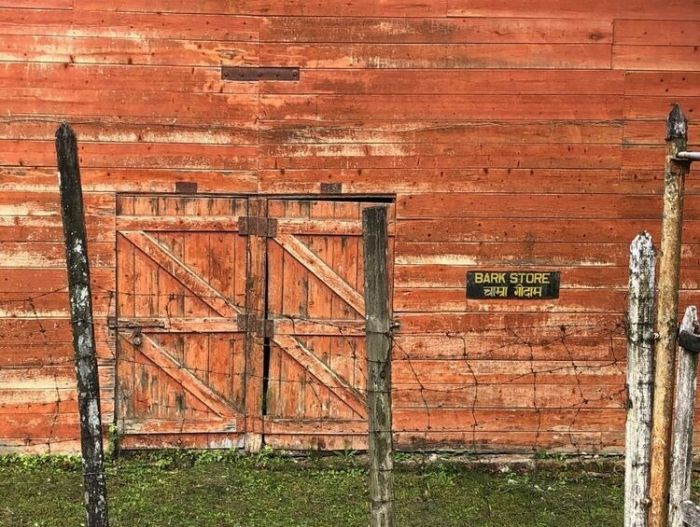
What happens after colonial industries have run their course? When the factory closes and the fields go fallow, how do laboring communities continue to live and fight amid all that remains? In this talk, anthropologist (and Cornell SAP alum), Towns Middleton takes on these questions through a discussion of his new book Quinine’s Remains. Harvested from cinchona bark, quinine was malaria’s only remedy throughout the colonial period. As such, the alkaloid was vital to the British Empire. British botanists appropriated cinchona from indigenous South America, bringing the ‘fever tree’ to India in the 19th century and establishing massive plantations to produce the medicine the empire needed. Today, the cinchona plantations of the Darjeeling Hills remain—as do the roughly fifty thousand people who call them home. Their futures, however, are unclear. The Indian government has threatened to privatize or shut down this seemingly obsolete and crumbling industry, but the plantation community, led by strident trade unions, has successfully resisted. Overgrown cinchona fields and shuttered quinine factories may appear the stuff of postcolonial ruination, but quinine’s remains are not dead. Rather, they have become the site of urgent efforts to redefine land and life for the twenty-first century. To engage quinine’s remarkable history and its often-confounding aftermaths, then, is to explore what it means to forge life after empire.
Townsend Middleton is an Associate Professor of Anthropology at the University of North Carolina at Chapel Hill. He received his PhD in Anthropology from Cornell University in 2010. He is the author of The Demands of Recognition: State Anthropology and Ethnopolitics in Darjeeling (Stanford 2015) and co-editor of Darjeeling Reconsidered: Histories, Politics, Environments (OUP-India 2018). He publishes broadly on political culture and the conditions of postcoloniality in the Indian Himalayas. He is currently co-editor of the scholarly magazine Limn.
Quinine’s Remains is published by the University of California Press (2024) and is available in digital Open Access format for free globally.
Additional Information
Program
Einaudi Center for International Studies
South Asia Program
Colonizing Kashmir

October 10, 2024
12:00 pm
Uris Hall, G08
State-Building Under Indian Occupation
In this talk, Dr. Hafsa Kanjwal discusses her book Colonizing Kashmir: State-Building Under Indian Occupation. The book interrogates how Kashmir was made “integral” to India through a study of the decade long rule (1953-1963) of Bakshi Ghulam Mohammad, the second Prime Minister of the State of Jammu and Kashmir. Drawing upon a wide array of bureaucratic documents, propaganda materials, memoirs, literary sources, and oral interviews in English, Urdu, and Kashmiri, Kanjwal examines the intentions, tensions, and unintended consequences of Bakshi’s state-building policies in the context of India’s colonial occupation.
She reveals how the Kashmir government tailored its policies to integrate Kashmir’s Muslims while also showing how these policies were marked by inter-religious tension, corruption, and political repression. Challenging the binaries of colonial and postcolonial, Kanjwal historicizes India’s occupation of Kashmir through processes of emotional integration, development, normalization, and empowerment to highlight the new hierarchies of power and domination that emerged in the aftermath of decolonization. In doing so, she urges us to question triumphalist narratives of India’s state-formation, as well as the sovereignty claims of the modern nation-state.
About the Speaker
Hafsa Kanjwal is an associate professor of South Asian History in the Department of History at Lafayette College in Easton, Pennsylvania, where she teaches courses on the history of the modern world, South Asian history, and Islam in the Modern World. As a historian of modern Kashmir, she is the author of Colonizing Kashmir: State-building Under Indian Occupation (Stanford University Press, 2023), which examines how the Indian and Kashmir governments utilized state-building to entrench India’s colonial occupation of Kashmir in the aftermath of Partition. Hafsa has written and spoken on her research for a variety of news outlets including The Washington Post, Al Jazeera English, and the BBC.
Host
Judith Reppy Institute for Peace and Conflict Studies
Co-Host
South Asia Program
Additional Information
Program
Einaudi Center for International Studies
Reppy Institute for Peace and Conflict Studies
South Asia Program
The Social Movement to Legalize Same-sex Marriage in Taiwan
September 4, 2024
12:00 pm
Myron Taylor Hall, L28
The Social Movement to Legalize Same-sex Marriage in Taiwan: Mobilizing the Court, the Legislature, and the People
Speaker: Hsiao-wei Kuan, College of Law, National Taipei University, Taiwan
Taiwan will mark the 5th anniversary of legalizing same-sex marriage in May 2024. The achievement of marriage equality in Taiwan unfolded through a complex political process involving judicial, legislative, and popular initiatives. In May 2017, Taiwan's Constitutional Court deemed the Civil Code's denial of equal marriage rights for same-sex couples unconstitutional. This landmark decision gave the legislature a two-year window to revise existing laws or create new ones to permit same-sex marriage. However, this progress faced setbacks when voters approved two anti-same-sex marriage initiatives at the end of 2018. In response, the legislature passed a new law that granted substantive marriage rights to same-sex couples without using the term "marriage" explicitly. This talk will explore how the movement for same-sex marriage leveraged the Constitutional Court, Parliament, and popular support to advance its cause amidst opposition.
Introduced by Yun-chien Chang, Jack G. Clarke Professor in East Asian Law, Cornell
A light lunch will be served. RSVP by August 30, 2024. The lecture venue is subject to change. Those who RSVP will automatically be notified.
Short Bio of the speaker:
Dr. Hsiaowei Kuan is a law professor at the College of Law, National Taipei University in Taiwan. She holds an LL.M. and an S.J.D. from the University of Pennsylvania School of Law. With a scholarly focus on the intricate intersections of gender and law, legal mobilization, and the vital domains of women's rights and LGBTI+ rights, her written contributions have significantly enriched these fields of study.
Co-sponsored by the Clarke Program in East Asian Law and Culture.
Additional Information
Program
Einaudi Center for International Studies
East Asia Program
2024 Global Forum for Financial Consumers
August 9, 2024
12:00 am
Martha Van Rensselaer Hall
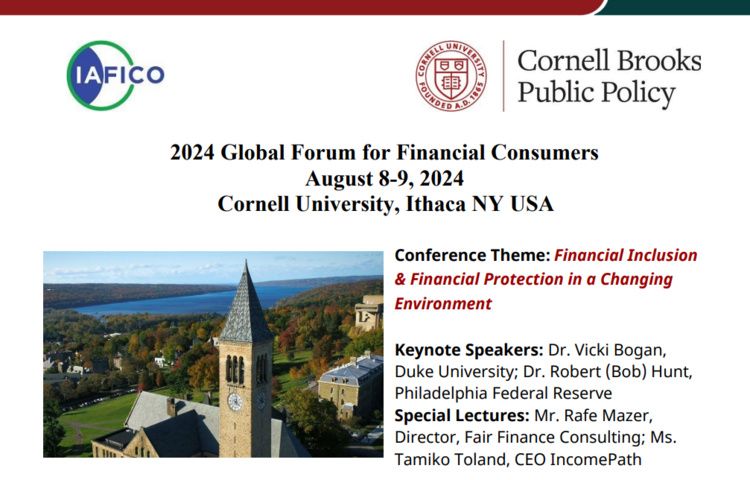
Conference Theme: Financial Inclusion
& Financial Protection in a Changing
Environment
Keynote Speakers: Dr. Vicki Bogan,
Duke University; Dr. Robert (Bob) Hunt,
Philadelphia Federal Reserve
Special Lectures: Mr. Rafe Mazer,
Director, Fair Finance Consulting; Ms.
Tamiko Toland, CEO IncomePath
Additional Information
Program
Einaudi Center for International Studies
Ancient DNA and the Politics of Ethnicity in Neo-Nationalist China

Magnus Fiskesjö, EAP
Magnus Fiskesjö has published a chapter on the politics of labeling genetic populations in China in a new open-access book, Critical Perspectives on Ancient DNA, from MIT Press.
Additional Information
Russian Missile Hits Children’s Hospital

Matthew Evangelista, PACS
Voice of America's International Edition podcast talks with Matthew Evangelista (PACS) about how Russia's recent deliberate attacks on civilians violate the Geneva Convention.
Deliberate attacks on civilians violate the Geneva Convention. We talked to Matthew Evangelista, a professor of history and political science emeritus at Cornell University. A Russian court sentenced a playwright and a theater director each to six years in prison on Monday for "justifying terrorism," concluding a trial that rights campaigners had said demonstrated Russia's intolerance of artistic freedom.
Additional Information
Seaweed for Climate Mitigation
Jenny Goldstein Wins Atkinson Venture Fund Award
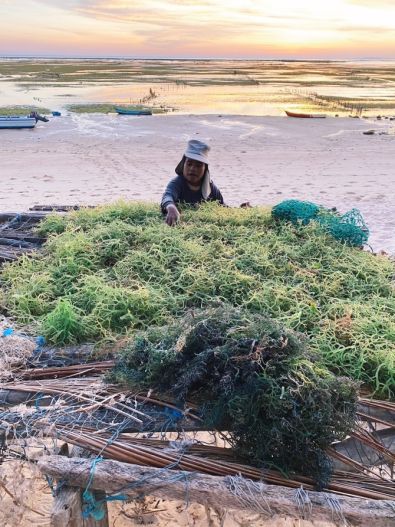
Seaweed may play a significant role in the transition to a low-carbon economy. It can be converted into products that can sequester carbon directly, such as building materials; biofuels and bioplastics derived from seaweed may be able to substitute for fossil fuel-based products; and seaweed has been shown to directly suppress greenhouse gas emissions when used as a supplement in cattle feed and a soil amendment in rice paddies. Cornell researchers will explore barriers to scaling up seaweed-based products for climate mitigation, particularly at cultivation sites in the Philippines, where seaweed quantity and quality are in rapid decline. Ice-ice disease is a primary cause of this decline, and researchers will work with local collaborators to develop strategies to reduce disease loss, support farmer livelihoods, and increase climate-mitigating products from seaweed.
Additional Information
Can China’s Development-based Social Contract Withstand Unemployment Pressures?

Eli Friedman, EAP
While the modern party’s legitimacy is based on a growing and diverse range of sources, “performance-based legitimacy” remains a central pillar of stability, as it has for many decades, said Eli Friedman from Cornell University’s School of Industrial and Labour Relations.