
Einaudi Center for International Studies
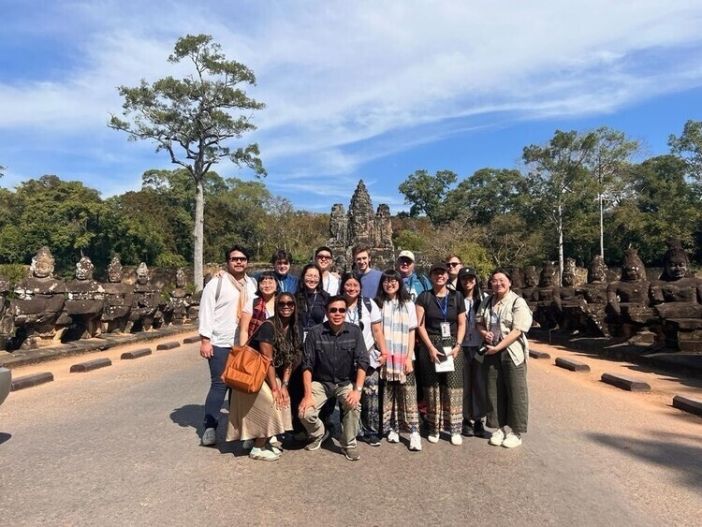
Cornell Winter Program in Cambodia Info Session
September 5, 2024
4:30 pm
Rockefeller Hall, 374
Come learn more about our winter study abroad in Cambodia, lunch provided. In collaboration with the Center for Khmer Studies (CKS), Cornell's Southeast Asia (SEAP, Einaudi) Study Abroad program in Cambodia will provide an in-depth focus on the cultural heritage of Cambodia both past and present. This highly interactive course will focus on Cambodian heritage past and present — how it's been created in the past, including the city of Angkor, and how that heritage and history is understood and engaged today. We will visit historical sites as well as museums and other relevant sites, including performances, where history is remembered and engaged.
Additional Information
Program
Einaudi Center for International Studies
Southeast Asia Program
One Way to Make Russia Pay for Ukraine? Take Its Money.

Nicholas Mulder, IES
This opinion piece quotes Cornell historian Nicholas Mulder's 2022 book, “The Economic Weapon: The Rise of Sanctions as a Tool of Modern War.”
Additional Information
Haitians Hold Their Breath as Newly Arrived Kenyan Police Force Prepares to face Gangs

Sabrina Karim, PACS
Sabrina Karim, assistant professor of government, talks about the importance of Kenyan-led forces to prove themselves accountable to the Haitian people for this move to work.
Additional Information
SCOTUS Seems Determined to Dismantle the Administrative State. It Will Make Regulating Major Industries Tougher.

Robert Hockett, CRADLE
"These rulings make it impossible for the agencies that Congress itself created to respond quickly and efficiently to newly emerging problems," says Robert Hockett, a professor of law and finance.
Additional Information
Trump Made MAGA Happen. JD Vance Represents Those Who Will Inherit It
Mabel Berezin, IES
“They will be able to play that constituency long after Trump,” says professor of arts and sciences in sociology, Mabel Berezin. “They don’t come out of the blue. There is an audience for what they have to say.”
Additional Information
Battered Mexico Opposition in Disarray as AMLO Pushes for Reform

Gustavo Flores-Macias, LACS
“What is most worrisome for the opposition is that this landscape is likely to give Morena the ability to modify the rules of the game on a number of fronts, including the electoral authority and the judiciary,” says Gustavo Flores-Macias, professor of government and public policy, on what’s next for the Mexican government.
Additional Information
Musics of Southeast Asia
August 14, 2024
12:00 am
Kahin Center
A Hands-On Workshop for K-16 Music Teachers
Calling all music educators: learn to play percussion and stringed instruments from Southeast Asia while exploring innovative ways to bring these musical traditions into your classroom.
Intended Participants: K-12 music teachers, Community College and other music educators welcome.
Join the director of the Cornell Gamelan Ensemble (Chris Miller) and the founder of the 14 Strings (Jane Maestro)! Filipino Rondalla for a three-day hands-on workshop designed for music teachers. Participants will become familiar with percussion and stringed instrument musical forms found in Southeast Asia. The hands-on focus will be on learning to play Indonesian gamelan and Filipino Rondalla music, with emphasis on exploring innovative and fun ways to share these musical traditions with students. Workshop leaders and other guest speakers will highlight the rich histories and cultural contexts of these musical forms, from the medieval Spanish roots of Rondalla to contemporary forms, fusion, and even connections to popular music and hip hop in Southeast Asia.
Eligible participants will receive stipends of $100 per day for three days, with six additional travel subsidies also available. Deadline extended to August 2!
Register here.
Gamelan
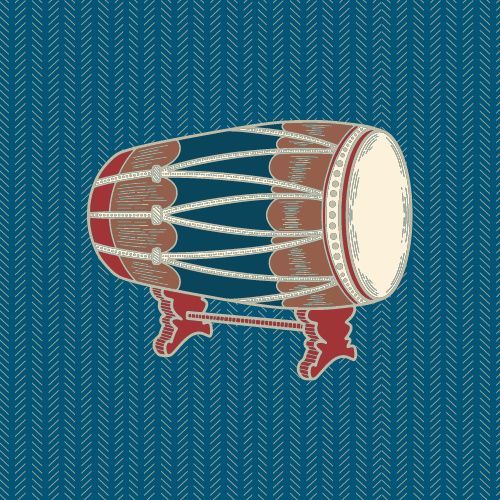
Metallophones, gongs, drums and xylophones are just some of the instruments that make up the various types of gamelan ensembles that are found across the archipelago of Indonesia. Learning to play traditional pieces on gamelan instruments will offer participants an immediate encounter with musical difference on multiple levels, including tuning systems, cyclical formal structures, rhythmic organization, and the real-time generation of parts. Participants will also be provided with materials to translate musical materials to instruments available to their students. Building on the experience of playing gamelan, participants will explore how musicians working in contemporary idioms draw upon traditional fundamentals.
Rondalla
The Filipino Rondalla is a traditional ensemble in the Philippines known as a plectrum orchestra. It consists of a unique set of stringed instruments (bandurria, laud, octavina, and bajo de uñas) that are played with a plectrum or pick. Learning to play these instruments can enhance teachers' knowledge of stringed instruments, introducing new techniques and sounds to explore in the classroom. It also gives teachers ways to offer students a richer, more varied musical education while promoting cultural understanding and appreciation. Filipino music often features complex rhythms and time signatures. Teaching these rhythms can improve students' rhythmic abilities and expose them to non-Western musical structures. Incorporating Rondalla music expands the musical repertoire available to teachers and students and can provide opportunities for creative arrangements (or compositions) and teamwork (building listening skills and synchronization).
Additional Information
Program
Einaudi Center for International Studies
Southeast Asia Program
Creative Construction: The Rise and Stall of Mass Infrastructure in Latin America
October 8, 2024
12:20 pm
Uris Hall, G08
CANCELLED!!
Co-sponsored by Government
Infrastructure is at the heart of contemporary development strategies. Yet short time horizons are thought to impede infrastructure provision in democracies. Why do elected politicians invest in infrastructure projects that will not be completed during their time in office? The answer depends on understanding what infrastructure is and does in politics. I argue that the political rewards from infrastructure projects come from the associated contracts. Like many goods and services, infrastructure investments are neither fully privatized, in the sense of transferring ownership to the private sector, nor fully public, in that the state directly builds projects. Governments instead contract out to the private sector. In Latin America, politicians use their discretion in the contracting process to secure campaign donations, as well as personal rents. They also manipulate contracts—and particularly the use of public-private partnerships (PPPs)— to hide project costs, shift liabilities to future administrations, and move project decisions away from legislatures. Detailed evidence from 1,000 large infrastructure contracts, judicial investigations and leaked financial documents, and qualitative interviews with politicians and bureaucrats in Colombia, Ecuador, and Peru demonstrate why politicians invest in infrastructure and why projects often fail to produce the economic development and social welfare gains promised.
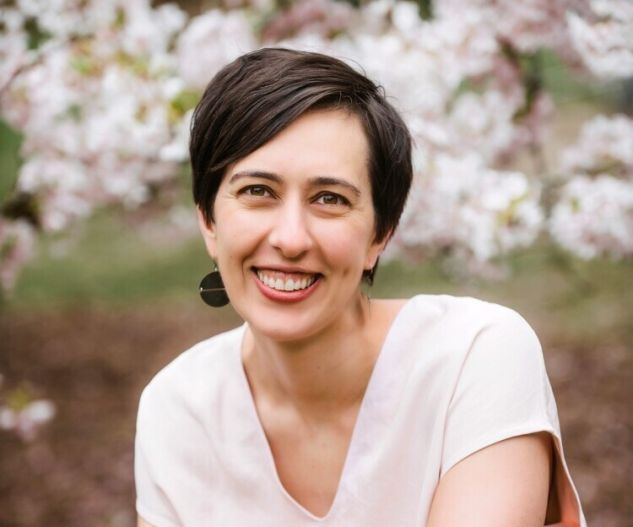
Alisha C. Holland is Professor of Government at Harvard University. Before joining the Harvard faculty, she was an Assistant Professor in the Politics Department at Princeton University. Her first book, Forbearance as Redistribution: The Politics of Informal Welfare in Latin America (Cambridge Studies in Comparative Politics), looks at the politics of enforcement against property law violations by the poor, such as squatting, street vending, and electricity theft. She is working on a new book on the politics of mass infrastructure investments in Latin America.
Additional Information
Program
Einaudi Center for International Studies
Latin American and Caribbean Studies
The Last Heroes: Foot Soldiers of Indian Freedom - Who, Really, Were India’s Anti-colonial Raj Fighters

September 23, 2024
12:15 pm
Uris Hall, G08
Talk by P. Sainath (Founding Editor, People’s Archive of Rural India)
The 2022 celebrations around the 75th year of India’s Independence seemed devoid of any recall of who and what it was the Indian people fought against to win Freedom and Independence. Official websites dedicated to the subject tell young readers nothing about it. Nor was there any debate on who won India its Independence. A bunch of returning Oxbridge elites? Or, as Gandhi observed, ‘the people themselves’? India’s official website commemorating 75 years of Independence (Azadi ki Amrut Mahotsav) has many thousands of entries on what the government considers vital around that period. It has no single story on, by, or about, nor even a single photo or video of a living freedom fighter – and there are still some, as my book The Last Heroes (Penguin November 2022) would show you. No less importantly, the official site has nothing on the British Raj and its impact on Indians. Two vital questions, then, remain unanswered: what did British colonialism actually do to Indians? And secondly – the question my recent book deals with – who, really, were our freedom fighters? The book records the life stories of 15 very ordinary Indians – representative of tens of millions of others – and how they took on the British Raj. Farmers, labourers, cooks, couriers, homemakers, artisans, students, and others played astonishingly courageous roles without personal gain. They came from a diverse social spectrum: Dalits, Adivasis, Hindus, Muslims, Sikhs, OBCs, Brahmins, atheists… What motivated these freedom fighters? Why do they tell us that freedom and independence are two different things?
Magsaysay Prize -winner P. Sainath is an Indian journalist focusing on social and economic inequality, deprivation, and poverty, particularly in rural India. Despite receiving over 60 national and global awards for journalism, Sainath has also declined several – including the Padma Bhushan, as he believes “journalists should never accept prizes and rewards from the governments they cover and critique.” Sainath was McGraw Professor of Writing at Princeton University in the Fall of 2012 and has been conferred doctorates by three other Universities. In India, he has taught journalism for 37 years. His first book, Everybody Loves A Good Drought, was declared a Penguin Classic in 2013 and is in its 61st printing. His latest book, The Last Heroes: Foot Soldiers of Indian Freedom, is already in its 5th edition. A journalist since 1980, Sainath became a full-time rural reporter in 1993 and has since then spent, on average, around 270 days a year in India’s poorest regions, writing from there for India’s largest newspapers, including The Times of India and for The Hindu (of which he was Rural Editor for a decade). More recently, his path-breaking reporting placed India’s ongoing agrarian crisis and farmers’ suicides – over 400,000 in two decades since 1995 – on the national agenda. In 2014, Sainath launched the People’s Archive of Rural India (PARI), a unique online project on rural India, with its 833 million people speaking 780 living languages and a bewildering array of stories, occupations, arts, music, culture, and a lot more. In less than ten years, PARI has won 70 journalism awards, including every single major prize in that field in India.
Additional Information
Program
Einaudi Center for International Studies
South Asia Program
Migrations Program
Feminist Friendships and Third World Solidarity: Bangladesh, South Asia, and Worldmaking in the Late Twentieth Century

October 21, 2024
12:15 pm
Uris Hall, G08
Talk by Elora Shehabuddin (University of California, Berkeley )
Founded in 1984 with the goal of preparing for the third UN Women’s Conference in Nairobi the following year, DAWN (Development Alternatives with Women for a New Era) was the first “South-South” feminist network to challenge the racial and economic privilege inherent in hegemonic “Second Wave” white, western, middle-class feminism. It did so by drawing on the histories and lived experiences of women in the Global South and impoverished women and women of color in the Global North. This paper draws on interviews with and memoirs by some of the South Asian (and other) founding members of the group to offer a history of late-twentieth-century Global South feminist organizations that centers personal experience, political solidarity, and friendship across differences.
Elora Shehabuddin is Professor of Gender & Women's Studies and Global Studies, Director of Global Studies, and Director of the Chowdhury Center for Bangladesh Studies at UC Berkeley. She received her AB in Social Studies from Harvard University and PhD in Politics from Princeton University. Her doctoral dissertation received the American Political Science Association’s 2002 Aaron Wildavsky Dissertation Award for best dissertation in Religion and Politics. She is the author of Sisters in the Mirror: A History of Muslim Women and the Global Politics of Feminism (University of California Press, 2021), Reshaping the Holy: Democracy, Development, and Muslim Women in Bangladesh (Columbia University Press, 2008), and Empowering Rural Women: The Impact of Grameen Bank in Bangladesh (Grameen Bank, 1992). She co-edited, with Ebru Kongar and Jennifer Olmsted, Gender, and Economics in Muslim Communities: Critical Feminist and Postcolonial Analyses (Routledge, 2018). She is associate editor of the Journal of Bangladesh Studies and the Encyclopedia of Women and Islamic Cultures and serves on the editorial board of a new Cambridge University Press book series titled “Muslim South Asia.” Her book Sisters in the Mirror was selected as a 2022 Choice Outstanding Academic Title by the American Library Association and awarded the 2023 Coomaraswamy Book Prize by the Association for Asian Studies.
Additional Information
Program
Einaudi Center for International Studies
South Asia Program