
Einaudi Center for International Studies
The Migration-Development Regime: How Class Shapes Indian Emigration
April 24, 2024
12:20 pm
Warren Hall, 175
Perspectives in Global Development: Spring 2024 Seminar Series
Abstract
How can we explain the causes and effects of global migration from the perspective of sending states and migrants themselves? Rina Agarwala will present on her book The Migration and Development Regime, which introduces a novel analytical framework to help answer this question in India, the world’s largest emigrant exporter and the world’s largest remittance-receiving country. Drawing on an archival analysis of Indian government documents, a new database of Indian migrants’ transnational organizations, and unique interviews with poor and elite Indian emigrants, recruiters, and government officials, this book exposes the vital role the Indian state, as well as its poor and elite emigrants, have long played in forging and legitimizing class inequalities within India through their management of international emigration. Since the 1800s, the Indian state has differentially used poor and elite emigrants to accelerate domestic economic growth at the cost of class inequalities, while still retaining political legitimacy. At times, the Indian state has forbidden emigration, at other times it has promoted it. At times, Indian emigrants have brought substantial material inflows, at other times, they have brought new ideas to support new development agendas within India. But throughout, Indian emigration practices have deepened class inequalities by imposing different regulations, acquiring different benefits from different classes of emigrants, and making new class pacts--all while remaining invisible in political and academic discussions on Indian development. On the flip side, since the early 1900s, poor and elite emigrants have resisted and re-shaped Indian development in response to state migration practices. By taking this long and class-based view, this book recasts contemporary migration not simply as a problematic function of “neoliberalism” or as a development panacea for sending countries, but as a long and dynamic historical process that sending states and migrants have long tried to manage. In doing so, it re-defines the primary problems of migration, exposes the material and ideological impact that migration has on sending state development, and isolates what is truly novel about contemporary migration.
Speaker
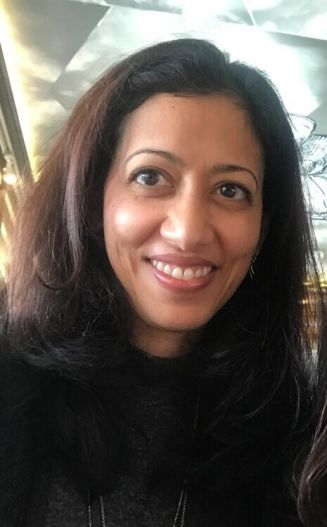
Rina Agarwala, Professor, Department of Sociology, Johns Hopkins University
Perspectives in Global Development
The Perspectives in Global Development seminars are held Wednesdays from 12:20-1:20 p.m. eastern time during the semester. The series is presented in a hybrid format. All seminars are shown in 175 Warren Hall. Students, faculty and the general public are welcome to attend. The series is co-sponsored by the Department of Global Development, the Department of Natural Resources and the Environment, the Charles H. Dyson School of Applied Economics and Management, and the School of Integrative Plant Science as part of courses GDEV 4961, AEM 4961, NTRES 4961, GDEV 6960, AEM 6960, and NTRES 6960.
Additional Information
Program
Einaudi Center for International Studies
South Asia Program
Announcing: Art and Architecture of Migration and Discrimination

Edited by Esra Akcan and Iftikhar Dadi
Esra Akcan (IES) and Iftikhar Dadi (SAP) announce the release of their new edited volume on the art and architecture of 20th-century partitions and Muslim diasporas in Europe.
Additional Information
Muntz Metal and Shipping Building: How a Family Built an Empire
March 27, 2024
4:30 pm
Statler Hall, 291
Latin American and Caribbean Studies Program (LACS) Seminar Series.
This Seminar will be in Spanish.
Muntz Metal, an alloy of copper and zinc, remains a significant find in shipwrecks across the globe. In the 19th century, its introduction revolutionized maritime safety for the British Empire navigation by providing a cost-effective sheathing solution. Created by the Muntz family in Birmingham, the commercialization of the muntz metal links local resources such as copper with global commerce. In the process, the history of Muntz Metal Company also brings light into scientific inquiry, commercial rivalry, and the global landscape.
Through maritime archaeology and historical sources, this presentation aims to delve into the study of Muntz Metal Company. By using commercial records, material culture, and historical testimonies, we seek to understand the repercussions that the development of Muntz Metal had into navigation and commercial expansion.
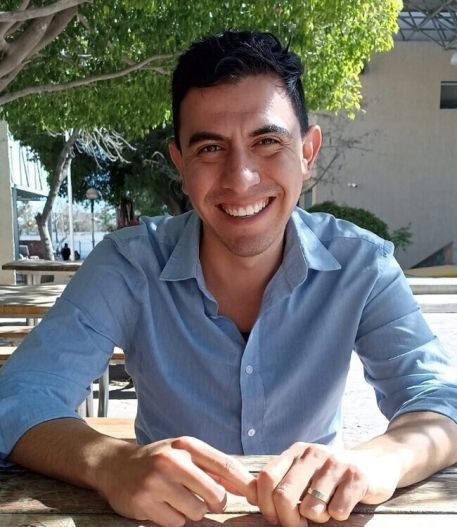
Andrés Zuccolotto is a doctoral candidate in History at the College of San Luis Potosí in Mexico. With a background as a conservator and maritime archaeologist at the Underwater Archaeology Directorate of the National Institute of History and Anthropology of Mexico, he specializes in the study and conservation of maritime heritage. His research is centered on fastening elements and copper-zinc alloy seathings of maritime vessels. Andrés has contributed to international research projects in Argentina, Mexico, and Colombia, furthering our understanding of maritime history and cultural preservation.
Additional Information
Program
Einaudi Center for International Studies
Latin American and Caribbean Studies
Nobel Prize-winning Author Mo Yan Is Being Sued in China for 'Distorting History'

Jessica Chen Weiss, EAP
In recent years, the party has really become increasingly concerned about what it sees as the roots of the Soviet Union's collapse, said Jessica Chen in an interview with NPR’s Scott Simon.
Additional Information
What to Know About Bernie Sanders’ Bill for the U.S. to Adopt a 32-hour Workweek

Tejasvi Nagaraja, GPV
The landmark law followed a century of labor-union efforts seeking protections for the many overworked people in the U.S., said ILR’s Tejasvi Nagaraja.
Additional Information
Will the United States ban TikTok?

Sarah Kreps, PACS
Sarah Kreps, professor of government, joins Inside Story to discuss the potential TikTok ban in the U.S.
Additional Information
The Drama in Russia’s Election is All About What Putin Will Do With Another 6 Years in Power

Bryn Rosenfeld, IES
“Russia’s presidential election is not so important as what will come after. Putin has often postponed unpopular moves until after elections,” says Bryn Rosenfeld, assistant professor of government.
Additional Information
Transforming Asia with Food: Women and Everyday Life
April 20, 2024
9:30 am
Kahin Center, 640 Stewart Ave
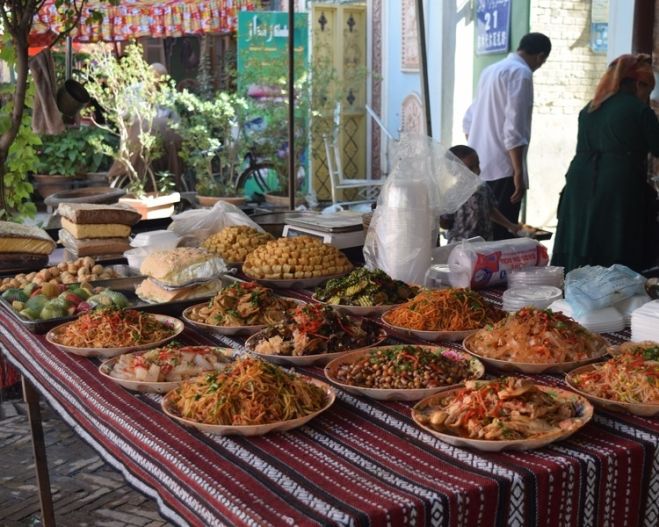
The panels will delve into women’s roles in effecting change across Asia through everyday practices of food production, handling, preparation, and consumption. This interdisciplinary and transregional approach will open new windows on the ways in which women—which we see as a heterogenous category, intersecting with class, education, locality, etc.—and their domestic practices have restructured familial, social, cultural, and at times political dynamics during the transition to “modernity."
DAY 1 (Friday, April 19) Program
Saturday, April 20
9:30-12:00 Cooking as Gendered Agency
Chair: Shaoling Ma (Cornell University)Tom Hoogervorst (KITLV, Leiden)Michelle King (The University of North Carolina)Joshua Kam (Cornell University)Mohini Mehta (Uppsala University)Arunima Datta (University of North Texas)
Additional Information
Program
Einaudi Center for International Studies
East Asia Program
Southeast Asia Program
South Asia Program
Transforming Asia with Food: Women and Everyday Life
April 19, 2024
10:30 am
Kahin Center, 640 Stewart Ave
The panels will delve into women’s roles in effecting change across Asia through everyday practices of food production, handling, preparation, and consumption. This interdisciplinary and transregional approach will open new windows on the ways in which women—which we see as a heterogenous category, intersecting with class, education, locality, etc.—and their domestic practices have restructured familial, social, cultural, and at times political dynamics during the transition to “modernity."
Friday, April 19
10:30-12:30 Nourishing Life, Family, and the Nation
Chair: Nick Admussen (Cornell University) Joshua Schlachet (University of Arizona) Christina Firpo (California Polytechnic State University)Violetta Ravagnoli (Emmanuel College) Wang Fei-Hsien (Indiana University)1:45-3:00 Keynote Address
Hyaeweol Choi (The University of Iowa)3:30-5:30 The Kitchen and Aspirational Domesticity
Chair: Jaime Sunwoo (Multidisciplinary artist)Suyoung Son (Cornell University)Rituparna Chowdhury (West Bengal State University)Chiara Formichi (Cornell University)DAY 2 (Saturday, April 20) Program
Additional Information
Program
Einaudi Center for International Studies
East Asia Program
Southeast Asia Program
South Asia Program
Graduate Conference: Agrarian Studies, Climate Change and the Future of Work
April 19, 2024
10:30 am
Warren Hall, B73
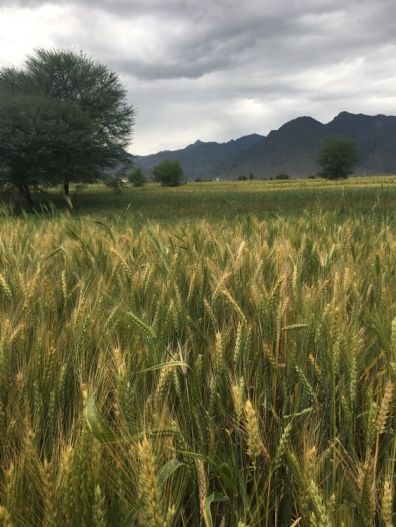
The future of work is hot. Literally. Unpredictable seasons, droughts, floods, warming temperatures, rising seas, and a host of other climatic factors are changing what work is, what it means, and what it does to the body. These effects are unevenly felt across geographies, forms of difference, and inequalities.
The impacts of climate change – extreme temperatures and changing agricultural cycles - on agrarian environments demand new frameworks to analyze work in the agrarian present and future. We invite abstracts that conceptualize climate change as a problem of work. Rather than restricting a changing climate to new weather patterns, shifting topographies, and techno-fixes, this conference opens a conversation to think about climate change through other anthropogenic changes, such as sociopolitical and economic transformations.
This graduate conference will bring graduate students across disciplines to speak on a variety of topics including agrarian change, urban and rural relations, infrastructural transitions, uneven geographies of risk, and the politics of scale and temporality.
We invite graduate students to send abstracts of up to 250 words to hak78@cornell.edu by March 1st, 2024.
Additional Information
Program
Einaudi Center for International Studies
South Asia Program