
Einaudi Center for International Studies
The Left in China
April 12, 2024
3:00 pm
Cornell ILR School, 281 Ives Faculty Building
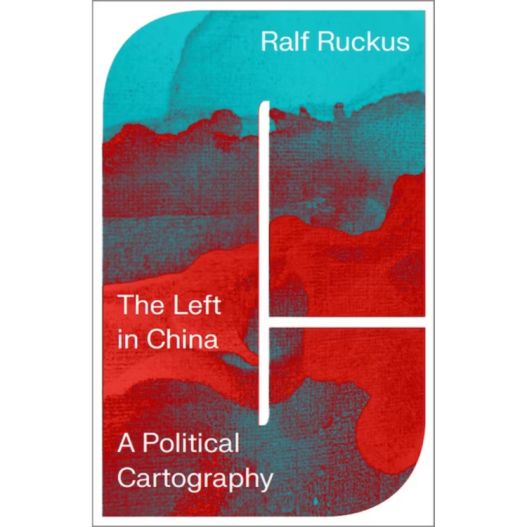
Ralf Ruckus will present central arguments from the book The Left in China. A Political Cartography (Pluto Press, 2023):
All over the world, progressive forces debate the nature of the People’s Republic of China (PRC) and the Chinese Communist Party (CCP). While some consider them to be socialist, others recognize the critical role of the current CCP government in facilitating capitalist exploitation and the suppression of social struggles.
Often, little or no attention is given to leftwing oppositional movements and groups in the PRC. Since the founding of the PRC in 1949, changing class divisions have led to waves of social protests by workers, migrants, and women, which inspired several generations of leftwing opposition against CCP rule.
The dialectic of social struggles and leftwing oppositional movements has shaped the history of the PRC, from the socialist build-up in the 1950s to the Cultural Revolution in the 1960s, the democracy movements in the 1970s and 1980s, the resistance of the socialist working class against capitalist restructuring in the 1990s and 2000s, and the struggles of migrant workers and women since.
This event is co-sponsored by the East Asia Program.
Additional Information
Program
East Asia Program
Einaudi Center for International Studies
American Democracy Challenges in Comparative Perspective
April 10, 2024
2:30 pm
Uris Hall, G08
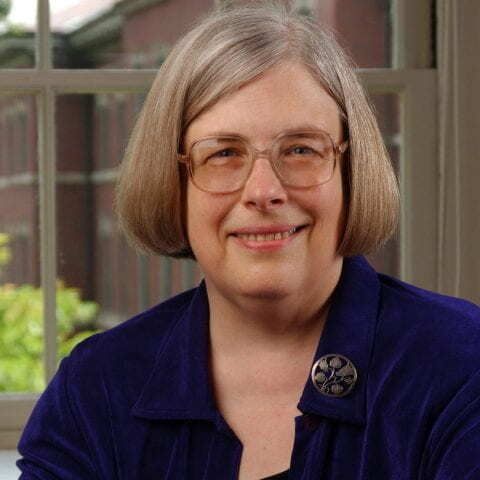
Anti-democratic politics is a global phenomenon. Apart from the United States, countries in Europe, Latin America, Africa have seen the rise of populism, polarization, and illiberal politics. This event is an informal conversation among Einaudi Center faculty Mabel Berezin (IES), Ken Roberts (DTR and LACS), and Rachel Beatty Riedl (Einaudi Center director and DTR) and renowned Harvard sociologist Theda Skocpol, AD White Professor-at-Large, on American democracy’s place among global challenges to democracy.
This event is hosted by the Institute for European Studies in collaboration with the Einaudi Center's Democratic Threats and Resilience research priority.
Theda Skocpol is the Victor S. Thomas Professor of Government and Sociology at Harvard University. The author of twelve books, twelve edited collections, and more than seven dozen articles, Skocpol is recognized as one of the most cited and widely influential scholars in the modern social sciences. Her work has contributed to the study of comparative politics, American politics, comparative and historical sociology, U.S. history, and the study of public policy. Her first book, States and Social Revolutions: A Comparative Analysis of France, Russia, and China (1979), won the 1979 C. Wright Mills Award and the 1980 American Sociological Association Award for a Distinguished Contribution to Scholarship. Skocpol edited Vision and Method in Historical Sociology (1984) and co-edited the influential Social Science Research Council collection Bringing the State Back In (1985). Since the 1990s, Skocpol’s research has focused on US politics in historical and comparative perspective. Her Protecting Soldiers and Mothers: The Political Origins of Social Policy in the United States (1992), won five scholarly awards. Her most recent book is Upending American Politics: Polarizing Parties, Ideological Elites, and Citizen Activists from the Tea Party to the Anti-Trump Resistance (edited with Caroline Tervo, 2020). Skocpol is an elected member of all three major U.S. interdisciplinary honor societies: the American Academy of Arts and Sciences, the American Philosophical Society, and the National Academy of Sciences. In 2009, she co-founded, and currently directs, the Scholars Strategy Network (SSN), whose mission is to improve public policy and strengthen democracy by encouraging nonpartisan public engagement by university-based scholars. SSN has grown into a national organization of over 900 scholars from 200+ universities, focused on bringing evidenced-based policy research to the public discourse.
Additional Information
Program
Einaudi Center for International Studies
Institute for European Studies
Swahili Conversation Hour

March 27, 2024
3:00 pm
Stimson Hall, G25
Come to the LRC to practice your language skills and meet new people. Conversation Hours provide an opportunity to use the target language in an informal, low-pressure atmosphere. Have fun practicing a language you are learning! Gain confidence through experience! Just using your new language skills helps you learn more than you might think. Conversation Hours are are open to any learner, including the public. Campus visitors and members of the public must adhere to Cornell's public health requirements for events.
This Conversation Hour is sponsored by the Institute for African Development.
Additional Information
Program
Einaudi Center for International Studies
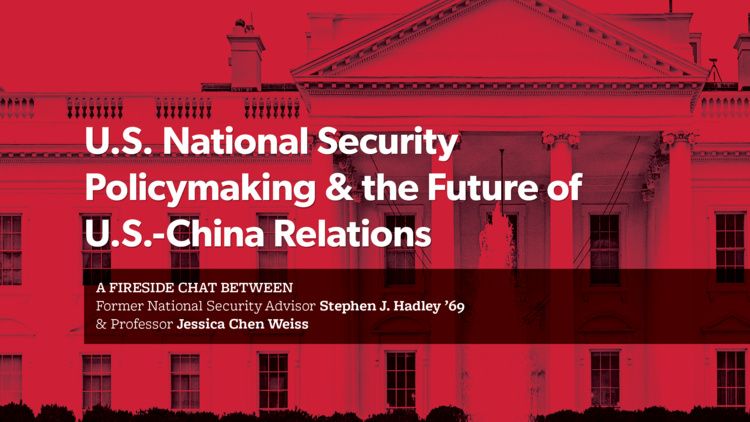
U.S. National Security Policymaking and the Future of U.S.-China Relations: A Fireside Chat between Former National Security Advisor Stephen J. Hadley (2005-2009, Cornell '69) and Professor Jessica Chen Weiss
April 17, 2024
5:00 pm
245 Feeney Wy, Ithaca, NY 14853, Physical Sciences Building 120.
The Cornell Levinson Program in China and Asia-Pacific Studies is delighted to host a conversation on U.S. national security policymaking and the future of U.S.-China relations between Former National Security Advisor Stephen J. Hadley and Professor Jessica Chen Weiss on Wednesday, April 17, from 5 PM to 6:15 PM, at 120 Physical Sciences Building, followed by a reception from 6:15 PM to 7:15 PM at the Baker Portico.
This event is co-sponsored with Cornell Jeb E. Brooks School of Public Policy, Cornell Mario Einaudi Center for International Studies, Cornell Department of Government, and Cornell East Asia Program.
This hybrid event is free to attend.
For joining in-person, please register on EventBrite here.
Register for the Webinar at: https://cornell.zoom.us/webinar/register/WN_y25dTQ7LSTOCFjmTVNkjDA
Stephen J. Hadley Bio:
Stephen Hadley is a principal of Rice, Hadley, Gates & Manuel LLC, an international strategic consulting firm founded with Condoleezza Rice, Robert Gates, and Anja Manuel. He is an Executive Vice Chair of the Board of Directors of the Atlantic Council and is also the former Board Chair of the United States Institute of Peace (USIP).
Mr. Hadley served for four years as the Assistant to the President for National Security Affairs from 2005 to 2009. From 2001 to 2005, Mr. Hadley was the Assistant to the President and Deputy National Security Advisor, serving under then National Security Advisor Condoleezza Rice. Mr. Hadley had previously served on the National Security Council staff and in the Defense Department including as Assistant Secretary of Defense for International Security Policy from 1989 to 1993.
During his professional career, Mr. Hadley has served on a number of corporate and advisory boards, including: the National Security Advisory Panel to the Director of Central Intelligence, the Department of Defense Policy Board, and the State Department’s Foreign Affairs Policy Board. He is also the editor of the book Hand-Off: The Foreign Policy George W. Bush Passed to Barack Obama.
Jessica Chen Weiss Bio:
Jessica Chen Weiss is the Michael J. Zak Professor for China and Asia-Pacific Studies in the Department of Government at Cornell University and nonresident senior fellow at the Asia Society Policy Institute Center for China Analysis. From August 2021 to July 2022, she served as senior advisor to the Secretary's Policy Planning Staff at the U.S. State Department on a Council on Foreign Relations Fellowship for Tenured International Relations Scholars (IAF-TIRS). Weiss is the author of Powerful Patriots: Nationalist Protest in China’s Foreign Relations (Oxford University Press, 2014). Her research appears in International Organization, China Quarterly, International Studies Quarterly, Journal of Conflict Resolution, Security Studies, Journal of Contemporary China, and Review of International Political Economy. With commentary in the New York Times, Washington Post, Foreign Affairs, Los Angeles Times, and the Ezra Klein show, Weiss was profiled by the New Yorker and named one of Prospect Magazine's Top Thinkers for 2024. Weiss was previously an assistant professor at Yale University and founded FACES, the Forum for American/Chinese Exchange at Stanford University. Born and raised in Seattle, Washington, she received her Ph.D. from the University of California, San Diego.
Additional Information
Program
Einaudi Center for International Studies
East Asia Program
Do Not Uproot the Pumpkin

March 28, 2024
9:00 am
Africana Center
The literary event, hosted by the Institute for African Development's Humphrey Fellowship Program at Cornell and Okere City, is set to unite people from across the globe to contemplate the enduring legacy and influence of Okot p'Bitek, a towering figure in 20th-century African literature. Renowned for his seminal works "Song of Ocol" and "Song of Lawino," which have been translated into over 30 languages and sold millions of copies worldwide, p'Bitek's writings encapsulate a poignant, poetic exchange between Lawino, a rural champion of African traditions, and her husband Ocol, who grapples with cultural estrangement and Western influence. Juliane Okot Bitek, daughter of the late author and a distinguished professor of creative writing at Queen's University, Canada, will deliver the keynote address. Okot p'Bitek's critical exploration of African culture, politics, and colonialism through his teaching, research, and prolific writing remains an enduring testament to his scholarly contributions.
This event is sponsored by Cornell University’s Institute for African Development with funds from the US Department of Education UISFL Program.
Register to watch the web version of the event here:
https://cornell.zoom.us/j/96624897395?pwd=QSszOVU3V0E3bWcxVWNaeTRyTlZtZ…
Additional Information
Program
Einaudi Center for International Studies
Institute for African Development
Twi Conversation Hour
April 16, 2024
6:00 pm
Stimson Hall, G24A
Come to the LRC to practice your language skills and meet new people. Conversation Hours provide an opportunity to use the target language in an informal, low-pressure atmosphere. Have fun practicing a language you are learning! Gain confidence through experience! Just using your new language skills helps you learn more than you might think. Conversation Hours are are open to any learner, including the public. Campus visitors and members of the public must adhere to Cornell's public health requirements for events.
This Conversation Hour is sponsored by the Institute for African Development.
Additional Information
Program
Einaudi Center for International Studies
Women in AI: Sarah Kreps, Professor of Government at Cornell

Sarah Kreps, PACS
TechCrunch highlights Sarah Kreps, professor of government, and her contributions to the AI revolution.
Additional Information
House Panel Unanimously Advances Bipartisan Bill that Could Ban TikTok

Sarah Kreps, PACS
“I’m just not confident that this will actually side-step the free speech concerns that have been raised with previous attempts to ban TikTok,” says Sarah Kreps, professor of government.
Additional Information
What Is Insider Trading?

Robert Hockett, CRADLE
Robert Hockett, professor of law, explains what could happen when insider trading occurs too frequently.
Additional Information
We Must Start Preparing the U.S. Workforce for the Effects of AI – Now

Virginia Doellgast, IES
Virginia Doellgast, professor of employment relations and dispute resolution, explains how to introduce AI in ways that lead to less employee resistance.