
Einaudi Center for International Studies
World in Focus Briefs
Research and Policy Insights from Einaudi Experts
Explore recent research publications and op-eds by our faculty. Their global perspectives help put our world in focus.
Fields of Contestation and Contamination

Rachel Bezner Kerr in World in Focus
Rachel Bezner Kerr recently coauthored an article, "Fields of Contestation and Contamination: Maize Seeds, Agroecology, and the (De)coloniality of Agriculture in Malawi and South Africa," in the peer-reviewed journal Elementa.
"We reveal how colonial histories and ongoing colonialities of power, knowledge, being, and nature continue to shape the character and form of agriculture in both countries, running counter to the needs of agroecological smallholder farmers and their ways of knowing and being."
The article examines how seed laws that implicitly support the uptake of modern crop varieties, including genetically modified (GM) and gene-edited crops, may lead over time to the contamination of smallholder fields and displacement of local, open-pollinated maize varieties. Using the case of South Africa, where GM crops have been grown for several decades, the researchers preview implications for Malawi, which passed a seed act in 2022.
The piece concludes with a call to action to support food and seed sovereignty, agroecology, and farmers' collective knowledge and innovations for an "ecologically secure future for African smallholders and the lands, diversity, and cultures of which they are custodian."
Rachel Bezner Kerr is director of Einaudi's Institute for African Development. She will moderate this year's Lund Critical Debate, Getting to Climate Justice: A Global Approach, on April 11.
Featured in World in Focus Briefs
Additional Information
Living with Algorithms: Agency and User Culture in Costa Rica
April 12, 2024
12:20 pm
Statler Hall, 391
Latin American and Caribbean Studies Program (LACS) Seminar Series.
Co-sponsors: Departments of Communication, Information Science, and Science & Technology Studies
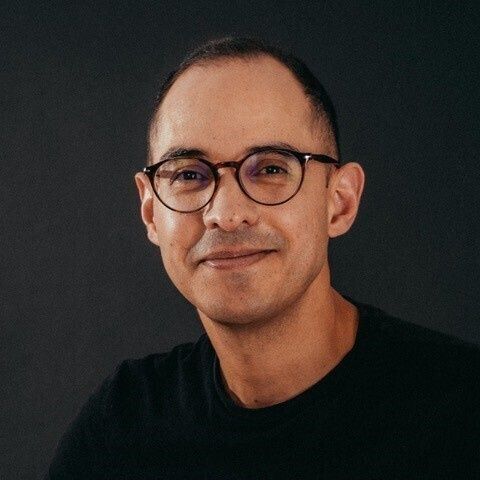
What does it mean to live in a “datafied” society? Life in media-saturated contexts implies the increasing transformation of people’s experiences, relations, and identities into data. To make sense of this process, scholars have focused mostly on how algorithms give rise to new forms of power and control. Alternatively, in this talk I ask not what algorithms are doing to society but rather what people are doing with algorithms. I present research on the use of such algorithmic platforms as Netflix, Spotify, and TikTok in an understudied region of the global south (Costa Rica). I develop the framework of “mutual domestication” by examining the personal relationships that have formed between users and algorithms as Latin Americans have integrated these systems into the structures of everyday life, enacted them ritually, participated in public with and through them, and thwarted them. In this way, I provide a new perspective on the commonalities and differences among users within a global ecology of technologies.
Ignacio Siles (PhD, Northwestern University) is a professor of media and technology studies in the School of Communication and researcher in the Centro de Investigación en Comunicación (CICOM) at Universidad de Costa Rica. He is the author of "Living with Algorithms: Agency and User Culture in Costa Rica" (MIT Press, 2023), "A Transnational History of the Internet in Central America, 1985–2000" (2020, Palgrave Macmillan) and "Networked Selves: Trajectories of Blogging in the United States and France" (2017, Peter Lang), along with several articles on the relationship between technology, communication, and society.
Additional Information
Program
Einaudi Center for International Studies
Latin American and Caribbean Studies
Preventing Nuclear Weapons Proliferation
March 28, 2024
12:00 pm
Uris Hall, G08
Diplomacy through Sanctions and Incentives
Although nuclear dangers have increased among the nine states that currently possess nuclear weapons, the proliferation of nuclear weapons to other states so far has been relatively contained. States are adhering to the 1970 Nuclear Nonproliferation Treaty. The global nonproliferation regime has effectively combined the threat of sanctions for violations with incentives for compliance. The offer to ease sanctions has been an effective inducement in several cases of negotiated nonproliferation. What are the lessons of these experiences for taming nuclear dangers today?
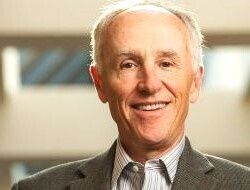
David Cortright, visiting scholar, Reppy Institute and Emeritus, University of Notre Dame, will discuss the chapter “Incentivizing Nuclear Nonproliferation: Theory, Policy and Experience” by David Cortright and Thomas Biersteker for a forthcoming volume edited by Peter Wallensteen and Armend Bikaj of the Alva Myrdal Center for Nuclear Disarmament in Sweden.
About the Speaker
David Cortright is a visiting scholar with the Reppy Institute of Peace and Conflict Studies program and professor emeritus of the practice at the Keough School of Global Affairs at the University of Notre Dame. Previously, Cortright was the director of policy studies at the Keough School’s Kroc Institute for International Peace Studies and director of the institute’s Peace Accords Matrix project, the largest existing collection of implementation data on intrastate peace agreements.
Cortright has written widely about nonviolent social change, nuclear disarmament, and the use of multilateral sanctions and incentives as tools of international peacemaking. He has provided research services to the foreign ministries of Canada, Denmark, Germany, Japan, the Netherlands, Sweden, and Switzerland, and has served as consultant or advisor to agencies of the United Nations, the Carnegie Commission on Preventing Deadly Conflict, the International Peace Academy, and the John D. and Catherine T. MacArthur Foundation.
Host
Judith Reppy Institute for Peace and Conflict Studies
Additional Information
Program
Einaudi Center for International Studies
Reppy Institute for Peace and Conflict Studies
Navigating Identities Abroad
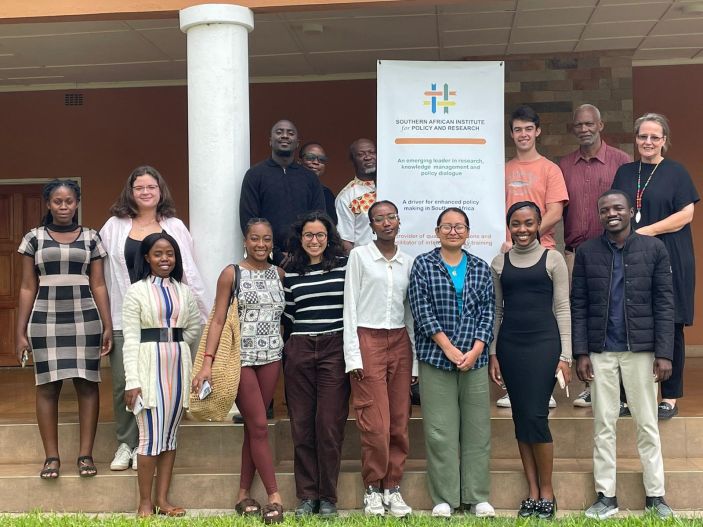
IAD Winter Program Student Shares Advice at Upcoming Panel
For Eva Telesca ’25, studying abroad was a transformative experience—but she noticed several forms of systemic discrimination in Zambia.
Additional Information
Getting to Climate Justice: A Global Approach
April 11, 2024
5:00 pm
Rockefeller Hall, Schwartz Auditorium, Room 201
Lund Critical Debate
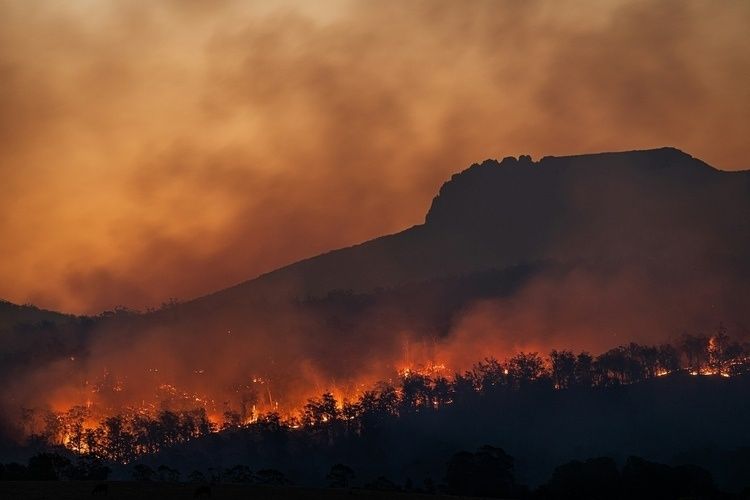
Climate change has a disproportionate impact on the world’s most vulnerable populations, yet climate crises also impact people across the full spectrum of wealth and power. How do we understand these varied impacts and design climate policy to maximize human well-being and justice on a global level?
As climate change accelerates, we see the rise of violent conflict and humanitarian emergencies in some places but not others. In some places but not others, we see disruptions in food security and forced migration. And around the world, debates rage about access to energy, the need to profit from valuable natural resources, and pressures to reduce extraction and consumption.
This year’s Lund debate from the Mario Einaudi Center for International Studies explores how citizens and policymakers worldwide can act to increase justice in our shared climate crisis. The panel will discuss key issues surrounding societies, governments, business, and labor and ways to share responsibilities globally to reduce emissions and mitigate climate change.
How can we imagine new strategies for reshaping global trade and finance, national and transnational security policies, and environmental protections that go beyond political borders? Join climate journalist Kate Aronoff and climate security expert Joshua Busby (LBJ School of Public Affairs, University of Texas) for a conversation on our climate’s state of emergency and how governments can help.
***
Livestream for National and International Viewers
Can't join in person? Register to attend virtually at eCornell.
***
Panelists
Kate Aronoff is a Brooklyn-based staff writer at The New Republic, covering climate and energy politics, and a fellow at the Roosevelt Institute. She is the author of Overheated: How Capitalism Broke the Planet and How We Fight Back (2021) and the coauthor of A Planet to Win: Why We Need a Green New Deal (2019). Aronoff serves on Dissent magazine's editorial board and the advisory board of Jewish Currents.
Joshua Busby is professor of public affairs in the University of Texas at Austin’s Lyndon B. Johnson School of Public Affairs. His research focuses on climate change, global health, transnational advocacy movements, and U.S. foreign policy. Busby was principal investigator on two multimillion-dollar climate and security grants from the U.S. Department of Defense. He served as senior advisor for climate at the U.S. Department of Defense from 2021 to 2023. His newest book is States and Nature: The Effects of Climate Change on Security (2022).
Moderator
Rachel Bezner Kerr is director of Einaudi’s Institute for African Development and professor of global development in the College of Agriculture and Life Sciences. She served as coordinating lead author for the United Nations’ Intergovernmental Panel on Climate Change sixth assessment report chapter on climate change impacts and adaptation of food systems.
***
About the Debate
The Lund Critical Debate is a signature event of the Mario Einaudi Center for International Studies. Established in 2008, Einaudi's Lund debate series is made possible by the generosity of Judith Lund Biggs '57.
Additional Information
Program
Einaudi Center for International Studies
Reppy Institute for Peace and Conflict Studies
East Asia Program
Latin American and Caribbean Studies
Institute for African Development
Institute for European Studies
South Asia Program
Slogging Together: The Antidote to World-Weariness
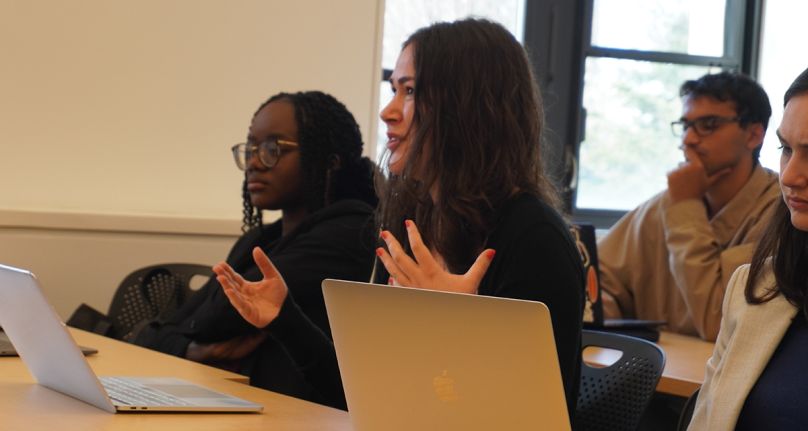
Alexandra Dufresne, GPV
"Everyone has their own way of dealing with the sadness of the world. My method is simple: by staring directly at the darkness and tackling it head-on, concretely and in community, one step at a time."
Additional Information
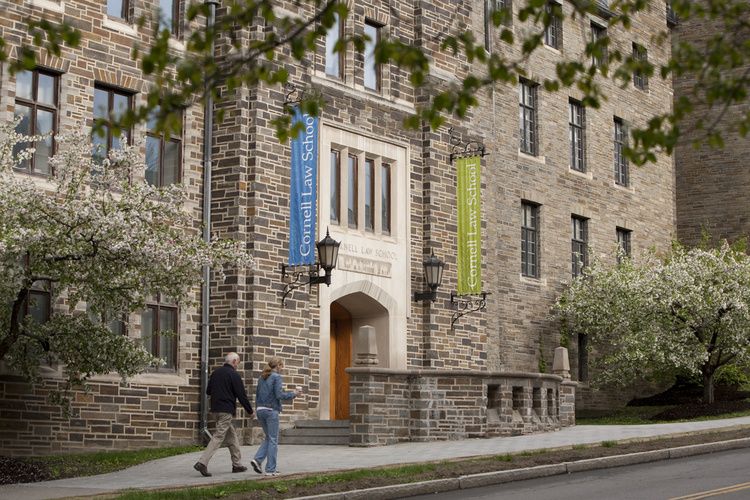
Berger International Speaker Series with William Hubbard – Court on Trial: Lesson for Court Reform from Empirical Studies of the Supreme Court of India
March 12, 2024
12:15 pm
Myron Taylor Hall, MTH 182
The Supreme Court of India has been called “the most powerful court in the world” for its wide jurisdiction, its expansive understanding of its own powers, and the billion plus people under its authority. It has also attracted its share of controversy. Critics have disputed its claim to being a “people’s court” serving the interests of the common person. Scholars and even judges have leveled claims of corruption and overreaching against the Court. And observers lament the backlog of cases and the disproportionate influence of the most elite (and expensive) members of the Supreme Court bar. In this talk, William Hubbard shows how an empirical approach to studying the Court offers new insights into the controversies, generating lessons for reformers in India and even the US.
Additional Information
Program
Einaudi Center for International Studies
South Asia Program
Monsoon Marketplace: Capitalism, Media, and Modernity in Manila and Singapore
April 11, 2024
4:30 pm
Rockefeller Hall, 374
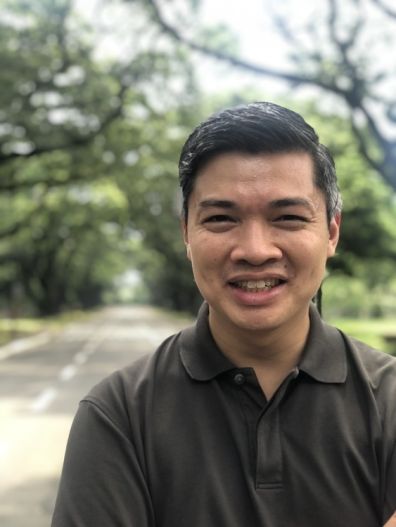
Join Media Studies and the Southeast Asia Program for a talk by Elmo Gonzaga, Associate Professor in the Division of Cultural Studies at the Chinese University of Hong Kong (CUHK).
About the Talk
This talk discusses how the book Monsoon Marketplace applies an archipelagic method to trace the changing vernacular cultures of capitalist modernity, mass consumption, and media spectatorship in two Southeast Asian cities Manila and Singapore by looking at print, film, and audiovisual representations of commercial and leisure spaces including night markets, amusement parks, department stores, movie theaters, and shopping malls that captivated their populations at three important historical moments of colonial occupation in the 1930s, national development in the 1960s, and neoliberal globalization in the 2000s. Juxtaposing seemingly unrelated urban environments that have become unrecognizably and irretrievably transformed such as Calle Escolta and Raffles Place, the talk will examine lost spaces like Crystal Arcade and Change Alley, which had offered contrasting experiences of consumerism and sociality in times of upheaval.
About the Speaker
Elmo Gonzaga is Associate Professor in the Division of Cultural Studies and Director of the MA in Intercultural Studies Programme at The Chinese University of Hong Kong (CUHK). He obtained his PhD in Rhetoric from the University of California, Berkeley. A native of Manila, he is a former Permanent Resident of Singapore. His work on Southeast Asian film and urban cultures has appeared in Cinema Journal, Cultural Studies, South East Asia Research, Verge: Studies in Global Asias, and the Journal of Asian Studies. He is the project leader of the Doing Theory in Southeast Asia online database, which was funded by a highly competitive Hong Kong Research Grants Council General Research Fund grant.
Additional Information
Program
Einaudi Center for International Studies
Southeast Asia Program
East Asia Program
A Showcase of Bophana Center Indigenous Filmmakers
April 9, 2024
6:00 pm
Kahin Center
A simulcast film screeing and discussion, hosted by the GETESA consortium.
In conjunction with the International Decade of Indigenous Languages, GETSEA and the Bophana Center present four short films by Indigenous Cambodian filmmakers on the themes of “Healing, Memory & Care.”
Dull Trail (2020) – Directed by KHON Raksa, PEOU Mono & CHOEY Rickydavid, Bunong Language
My Wish (2021) – Directed by KASOL Sinoun, Jarai Language
Trung (2022) – Directed by Khamnhei HEA, Karvet Language
Alive Skin (2022) – Directed by Veasna OEM & Vantha RAT, Khmer Language
In-person screenings of GETSEA’s Simulcast Film Screening with the Bophana Center will be held at the universities across North America. Each university will connect via Zoom with the film makers located at the Bophana Center in Phnom Penh, Cambodia for introductions and a post-screening discussion of the films. Meanwhile, a virtual screening will be available for viewers across the globe at KhmerTV.com. Virtual-only viewers will also be able to join the in-person screening locations for the post-screening discussion with the film makers via Zoom.
Additional Information
Program
Einaudi Center for International Studies
Southeast Asia Program