
Einaudi Center for International Studies
Speaker Series to Examine Antisemitism, Islamophobia
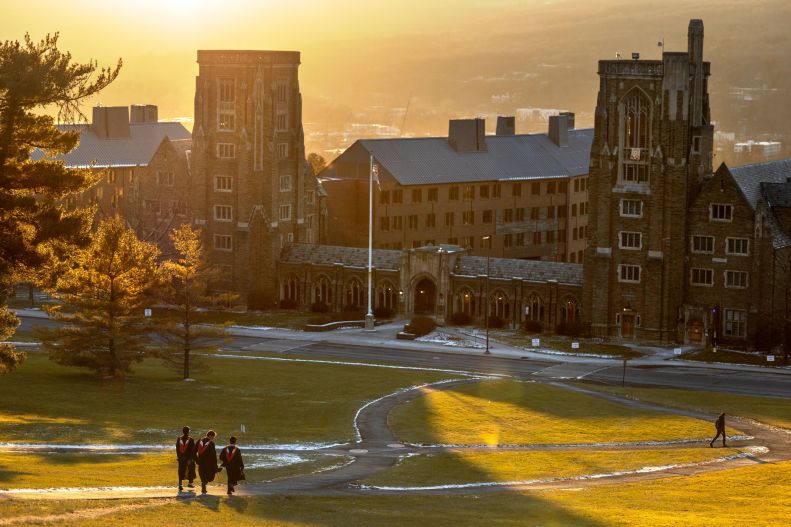
Einaudi/CO+POS cosponsor a semester-long series of community talks.
Leading academics from around the country will join Cornell experts in a semester-long series of talks examining antisemitism, Islamophobia, and racism.
Additional Information
DTR Postdoc Paul Friesen
World Offers Lessons on U.S. Democracy
In the 2024 election cycle, Paul Friesen is using an international lens to monitor threats to U.S. democracy.
Additional Information
Afghan Women Behind the Wheel

March 7, 2024
7:00 pm
Willard Straight Theatre
Film screening with Sahraa Karimi (Director), followed by Q&A and conversation moderated by Iftikhar Dadi, John H. Burris Professor of History of Art
The desire for freedom is basic to human nature all over the world. Obtaining a driver's license is becoming a key factor towards attaining personal freedom for Afghan women. However, is the Afghan society prepared for women behind the wheel? In Afghan Women Behind the Wheel, director Sahraa Karimi, born and raised in Kabul, follows several Afghan women trying to obtain a driving license. Through personal interviews, Karimi discovers the motivations and desires of these women, which are often shaped by their age, social status, and family backgrounds. She taps into their lives and dreams and discusses religion and family traditions with them to better understand their journey toward their personal freedom.
Sahraa Karimi is an independent film director and screenwriter from Afghanistan. On August 15, 2021, she was forced to leave Afghanistan due to the sudden and unexpected fall of Kabul and the return of the Taliban to power. Currently, she is a Visiting Professor at Centro Sperimentale di Cinematographia (Rome National Film School) in Rome, Italy.
She belongs to the second generation of Afghan migrants in Iran. When she was 17 years old, she immigrated to the Slovak Republic. In August 2012, she returned to Kabul and established her own Film Production Company, Kapila Multimedia House, to support Afghan independent filmmakers and artists. Karimi received her PhD In Cinema (Fiction Film Directing & Screenwriting) from the Academy of Music and Performing Arts, Film and TV Faculty in Bratislava, Slovakia (FTF-VSMU).
Presented in collaboration with the Ithaca City of Asylum. Cosponsored by the Department of Near Eastern Studies, the Feminist, Gender and Sexuality Studies Program, the Department of Performing & Media Arts, and the Mario Einaudi Center for International Studies. Financial support is provided by a Title VI grant from the U.S. Department of Education.
Tickets are free, and can be reserved beforehand through Cornell Cinema.
Additional Information
Program
Einaudi Center for International Studies
South Asia Program
Ida Danewid: Resisting Racial Capitalism
March 18, 2024
12:00 pm
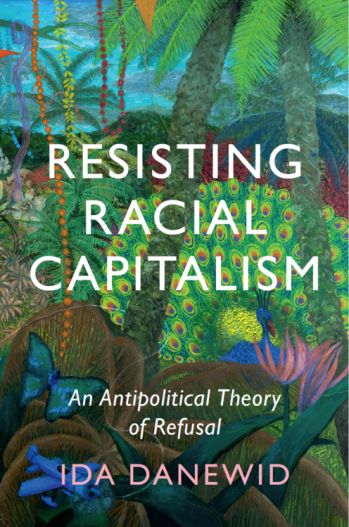
What does freedom mean without, and despite, the state? In her new book, Resisting Racial Capitalism: An Antipolitical Theory of Refusal, Ida Danewid argues that state power is central to racial capitalism's violent regimes of extraction and accumulation. Tracing the global histories of four technologies of state violence: policing, bordering, wastelanding, and reproductive control, she excavates an antipolitical archive of anarchism that stretches from the favelas of Rio de Janeiro to the borderlands of Europe, the poisoned landscape of Ogoniland, and the queer lifeworlds of Delhi.
Thinking with a rich set of scholars, organisers, and otherworldy dreamers, Danewid theorises these modes of refusal as a utopian worldmaking project which seeks not just better ways of being governed, but an end to governance in its entirety. In a time where the state remains hegemonic across the Left–Right political spectrum, Resisting Racial Capitalism calls on us to dream bolder and better in order to (un)build the world anew.
Register in advance to attend!
About the Speaker
Ida Danewid is a social and political theorist based in the Department of International Relations at the University of Sussex.
About the Moderator
Oumar Ba is an Assistant Professor in the Department of Government at Cornell University. His primary areas of research focus on law, violence, race, humanity, and world order(s) in global politics.
Host and Sponsors
This event is hosted by the Migrations initiative, part of Global Cornell.
Additional Information
Program
Einaudi Center for International Studies
Institute for European Studies
Summer Program in India Info Session
February 12, 2024
12:30 pm
Rockefeller Hall, 183
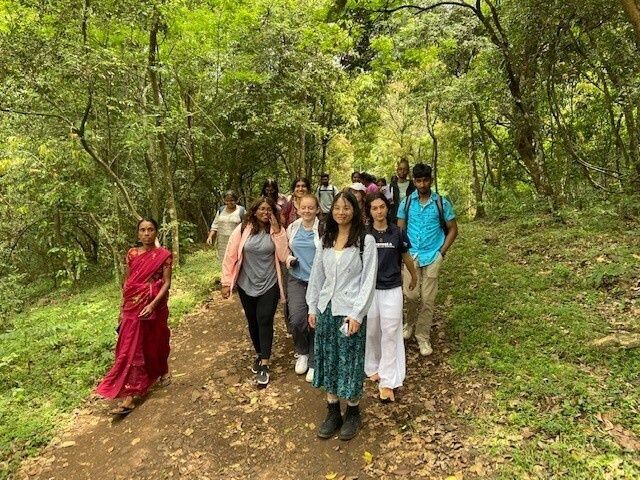
Are you interested in the intersection of mental health and culture, global health, and community engagement? Do you want to gain field research skills and learn about indigenous communities in South India’s beautiful and fragile Nilgiris Biosphere Reserve? If so, the Cornell-Keystone Nilgiris Field Learning Program might be for you!
Additional Information
Program
Einaudi Center for International Studies
South Asia Program
Bukele, the Iron Fist Leader Without Rival in El Salvador’s Elections
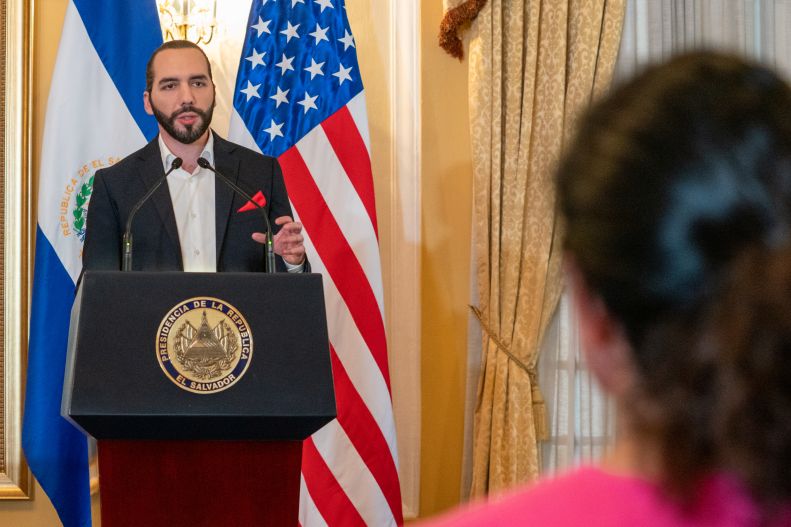
Gustavo Flores-Macías, LACS
Gustavo Flores-Macías, a professor specialized in governments and public policies at Cornell University in the United States, believes that the elections in El Salvador will serve as a referendum on Bukele’s measures.
Additional Information
Faculty Info Session: Global Grand Challenge Call for Proposals

February 12, 2024
12:00 pm
Learn about Cornell's new Global Grand Challenge: The Future and how you can propose a research or curricular project.
Global Cornell is opening what will be The Future’s only call for proposals. Interdisciplinary teams of faculty and researchers from all Cornell colleges, schools, and departments are encouraged to identify a research issue of global importance and plan a path to a successful alternative future.
Teams may apply for research project support up to $150,000 per year for two years. Stand-alone curricular projects are eligible for up to $20,000 per year for two years.
Deadline for letters of intent to apply (1 page): February 26, 2024Deadline for full proposals (5–7 pages): May 6, 2024Register here to join the virtual info session. The session will include an opportunity to ask questions and network with others interested in finding collaborators.
The information session slides and Q&A will be posted online after the event.
Additional Information
Program
Reppy Institute for Peace and Conflict Studies
East Asia Program
Southeast Asia Program
Latin American and Caribbean Studies
Institute for African Development
Institute for European Studies
South Asia Program
Einaudi Center for International Studies
The Hidden City

February 20, 2024
7:00 pm
Willard Straight Hall Theatre
Victor Moreno's The Hidden City (La cuidad oculta) is a dark, unsettling, almost hallucinogenic journey into an unknown world: the labyrinthine sewer system beneath the city of Madrid, Spain. Filmed underground over several years, the film offers unprecedented access to the vast network of tunnels, sewers, machinery, and infrastructure that at once sustainsÑand stands in stark contrast toÑthe life above it. With otherworldly cinematography and sound design reminiscent of Kubrick's 2001: A Space Odyssey and other sci-fi classics, The Hidden City is a contemporary symphony of an underground metropolis that demands to be heard in a darkened theatre and seen on the big screen.
Additional Information
Program
Einaudi Center for International Studies
Institute for European Studies
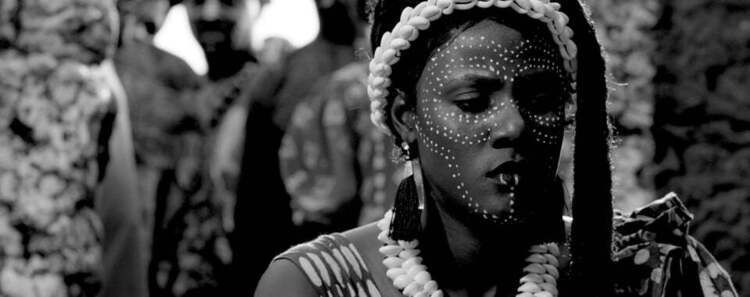
Mami Wata
February 3, 2024
6:00 pm
Willard Straight Hall Theatre
In the oceanside village of Iyi, the revered Mama Efe (Rita Edochie) acts as an intermediary between the people and the all-powerful water deity Mami Wata. But when a young boy is lost to a virus, Efe's devoted daughter Zinwe (Uzoamaka Aniunoh) and skeptical protg Prisca (Evelyne Ily Juhen) warn Efe about unrest among the villagers. With the sudden arrival of a mysterious rebel deserter named Jasper (Emeka Amakeze), a conflict erupts, leading to a violent clash of ideologies and a crisis of faith for the people of Iyi.
C.J. "Fiery" Obasi's potent modern fable deploys vivid monochromatic black-and-white cinematography, rich sound design, and a hypnotic score in a folk-futurist style both earthy and otherworldly. Obasi depicts a pitched battle between opportunistic militants promising technological progress and a matriarchal spiritual order living in fragile harmony with the ocean. Mami Wata transports us to a place that seems both suspended in time and perhaps running out of time, as the threats of modern life wash up on its shores.
(Synopsis courtesy of the Sundance Film Festival)
Nigerian submission for the Academy Award for Best International Feature Film, 2024
Winner of the Sundance Film Festival Special Jury Award: Cinematography, 2023
Additional Information
Program
Einaudi Center for International Studies
The Boy and the Heron

January 28, 2024
2:30 pm
Willard Straight Hall Theatre
Saturday screening - Japenese with English subtitles, Sunday afternoon matinee - English dub version
After losing his mother during the war, young boy named Mahito moves to his family's estate in the countryside. There, a series of mysterious events lead him to a secluded and ancient tower, home to a mischievous gray heron. When Mahito's new stepmother disappears, he follows the gray heron into the tower, and enters a fantastic world shared by the living and the dead. As he embarks on an epic journey with the heron as his guide, Mahito must uncover the secrets of this world, and the truth about himself.
The Boy and the Heron is a semi-autobiographical fantasy about life, death, and creation, in tribute to friendship, from the legendary Studio Ghibli. Hayao Miyazaki's first feature film in 10 years is a hand-drawn, original story written and directed by the Academy Award¨_-winning director. Produced by Studio Ghibli co-founder Toshio Suzuki, the film features a musical score from MiyazakiÕs long-time collaborator Joe Hisaishi.
Additional Information
Program
Einaudi Center for International Studies