
Einaudi Center for International Studies
Academic Freedom and Middle East Scholars after October 7

March 13, 2024
5:00 pm
Goldwin Smith Hall, 132
Additional Information
Program
Einaudi Center for International Studies
Argentina’s Caputo Brokers Deal With the IMF He Once Battled
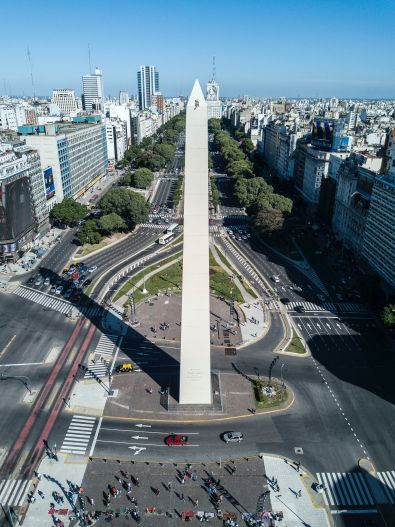
Gustavo Flores Macías, LACS
Gustavo Flores-Macías, professor of government, says the government and IMF “are more aligned now than they were in 2018, and Milei has the advantage of riding this honeymoon in international financial markets.”
Additional Information
The West Would Harm Itself with Rash Seizures of Frozen Russia Assets

Nicholas Mulder, IES
Nicholas Mulder, assistant professor of history, authors this op-ed on Western economic pressure against Russia.
Additional Information
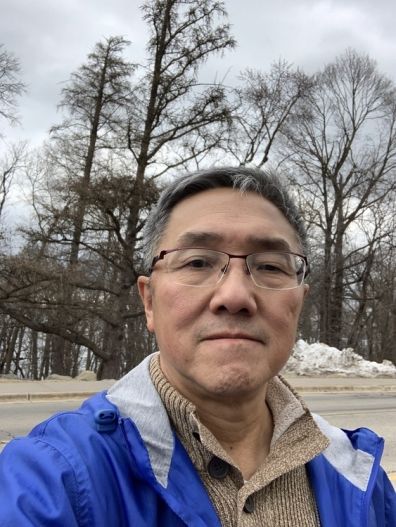
Doing Thai Intellectual History in the Global Context of Encounters
May 2, 2024
12:20 pm
Kahin Center
Gatty Lecture Series
Join us for a talk by Thongchai Winichakul, (Emeritus Professor of History, University of Wisconsin-Madison), who will discuss Thai intellectual history.
This Gatty Lecture will take place at the The Kahin Center, 640 Stewart Ave. Lunch will be served. For questions, contact seapgatty@cornell.edu.
About the Talk
What is the global context of doing Thai intellectual history today? First, it is always a cross-cultural encounter, always involving comparison, interpretation and translation across literal and cultural languages. Second, despite being non-colonized, Siam’s transformation to modernity went through the encounters of different intellectual worlds of unequal powers. Thirdly, it unavoidably involves the encounters between different academies whose particular environments (politics, economy, scholarly culture, etc.) often lead to different questions, points of view, even methodology. Finally, a scholar in this field approaches the subject with different positioning, from one of the “Other” to one of the “Self” as a home scholar, and anything in between, hence the different politics of knowledge.
About the Speaker
Thongchai Winichakul, Emeritus Professor of History at University of Wisconsin-Madison. Apart from eight books in Thai, his wrote two prize-winning books, Siam Mapped (1994, Harry Benda Prize, AAS, 1995) and Moments of Silence: The Unforgetting of the October 6, 1976, Massacre in Bangkok (2020, EUROSEAS 2022 award and George Kahin Prize, AAS, 2023). He received the John Simon Guggenheim Fellowship (1994), and was awarded the Fukuoka Grand Prize (2023). He was President of the Association for Asian Studies in 2013/14. His research interests are in the intellectual foundations of modern Siam under colonial conditions.
Additional Information
Program
Einaudi Center for International Studies
Southeast Asia Program
Addiction and Rehabilitation in Military Myanmar

April 25, 2024
12:20 pm
Kahin Center
Gatty Lecture Series
Join us for a talk by Joshua Mitchell, (PhD Candidate, Department of Anthropology, Cornell University), who will discuss addiction and rehabilitation in Myanmar.
This Gatty Lecture will take place at the The Kahin Center, 640 Stewart Ave. Lunch will be served. For questions, contact seapgatty@cornell.edu.
About the Talk
Burma is home to the world's longest running armed conflict. It is also the world's second largest producer of heroin and Asia's largest producer of methamphetamines. Studies of the drug-war relationship in Burma are top-down. They concern the way elite agreements, such as ceasefires between belligerents, shape patterns of drug production, peace, and conflict. In contrast, I consider these patterns from the ground up. Drawing on interviews with ex-soldiers recovering from addiction in drug rehabilitation centers in northeastern Burma, as well as public portrayals of addiction and war in Burma, I examine the role that drug addiction and rehabilitation play in the maintenance of militaries. I argue that there is a symbiotic relationship between rehabilitation and conscription. As a population that is commonly represented in Burma as the epitome of wasted male labor addicts are made into a labor pool that both militaries and churches can rehabilitate, deploy, or abandon. The social value of the addict is structured but the shifting contingencies of war and the shifting demands for military manpower. Centering the life stories of soldier-addicts shows the ways these men create and contest practices and imaginations of war, as well as their role in it. Yet the stories also reveal the way they often become ensnared in circuits of rehabilitation and conscription. These are produced by a diffuse array of religious and military institutions that hold conflicting ideologies, identities, and intentions, yet create a shared military order: the military-religious complex.
About the Speaker
Joshua Mitchell is a PhD candidate at Cornell University in socio-cultural anthropology. His dissertation research examines the intersections of Christianity, addiction, and war in Myanmar.
Additional Information
Program
Einaudi Center for International Studies
Southeast Asia Program
Shifting Constructions of the Field: Complicating Indonesia’s Turn to Anti-Science
April 18, 2024
12:20 pm
Kahin Center
Gatty Lecture Series
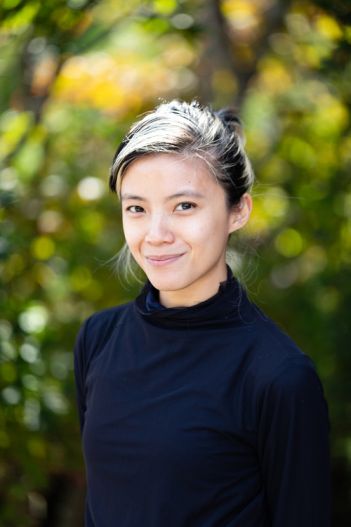
Join us for a talk by Cindy Lin, (Assistant Professor, College of Information Sciences and Technology, Pennsylvania State University), who will discuss environmental governance in Indonesia.
This Gatty Lecture will take place at the The Kahin Center, 640 Stewart Ave. Lunch will be served. For questions, contact seapgatty@cornell.edu.
About the Talk
Government data on Indonesia’s environment is in question. When ministerial officials contest deforestation and fire estimates that differ from their numbers, activists and scientists regard these actions as a suppression of science and, for some, even anti-science. In response, ministerial officials reason that such estimates, often provided by foreign scientists, are unverified by field surveys.
The talk considers a lesser-known story at the interface of this contradiction, that of topographical field surveys and their significance for the formation of professional work and scientific expertise. While field surveys are claimed to allow for the faithful validation of remote sensing data, what is missed is how they refashion scientists as technologists with alternative ways of accessing and knowing otherwise contingent resource frontiers.
In Indonesia, reduced research budgets, rapid environmental change, and the advent of machine learning in the last decade have greatly transformed the role of field surveys in the mapping sciences, forcing scientists to either question or hold more tightly to prior regimes of verification.
To explore these shifting constructions of the field, I bring together critical data studies scholarship with conceptual work on expertise in anthropology and history of science to examine the shifting material and social basis of environmental governance in Indonesia today.
About the Speaker
Cindy Lin is an ethnographer and information science assistant professor at the College of Information Sciences and Technology at Pennsylvania State University. Her first single-authored book project explores statecraft and computing practices in the environmental and mapping sciences in Indonesia and the professional identities and government institutions that emerged from these efforts.
Additional Information
Program
Einaudi Center for International Studies
Southeast Asia Program
Rethinking Colonial Legacies across Southeast Asia: Through the Lens of Japan’s Wartime Empire
April 16, 2024
12:20 pm
Kahin Center
Gatty Lecture Series
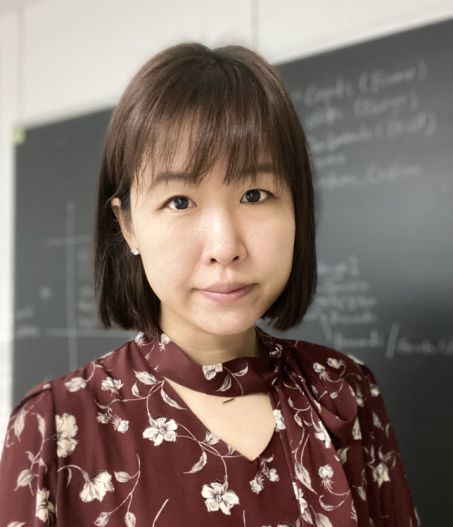
Join us for a talk by Diana Kim, (Assistant Professor, Georgetown University School of Foreign Service), who will discuss Japanese colonial legacies in Southeast Asia.
This Gatty Lecture will take place at the The Kahin Center, 640 Stewart Ave. Lunch will be served. For questions, contact seapgatty@cornell.edu.
About the Talk
For over a century, Southeast Asia was ruled by multiple European powers. Then, between 1940 and 1945 during World War Two, there was a temporary changing of the colonial guard as the Japanese empire occupied the region. The ideological bases and discourses for arrogating political authority changed, with a self-avowed Asian empire professing to liberate fellow Asians from the old yoke of Western imperialism and build a so-called Greater East Asia Co-Prosperity Sphere. It was also a time of heightened emotions, both great material losses and gains, as well as extraordinary physical, sexual, and symbolic violence. And in retrospect, it is an era that people remember in different ways, from a time of war, material deprivation and acute hardship, and the indignities of a “double occupation,” to a turning point towards independence and the birth of new nations.
This talk explores the significance of the Japanese occupation (1940-1945) for understanding the legacies of European colonial institutions across Southeast Asia today. It examines how agents of wartime empires stationed across Southeast Asia implemented varieties of formal arrangements for governing territories under Japanese military control that variably destroyed, kept, or altered extant institutions, while sometimes introducing new ones altogether. The Japanese occupation as such, I argue, generated different pathways for transmitting pre-war European colonial institutions into independent Southeast Asia. By exploring these varieties of wartime institution-building processes, this talk grapples more generally with what constitutes a meaningful rupture to historical continuity when studying the long-term effects of colonial institutions upon contemporary outcomes.
About the Speaker
Diana S. Kim is Assistant Professor at Georgetown University in the Edmund A. Walsh School of Foreign Service, and a core faculty member of the Asian Studies Program. She is the award-winning author of Empires of Vice: The Rise of Opium Prohibition across Southeast Asia (Princeton University Press 2020), and is currently writing a new book on global untouchability. Her scholarship is animated by concerns with how modern states develop capacity to define people at the edges of respectable society, constructing what it means to be illicit, marginal, and deviant, and crosses disciplinary boundaries between political science and history, with area focus on Southeast and East Asia.
Additional Information
Program
Einaudi Center for International Studies
Southeast Asia Program
East Asia Program
Climate Change as Policy Agenda: Evidence from Indonesia
March 21, 2024
12:20 pm
Kahin Center
Gatty Lecture Series
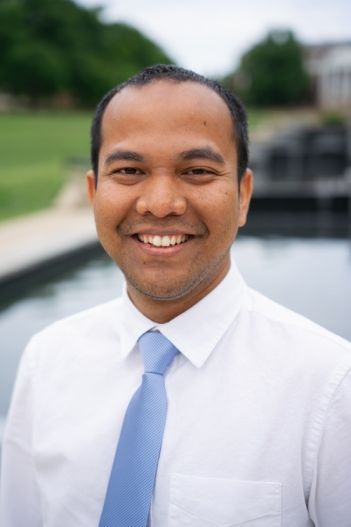
Join us for a talk by Aichiro Suryo Prabowo, (Postdoctoral Associate, Southeast Asia Program, Cornell University), who will discuss climate policy in Indonesia.
This Gatty Lecture will take place at the The Kahin Center, 640 Stewart Ave. Lunch will be served. For questions, contact seapgatty@cornell.edu.
About the Talk
Governments in developing countries often consider alleviating poverty and addressing climate change mutually exclusive agenda. The tension is likely salient in Indonesia, which has seen a momentum of economic development since the 2000s but is also home to the largest tropical forests in the world. This study empirically investigates whether such a dilemma exists by combining quantitative with textual analysis of the Indonesian central government’s budget documents over the last two decades. First, I will examine yearly allocations for environmental programs within the national budget. My analysis seeks to find intertemporal spending patterns and identify whether expenditures addressing environmental issues are adjusted across different presidencies. Second, I will focus on the narrative portions of the budget documents. By employing computational text analysis, this iteration aims to evaluate the extent to which national programs are oriented toward climate solutions, and how they stack up against competing economic agenda. Early evidence shows that the central government has allocated more funds to environmental programs at present than in the past, but it is unclear whether more funding is associated with quality spending.
About the Speaker
Aichiro Suryo Prabowo (Chiro) is a Postdoctoral Associate at the Cornell University Southeast Asia Program (SEAP). His research integrates sustainability and resilience issues into public finance and budgeting. Beyond academia, Chiro has consulted internationally for the World Bank and previously served as an associate director at Indonesia’s Presidential Office (UKP4). He received his PhD from the University of Maryland, after completing a master's degree at the University of Chicago, both in policy studies.
Additional Information
Program
Einaudi Center for International Studies
Southeast Asia Program
Lenin’s Shadow in Hanoi and Other Responses to Monuments by Contemporary Vietnamese Artists in the Age of Decoloniality
March 14, 2024
12:20 pm
Kahin Center
Gatty Lecture Series
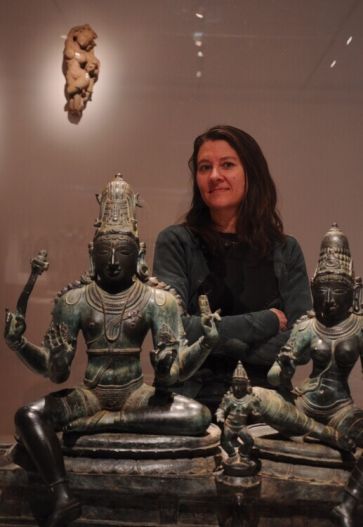
Join us for a talk by Nora Taylor, (Alsdorf Professor of South and Southeast Asian Art History, School of the Art Institute of Chicago), who will discuss contemporary Vietnamese artistic responses to monuments.
This Gatty Lecture will take place at the Kahin Center at 12:20pm, not in Goldwin Smith later in the evening as was previously advertised. For questions, contact seapgatty@cornell.edu.
About the Talk
What do monuments to war heroes and victims of colonialism and American imperialism say to the current generation of Vietnamese, in a country where 80% of the population was born after the end of the war? As demands for dismantling monuments that glorified racism and imperialism arose around the globe in the last decade, how can we consider - or as Mechtild Widrich’s recent book Monumental Cares evokes - care for and about commemorative statues in contemporary Vietnam? Are they still relevant in Vietnam’s rapid changing society or are they merely vestiges of the past? This talk will look at several projects by contemporary Vietnamese artists that engage with the paradoxical nature of monuments and the changing perceptions of historical memory in the aftermath of war and colonialism.
About the Speaker
Nora Annesley Taylor is the Alsdorf Professor of South and Southeast Asian Art at the School of the Art Institute of Chicago. She is the author of Painters in Hanoi: An Ethnography of Vietnamese Art (Hawaii 2004 and Singapore 2009) and the co-editor of Modern and Contemporary Southeast Asian Art: An Anthology (Cornell SEAP 2012) as well as numerous essays on Modern and Contemporary Southeast Asian and Vietnamese Art. In 2013, she was the recipient of a John Solomon Guggenheim Foundation Fellowship. She is currently co-editing with Pamela Corey, Contemporary Art from Vietnam: A Critical Reader forthcoming from the Nguyen Art Foundation in Ho Chi Minh City.
Additional Information
Program
Einaudi Center for International Studies
Southeast Asia Program
Against ‘Colonizers’: Decolonial Idioms and Right-wing Propaganda in Malaysia
March 7, 2024
12:20 pm
Kahin Center
Gatty Lecture Series
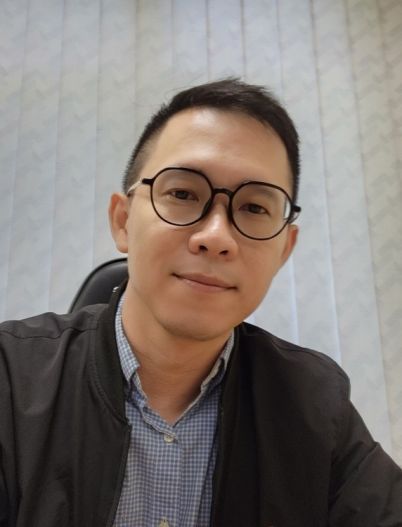
Join us for a talk by Hew Wai Weng, (Research fellow at the Institute of Malaysian and International Studies, National University of Malaysia), who will discuss Decolonial Idioms and Right-wing Propaganda in Malaysia.
This Gatty Lecture will take place at the The Kahin Center, 640 Stewart Ave. Lunch will be served. For questions, contact seapgatty@cornell.edu.
About the Talk
It is often assumed that decolonial discourses will empower emancipatory and anti-racist movements. Yet, in reality, many right-wing activists appropriate decolonial idioms to promote their ultra-nationalist, majoritarian and nativist agenda. In Malaysia, several right-wing groups and individuals routinely use the “decolonial” rhetoric to criticize various ethnic, religious, gender and sexual minorities and to silence their efforts to demand equal rights. In other words, their call to go against ‘colonizers’ is to justify their intolerant stands by simply labelling any perceived threats to ‘heterosexual Malay Muslim identity’ as “foreign intervention”, “Western imperialism”, or “Chinese colonialism”. In this talk, he will first discuss two concurrent trends in Malaysia – the rise of right-wing majoritarianism and the popularity of decolonial discourses. He will then explore how “decolonial” rhetoric feeds into right-wing propaganda, as manifested in political campaigns, social activism, academic writings, and pop culture. Lastly, he goes beyond the Malaysian case study to examine similar trends of right-wing appropriation of “decolonial” discourses in the region (such as in Indonesia) and beyond. This talk aims to draw attention to the possible danger and limitations of decolonial scholarship without totally dismissing its emancipatory potential.
About the Speaker
Hew Wai Weng is a research fellow at the Institute of Malaysian and International Studies, Universiti Kebangsaan Malaysia (IKMAS, UKM). He writes about Chinese Muslim identities, Hui migrations, political Islam, urban middle-class Muslim aspirations and their social media practices in Malaysia and Indonesia. He is the author of ‘Chinese Ways of Being Muslim: Negotiating Ethnicity and Religiosity in Indonesia’ (NIAS Press, 2018). As a visiting fellow at SEAP during 2023-2024, under the Fulbright Malaysia Scholar Program, he researches political Islam and Malay Muslim majoritarianism in contemporary Malaysia by looking at various key actors and their narratives - ranging from politicians, activists, and preachers to influencers.
Additional Information
Program
Einaudi Center for International Studies
Southeast Asia Program