
Einaudi Center for International Studies
Biden Issues Executive Order to Create A.I. Safeguards

Sarah Kreps, PACS
Sarah Kreps, professor of government, notes that there may be challenges in carrying out some of the directives in the executive order issued by President Biden.
Additional Information
CANCELED: Andrew Schonebaum: Animating Forces: Late-Ming and Early-Qing Conceptions of "Plucking Life" (caisheng 採生).
November 3, 2023
3:30 pm
Rockefeller Hall, 375 Asian Studies Lounge
Unfortunately, this 4C's text reading with Andrew Schonebaum is canceled. For more information, please contact: eap-guwen@cornell.edu.
The Cornell Classical Chinese Colloquium (CCCC) 古文品讀 is a reading group for scholars interested in premodern Sinographic text (古文). The group meets monthly during the semester to explore a variety of classical Chinese texts and styles. Other premodern texts linked to classical Chinese in Japanese, Korean, and Vietnamese have been explored. Presentations include works from the earliest times to the 20th century. Workshop sessions are led by local, national, and international scholars.
Participants with any level of classical Chinese experience are welcome to attend.
At each session, a presenter guides the group in a reading of a classical Chinese text. Attendees discuss historical, literary, linguistic, and other aspects of the text, working together to resolve difficulties in comprehension and translation.
No preparation is required; all texts will be distributed at the meeting.Contact eap-guwen@cornell.edu for more information and subscribe to CCCC news for updates about events. Please make sure to send your subscription request from the email address at which you wish to receive CCCC updates.
Cornell faculty hosts are TJ Hinrichs, History, and Suyoung Son, Asian Studies.
Additional Information
Program
Einaudi Center for International Studies
East Asia Program
“Cobalt Red” - Book Talk with Siddharth Kara
November 10, 2023
12:00 pm
Goldwin Smith Hall , Kaufmann Auditorium
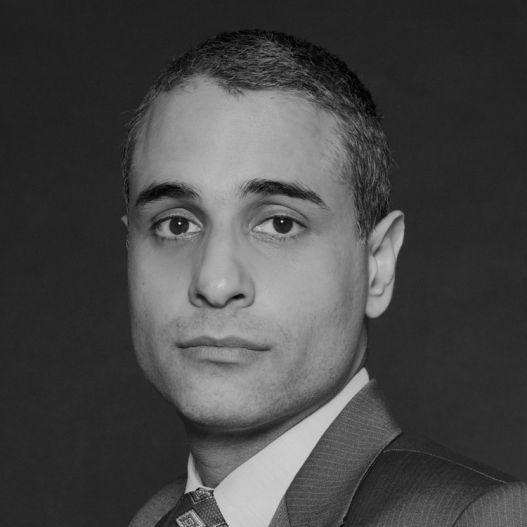
Siddharth Kara is a researcher, activist, and author on modern slavery. He is a British Academy Global Professor and a Visiting Lecturer at the Jeb E. Brooks School at Public Policy. Kara has taught courses on modern slavery at the Harvard Kennedy School, UC Berkeley, and Cornell.
Cobalt Red is the searing, first-ever exposéof the immense toll taken on the people and environment of the Democratic Republic of the Congo by cobalt mining, as told through the testimonies of the Congolese people themselves. Kara has traveled deep into cobalt territory to document the testimonies of the people living, working, and dying for cobalt. To uncover the truth about brutal mining practices, Kara investigated militia-controlled mining areas, traced the supply chain of child-mined cobalt from toxic pit to consumer-facing tech giants, and gathered shocking testimonies of people who endure immense suffering and even die mining cobalt.
Additional Information
Program
Einaudi Center for International Studies
Authoritarian Near Miss: The Future of the Polish Democracy after the Populist Defeat
November 30, 2023
4:30 pm
Uris Hall, G08
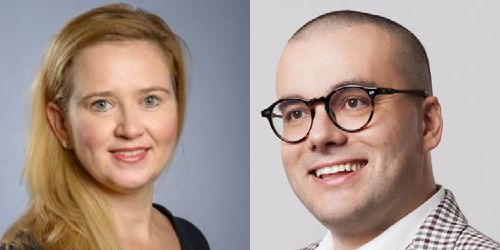
The resounding victory of the Polish opposition on October 15 bewildered many comparative political scientists. The loose coalition of liberals, leftists, and Christian Democrats defied international trends by out-competing the ruling Law and Justice party (“PiS”) in a barely free and grotesquely unfair ballot held eight years after PiS’s 2015 ascent to power. The speakers – prof. Maciej Kisilowski of Central European University in Vienna and prof. Anna Wojciuk of the University of Warsaw – will discuss the significance of the Polish election while resisting the temptation to declare an(other) democratic “end of history.” Instead, they will focus on what can be done to minimize the risk of a future authoritarian recurrence.
They will start by analyzing the possible causes of that unexpected victory. Contrasting the Polish case with other examples of electoral authoritarianism, they will discuss: the role of the US and the EU in preserving democracy in Poland, COVID-related economic and political crises, freedom and pluralism of the media, civil society, and the strategies adopted by democratic opposition.
The second part of the presentation will cover “Umówmy się na Polskę” [“Let’s Agree on Poland”] – a recently published volume edited by Kisilowski and Wojciuk in which a diverse group of 28 Polish intellectuals, representing views from the left to the conservative right, present a comprehensive proposal for a democratic constitutional reform. Acclaimed as “the most important book about Polish politics since 1989” by Poland’s main “Polityka” opinion weekly and as “a decisive step forward in the reconstruction of Polish democracy” by Prof. Bruce Ackerman of Yale University, the volume advocates for a new social contract – a set of constitutional rules accepted by citizens of both progressive and conservative political leanings. The authors argue that the key to developing such rules, and thus to the emergence of a genuinely consolidated democracy in Poland, is greater involvement of provincial and municipal governments, as well as citizens, in the mechanisms of governing the country.
Poland’s deep, geographically asymmetrical polarization makes the country’s challenges remarkably relevant for the US audience. The discussion of the Kisilowski-Wojciuk constitutional proposal for Poland may therefore elucidate the difficult choices that democrats around the world face when dealing with the modern wave of right-wing authoritarian populism.
Additional Information
Program
Einaudi Center for International Studies
Institute for European Studies
Institute for African Development Seminar: GMOs, Food Sovereignty, and the Future of Food in Ghana.

November 15, 2023
2:30 pm
Uris Hall, G08
Register
The seminar series for fall 2023 explores the future of African land, agriculture and food, digging into the contestations, conflicting and converging visions from a wide range of perspectives. How might land be used, valued and lived in, across cities, rural communities, forests, deserts and grasslands on the continent in the future? Who is proposing different visions of land futures in Africa, what are the histories, politics, socio-cultural, environmental and economic implications of these potential visions? In one of the regions with the most youthful populations, how are young people considering possible futures? What are ways that land, agriculture and food systems could be resilient, healthy, ecological, thriving and just? Can there be a decolonial agriculture and food future in Africa that celebrates Indigenous and local foodways?
Additional Information
Program
Einaudi Center for International Studies
Institute for African Development
Support for Times of Crisis

Campus Resources for Cornell's Global Community
On this new page, Global Cornell gathers campus services to help students, faculty, and staff cope with international conflict and turbulent times.
Additional Information
Institute for African Development Seminar: Climate Change and Minning Induced Agricultural Transformation in Ghana

November 8, 2023
2:30 pm
Uris Hall, G08
The seminar series for fall 2023 explores the future of African land, agriculture and food, digging into the contestations, conflicting and converging visions from a wide range of perspectives. How might land be used, valued and lived in, across cities, rural communities, forests, deserts and grasslands on the continent in the future? Who is proposing different visions of land futures in Africa, what are the histories, politics, socio-cultural, environmental and economic implications of these potential visions? In one of the regions with the most youthful populations, how are young people considering possible futures? What are ways that land, agriculture and food systems could be resilient, healthy, ecological, thriving and just? Can there be a decolonial agriculture and food future in Africa that celebrates Indigenous and local foodways?
Additional Information
Program
Einaudi Center for International Studies
Institute for African Development
Cooking and Cooling in an Age of Global Warming
December 1, 2023
3:00 pm
Mann Library, 160
Seminar in Critical Development Studies co-hosted by the Graduate Field of Development Studies, Department of Global Development, the Mario Einaudi Center for International Studies, the South Asia Program, and the Department of Anthropology
Abstract:
Even in north India cities, with their centuries-old practices of living in a hot, dry climate, global warming poses a new challenge. My talk focuses on the shifts brought about by climate change and how they interact with patterns of accelerated urban growth since the 1990s. In particular, I will examine how living conditions are shaped by inequalities in access to decent work and housing, exacerbated by economic liberalization policies. In this context, how does climate change affect the social experience of urban life? From individual households to neighborhoods to wider public spaces, how do people understand and deal with heat? I hope to suggest some avenues for future research by reflecting on my work in Delhi, India.
About the speaker:
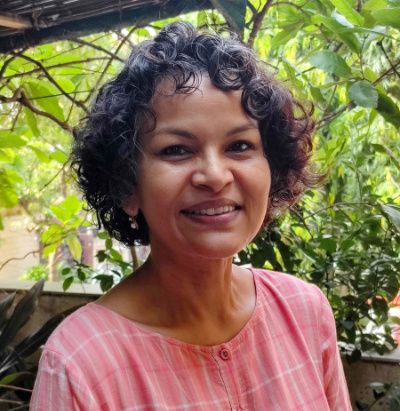
Amita Baviskar is a Professor of Environmental Studies and Sociology and Anthropology at Ashoka University (India). Her research and teaching address the cultural politics of environment and development in rural and urban India. She focuses on the role of social inequality and identities in natural resource conflicts. Currently, she is working on the politics of food and changing agrarian environments in Madhya Pradesh and studying the social experience of air pollution in Delhi.
After studying Economics and Sociology at the University of Delhi, she received a PhD in Development Sociology from Cornell University. Besides working at the Department of Sociology, University of Delhi, and at the Institute of Economic Growth, Delhi, she has been a visiting scholar at several universities including Stanford, Cornell, Yale, SciencesPo, University of California at Berkeley and the University of Cape Town.
Her first book In the Belly of the River: Tribal Conflicts over Development in the Narmada Valley and other writings explore the themes of resource rights, popular resistance and discourses of environmentalism. Her recent publications include the edited books Elite and Everyman: The Cultural Politics of the Indian Middle Classes (with Raka Ray) and First Garden of the Republic: Nature on the President’s Estate. In January 2020, she published Uncivil City: Ecology, Equity and the Commons in Delhi.
Her contributions to developing the field of environmental sociology in India and to the study of social movements have been recognised by her peers. She was awarded the 2005 Malcolm Adiseshiah Award for Distinguished Contributions to Development Studies, the 2008 VKRV Rao Prize for Social Science Research, and the 2010 Infosys Prize for Social Sciences.
Additional Information
Program
Einaudi Center for International Studies
South Asia Program
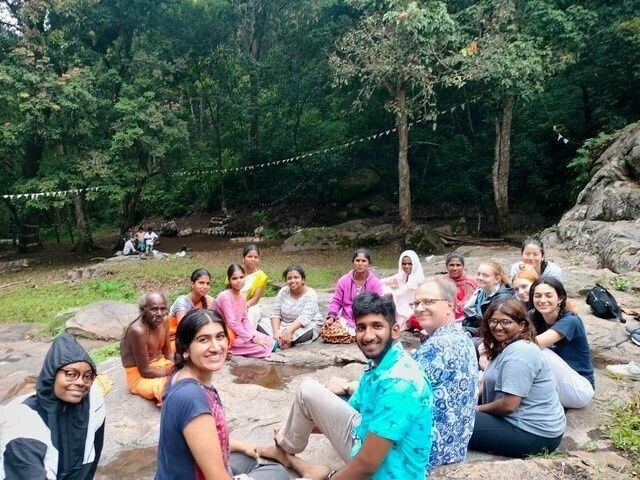
Summer Program in India Info Session
December 5, 2023
5:15 pm
Are you interested in the intersection of mental health and culture, global health, and community engagement? Do you want to gain field research skills and learn about indigenous communities in South India’s beautiful and fragile Nilgiris Biosphere Reserve? If so, the Cornell-Keystone Nilgiris Field Learning Program might be for you!
Additional Information
Program
Einaudi Center for International Studies
South Asia Program
No End in Sight? Prospects for Peace and Justice in Israel-Palestine

October 31, 2023
12:00 pm
The dramatic escalation of violence in Israel and Palestine should prompt not only horror, grief, and dismay, but also reflection and action toward lasting peace and justice.
This virtual panel will provide expert perspectives on past and future prospects for peace and justice in Israel and Palestine. The event will include a moderated discussion with members of the audience.
The goal of this conversation is to deepen understanding by creating a space for dialogue between scholarly experts and individuals with a variety of perspectives and experiences. Our conversation will center humanity and the possibility of future repair, and encourage good faith participation, while also recognizing the trauma and grief that so many in our community are experiencing. Our ability to speak and learn is accompanied by a responsibility to listen and respect human life. We will stand firmly against any attempt to intimidate, threaten, or harass any member of our community, as we continue to seek possibilities for peace and restorative justice.
Panelists
Uriel Abulof, Associate Professor, Politics, Tel Aviv University Leena Dallashesh, Independent ScholarIan Lustick, Professor Emeritus, Bess W. Heyman Chair in Political Science, University of PennsylvaniaModerator
Rebecca Slayton, Judith Reppy Institute for Peace and Conflict Studies Director and Associate Professor, Department of Science & Technology, Cornell University
Register to join this virtual event
Event Host
Judith Reppy Institute for Peace and Conflict Studies, part of the Mario Einaudi Center for International Studies
Cosponsors
Mario Einaudi Center for International Studies
Department of Near Eastern Studies
Additional Information
Program
Einaudi Center for International Studies
Reppy Institute for Peace and Conflict Studies