
Einaudi Center for International Studies
Environmental Justice
November 16, 2023
12:00 pm
Uris Hall, G08
History of a Timely Idea
What do we mean when we talk about environmental justice? Usually, we mean the crucial struggle against specific forms of injustice: dirty factories in poor, Black-majority neighborhoods; unequal access to green space; radioactive waste seeping into Native water supplies; the poisoning of Latinx farm workers; the flight of refugees from drought, famine, fires, and storms.
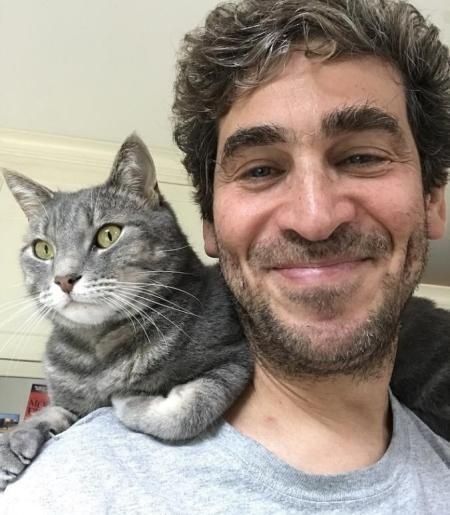
Aaron Sachs, Professor of History at Cornell University, will discuss how environmental justice can also offer a radical, positive vision of collective thriving—as a historical perspective reveals. The idea of environmental justice, connecting the common good to the protection of common, shared environments, goes back centuries. This talk will use the lens of history to reconsider the ways in which environmental justice could shape our common future.
About the speaker
Dr. Aaron Sachs is a Professor of History at Cornell University. His general focus is on nature and culture. He examines how ideas about nature have changed over time and how those changes have mattered in the Western world. He is writing a book called Environmental Justice: History of a Timely Idea, which explores a theme he has worked on since 1995, when he published a pamphlet for the Worldwatch Institute entitled Eco-Justice: Linking Human Rights and the Environment. He was also the founder and coordinator of the Cornell Roundtable on Environmental Studies Topics (CREST), which for a decade brought together faculty and graduate students across all the environmental disciplines on campus.
Host
Judith Reppy Institute for Peace and Conflict Studies
Additional Information
Program
Einaudi Center for International Studies
Reppy Institute for Peace and Conflict Studies
David Cortright: Impacts of Peace Movements on Policy
November 13, 2023
5:00 pm
Physical Sciences Building, 120
Politics and Protest: Historical, Sociological, and Political Perspectives
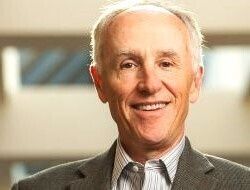
Drawing from first-hand experience and research into the U.S. nuclear freeze movement of the 1980s and the Iraq antiwar movement of 2002-09, David Cortright (University of Notre Dame) will discuss the challenge of attempting to evaluate if policy is shaped by social movements against war and nuclear weapons.
By examining specific episodes and social action campaigns and their impacts, he will review, and in some cases contest, historical and political interpretations of these events. His arguments will engage sociological debates on the boundaries between civil resistance movements and engagement in institutional politics and include a set of conclusions on strategies for peace and disarmament action.
Register to attend the lecture and reception.
About the Speaker
David Cortright is professor emeritus of the practice at the Keough School of Global Affairs at the University of Notre Dame. Previously, Cortright was the director of policy studies at the Keough School’s Kroc Institute for International Peace Studies and director of the institute’s Peace Accords Matrix project, the largest existing collection of implementation data on intrastate peace agreements.
Cortright has written widely about nonviolent social change, nuclear disarmament, and the use of multilateral sanctions and incentives as tools of international peacemaking. He has provided research services to the foreign ministries of Canada, Denmark, Germany, Japan, the Netherlands, Sweden, and Switzerland, and has served as consultant or advisor to agencies of the United Nations, the Carnegie Commission on Preventing Deadly Conflict, the International Peace Academy, and the John D. and Catherine T. MacArthur Foundation.
Hosts and Sponsors
This event is a University Lecture hosted by the Reppy Institute for Peace and Conflict Studies.
Additional Information
Program
Einaudi Center for International Studies
Reppy Institute for Peace and Conflict Studies
Rights Refused: Grassroots Activism and State Violence in Myanmar

November 9, 2023
12:20 pm
Rockefeller Hall, 374
Gatty Lecture Series
Join us for a talk by Elliott Prasse-Freeman, (Assistant Professor, Department of Sociology and Anthropology, National University of Singapore), who will discuss grassroots political activism in Myanmar.
This Gatty Lecture will take place at the Rockefeller Hall 374. Lunch will be served. For questions, contact seapgatty@cornell.edu.
About the Talk
For decades, the outside world mostly knew Myanmar as the site of a valiant human rights struggle against an oppressive military regime, predominantly through the figure of Nobel Peace Prize winner Aung San Suu Kyi. And yet, a closer look at Burmese grassroots sentiments reveals a significant schism between elite human rights cosmopolitans and subaltern Burmese subjects maneuvering under brutal and negligent governance. While elites have endorsed human rights logics, subalterns are ambivalent, often going so far as to refuse rights themselves, seeing in them no more than empty promises. Such alternative perspectives became apparent during Burma’s much-lauded decade-long “transition” from military rule that began in 2011, a period of massive change that saw an explosion of political and social activism. How then do people conduct politics when they lack the legally and symbolically stabilizing force of “rights” to guarantee their incursions against injustice? In this presentation, Elliott Prasse-Freeman describes his recent book on the topic, in which he documents grassroots political activists who advocate for workers and peasants across Burma, covering not only the so-called “democratic transition” from 2011-2021, but it also the February 2021 military coup that ended that experiment and the ongoing mass uprising against it. Taking the reader from protest camps, to flop houses, to prisons, and presenting practices as varied as courtroom immolation, occult cursing ceremonies, and land reoccupations, the talk shows how Burmese subaltern politics compel us to reconsider how rights frameworks operate everywhere.
About the Speaker
Elliott Prasse-Freeman, an assistant professor in the Department of Sociology and Anthropology at the National University of Singapore, received his PhD from the Department of Anthropology at Yale University. He has conducted long-term fieldwork in Myanmar, and his recently published book (Rights Refused, Stanford University Press) foucses on Burmese subaltern political thought as adduced from an extended ethnography of activism and contentious politics in the country's semi-authoritarian setting. Prasse-Freeman also has a book project on Rohingya ethnogenesis and political subjectivity amidst dislocation and mass violence. His work has appeared in journals such as American Ethnologist, Current Anthropology, Journal of Peasant Studies, Public Culture, and Comparative Studies in Society and History, and he's part of the editorial team at Anthropological Theory, a journal you should consider submitting to.
Additional Information
Program
Einaudi Center for International Studies
Southeast Asia Program
Risk, Mobility, and Masculinity: Coming of Age in the Agrarian Borderlands of India and Bangladesh
November 6, 2023
12:15 pm
Uris Hall, G08
Talk by Sahana Ghosh (Anthropology, National University of Singapore)
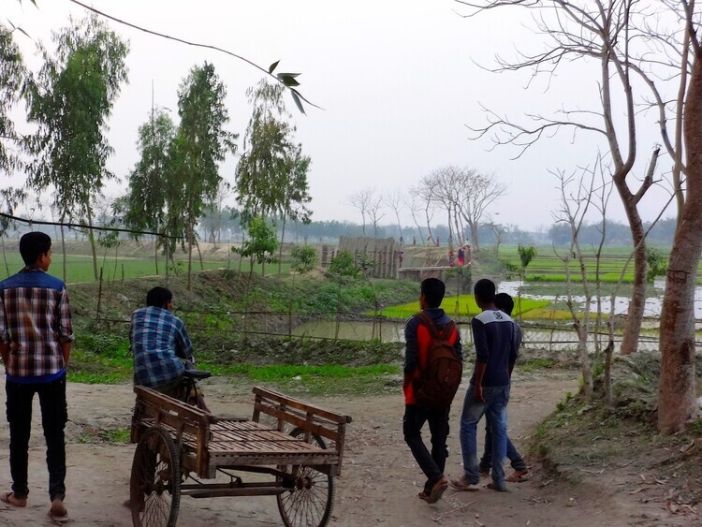
This talk draws on my book, A Thousand Tiny Cuts: Mobility and Security Across the Bangladesh-India Borderlands (2023). It explores how national security practices produce differentiated risks, fundamentally gendered, across a transnational and highly unequal terrain of mobilities across the India-Bangladesh borderlands. Bordering unfolds with a thousand tiny cuts: here the (re)production of masculinity, risk, and national value in agrarian economies occurs with the criminalization of the borderlands and its residents as deserving of violent policing and social reprobation. The talk centers the reflections, decisions, jokes, and critiques of young Bengali men as they come of age and contemplate such a horizon of gendered risks and inequalities.
Sahana Ghosh is a social anthropologist broadly interested in forms and experiences of inequality produced through the intersection of mobility, policing, and gender in our contemporary world. She uses ethnography and feminist approaches to study a range of concerns, such as borders and borderlands, the mobility of people and goods, citizenship, refuge, and neighborliness, the national security state, agrarian change, spatial history, transnational kinship, and the political economy of gendered labor. Ghosh conducts research in India and Bangladesh. Her first book, A Thousand Tiny Cuts: Mobility and Security Across the India-Bangladesh Borderlands, chronicles the slow transformation of a connected region into national borderlands and shows the foundational place of gender and sexuality in the meaning and management of threat and security in relation to mobility. This book recasts a singular focus on border fences and migrants as border-crossers and shows, instead, that postcolonial bordering materializes through multiple forms of violence and devaluation in agrarian, borderland lives. It is under contract with Atelier: Ethnography in the 21st Century, a book series at the University of California Press. Ghosh’s academic writing and photo essays have been published in the American Anthropologist, Current Anthropology, Comparative Studies of South Asia, Africa, and the Middle East, the Economic and Political Weekly, Gender, Place, and Culture, among others. She also contributes to podcasts, op-eds, and photo essays to engage in broader public debates on these topics. She received her Ph.D. in Sociocultural Anthropology and Women’s, Gender, and Sexuality Studies at Yale University. Before joining NUS, Ghosh was a Postdoctoral Fellow at the Harvard Academy for International and Area Studies, Harvard University, and the Watson Institute at Brown University. She also holds an MPhil in Migration Studies from the University of Oxford and a BA and MA in English Literature from Delhi University and Jadavpur University, respectively.
Additional Information
Program
Einaudi Center for International Studies
South Asia Program
EMI Conference 2023: Risks and Realignments
November 3, 2023
9:00 am
Bloomberg Center, Cornell Tech, NYC, Bloomberg Auditorium
Register Here
Featured Speakers:
Iván Duque Former President of Colombia (2018-2022) Colombia
Heather Henyon Founding Partner Mindshift Capital, UAE
Andrew Karolyi Charles Field Knight Dean and Harold Bierman Jr Distinguished Professor of Management Cornell SC Johnson College of Business, USA
Mark Mobius Founding Partner Mobius Capital Partners, UAE
Juan Pablo Ortega Co-founder and CEO Yuno, Puerto Rico
Shaanti Shamdasani CEO & Founder S. ASEAN International Advocacy & Consultancy - SAIAC, Indonesia
Vera Songwe Chair and Founder Liquidity and Sustainability Facility, Africa
Marcos Troyjo Transformational Leadership Fellow University of Oxford
Edward Tse Founder and Chairman Gao Feng Advisory Company, China
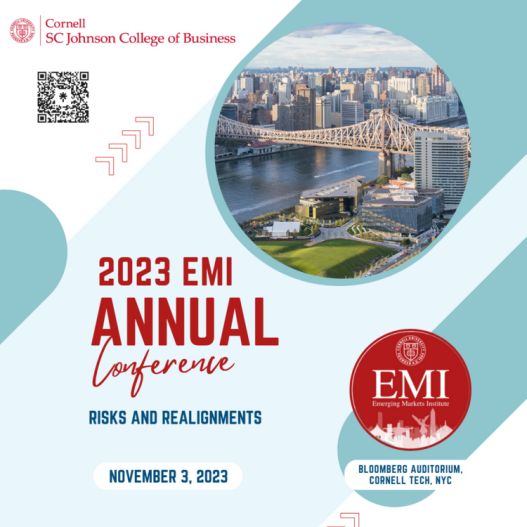
The Cornell Emerging Market Institute Conference is the United States’ leading annual forum for discussing the ongoing trends and phenomena in our world’s rapidly growing emerging markets. Bringing together heads of the world’s largest multilateral institutions and preeminent business, the conference fosters engaging discussions on economic development and this year, specifically, through the lens of global supply chains.
The Conference is hosted at Cornell’s landmark Cornell Tech campus on Roosevelt Island in New York City and will feature a variety of key-note speakers, thought-provoking panel discussions, networking sessions, and two sponsored competitions: the Cornell EMI Mark Mobius Pitch Competition and the Cornell EMI Corning Case Competition. The Conference also marks the launch of the Institute’s Annual Report, a collection of research and articles from the past year developed by researchers within Cornell as well as the Emerging Multinationals Research Network in collaboration with OECD Development Center, UNCTAD, IFC, and Inter-American Development Bank.
This year’s conference is centered around the compelling theme Risks and Realignments:
Emerging markets are in flux—no longer the future, already central to the present. And yet Capital is flowing as if there is doubt, with new partnerships dawning, old questions lingering. The EMI Conference straddles the crossroads, here to capture a seminal moment, when crises — even the specters of financial contagion — may not have to threaten us, so much as invite us to think anew. This Conference reaffirms our commitment to building bridges, as risks spill over, as potential realignments draw closer. The conference will hold 4 panels, the Cañizares Award ceremony, and the competition finals:
Central Bank Digital Currencies: Looking Back and Looking ForwardReorganizing investments in Emerging MarketsRealignments: Multilaterals and Sovereign Wealth FundsLaunch of the EMI Report 2023Cornell EMI Corning Case CompetitionCornell EMI Mark Mobius Pitch CompetitionJoin us.
Cornell University’s Emerging Market Institute is holding its annual conference on November 3rd at Cornell Tech on Roosevelt Island, NYC.
The Emerging Markets Institute holds an Annual Conference every first Friday of November, in which Emerging Markets are brought to the forefront of discussion. Within the conference, EMI also holds the finals of the and the . Stay connected to the EMI Conference website to find more about the speakers and agenda, and follow our newsletter.
Additional Information
Program
Einaudi Center for International Studies
Latin American and Caribbean Studies
South Asia Program
East Asia Program
Phantom Threads: Haute Couture in the Philippine Camelot of Ferdinand and Imelda Marcos
November 2, 2023
12:20 pm
Rockefeller Hall, 374
Gatty Lecture Series
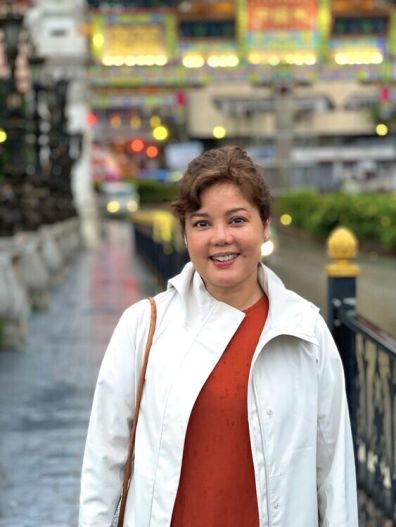
Join us for a talk by Talitha Espiritu, (Associate Professor of Film and New Media, Wheaton College), who will discuss the myth-making of Ferdinand and Imelda Marcos’ conjugal dictatorship in the Philippines.
This Gatty Lecture will take place at the Rockefeller Hall 374. Lunch will be served, and this event is co-sponsored by the Department of Performing and Media Arts. For questions, contact seapgatty@cornell.edu.
About the Talk
My talk will explore the sartorial in the myth-making of Ferdinand and Imelda Marcos’ conjugal dictatorship in the Philippines (1965-1986). I will focus on fashion designer Christian Espiritu, Imelda Marcos’ chief couturier, who created her iconic image dressed in the Philippine terno, the traditional women’s formal wear, which she wore in all her state visits and state events. I will reconstruct and unpack the elevation of the terno into a state sign and the creative input of fashion designers in the public culture and cultural policy of the dictatorship.
About the Speaker
Talitha Espiritu teaches in the Film and New Media department at Wheaton College in Norton, Massachusetts, where she also co-chairs the college’s Diversity, Equity and Access Leadership Team. Her book, Passionate Revolutions: the Media and the Rise and Fall of the Marcos Regime is available from Ohio University Press. Recent publications include a round table article on the 2022 Philippine elections for Contemporary Southeast Asia and she was recently interviewed about the Marcos regime on NPR’s Throughline podcast series.
Additional Information
Program
Einaudi Center for International Studies
Southeast Asia Program
Oppenheimer's Legacy
November 2, 2023
12:00 pm
Uris Hall, G08
Nonproliferation and Disarmament Today, A Nuclear Reckoning
Building on renewed awareness of nuclear dangers arising from Christopher Nolan's epic film, the presentation assesses the status of the international nonproliferation regime and the increased risk of the use of nuclear weapons arising from Russia's war of aggression in Ukraine. The nonproliferation regime has been relatively successful in preventing the cascade of nuclear weapons development that some feared early in the atomic age, although significant proliferation dangers remain. Russian threats of nuclear weapons use and the risk of catastrophe at the Zaporizhzhia atomic station recently prompted the Bulletin of Atomic Scientists to move the hands of its iconic clock closer to midnight than at any time since Oppenheimer and his colleagues created these weapons 78 years ago. The talk explores strategies for containing proliferation dangers and renewing the impetus for nuclear arms reduction and disarmament.
About the Speaker
David Cortright is professor emeritus of the practice at the Keough School of Global Affairs at the University of Notre Dame. Previously, Cortright was the director of policy studies at the Keough School’s Kroc Institute for International Peace Studies and director of the institute’s Peace Accords Matrix project, the largest existing collection of implementation data on intrastate peace agreements.
Cortright has written widely about nonviolent social change, nuclear disarmament, and the use of multilateral sanctions and incentives as tools of international peacemaking. He has provided research services to the foreign ministries of Canada, Denmark, Germany, Japan, the Netherlands, Sweden, and Switzerland, and has served as a consultant or advisor to agencies of the United Nations, the Carnegie Commission on Preventing Deadly Conflict, the International Peace Academy, and the John D. and Catherine T. MacArthur Foundation.
Host
Judith Reppy Institute for Peace and Conflict Studies
Additional Information
Program
Einaudi Center for International Studies
Reppy Institute for Peace and Conflict Studies
Pu Wang, Brandeis University: How Long is a Contemporary Chinese Poem?
October 30, 2023
4:45 pm
Goldwin Smith Hall, 64 Kaufman Auditorium
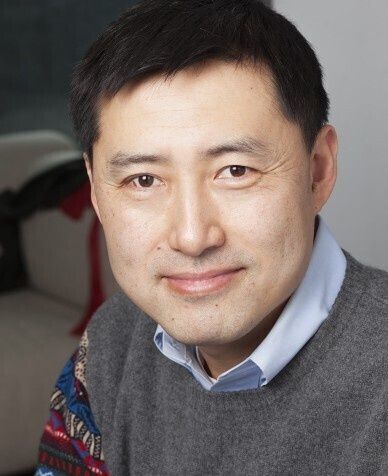
Pu Wang, Professor of Chinese, Russian and Asian Languages and Literature, at Brandeis University, traces the outburst of the writing of long poems by mainland Chinese poets since the turn of the century. These longer experimental texts, together with the debates revolving around them, have formed a key yet controversial intervention into contemporary cultural-political changes in China and beyond.
Pu Wang is an Associate Professor of Chinese and Chair of the Comparative Literature Program at Brandeis University. He is the author of The Translatability of Revolution: Guo Moruo and Twentieth-Century Chinese Culture (2018). He is also an acclaimed poet writing in Chinese, having published two books of verse. He translated Walter Benjamin: A Critical Life into Chinese.
Introduced by Kevin Dong, PhD Asian Studies graduate student; co-hosted by the EAP Graduate Student Steering Committee
Please note: this event will not be recorded and is solely in-person unless special access is required due to accessibility needs.
Additional Information
Program
Einaudi Center for International Studies
East Asia Program
Lingua Mater Competition Deadline
November 9, 2023
12:00 am
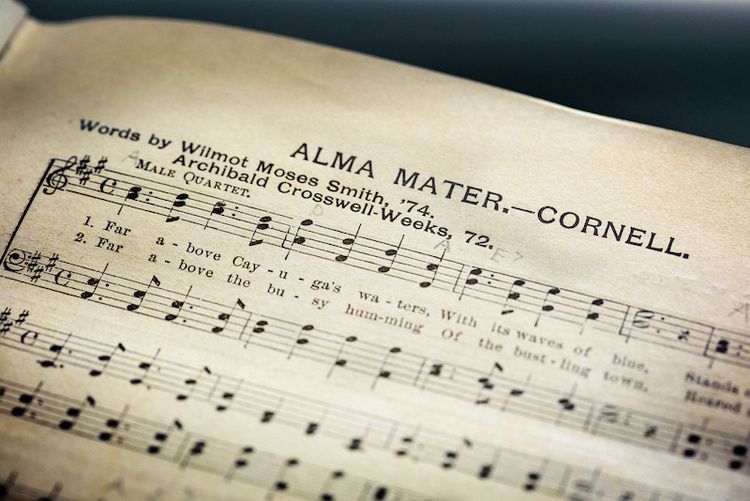
The Lingua Mater competition invites students and alumni to translate Cornell's Alma Mater into a different language and submit a video of the performed translation. The inaugural Lingua Mater alumni competition took place in 2018 as part of Cornell's Global Grand Challenges Symposium. The top videos received cash prizes.
2023 competition details
Can you translate Cornell’s Alma Mater into your mother tongue (or a language you are learning/have learned at Cornell) and sing it? We invite you to translate “Far Above Cayuga’s Waters” and submit a video of you (and your friends!) performing it, wherever you may be!
Translations do not need to be exact or perfectly in meter but should capture the feel and tune of our university’s Alma Mater. As is customary, include the first verse, refrain, second verse, and refrain in your video submission (for guidance, listen to a performance and read the lyrics).
Video submissions need to be MP4 files at 1920 x 1080 (1080p), in landscape mode with an aspect ratio of 16:9. Please ensure that you have copyright permission for any images/videos you use.
Entries will be reviewed by a panel of judges. Submissions will be judged equally on the translation, the musical quality, and the creativity in visual presentation.
The top three student entries will win cash prizes, the top alumni entry will receive financial support and Cornell swag for a local alumni event.
Winners will be announced during International Education Week (November 13-17, 2023), and the top video will be posted online that week. For alumni, be sure to subscribe to our weekly newsletter to stay in the know of this competition and international alumni activities.
Student entries may be submitted by any registered Cornell student or group of students.
Alumni entries may be submitted by any Cornell alumni groups outside of the United States and Canada.
Submission deadline: Thursday, November 9, 2023
SUBMIT YOUR VIDEO AND LYRICS HERE
Please contact Angelika Kraemer, Director of the Language Resource Center, if you have any questions.
The Lingua Mater competition is co-sponsored by the Language Resource Center, the Office of the Vice Provost for International Affairs, and the Office of International Alumni Relations.
Additional Information
Program
Einaudi Center for International Studies
Southeast Asia Program
Institute for European Studies
South Asia Program
The Next Monsoon: Climate Change and Contemporary Cultural Production in South Asia

October 29, 2023
10:00 am
Johnson Museum of Art
Three-day conference: Friday, October 27 to Sunday, October 29.
South Asia is an empirical microcosm of the ecological and epistemological upending caused by climate change. Forming a quarter of the world's population and inhabiting tremendous cultural and geographic diversity, South Asia provides a unique case study for examining the challenges of climate change on diverse cultural forms. Climate change has indelibly altered landscapes and people, from Bangladeshi river deltas to Nepali mountaintops to Pakistani deserts to Indian megalopolises to Maldivian islands.
This conference thus asks: How is climate change rendered in visual arts, cinema, literature, and architecture in South Asia? How do projects of cultural expression render visibility to place-based narratives in South Asia? A humanistic approach to climate change entails developing modes of attention to a world yet to come. Centering the human imagination in the scientized field of climate change engenders a view of environmental variation over time that highlights the flexibility, resilience, and persistence of human life and its relation to the nonhuman worlds. Such a perspective links meaning and materiality, ingenuity, imagination, literature and livelihoods, subsistence, and stories.
The full conference schedule is now available.
Supported by grants from the National Endowment for the Humanities and the Central New York Humanities Corridor. Cosponsored by the Johnson Museum of Art and its Stoikov Asian Art Lecture Fund.
Additional Information
Program
Einaudi Center for International Studies
South Asia Program