
Einaudi Center for International Studies
Reinscribing P’u-tuan in the Metanarrative of Early Southeast Asia
October 26, 2023
12:20 pm
Rockefeller Hall, 374
Gatty Lecture Series
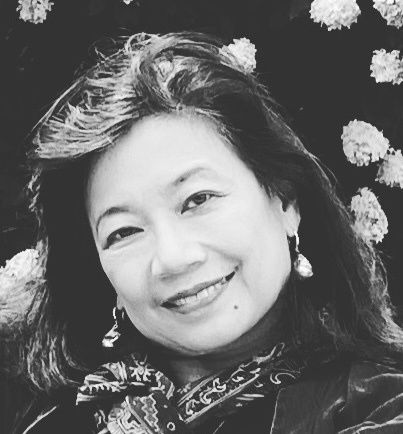
Join us for a talk by Nina Baker Capistrano, (Consulting Curator and Special Projects Consultant, Ayala Museum, Philippines), who will discuss reinscribing P’u-tuan (Butuan) in the metanarrative of Early Southeast Asia.
This Gatty Lecture will take place at the Rockefeller Hall 374. Lunch will be served, and this event is co-sponsored by the Department of History of Art, and by the Cornell Institute for Archaeology and Material Science. For questions, contact seapgatty@cornell.edu.
About the Talk
Maps delineate the imagined contours of history and empire. Exclusion from cartographic representations thus marginalizes, blurs, and erases narratives and geographies. This paper attempts to recover and reinscribe the enigmatic polity of P’u-tuan (Butuan) on northeastern Mindanao, Philippines, in the metanarrative of Early Southeast Asia. The arrival of trade missions from P’u-tuan at the Chinese imperial court in the 11th century is documented in the Song Shih (Song History) compiled in 1345 from earlier sources. The early polity’s existence is confirmed as well by archaeological excavations conducted by the National Museum of the Philippines since the 1970s. Archaeologists suggest the existence of a port settlement actively engaged in maritime trade between the 10th-13th centuries at the mouth of the Agusan River near Butuan Bay. The archaeological record further suggests that commercial activities ceased and the settlement declined after the 13th century. The purported decline and ‘mysterious disappearance’ of Butuan is disputed in part by a glorious description of the king of Butuan in the 16th century written by Italian chronicler Antonio Pigafetta, who accompanied Ferdinand Magellan in the Spanish expedition that arrived in the Philippines in 1521. This paper re-examines early accounts, documents, and related concepts in light of material evidence from Butuan and neighboring cultures to gain insight into early interregional connectivities.
About the Speaker
Florina H. Capistrano-Baker received the PhD, MPhil, and MA from the Department of Art History and Archaeology at Columbia University. She was formerly museum director of the Ayala Museum (Philippines) where she is currently consulting curator and special projects consultant. Since 2000, her research has focused on Philippine specificities within a metanarrative of global exchange between the 10th-13th and 16th-19th centuries. Her book Philippine Ancestral Gold (Ayala Foundation and NUS Press, 2011) documents previously unpublished material suggesting early trade with neighbors in the Indian Ocean and South China Sea. In 2015 she co-curated the exhibition “Philippine Gold: Treasures of Forgotten Kingdoms” at the Asia Society Museum in New York and authored the exhibition catalogue of the same title (Ayala Foundation and Asia Society, 2015). She is co-editor of the volume Transpacific Engagements: Trade, Translation, and Visual Culture of Entangled Empires, 1565-1898 (Ayala Foundation with the Getty Research Institute and Kunsthistorisches Institut in Florenz, 2021). Her scholarly work has been supported by grants from Columbia University, Ford Foundation, Asian Cultural Council, American Association of University Women, Japan Foundation, Locsin Foundation, the Metropolitan Museum of Art, and the Getty Research Institute.
Additional Information
Program
Einaudi Center for International Studies
Southeast Asia Program
How Russia's Invasion of Ukraine is Changing Europe
October 26, 2023
12:00 pm
Uris Hall, G08
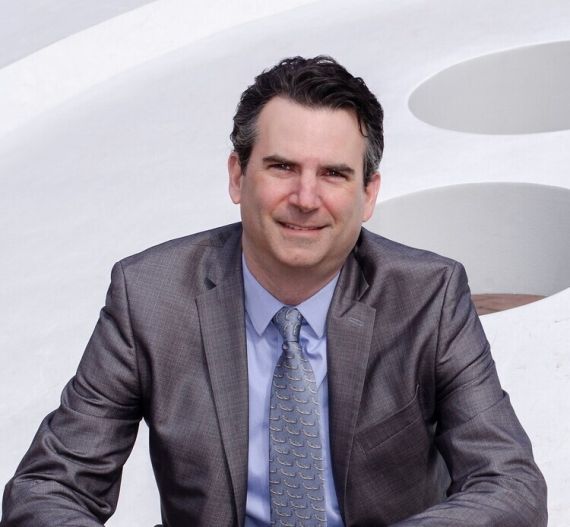
Mitchell A. Orenstein, Professor of Russian and East European Studies at the University of Pennsylvania, will discuss how Russia's full-scale invasion of Ukraine on February 24, 2022 changed Europe. It shattered any remaining illusions that the EU could achieve peaceful coexistence with Russia through greater integration and united Europe instead around NATO. While Europe quickly reshaped its energy strategy and imposed unified sanctions on Russia, the invasion revealed Europe's continuing reliance on the United States for basic security and initiated a period of soul searching about Europe's lack of "strategic autonomy." Central and East European states that had long warned of Russia's violent intentions rose in importance, while France and Germany saw their influence diminished after decades of accommodating Russia. European leaders had to admit that they had been wrong to ignore the warnings of front-line states. In addition, the invasion reignited European Union and NATO enlargement, with Finland and Sweden joining NATO and Ukraine and Moldova offered EU candidate status. The result of these trends is a more geopolitical Europe with a sharper dividing line between an internal zone of integration and an external zone of power projection.
About the speaker
Dr. Mitchell Orenstein is Professor of Russian and East European Studies at the University of Pennsylvania and Senior Fellow at Foreign Policy Research Institute. His sole-authored and co-authored works on the political economy and international affairs of Central and Eastern Europe have won numerous prizes. His most recent book, Taking Stock of Shock (Oxford University Press, 2021), co-authored with Prof. Kristen Ghodsee, evaluates the social consequences of the 1989 revolutions that ended communism in Central and Eastern Europe and the former Soviet Union. Orenstein is also the author of The Lands in Between: Russia vs. The West and the New Politics of Hybrid War (Oxford University Press, 2019), a study of how intensifying geopolitical conflict has shaped politics in the lands in between Russia and the West.
Cohosts
Institute for European Studies
Judith Reppy Institute for Peace and Conflict Studies
Additional Information
Program
Einaudi Center for International Studies
Reppy Institute for Peace and Conflict Studies
Institute for European Studies
Between War and the State: Civil Society in South Vietnam, 1954–1975
October 19, 2023
12:20 pm
Rockefeller Hall, 374
Gatty Lecture Series
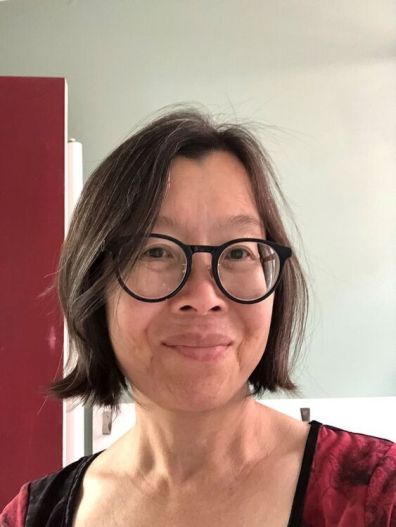
Join us for a talk by Van Nguyen Marshall, (Associate Professor of History at Trent University), who will discuss associational life in South Vietnam, 1954-1975.
This Gatty Lecture will take place at the Rockefeller Hall 374. Lunch will be served. For questions, contact seapgatty@cornell.edu.
About the Talk
In Between War and the State, Van Nguyen-Marshall examines an array of voluntary activities, including mutual-help, professional, charitable, community development, student, women's, and rights organizations active in South Vietnam from 1954 to 1975. By bringing focus to the public lives of South Vietnamese people, Between War and the State challenges persistent stereotypes of South Vietnam as a place without society or agency. Such robust associational life underscores how an active civil society survived despite difficulties imposed by the war, government restrictions, economic hardship, and external political forces. These competing political forces, which included the United States, Western aid agencies, and Vietnamese communist agents, created a highly competitive arena wherein the South Vietnamese state did not have a monopoly on persuasive or coercive power. To maintain its influence, the state sometimes needed to accommodate groups and limit its use of violence. Civil society participants in South Vietnam leveraged their social connections, made alliances, appealed to the domestic and international public, and used street protests to voice their concerns, secure their interests, and carry out their activities.
About the Speaker
Van Nguyen-Marshall is Associate Professor in the Department of History at Trent University with particular research interests in Modern Vietnamese History, focusing on associational life, civil society, and the Vietnam War. She is the author of In Search of Moral Authority: The Discourse on Poverty, Poor Relief, and Charity in French Colonial Vietnam (Frankfurt: Peter Lang, 2008) and the recently published Between War and the State: Vietnamese Voluntary Association in South Vietnam (1954-1975) (Ithaca: Cornell University Press, 2023).
Additional Information
Program
Einaudi Center for International Studies
Southeast Asia Program
Between War and the State: Civil Society in South Vietnam, 1954–1975
October 19, 2023
12:20 pm
Rockefeller Hall, 374
Gatty Lecture Series
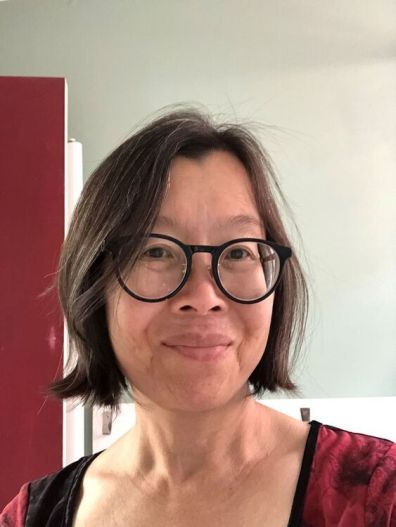
Join us for a talk by Van Nguyen Marshall, (Associate Professor of History, Trent University), who will discuss the public lives of South Vietnamese people, Between War and the State.
This Gatty Lecture will take place at the Rockefeller Hall 374. Lunch will be served. For questions, contact seapgatty@cornell.edu.
About the Talk
In Between War and the State, Van Nguyen-Marshall examines an array of voluntary activities, including mutual-help, professional, charitable, community development, student, women's, and rights organizations active in South Vietnam from 1954 to 1975. By bringing focus to the public lives of South Vietnamese people, Between War and the State challenges persistent stereotypes of South Vietnam as a place without society or agency. Such robust associational life underscores how an active civil society survived despite difficulties imposed by the war, government restrictions, economic hardship, and external political forces. These competing political forces, which included the United States, Western aid agencies, and Vietnamese communist agents, created a highly competitive arena wherein the South Vietnamese state did not have a monopoly on persuasive or coercive power. To maintain its influence, the state sometimes needed to accommodate groups and limit its use of violence. Civil society participants in South Vietnam leveraged their social connections, made alliances, appealed to the domestic and international public, and used street protests to voice their concerns, secure their interests, and carry out their activities.
About the Speaker
Van Nguyen-Marshall is Associate Professor in the Department of History at Trent University with particular research interests in Modern Vietnamese History, focusing on associational life, civil society, and the Vietnam War. She is the author of In Search of Moral Authority: The Discourse on Poverty, Poor Relief, and Charity in French Colonial Vietnam (Frankfurt: Peter Lang, 2008) and the recently published Between War and the State: Vietnamese Voluntary Association in South Vietnam (1954-1975) (Ithaca: Cornell University Press, 2023).
Additional Information
Program
Einaudi Center for International Studies
Southeast Asia Program
Queers for Peace
October 19, 2023
12:00 pm
Uris Hall, G08
Stories of Queer Feminist Alliances in the Peacebuilding Movement
Lesbian feminist organizing has played a significant role in women’s peacebuilding work, including anti-war and abolitionist organizing. Yet women’s lesbian and queer identities as a part of their organizing are continually marginalized in the histories of the women’s peacebuilding movement and feminist strategies for resisting patriarchal violence. What can explain the silence about these lesbian and queer lives, especially as told about the American and UK women’s peacebuilding movements?
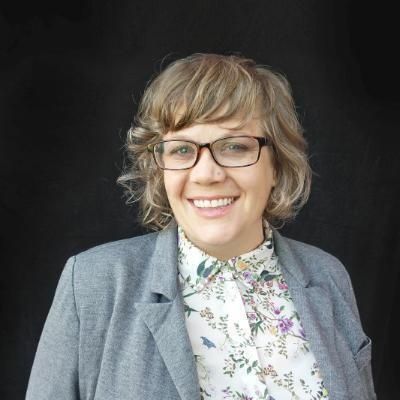
Jamie Hagen, Lecturer in International Relations at Queen’s University Belfast, will discuss how this silencing perpetuates heteronormative practices in gender, peace, and security work. Her research surfaces stories of queer women in organizing for peace, both past and present. Part of this work is also articulating the complex ways people align themselves with LGBTQ identities and how this has shifted historically when working in international security spaces such as the United Nations.
About the Speaker
Dr. Jamie J. Hagen is a Lecturer in International Relations at Queen’s University Belfast, where she is the founding co-director of the Centre for Gender in Politics. Her work sits at the intersection of gender, security studies, and queer theory. Jamie brings a feminist, anti-racist approach to her work, bridging gaps between academic, policy, and activist spaces. She is the lead researcher on a British Academy Innovation Fellowship (2022-2023) focusing on improving engagement with lesbian, bisexual, transgender, and queer women in Women, Peace, and Security Programming. She is co-editor of the forthcoming edited volume Queer Conflict Research: New Approaches to the Study of Political Violence (BUP).
Host
Judith Reppy Institute for Peace and Conflict Studies
Additional Information
Program
Einaudi Center for International Studies
Reppy Institute for Peace and Conflict Studies
Timothy Cheek “Guiding the People: Chinese Statecraft from Confucian Literati to Communist Cadres”
September 25, 2023
4:45 pm
Goldwin Smith Hall, GSH64 Kaufman Auditorium
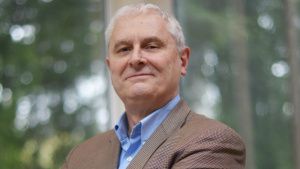
Timothy Cheek, History, University of British Columbia kicks off this semester's CCCI lecture series with the theme of "China, the Central State and All Under Heaven."
How is China governed? It is a question on our minds today as the rule of Xi Jinping in China challenges American hopes and stokes our fears. Is it Communist? Capitalist? Confucian? Making sense of Chinese statecraft, or of how any state is governed, requires not only political analysis but also some sense of the context, inherited problems, sense of self, that is, of its history.
This is a fundamental historiographical challenge: how and in what ways can knowledge of past practice inform our understanding of later or current practice? How can specific knowledge of history inform, deepen, challenge, and open up new questions about what we think we know of our present rather than simply reinforcing our current assumptions and prejudices?
This lecture explores that challenge to the practice of history through the example of one sort of governance—state-sponsored, village-based local public education in civic virtues. This state attempt to create ideal subjects began with the Confucians of the early 11th century, continued in rural education programs in Republican China in the 1930s, re-emerged in Communist ideological remolding campaigns under Mao, and appeared once again in political study sessions in Xi Jinping’s China today.
China: The Central State and All Under Heaven is the theme of this semester's CCCI lecture series directed by Professor Yue (Mara) Du, History, Cornell. At the core of the “China Dream” and China’s rise in power on the global stage is the Chinese Communist Party’s proclaimed role in the “great rejuvenation of the Chinese Nation”—a restoration of China’s historical glory and its rightful place as a “Central State” of “All under Heaven.” To achieve this goal, China’s current leader Xi Jinping requires the party “not to forget the original intention,” which could be interpreted as either a return to Marxist-Leninist fundamentalism, to Mao’s integration of “Marx” and Legalism of China's first imperial dynasty, to Republican ethnonationalism, or to state Confucianism combined with territorial expansion in imperial China. As China’s past looms large in its present, understanding the historical relationship between the "Central State" and "All under Heaven" is critical for our analysis of China’s economy, society, politics, and international engagement at the present and in the future.
The Cornell Contemporary China Initiative lecture series is co-sponsored by The Levinson China and Asia-Pacific Studies Program, Cornell Society for the Humanities, and the Department of History.
Additional Information
Program
Einaudi Center for International Studies
East Asia Program
The Return of the Native: Can Liberalism Safeguard Us Against Nativism?
October 2, 2023
5:30 pm
Uris Hall, G08
This talk, based on the 2022 book with the same title, explores how diverse phenomena, such as populism, anti-black racism, and islamophobia in various countries share the same core: nativism. It Includes an in-depth, original analysis of political developments in three countries: the US, France, and the Netherlands, some of the most liberal countries in the world, and shows why liberalism is not a safeguard against the rise of nativism. The talk offers a distinct approach from alternate explanations of the rise of far-right nativist discourses.
Speaker
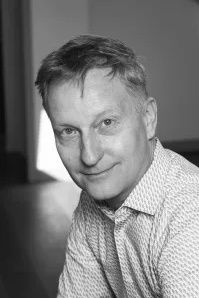
Jan Willem Duyvendak is the Director of the Netherlands Institute for Advanced Study in the Humanities and Social Sciences (NIAS-KNAW) and Distinguished Research Professor of Sociology at the University of Amsterdam (UvA). His main fields of research currently are belonging, urban sociology, 'feeling at home' and nativism.
Additional Information
Program
Institute for European Studies
Einaudi Center for International Studies
Earth Just Had Its Hottest Month Ever. How Six Cities Are Coping.

Jeremy Wallace, EAP
“There is a real irony of climate extremes here because the principal fear in Beijing has always been not enough water and desertification, but the images that we’re seeing have been absolutely terrifying flooding in the city,” says Jeremy Wallace, professor of government.
Additional Information
Labor Costs Are a Key Ingredient in Food Inflation
Chris Barrett, IAD/SEAP
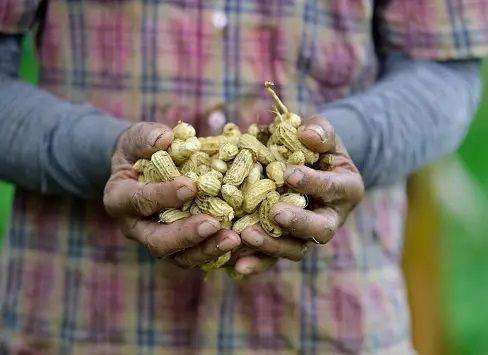
Chris Barrett, professor of agricultural and development economics, discusses how labor costs contribute to food inflation.
Additional Information
China’s Economic Miracle Is Turning into a Long Slog

Eswar Prasad, SAP/Einaudi
Eswar Prasad, professor of international trade policy and economics, says, “It is a perilous moment because of the possibility that you could have declining growth, faltering confidence, and price deflation all leading to a downward spiral and reinforcing each other.”