
Einaudi Center for International Studies
RRR

October 30, 2022
4:00 pm
Willard Straight Theatre
2021 > India > Directed by S.S. Rajmouli
With N.T. Rama Rao Jr (Jr NTR), Ram Charan, Ajay Devgn
An action-packed spectacular that mythologizes two real-life freedom fighters who helped lead India's fight for independence from the British Raj: Komaram Bheem (Jr NTR) and Alluri Sitarama Raju (Ram Charan). RRR imagines a fictional meeting between the two fighters amid staggeringly choreographed action sequences and an all-timer of a musical number. Screening with an intermission. Subtitled.
3 hrs 1 min
Additional Information
Program
Einaudi Center for International Studies
South Asia Program
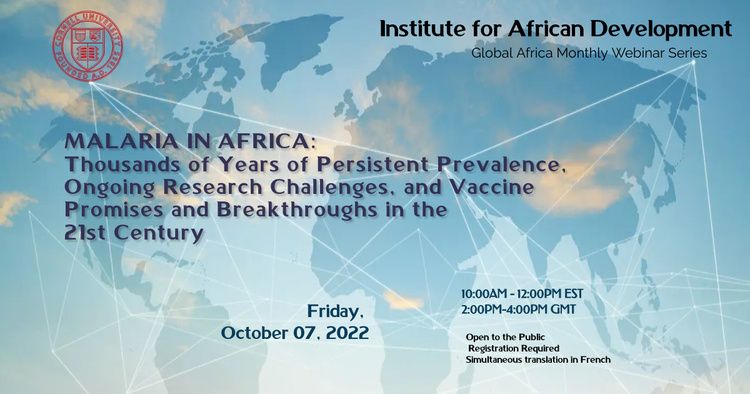
IAD Webinar: MALARIA IN AFRICA: Thousands of Years of Persistent Prevalence, Ongoing Research Challenges, and Vaccine Promises and Breakthroughs in the 21st Century
October 7, 2022
10:00 am
The Cornell Institute for African Development (IAD) hosts a monthly webinar on contemporary African issues. This webinar series features diverse voices from the African continent and the Diaspora on a wide range of themes, challenges, breakthroughs in cutting-edge research outcomes, innovations, and discoveries across all disciplines and area studies. The topics include climate change, the environment, gender, education, the economy, health, governance, creative arts, Indigenous knowledge systems, the youth, and the recent/ongoing COVID-19 pandemic. Other key topics deal with engaged research and academic issues on theory, critical thinking, approaches, methodologies, and fundamental and applied research in the development process. The webinar is open to the global academic public and all are welcome to participate.
Additional Information
Program
Einaudi Center for International Studies
Institute for African Development
Why African Nations Are Mostly Silent on China’s Rights Record

Magnus Fiskesjö, PACS/EAP/SEAP
“South Africa, with its proud tradition as a shining example for human rights, struggles now, saying nothing about China’s apartheid,” says Magnus Fiskesjo, associate professor of anthropology.
Additional Information
Aftershocks

War in Ukraine Reshapes World Order
Einaudi panelists appeared with Ann Simmons, the Wall Street Journal’s Moscow bureau chief, in a Sept. 22 event. Watch the video at eCornell.
Additional Information
Mr Klein

October 23, 2022
7:00 pm
Willard Straight Theatre
1976 > France > Directed by Joseph Losey
With Alain Delon, Jeanne Moreau, Michel Lonsdale, Francine Berge
A political thriller, an existential nightmare, and an indictment of French collaboration under Nazi Occupation, Losey's masterful film stars Alain Delon as Mr. Klein, a Catholic art dealer who gets confused with another Mr. Klein, a Jew. "A slow-burning French thriller... Suffused not only with history, but also with echoes of Kafka, Dostoyevsky and the clipped paranoia of Losey's collaborations with Harold Pinter." (NY Times) Shown in a new 4K Restoration. Subtitled. More at www.rialtopictures.com/catalogue/mr-klein
2 hrs 3 min
MR. KLEIN - 4K Restoration Trailer from Rialto Pictures on Vimeo.
Additional Information
Program
Einaudi Center for International Studies
Murina

October 9, 2022
7:00 pm
Willard Straight Theatre
2021 > Croatia/Brazil/US/Slovenia > Directed by Antoneta Alamat Kusijanovic
With Gracija Filipovic, Danica Curcic, Leon Luce, Cliff Curtis
In this "sunshine noir" (Variety), a 17-year-old girl spends her days diving for eels with her overbearing father off Croatia's Adriatic coast, envying the tourists sunning nearby. Then a rich, handsome, mysterious stranger appears with an offer to buy their land. "Beautiful scenery, nuanced performances, and canny filmmaking provide one of the most memorable coming-of-age stories of the 2020s so far." (Film Threat) Winner of Cannes' Camera d'Or. Subtitled. More at www.kinolorber.com/film/view/id/5305
1 hr 36 min
Additional Information
Program
Einaudi Center for International Studies
Memoria
October 16, 2022
7:00 pm
Willard Straight Theatre
2021 > Thailand/Colombia > Directed by Apichatpong Weerasethakul
With Tilda Swinton, Elkin D’az, Jeanne Balibar
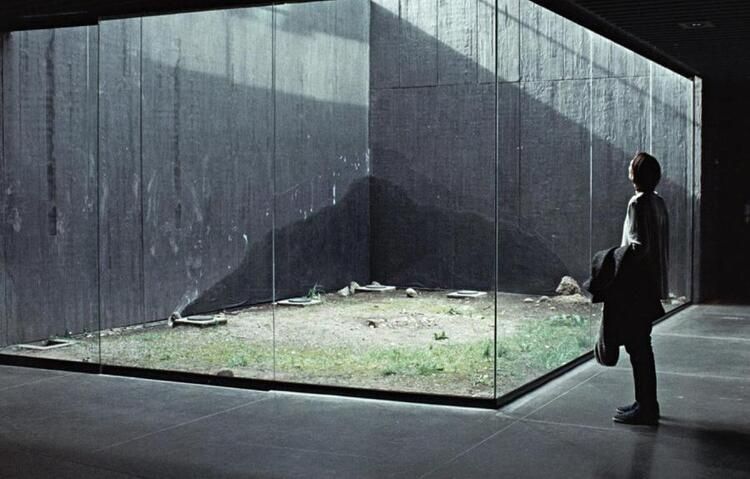
Winner of the Jury Prize at the 2021 Cannes Film Festival and following a unique roadshow distribution model that supposedly will never make the film available via online streaming, Apichatpong Weerasethakul's latest film stars Tilda Swinton as a woman suffering from sudden loud, mysterious sounds that only she can hear. Haunted by the noise, she seeks out answers, ultimately leading her to the interior of the lush Colombian jungle, and to a place where past, present, and future coexist. Subtitled. More at neonrated.com/films/memoria
2 hrs 16 min
Additional Information
Program
Einaudi Center for International Studies
A Night of Knowing Nothing
October 12, 2022
7:15 pm
Willard Straight Theatre
2021 > India, France > Directed by Payal Kapadia
With Bhumisuta Das
Through a series of fictional letters between two anonymous lovers, a whirlwind of fantasy, reality, dream, memory and feeling emerges, as Indian students take to the streets to protest the right-wing government and widespread injustice. A Night of Knowing Nothing is both a love letter to cinema, and an alarming wake-up call, all at once. Subtitled. More at www.cinemaguild.com/theatrical/anightofknowingnothing.html
1 hr 37 min
Additional Information
Program
Einaudi Center for International Studies
South Asia Program
Inu-Oh

October 2, 2022
9:00 pm
Willard Straight Theatre
2021 > Japan > Directed by Masaaki Yuasa
With Avu-chan, Mirai Moriyama, Kenjir™ Tsuda, Yutaka Matsushige
A musical fantasy about a pair of 14th century rockstars in feudal Japan. Psychedelic colors, painterly art styles and a head-banging soundtrack make this story of two cursed artists against the world an absolute must-see for anime fans everywhere. Subtitled. More at gkids.com/films/inu-oh
1 hr 38 min
Additional Information
Program
Einaudi Center for International Studies
Migration, Ethnicity/Race, Gender, and Labor Market Inequality in Sub-Saharan Africa & the Asia-Pacific Region

October 7, 2022
9:00 am
ILR Conference Center
Scholars from Ghana, South Africa, Singapore, China, Japan, Australia, the Netherlands, the United Arab Emirates, Canada and the U.S. will present research on labor market inequality for global migrants in the Sub-Saharan Africa and Asia-Pacific regions.
Invited Conference to be held at the ILR Conference Center on Thursday October 6th (afternoon) and Friday October 7th (all day). Attendees are welcome, please register here.
Additional Information
Program
East Asia Program
Einaudi Center for International Studies