
Einaudi Center for International Studies
Family History as U.S. Immigration History

July 26, 2022
10:00 am
Recovering and propagating family histories can be a strategy to identify and dismantle how U.S. immigration policies have institutionalized the racial exclusion of targeted groups, even as they mask the selective inclusion of legal immigrants. Madeline Y. Hsu will discuss the family history origins of her two monographs to explore intersections between the personal and the political and the possibilities of scholarship as an aspect of activism.
Madeline Y. Hsu is professor of history at the University of Texas at Austin and is presently representative-at-large for the International Society for the Study of Chinese Overseas. She was born in Columbia, Missouri but grew up in Taiwan and Hong Kong between visits with her grandparents at their store in Altheimer, Arkansas.
This lecture is a part of the Migrations Summer Pathways program.
Additional Information
Program
Einaudi Center for International Studies
Downfall of the American Order?

New Book from Katzenstein and Kirshner
An edited volume from Peter Katzenstein and Jonathan Kirshner considers what comes next as the U.S.'s international influence wanes.
Additional Information
Companies Add Immigration Reimbursement to List of Benefits
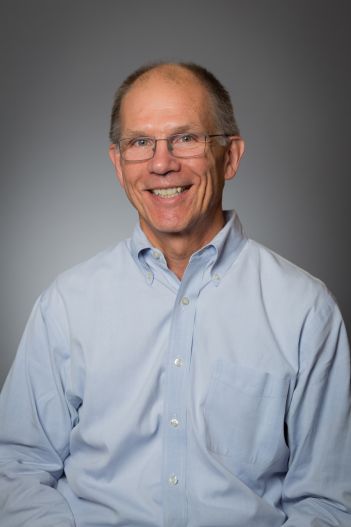
Stephen Yale-Loehr, Migrations
"This is a new trend because of the tight labor market and employers need to figure out how to both attract and retain workers," said Stephen Yale-Loehr, professor of immigration law. "And with foreign workers being a growing part of the employment base, benefits to foreign-born workers is increasingly one way that they can entice people to come work for them or to stay with them."
Additional Information
Immigration Research Using Quantitative and Social Demographic Methods
July 27, 2022
10:00 am
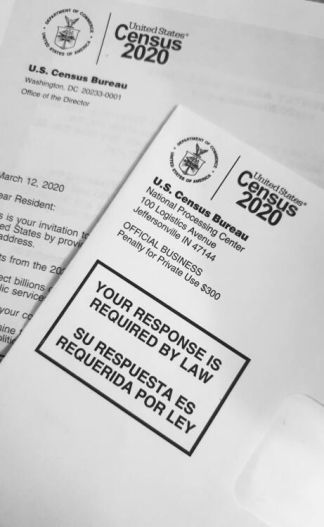
Immigrants have set down roots and continue to arrive in local communities across the United States. If we want to know where immigrant families and residents are thriving (or falling behind), then quantitative analyses offer many opportunities to compare and contrast where immigrants make the most of local resources and networks (and where such opportunities remain stunted). Census, survey, administrative, and newly emerging data sources can hold important insights — if we have the tools to leverage such information in order to answer pressing social questions.
Juan Pedroza, assistant professor of sociology at University of California, Santa Cruz, will present this lecture on his work about the changing landscape of immigration in the United States. Over the past decade, he has examined the vast inequalities of immigrants' access to justice, the social safety net, poverty, and segregation. His research examines how and where deportation and enforcement initiatives exacerbate these inequalities and leave imprints in our local communities.
This lecture is a part of the Migrations Summer Pathways program.
Additional Information
Program
Einaudi Center for International Studies
"Figures of the Future: Latino Civil Rights and the Politics of Demographic Change"

July 25, 2022
11:00 am
For decades, numbers and narratives about ethnoracial demographic change have flooded U.S. public life. Yet, to date, scholarly attention has been more concerned with the sources and consequences of projected trends than with the political struggles and meaning-making processes through we have come to envision and sense demographic change in the first place.
Drawing on his book, Figures of the Futures: Latino Civil Rights and Politics of Demographic Change (Princeton University Press, 2021), Michael Rodríguez-Muñiz will explore the racialized population politics of national Latino civil rights organizations. Specifically, it shows how Latino advocates have worked—and struggled—to render the “Latino demographic” and its growth politically potent and socially palatable. Along with insights into the contemporary state of Latino civil rights advocacy, the talk offers conceptual tools and methodological insights to challenge essentialist, deterministic, and depoliticized treatments of population dynamics.
Michael Rodríguez-Muñiz is associate professor of sociology at the University of California, Berkeley. His research and teaching concerns the intersections of race, politics, and knowledge, with an emphasis on Latinx communities and movements.
This lecture is a part of the Migrations Summer Pathways program.
Additional Information
Program
Einaudi Center for International Studies
Language Resource Center Speaker Series - Luana Reis
August 29, 2022
4:00 pm
Stimson Hall, G25
"Black Feminist Poetics and Language Teaching"
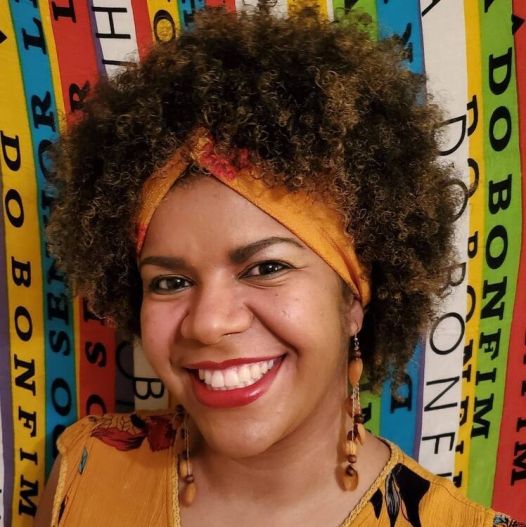
Luana Reis
Ph.D. Candidate and Portuguese Instructor, University of Pittsburgh
This talk discusses the inclusion of Black feminist poetic texts in language teaching. The objective is to rethink the roles of students and teachers in the classroom environment and contribute to inspiring new ideas and teaching practices. Black women's voices in poetry may promote the development of pedagogical proposals that encourage a critical reading of the world in educational practices.
Bio: Luana Reis is a poet, educator, and Black feminist scholar. She is currently a Ph.D. candidate in Literature at the University of Pittsburgh, where she teaches Portuguese and conducts research on Contemporary Black Women Literature and Quilombismo/Maroonage. As founder and president of the poetry collective, "ADDverse+Poesia" (@addversepoesia), she brings writers and audiences together across the hemisphere, using the power of poetry for engaging a range of issues – particularly race and gender, freedom and refuge, and language and identity. She is a board member of Mulherio das Letras - USA chapter, a collective of researchers and creative writers whose goal is to unite the voices of women from the Lusophone world who live in the United States. She is also one of the coordinators of the "KilombaCollective," the first collective formed by Black Brazilian women in the United States.
This event will be held in person in G25 Stimson and will also be streamed live over Zoom. Join us at the LRC or on Zoom.
The event is free and open to the public. Campus visitors and members of the public must adhere to Cornell's public health requirements for events.
Co-sponsored by the Language Resource Center, the Latin American and Caribbean Studies Program, and the Institute of African Development through their respective Undergraduate International Studies and Foreign Language (UISFL) grants from the U.S. Department of Education.
Additional Information
Program
Einaudi Center for International Studies
Latin American and Caribbean Studies
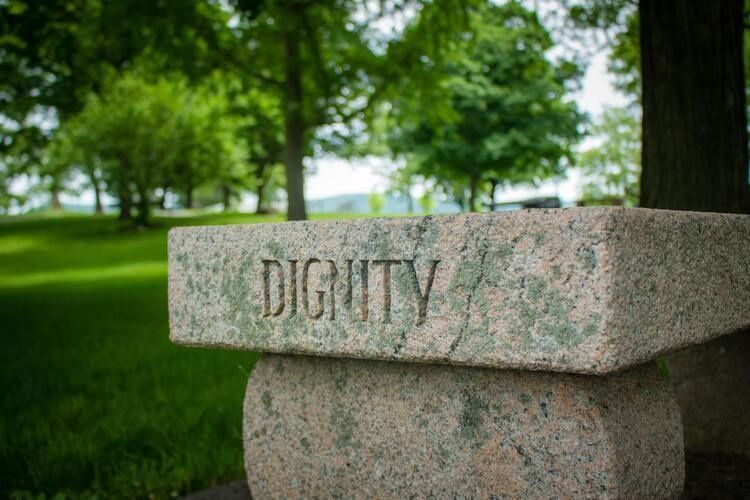
Dignity Takings and Dignity Restoration
July 22, 2022
10:00 am
Law scholars Bernadette Atuahene (Illinois Institute of Technology) and Mishuana Goeman (UCLA) will present this lecture at the annual Migrations summer institute. The talk highlights the institutes themes of dispossession and its ongoing effects in Africa and the Americas.
Bernadette Atuahene is a professor of law at the Chicago-Ken College of Law at the Illinois Institute of Technology.
Mishuana Goeman is a University of Buffalo Center for Diversity Innovation Distinguished Visiting Scholar. She is also a professor of gender studies, American Indian studies, and affiliated faculty of Critical Race Studies in the Law School at UCLA.
This event is part of the Migrations initiative's summer institute, co-sponsored by the Mario Einaudi Center for International Studies.
Additional Information
Program
Einaudi Center for International Studies
Transcending Stereotypes of Native Films

July 18, 2022
2:00 pm
Filmmaker Ginew Benton is a Native American filmmaker local to the Hamptons, NY. Benton wrote, starred, and directed in the 2018 film Looking Glass about a Native man who creates a time machine using modern science and ancient knowledge to stop his fathers murder and ultimately discovers his true purpose in creation.
As part of the Migrations initiative's summer institute, co-sponsored by the Mario Einaudi Center for International Studies, Benton will give a public lecture on transcending stereotypes of native films.
Additional Information
Program
Einaudi Center for International Studies
ISSI 2022
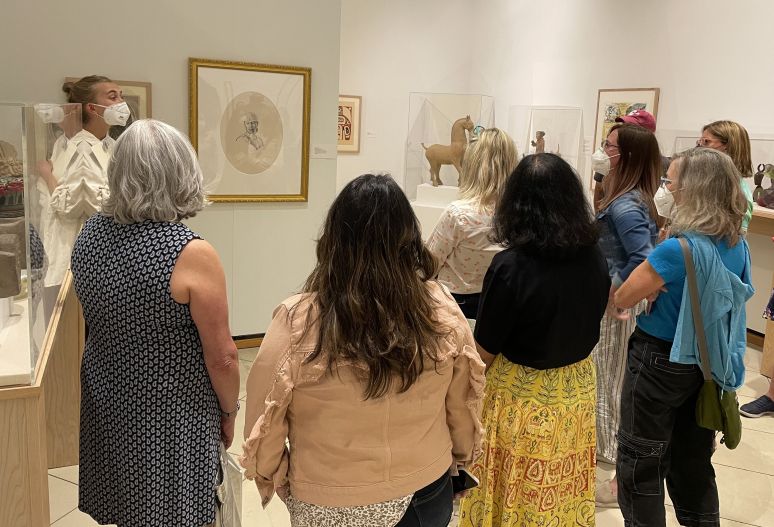
Institute for K–12 Teachers Highlights Global Inequalities
Einaudi's regional programs hosted more than 30 teachers from across central New York for professional development on the Cornell campus.
Additional Information
The (Un)Livable City: Food and Embodied Ambivalence in India's IT Capital

October 3, 2022
12:15 pm
Uris Hall, G08
Talk by Camille Frazier
With its emergence as India’s IT Capital, Bengaluru [Bangalore] has experienced exponential growth since the early 1990s. The rapid pace of urbanization has provoked intense ambivalence among members of the urban middle class, many of whom are both beneficiaries and critics of the city’s transformation. As boulevard trees make way for elevated highways, residents of Bengaluru and its outskirts narrate their city as poised at the edge, between the glamour of a globally-connected IT hub and the destruction of a cityscape trapped in unyielding processes of urbanization. This talk explores middle-class narratives and practices of livability to detail a kind of life-making anchored in aspiration yet simultaneously haunted by broader socioeconomic, ecological, and ethical concerns that destabilize estimations of present and future wellbeing. I capture this tension by examining efforts to reconfigure fresh fruit and vegetable supply chains to address middle-class concerns and desires (both experienced and imagined). Food networks figure as sites wherein the effects of a rapidly-developing metropolis are embodied, narrated, and critiqued. Whether through urban gardening workshops or corporate claims-making about “direct” connections with farmers, food offers a critical locus for class-specific mediations of urban livability that shape everyday life. As a form of negotiation over the present and future of the developing city and the lives it supports (and neglects), efforts to rework Bengaluru’s food system highlight the embodied ambivalences of urban transformation and estimations of current and future wellbeing in South Asia and beyond.
Camille Frazier is Assistant Professor of Anthropology in the Department of Humanities and Social Sciences at Clarkson University. Her ethnographic research explores the concept of livability as a sociopolitical, ecological, and ethical category. She is particularly interested in how changing food networks figure as sites for diverse evaluations of wellbeing. Her current book project examines these themes in the context of Bengaluru, India.
Additional Information
Program
Einaudi Center for International Studies
South Asia Program