
Einaudi Center for International Studies
The Coming Enlightenment: The University Sector and Reparatory Justice for Slavery and Colonialism
September 16, 2022
4:30 pm
Rhodes-Rawlings
Postcolonial discourse has called into question the historic Western Enlightenment by demonstrating its links to violent colonialism, chattel slavery, Indigenous genocide, and persistent institutional and cultural racism.
Sir Hilary Beckles suggests that the growing global reparatory justice movement—particularly as it emanates from the higher education sector—may present the best potential for an authentic 21st-century Enlightenment. Universities are now deeply researching their role, functions, and legacies within the Atlantic slave complex and exploring where these discursive discoveries, as crimes against humanity, will lead—back into the future or forward against the past.
Join the lecture live in the Rhodes-Rawlings Auditorium in Klarman Hall! In-person attendees have the chance to enchange ideas with Beckles during a Q&A session following the lecture. Or join the lecture virtually by registering at eCornell.
About the Speaker
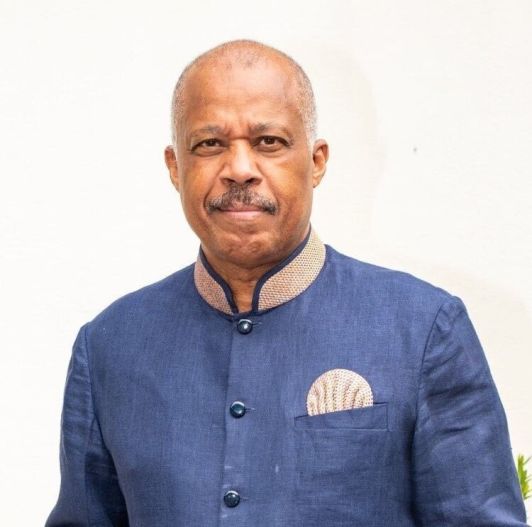
Sir Hilary Beckles, eighth vice chancellor of the University of the West Indies, is a distinguished academic, international thought leader, United Nations committee official, and global public activist in the field of social justice and minority empowerment.
He received his higher education in the United Kingdom and is professor of economic history. He has lectured extensively in Europe, the Americas, Africa, and Asia. He has published over 100 peer reviewed essays in scholarly journals and over 13 books on subjects ranging from Atlantic and Caribbean History, to gender relations in the Caribbean, sport development, and popular culture.
Beckles is president of Universities Caribbean, chair of the Caribbean Examinations Council, chair of the CARICOM Reparations Commission, and advisor on sustainable development to former United Nations secretary-general Ban Ki-moon. He was knighted by the government of Barbados. He has received numerous honorary doctorates from around the world and recently received the Martin Luther King Jr. Peace and Freedom Award.
Hosts and Sponsors
Beckles' lecture and campus visit are part of the Mario Einaudi Center for International Studies' Distinguished Speaker series and ongoing work on Inequalities, Identities, and Justice. The lecture is the closing event in the 60th anniversary Public Issues Forum series of the Einaudi Center's Latin American and Caribbean Studies Program.
The event is funded in part by the A.D. White Professor-At-Large Program, the Migrations initiative, and a LACS Undergraduate International Studies and Foreign Language (UISFL) grant from the U.S. Department of Education.
Additional Information
Program
Einaudi Center for International Studies
Latin American and Caribbean Studies
Institute for European Studies
The closed and the Open Prison: Contested Imaginaries and the Limits of Openness
November 28, 2022
12:15 pm
Uris Hall, G08
Talk by Trishna Senapaty
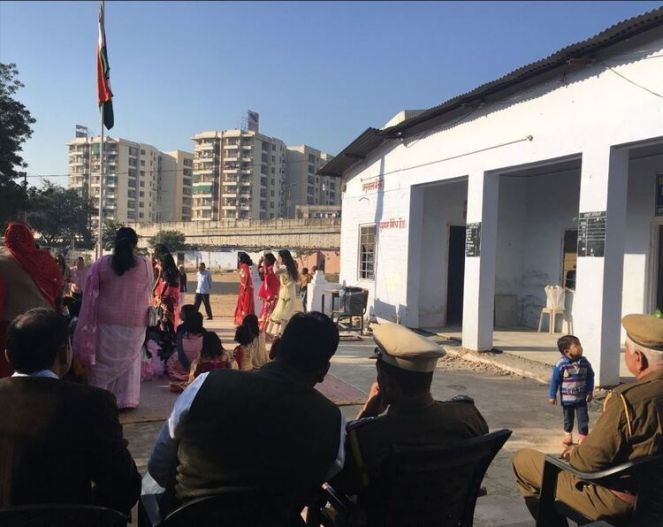
This talk explores the conceptual landscape of open prisons in India. Open prisons are institutions intended to facilitate prisoner rehabilitation by permitting them to live in small dwellings with their families and earn livelihoods outside their boundary walls. The talk delves into the tensions between how 'openness' is conceived in prison reform documents and the multiple ways in which it is imagined and materialized through everyday practices. It focuses on a specific open prison in Rajasthan, India, which is considered exceptional even as far as open prisons are concerned, both for its scale and forms of community. It draws attention to its histories and modes of governance that incrementally shape its socio-spatial landscape. This is followed by an interrogation of the elevated status this specific prison enjoys in penal discourse as an idealized community of reformed prisoners while underscoring the open prison's overall potential as a shifting institutional form. By drawing on ethnographic research conducted with activists, advocates, formerly incarcerated persons, and open prison residents, this talk contributes to the study of governance, political and legal institutions, and the carceral state.
Trishna Senapaty is an SSRC IDRF fellow and a PhD candidate in the department of anthropology at Cornell University. Her interests at the intersection of feminist and carceral studies are informed by her experiences working as an educator and volunteer in prisons in India and the US. Her research focuses on prisons and custodial institutions in India, transformative politics and spaces, and anti-carceral socio-legal formations.
Additional Information
Program
Einaudi Center for International Studies
South Asia Program
Deep Solidarity?: Reflections on Post-colonial Solidarities in a Moment of National and Global Crisis

October 31, 2022
11:00 am
Talk by Harshana Rambukwella
This talk explores what solidarity might mean in the current geo-political context through the specific example of postcolonial Sri Lanka, which is experiencing an existential threat unprecedented in the country's contemporary history. Mired in a deep and intractable economic and governance crisis, the country's future looks dark. But despite this despondent outlook, a youth-led protest movement transcends the many institutional, social, and economic fault lines that have characterized Sri Lanka's postcolonial history has emerged. I argue that this movement represents a form of 'deep solidarity' that stands in contrast to other iterations of solidarity, such as enchanted and disenchanted solidarities and vertical and hierarchical solidarities often marred by instrumentalist motives shaped by geo-political power and other forms of instrumental power structures. Exploring the actual protest movement and literary entanglements with the notion of solidarity, I offer a series of critical reflections on the limits and possibilities of solidarity in postcolonial societies. I argue that deep solidarity is a tenuous and, at times, idealistic but, nevertheless, morally and even pragmatically superior alternative to other ways in which solidarity has been imagined.
Harshana Rambukwella is a professor in English at the Postgraduate Institute of English, the Open University of Sri Lanka. Currently, he is a guest professor at the Geography Department at the University of Zurich and shortly before was a Visiting Fellow at the Institute for Human Sciences (Institut für die Wissenschaften vom Menschen) in Vienna. He was the Sri Lanka Chair at the South Asia Institute in Heidelberg in 2019 and a fellow at the Institute for Advanced Human Sciences at the University of Edinburgh, Scotland. He is the author of The Politics and Poetics of Authenticity: A Cultural Genealogy of Sinhala Nationalism (UCL Press 2018) and has published in journals such as boundary 2, the Journal of Asian Studies, Journal of Commonwealth Literature and Postcolonial Text, among others. He is an Associate Editor of the Journal of Sociolinguistics and serves on the editorial board of the International Journal of the Sociology of Language. Harshana is active in promoting Anglophone literature as a Trustee of the Gratiaen Prize for English creative writing instituted by Michael Ondaatje and is also a member of the State Literary Panel of Sri Lanka. With a primary focus on postcolonial and comparative literature and theory, Harshana’s work is interdisciplinary in nature and spans fields such as sociolinguistics, nationalism, and history.
Additional Information
Program
Einaudi Center for International Studies
South Asia Program
Reppy Institute for Peace and Conflict Studies
Chile Will Vote on Free Tuition

Kenneth Roberts, LACS
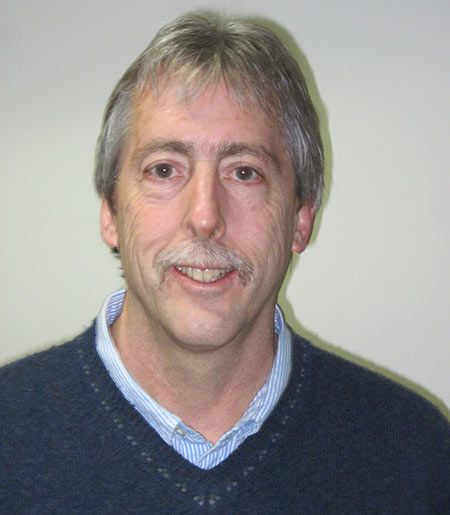
Constitutional changes will face significant opposition from the more conservative elements of Chilean society, says Kenneth Roberts, professor of government, but the polls are likely to narrow as the date of the vote approaches.
Additional Information
Skyrocketing Global Fuel Prices Threaten Livelihoods and Social Stability

Eswar Prasad, SAP
“The simultaneous rise in energy and food prices is a double punch in the gut for the poor in practically every country,” says Eswar Prasad, professor of international trade policy and economics, “and could have devastating consequences in some corners of the world if it persists for an extended period.”
Additional Information
Chile Mulls Scrapping Fees as Ex-student Leader Takes Presidency
Kenneth Roberts, LACS
Ken Roberts comments on efforts to change Chile’s constitution and include “bold commitments to higher education reforms.”
Additional Information
Biden Administration Can Drop “Remain in Mexico” Policy, But What Will It Use Instead?
Stephen Yale-Loehr, Migrations
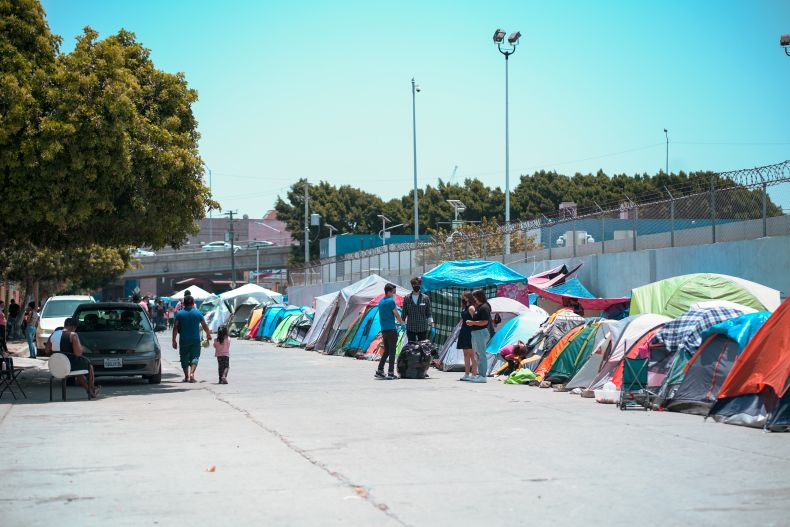
“The court today recognized that this is really part of a bigger political problem of not enough funding for our broken immigration system,” said Stephen Yale-Loehr, who teaches immigration law at Cornell.
Additional Information
Indigenous Creative Critique and Curating Anti-Colonial Expressive Culture

July 19, 2022
2:00 pm
This talk from Kyle T. Mays explores the meaning and importance of Indigenous creatives using expressive culture in the fight for Indigenous autonomy and sovereignty. Using contemporary examples of Indigenous Hip Hop, or what he calls "Indigenous Creative Critique," this talk argues for the possibilities created by Indigenous artists in their quest to bring awareness to urban dispossession and erasure within U.S. society.
Kyle T. Mays (he/his) Kyle T. is an Afro-Indigenous scholar of Afro-Indigenous history, urban studies and contemporary popular culture. He is an associate professor in the departments of African American Studies, American Indian Studies, and History at UCLA. He is the author of City of Dispossessions: Indigenous Peoples, African Americans, and the Creation of Modern Detroit (University of Pennsylvania Press, 2022), An Afro-Indigenous History of the United States (Beacon Press 2021), and Hip Hop Beats, Indigenous Rhymes: Modernity and Hip Hop in Indigenous North America (SUNY Press, 2018).
This event is part of the Migrations initiative's summer institute, co-sponsored by the Mario Einaudi Center for International Studies.
Additional Information
Program
Einaudi Center for International Studies
Perspective Taking and Security Dilemma Thinking: Experimental Evidence from China and the United States

November 17, 2022
11:25 am
Uris Hall, G08
Professor Ryan Brutger explains that one of the central challenges in China-US relations is the risk of a security dilemma between China and the United States, as each side carries out actions for what it perceives to be defensively-motivated reasons, failing to realize how it is perceived by the other side. Yet how susceptible to the psychological biases that undergird the security dilemma are the Chinese and American publics? Can their deleterious effects be mitigated?
The speaker explores the microfoundations of the security dilemma, fielding parallel dyadic cross-national survey experiments in China and the United States. Micro-level evidence is found to be consistent with the logic of the security dilemma in publics in both countries. IR scholars have overstated the palliative effects of perspective taking, which can backfire in the face of perceived threats to actors' identities and goals. These findings have important implications for the study of public opinion in China-US relations, and perspective taking in IR.
About the Speaker
Ryan Brutger is an Assistant Professor of Political Science at the University of California, Berkeley. He earned his Ph.D. from the Department of Politics at Princeton University. Prior to joining Berkeley, he was an Assistant Professor at the University of Pennsylvania.
Moderator
Paul Lushenko is a U.S. Army Lieutenant Colonel and a Ph.D. student in International Relations at Cornell University.
***
Presented by the Reppy Institute for Peace and Conflict Studies. Co-sponsored by the East Asia Program, the Department of Government, and the Gender and Security Sector Lab.
Additional Information
Program
Einaudi Center for International Studies
Reppy Institute for Peace and Conflict Studies
East Asia Program
International Fair 2022

August 31, 2022
11:00 am
Uris Hall, Terrace
The annual International Fair showcases Cornell's global opportunities for undergraduate and graduate students. Explore the fair and find out about international majors and minors, language study, study abroad, funding opportunities, global internships, and more.
The International Fair is sponsored by the Mario Einaudi Center for International Studies, the Office of Global Learning (both part of Global Cornell), and Cornell's Language Resource Center.
Additional Information
Program
Einaudi Center for International Studies
Reppy Institute for Peace and Conflict Studies
East Asia Program
Southeast Asia Program
Latin American and Caribbean Studies
Institute for African Development
Institute for European Studies
South Asia Program