
Einaudi Center for International Studies
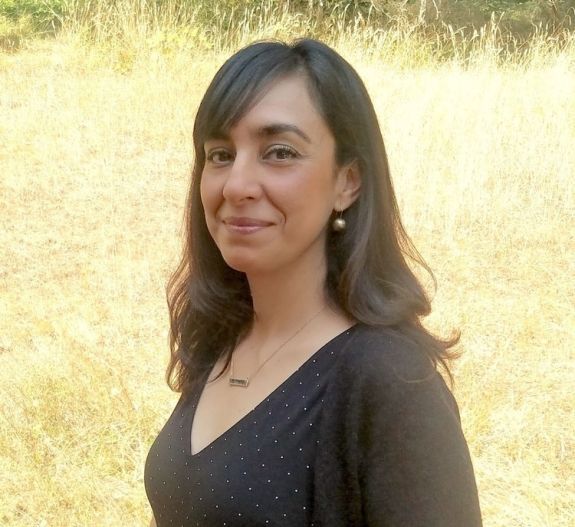
Language Resource Center Speaker Series - Claudia Holguín Mendoza
October 28, 2022
4:30 pm
"Antiracist Critical Literacy: Methodologies of the Oppressed for Language Education"
Claudia Holguín Mendoza
Associate Professor of Spanish Linguistics, University of California, Riverside
In this presentation, Dr. Holguín Mendoza describes the design and implementation of a comprehensive critical literacy and Critical Language Awareness (CLA)-oriented Spanish Heritage Language (SHL) program that deconstructs and questions sociopolitical hierarchies, challenges the subordination of SHL students' linguistic practices, and elevates students' voices and agency. She underscores the importance of building critical SHL programs on three interrelated foundations: stakeholder engagement, curriculum, and assessment. A truly comprehensive critical literacy and CLA-oriented program must integrate critical teacher training with a wide stakeholder engagement that serves to build on strengths from across the institution and to position the SHL program as a promoter of Latinx student success. Sociolinguistic justice and antiracist transformation through literacy occur when we critically understand how language and sociocultural access and expertise are socially constructed. Finally, Dr. Holguín Mendoza describes assessment tools that have demonstrated how comprehensive critical literacy programs have proven to be a valuable model for language education and student empowerment.
Bio: Dr. Claudia Holguín Mendoza is an Associate Professor of Spanish linguistics at the University of California, Riverside. She specializes in the sociolinguistics of race in the Mexican borderlands and Greater Mexico as well as critical pedagogies for the teaching of Spanish as a heritage language. She publishes in both English and Spanish and her work has appeared in journals such as International Multilingual Research Journal, Hispania, Studies in Hispanic & Lusophone Linguistics, Identities, and Frontera Norte.
This event will be held in person on campus (Goldwin Smith Hall G76) and will also be streamed live over Zoom (see link for registration details).
The talk is part of the 2022 Consortium for Language Teaching and Learning Fall Workshop titled Connecting Language Teaching and Social Justice: A Call for Diversity, Equity, and Inclusion. The event is free and open to the public. Registration is required. Campus visitors and members of the public must adhere to Cornell's public health requirements for events.
Additional Information
Program
Einaudi Center for International Studies
Latin American and Caribbean Studies
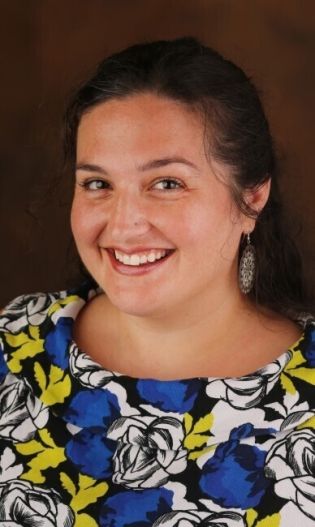
Language Resource Center Speaker Series - Stacey Margarita Johnson
September 20, 2022
4:30 pm
Stimson Hall, G25
"Problem-Based Models for Language and Culture Instruction"
Stacey Margarita Johnson
Assistant Director at the Center for Teaching and Senior Lecturer of Spanish, Vanderbilt University
A problem-based approach to language instruction infuses the communicative classroom with current events, critical thinking, and interdisciplinary connections. Through a process of identifying a problem, gathering resources to understand the problem, and then working with a group to process and report on what they have learned, students acquire language as they learn about the world around them and engage deeply with others' perspectives. Although problem-based language learning can be used as the foundation of an entire course or program of study, this talk will emphasize how and why instructors can implement problem-based language learning right away through intentional, research-informed modifications to their existing plans.
Bio: Dr. Stacey M Johnson is a teacher of Spanish as well as language teaching methods and second language acquisition. Stacey is also a researcher, technology administrator, editor of the journal Spanish and Portuguese Review, and producer of the podcast We Teach Languages. Her academic interests include postsecondary language classroom practices, hybrid/blended instruction, professional development, and adult learning including transformative learning and critical pedagogy. Her first book, Hybrid Language Teaching in Practice: Perceptions, Reactions, and Results, co-authored with Berta Carrasco, was published in March 2015, and her second book, Adult Learning in the Language Classroom, came out later that same year. Stacey’s recent publications include a book chapter and a magazine article about collecting authentic resources and an article about social justice in the language classroom. Currently she is working on projects including: 1) her third book, co-authored with Claire Knowles with expected publication in 2022, about the potential of a problem-based model for language and culture instruction, and 2) an edited collection co-edited with Kelly Davidson and LJ Randolph titled How We Take Action: Social Justice in K-16 Language Classrooms. At Vanderbilt University, in addition to her role as the Assistant Director for Educational Technology in the Center for Teaching, Stacey also holds appointments as a Senior Lecturer of Spanish in the Department of Spanish and Portuguese and as adjunct faculty in the English Language Learners program in Peabody College, and is Affiliated Faculty in the Center for Second Language Studies.
This event will be held in person in G25 Stimson and will also be streamed live over Zoom. Join us at the LRC or on Zoom.
The event is free and open to the public. Campus visitors and members of the public must adhere to Cornell's public health requirements for events.
Additional Information
Program
Einaudi Center for International Studies
Latin American and Caribbean Studies
"Final Stage of Russian Decline"

Bykov Talks with New Yorker
Visiting critic Dmitry Bykov discusses Russia—and Russians—under Putinism on the New Yorker Radio Hour.
Additional Information
4 Places That Could Be Trouble if the Economy Goes South

Eswar Prasad, SAP
It’s a time of great peril, says Cornell economics professor Eswar Prasad. Though he doesn’t see cascading crises at this stage, Prasad says countries with high levels of foreign currency debt, economic and political challenges are vulnerable as global financial conditions tighten.
Additional Information
What Biden Wanted in the Middle East — and What He Actually Got

Tejasvi Nagaraja, Global Public Voices
In the way that Washington has rationalized the need for Biden to travel to Saudi Arabia, Tejasvi Nagaraja, a professor at Cornell University, sees echoes of a term put forward by the late sociologist C. Wright Mills in the 1950s, “crackpot realism.”
Additional Information
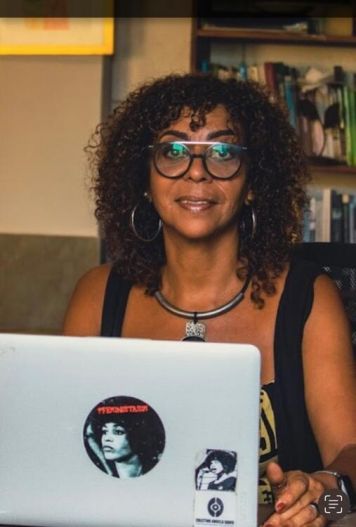
"Do Black Lives Matter in Brazil? Political Mobilization and Black Feminist Protagonism," by Brazilian Scholar Ângela Figueiredo, Universidade Federal do Recôncavo da Bahia
November 3, 2022
6:00 pm
Goldwin Smith Hall, G22
A LACS Public Issues Forum in collaboration with the African Diaspora Knowledge Exchange Project
Two cases have become emblematic for understanding the intensification of racism and sexism in Brazilian society during the pandemic that killed more than 650,000 Brazilians and since the election of Jair Bolsonaro as President of Brazil. The first death recorded in Brazil by Covid-19 was a black woman, 63 years old, a domestic worker, contaminated by her employer; the second was the death of 5-year-old Miguel Otávio when he fell from the 5th floor of the building where his mother worked. Throughout this period, black women's movements carried out various face-to-face activities. They acted strongly through social networks, conducting campaigns to collect resources, clothes, and food and denouncing the violence and the neglect of President Bolsonaro's government concerning public policies to combat the pandemic. They participated in the political campaign of black women in the 2020 elections, such as the Marielle Franco Forum, ENEGRECER a Política, Black Women Decide, Eu Voto em Negra. This presentation considers the political setback and loss of rights in recent years and addresses the Brazilian socio-political context and the political response of black feminist organizations. I focus mainly on processes of knowledge production, institutional political dispute, and the confrontation of political gender violence. The data presented result from effective participation as an activist and researcher and the analysis of social media cards, lives, seminars, and webinars produced in the last two years.
Ângela Figueiredo, PhD. is a professor in the Social Sciences Department of the Federal University of Recôncavo da Bahia in Cachoeira-Bahia, Brazil (CAHL – UFRB); an associate of the Graduate Program in Ethnic and African Studies (POSAFRO) and the Postgraduate Program in Interdisciplinary Gender Studies (PPGNEIM) at the Federal University of Bahia. Dr. Figueiredo is also the coordinator of the research and activist group Collective Angela Davis. Dr. Figueiredo has produced two documentaries - Ebony Goddess (Deusa do Ébano, 2004) e Dialogues with the Secret (Diálogos com o Sagrado, 2013) and curated the Global African Hair exhibition that took place in Salvador, Bahia. She has published the following books: New Black Elites (Novas elites de cor, 2002), Black Middle Class (Classe média negra, 2012), Black Beauty (Beleza Negra, (2016). She has also written several articles on Black Feminism in Brazil, including "Decolonial Black Feminist Epistemology" (2021) and "Letter to Judith Butler from an ex-mulatto woman" (2016).
This LACS Public Issues Forum event was organized by the Latin American and Caribbean Studies Program (LACS) as part of Celebrating it's 60th Anniversary (1961-2021) in collaboration with the African Diaspora Knowledge Exchange Project..
This event was made possible by the generous support of Cornell’s College of Arts and Sciences, the Mario Einaudi Center for International Studies, Romance Studies Department, Africana Studies and Research Center, Feminist Gender and Sexuality Studies (FGSS), the Latin American and Caribbean Studies Program, and the Anthropology Department.
Can't make it in person? Join us through eCornell, register at: https://ecornell.cornell.edu/keynotes/overview/K110322/
Additional Information
Program
Einaudi Center for International Studies
Latin American and Caribbean Studies
Institute for African Development
Family History as U.S. Immigration History

July 26, 2022
10:00 am
Recovering and propagating family histories can be a strategy to identify and dismantle how U.S. immigration policies have institutionalized the racial exclusion of targeted groups, even as they mask the selective inclusion of legal immigrants. Madeline Y. Hsu will discuss the family history origins of her two monographs to explore intersections between the personal and the political and the possibilities of scholarship as an aspect of activism.
Madeline Y. Hsu is professor of history at the University of Texas at Austin and is presently representative-at-large for the International Society for the Study of Chinese Overseas. She was born in Columbia, Missouri but grew up in Taiwan and Hong Kong between visits with her grandparents at their store in Altheimer, Arkansas.
This lecture is a part of the Migrations Summer Pathways program.
Additional Information
Program
Einaudi Center for International Studies
Downfall of the American Order?

New Book from Katzenstein and Kirshner
An edited volume from Peter Katzenstein and Jonathan Kirshner considers what comes next as the U.S.'s international influence wanes.
Additional Information
Companies Add Immigration Reimbursement to List of Benefits

Stephen Yale-Loehr, Migrations
"This is a new trend because of the tight labor market and employers need to figure out how to both attract and retain workers," said Stephen Yale-Loehr, professor of immigration law. "And with foreign workers being a growing part of the employment base, benefits to foreign-born workers is increasingly one way that they can entice people to come work for them or to stay with them."
Additional Information
Immigration Research Using Quantitative and Social Demographic Methods
July 27, 2022
10:00 am
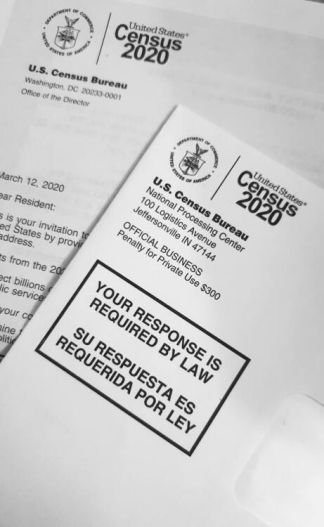
Immigrants have set down roots and continue to arrive in local communities across the United States. If we want to know where immigrant families and residents are thriving (or falling behind), then quantitative analyses offer many opportunities to compare and contrast where immigrants make the most of local resources and networks (and where such opportunities remain stunted). Census, survey, administrative, and newly emerging data sources can hold important insights — if we have the tools to leverage such information in order to answer pressing social questions.
Juan Pedroza, assistant professor of sociology at University of California, Santa Cruz, will present this lecture on his work about the changing landscape of immigration in the United States. Over the past decade, he has examined the vast inequalities of immigrants' access to justice, the social safety net, poverty, and segregation. His research examines how and where deportation and enforcement initiatives exacerbate these inequalities and leave imprints in our local communities.
This lecture is a part of the Migrations Summer Pathways program.
Additional Information
Program
Einaudi Center for International Studies