
Einaudi Center for International Studies
Climate Change is Taking a Big Bite Out of Our Food Supply
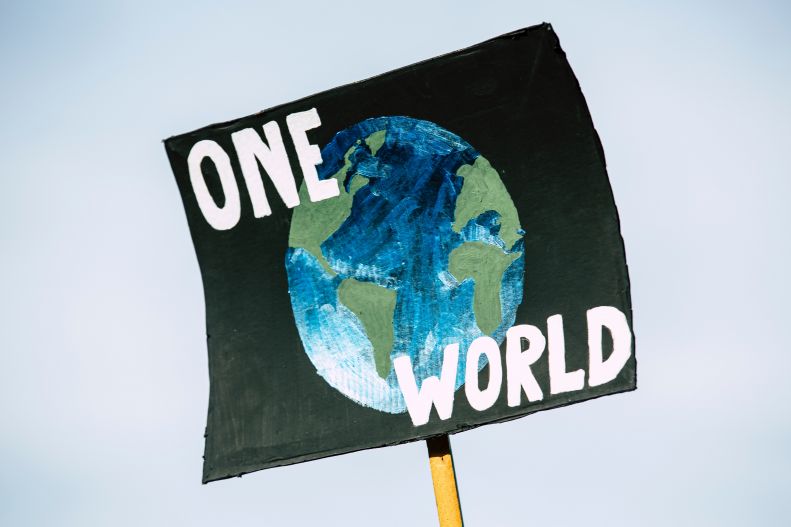
Rachel Bezner Kerr, Global Development
“Our report demonstrates that climate change—including increases in hazards such as flooding, drought, or cyclones—is already affecting food systems, and particularly in vulnerable regions,” says Rachel Bezner Kerr, professor of global development. Similar coverage can be found in BuzzFeed News.
Additional Information
Edward E. Baptist

Professor, History
Additional Information
Discusion: Tarjeta del Trabador Fronterizo en Mexico
March 11, 2022
1:00 pm
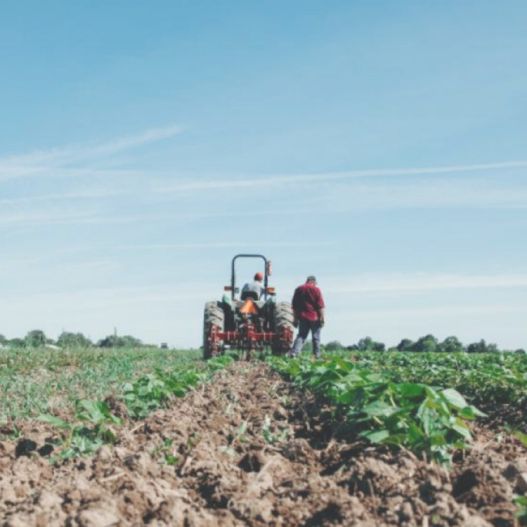
Este seminario tiene como ambito de mejor entender como funciona el programa de la Tarjeta del Trabajador Fronterizo (TTF) en Mexico, su desarollo y sus efectos sobre los trabajadores, la industria y la sociedad.
Los apresentadores incluyen Dra. Martha Rojas Wiesner (El Colegio de la Frontera Sur), Dra. Antonieta Barron (Universidad Nacional Autonoma de Mexico), Dra. Martha Garcia (El Colegio de la Frontera Sur) y Dr. Manuel Angel Castillo (El Colegio de Mexico).
La discusion tendra lugar en espanol y sera traducido en ingles.
La Migration Initiative, la Farmworker Legal Assistance Clinic y The Center for the Study of Inequality apoyan a este evento.
This workshop seeks to understand working mechanism of the agricultural temporary foreign workers program entitled 'Tarjeta del Trabajador Fronterizo' in Mexico, its development and effects on workers, the industry and society.
Speakers include Dra. Martha Rojas Wiesner (El Colegio de la Frontera Sur), Dra. Antonieta Barron (Universidad Nacional Autonoma de Mexico), Dra. Martha Garcia (El Colegio de la Frontera Sur) y Dr. Manuel Angel Castillo (El Colegio de Mexico).
The event will take place in Spanish and will be translated into English.
The event is supported by the Migration Initiative, the Farmworker Legal Assistance Clinic and the Center for the Study of Inequality.
Additional Information
Program
Einaudi Center for International Studies
Latin American and Caribbean Studies
Institute for African Development Seminar Series: Armed Conflicts and development: Lessons learned and the path forward
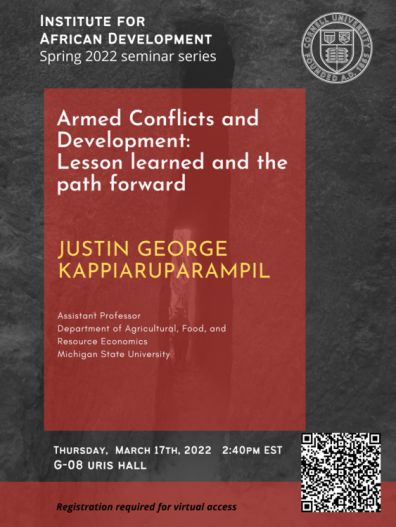
March 17, 2022
2:40 pm
Uris Hall, G-08
Issues in African Development Seminar Series examines critical concerns in contemporary Africa using a different theme each semester. The seminars provide a forum for participants to explore alternative perspectives and exchange ideas.
Speaker's details here
Register here
Additional Information
Program
Einaudi Center for International Studies
Institute for African Development
Einaudi Experts Speak Out

Ukraine War Puts World in "Uncharted Territory"
Five Einaudi experts shared insights during a Mar. 4 event, “Russia’s War on Ukraine: A New Attack on Peace, Rights and Sovereignty."
Additional Information
Emerging Markets Theme Research Seminar: Subrina Shen
April 22, 2022
1:00 pm
Sage Hall, B06
Registration Link: https://cglink.me/2cm/r1538417
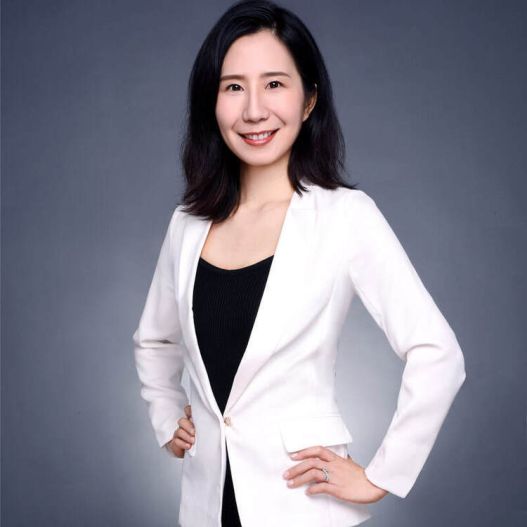
Subrina Shen is an assistant professor at the Department of Management at the McCombs School of Business, the University of Texas at Austin.
When having a higher-status follower promotes exploration: Hierarchical inconsistency, goal alignment, and exploration in product development teams
A burgeoning stream of work views organizational internal inconsistency as an impetus for innovation and strategic change. Building on this literature, this paper examines an important yet under-studied aspect of internal misfit/inconsistency: global-local hierarchical inconsistency in product development teams, or the situation in which team members have misaligned rank orderings in the global (organizational) and local (within-team) hierarchies. In contrast to prior research which shows hierarchical inconsistency to increase conflict and thus hurt performance, we argue that the conflict induced by global-local hierarchical inconsistency could spark explorative search–an important antecedent for innovation and strategic change–when team members have aligned goals. We propose a novel mechanism–goal-aligned social rank enhancing behavior–to explain the positive effect of global-local hierarchical inconsistency. We empirically tested these arguments with data on A/B testing experiments around a social networking app product in a Chinese internet company between 2019 and 2021. The results show that hierarchical inconsistency encourages search and exploration when departmental goals are aligned in a team. Our study contributes to the burgeoning discussion around the impact of organizational internal misfit on innovation and strategic change as well as the literature on consequences of status inconsistency.
Subrina's research examines the creation, evaluation, and commercialization of innovative ideas in emerging technology sectors, with a contextual focus on artificial intelligence technologies. It is informed by both organizational sociology and strategy research.
Subrina's work has been published in Organization Science and Strategic Management Journal. Subrina's research has won a number of awards, including the 2021 Conference Theme Best Paper Award from the International Association of Chinese Management Research and the Best Paper Award from the 2018 International Conference on Innovation Studies.
Additional Information
Program
Einaudi Center for International Studies
Latin American and Caribbean Studies
The Crisis in Ukraine Has Disturbing Echoes of the 1930s

Cristina Florea, IES
"If the 1930s teach us anything, it is that things can fall apart easily," says IES faculty member Cristina Florea in Time magazine.
Additional Information
Language Resource Center Speaker Series - Corrine Occhino

April 13, 2022
4:00 pm
Stimson Hall, G25
"What Everyone Should Know about ASL and American Deaf Culture"
Corrine Occhino
Assistant Professor of Languages, Literatures, and Linguistics, Syracuse University
ASL (American Sign Language) is experiencing a pop-culture moment. In the past few years, ASL has been visible in TV-shows, movies, commercials, and in sports and news broadcasts. ASL programs are popping up in schools and colleges all over the U.S. Despite dips in enrollment for many college programs, student enrollment in ASL classes is at an all-time high, as it has quickly become one of the most popular languages to take on college campuses. But despite its growing popularity, the hearing world knows little about ASL, its role in Deaf culture, its status as a real, human language, or the daily frustrations many Deaf ASL signers experience as they fight for access and inclusion in a hearing world.
In this talk I will take you on a whirlwind tour of ASL and the signing communities who use it. In the first half of my talk, I will discuss ASL's roots in Deaf Education and the role segregation played in the creation of ASL varieties. I will talk about the communities of signers who use ASL, why ASL is a Deaf language, and why language deprivation is still a very real problem for deaf children in the U.S.
In the second half of my talk, I will talk about some interesting linguistic properties of ASL and what research on ASL has taught us about language, and language learning. I will end with a discussion of how learning ASL opens the door to understanding Deaf culture, but also invites us to interrogate the ways we can disrupt the hegemony of hearingness, making way for a more inclusive and equitable society.
Bio: Dr. Corrine Occhino is an Assistant Professor in the Department of Languages, Literatures, and Linguistics and in the Department of Teaching and Leadership at Syracuse University. Dr. Occhino received her Ph.D. in Linguistics from the University of New Mexico in 2016. In 2017, she joined the Center on Culture and Language at the National Technical Institute for the Deaf at Rochester Institute of Technology where she ran the ASL Assessment Project. She now runs the Multimodal Language Lab at Syracuse University, where she uses a combination of corpus-based, psycholinguistic, and sociolinguistic approaches to study language in the visual modality. Most recently, Dr. Occhino has published articles on the phonological organization and structure of ASL, sociolinguistic variation in ASL, and on the role of experience and construal in ASL-English bilingual language processing. Dr. Occhino also works on issues related to language access and social justice, equity, and inclusion in deaf communities, collaborating on research projects aimed at improving reproductive health outcomes for deaf women and increasing the representation of minoritized dialects of ASL and their signers in the documentation and study of ASL.
This event will be held in person in G25 Stimson and will also be streamed live over Zoom. Join us at the LRC or on Zoom.
The event is free and open to the public. Campus visitors and members of the public must adhere to Cornell's public health requirements for events, which include wearing masks while indoors and providing proof of vaccination or a recent negative COVID-19 test.
Additional Information
Program
Einaudi Center for International Studies
Latin American and Caribbean Studies
(De)Constructing Southeast Asia: 24th Cornell SEAP Graduate Student Conference
March 11, 2022
4:30 pm
Kahin Center
How do we construct, deconstruct, and maintain Southeast Asia? Who is doing this labor and why? The sinews by which we entangle Southeast Asia take many forms: from the epic to the quotidian and every shade in between and beyond; as connective strands; as resonating sounds; as adjoining bridges; as shared images; as documenting videos; as so much more. This year's Cornell Southeast Asia Program Graduate Student Conference theme, (De)Constructing Southeast Asia, thinks about the dynamic ways we come to, work with, and move from the region as a constructed space. With these considerations, (De)Constructing Southeast Asia is an inquiry which brings these strands together, tugs at them, or perhaps pulls them apart. We encourage submissions which seek to think through how Southeast Asia is formed and Southeast Asia forms geographies and ecologies.
The Graduate Student Conference will be held in a hybrid format 11–13 March, 2022 at the George McT. Kahin Center for Advanced Research on Southeast Asia, located on Cornell University’s campus in Ithaca, New York and online over Zoom. COVID restrictions will be applied as per university policy and are subject to change.
Keynote Address:
(Re)Producing Knowledge: Gamelan and Southeast Asian Music within and without Academe
Senior Lecturer, Christopher J. Miller, Department of Music
Panel 1: The Stuff of History
Nicole Yow Wei, "Melaka is Minangkabau: Oral Historical Poetics in the Hikayat Anggun Cik Tunggaland the Making of an Early Malay Regionalism"Eunike G. Setiadarma, "Feeling Strange, Feeling Home: An Annotation of Indonesian History" Indah Wahyu Puji Utami, "Conflicts and negotiations: The representation of the National Revolution in Indonesian history textbooks"Panel 2: Southeast Asian America
Bradley DeMatteo & Sokunthary Svay, "An American Samleing: Music and Multivocality in the Poetry of Sokunthary Svay"Cai Barias, "Transnational Asian America: Vietnamese International Student Ac-tivism and the Asian American Movement (1968-1975)"Sokunthary Svay, "Playing Kaa (កា): Memory Work, Music, and Song-Speaking"Panel 3: Contesting Power
Chanatip Tatiyakaroonwong, " 'Surveillance-Disinformation’ Assemblage and The Politics of Tech-Driven Counterinsurgency in Thailand's Southern Border Conflict"Matthew Venker, "Legal Engagements: Buddhist Law and the Construction of Chinese-Burmese Families in Colonial Burma"Chao Ren, "Yankees on the Irrawaddy: Race, Migration, and Plural Society in a Burmese Oilfield, 1921-27"Panel 4: Politics and Identity
Kelvin Ng, "Itineraries of Self-Respect: Urban Sociality and Tamil Reform in Interwar Malaya, 1929–1940"Jonalyn C. Paz, "Colonial Beasts and Where to Find Them: Constructs of Sex Tourism in Olongapo, Zambales Philippines"Chu May Paing, "Gali-hto-thaw Images: Dangerous Laughter as Viral Spread in Contemporary Myanmar"Film Screening
Grace Simbulan, "A is for Agustin"Panel 5: Futures of Study
Bunkueanun “Francis” Paothong, "Despot on the Spotlight: Analyzing Thailand’s Actions Against its Pro-democracy Demonstrators"Dexter Lin, "Catholic Identification as a Mode of Protection for Asian Indios across Time and Space in the Early Modern Spanish Empire"Minh-Tiến Nguyễn, "“Đây là Viet Rap?”: Contesting Americanization and internal colonialism in Vietnamese rap"Panel 6: Colonial Makes
Harry Burke, "Emiria Sunassa: Archipelagic Painter"Linh Mueller, "From “Civilizing Mission” to “Heroic Railway”: Railroad Colonialism and Infrastructural Meaning-Making in Vietnam"Jefferson R. Mendez, "Deconstructing the Colony: Filipinization of Urban Spaces and Manila’s Role in the 19th Century Global History"Panel 7: Embodiment
Andrew Hollister, "Movement and the Body: Exploring Cambodian Young Adult Experience in Kavich Neang’s Short Films"Amira Noeuv, "Girl with the Sak Yon Tattoo"Nam Nguyen, "Cannibalism, Madness, (Tw)incest, and Death: Mobilizing theVietnamese Diasporic Body in Linda Lê’s Works"Anyone seeking accommodations of any kind, including COVID safety procedures, should reach out to us at seapgatty@cornell.edu.
A pdf conference packet is available here, with more information on speakers and panels and Zoom links to attend virtually. This information is also available on the conference website.
Additional Information
Program
Einaudi Center for International Studies
Southeast Asia Program
PACS faculty on Ukraine

Sarah Kreps speaks to the Washington Post about the war in Ukraine
Sarah Kreps, the John L. Wetherill Professor at the Department of Government, said, "We would need some real leadership to help the public understand what the issue is, and explain the consequences of inaction."