
Einaudi Center for International Studies
The US Keeps Turning to Sanctions Despite Their Mixed Record

Nicholas Mulder, IES
“The record of sanctions at deterring war is pretty mixed, and one of the reasons for that is that it’s quite difficult to calibrate, to sort of… really arrange the pressure exactly right,” says Nicholas Mulder, assistant professor of history. “If you make a threat that is too weak, then it doesn’t deter. But if you make a threat that is very strong, then you might not be actually able to deliver on that threat, and it might not be credible.”
Additional Information
Weighing Russia Sanctions Success Tough in Ukraine Conflict

Nicholas Mulder, IES
Nicholas Mulder discusses the difficulties of implementing successful sanctions on a country with a large economy like Russia.
Additional Information
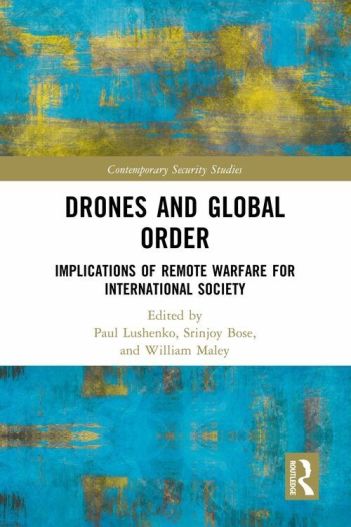
Drones and Global Order: Implications of Remote Warfare for International Society
April 14, 2022
11:25 am
Uris Hall, G08
This is a hybrid event. Registration information is below.
This panel discussion, based on the book Drones and Global Order: Implications of Remote Warfare for International Society (Routledge, 2022), will explore the implications of drone warfare for the legitimacy of the global order. Since 2002, when the first use of an armed drone for the targeted killing of a terrorist was authorized in Yemen, the literature for drone warfare has evolved from studying the proliferation of drones, measuring their effectiveness, and exploring their legal, moral, and ethical impacts. However, these "three waves" of scholarship do not address its implications for the global order. The panelists argue that drone warfare imposes contradictions on the structural and normative pillars of global order. The panel discussion will point to the emergence of a "fourth wave" of scholarship to better contend with the social and political implications of drones.
About the speakers
Paul Lushenko is a U.S. Army Lieutenant Colonel and General Andrew Jackson Goodpaster Scholar at Cornell University, where he is pursuing a PhD in International Relations.
Keith Carter is U.S. Army Lieutenant Colonel and Director of the Defense and Strategic Studies Program at the United States Military Academy.
William Maley is an Emeritus Professor at The Australian National University, where he was Professor of Diplomacy from 2003-2021.
This seminar is part of the spring seminar series with the Reppy Institute for Peace and Conflict Studies (PACS).
Cosponsored by the Department of Government, and the Department of Science & Technology Studies, Cornell University.
Register here
In accordance with university event guidance, all campus visitors who are 12 years old or older must also present a photo ID, as well as proof of vaccination for COVID-19 or results of a recent negative COVID-19 test. If you are not currently participating in the Cornell campus vaccination/testing program, please bring proof of vaccination or the results of a recent negative test.
Additional Information
Program
Einaudi Center for International Studies
Reppy Institute for Peace and Conflict Studies
Genealogies of Anti-Asian/Asia Violences Symposium

March 25, 2022
9:00 am
220 Eggers Hall, Syracuse University
The Cornell-Syracuse South Asia Consortium presents a symposium interrogating the histories and trajectories of anti-Asian violences.
The recent surge of racially motivated attacks on Asians in the United States brought renewed attention to the issue of anti-Asian violence. It is necessary to situate this rising tide of violence in the broader histories that have produced it. By taking up “Asia” as a fraught geopolitical category that is formed through imperialist projects, this symposium attends to the underlying logics of violence that are crucial to rendering these histories legible. Building connections that are enabled by transnational, relational, and critical lenses not only will deepen insights into the discourse of anti-Asian violence, but also will allow a meaningful consideration of the implications of this moment for solidarity and movement- building. This symposium will convene a cohort of scholars, students, and activists whose work can collectively help trace the genealogies and geographies of anti-Asian violence.
The South Asia Program is coordinating efforts for current Cornell students, faculty and staff to travel to and from Syracuse for this event on Friday March 25. Please fill out this form by March 18 if you are interested in a ride (or are able to offer others a ride) to and from Syracuse for the symposium. Space is limited.
220 Eggers Hall (Strasser Legacy Room), Syracuse University
Roundtable: Queering Solidarities: Race, Caste, and Gender
Chris Eng (Associate Professor, Department of English, University of Washington in St. Louis)
Sangeeta Kamat (Professor, Comparative and International Education, University of Massachusetts, Amherst)
William Mosley (Assistant Professor, Program for Interdisciplinary Humanities, Wake Forest University)
Esther K. (Red Canary Song Collective)
Discussant: Viranjini Munasinghe (Associate Professor, Department of Anthropology, Cornell University)
Panel: Cripping Violence, Indigeneity and Pedagogy: Global Perspectives
Juliann Anesi (Assistant Professor, Gender Studies, University of California, Los Angeles)
Deepika Meena (Research Scholar, IIT Gandhinagar)
Edward Nadurata (Graduate Student, Department of Global and International Studies, UC Irvine)
Discussant: Michael Gill (Associate Professor, Cultural Foundations of Education, Syracuse University)
Panel: Transnational Asia: Feminist & Decolonial Critiques
Juliana Hu Pegues (Associate Professor, Literatures in English, Cornell)
Danika Medak-Saltzman (Assistant Professor, Women's and Gender Studies, Syracuse University)
Deepti Misri (Associate Professor, Women and Gender Studies, University of Colorado, Boulder)
Discussant: Mona Bhan (Associate Professor, Anthropology and Ford-Maxwell Professor of South Asian Studies, Syracuse University)
Closing Keynote
Iyko Day, Mount Holyoke College
“Nuclear Antipolitics and the Queer Art of Logistical Failure”
CO-SPONSORED BY:
At Cornell University: South Asia Program, Mario Einaudi Center for International Studies, East Asia Program, Southeast Asia Program, and Asian American Studies Program
At Syracuse University: Graduate School, Humanities Center, Hendricks Chapel, Department of Cultural Foundations of Education, Department of English, Department of Religion, Department of Women’s and Gender Studies, East Asia Program, Asian/Asian American Studies Program, Disability Studies; Disability Cultural Center, Intergroup Dialogue, and Democratizing Knowledge Collective
With funding from the Department of Education Title VI Program.
FACULTY CO-ORGANIZERS:
Susan Thomas, Cultural Foundations of Education, Syracuse University
Antonio Tiongson, Department of English, Syracuse University
Additional Information
Program
Einaudi Center for International Studies
East Asia Program
Southeast Asia Program
South Asia Program
How Not to Impose Sanctions
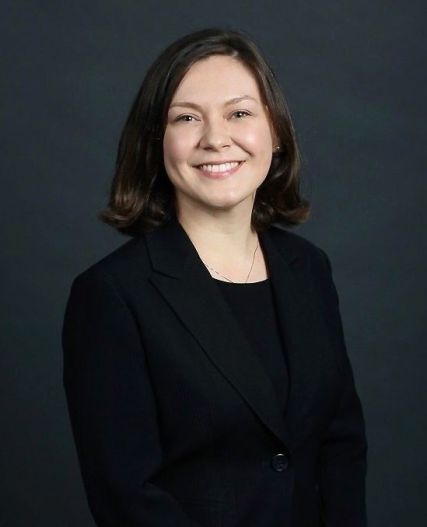
Desirée LeClercq in Fortune
"President Biden should draw lessons from these recent developments and act quickly," says Global Public Voices fellow Desirée LeClercq in this op-ed in Fortune.
Additional Information
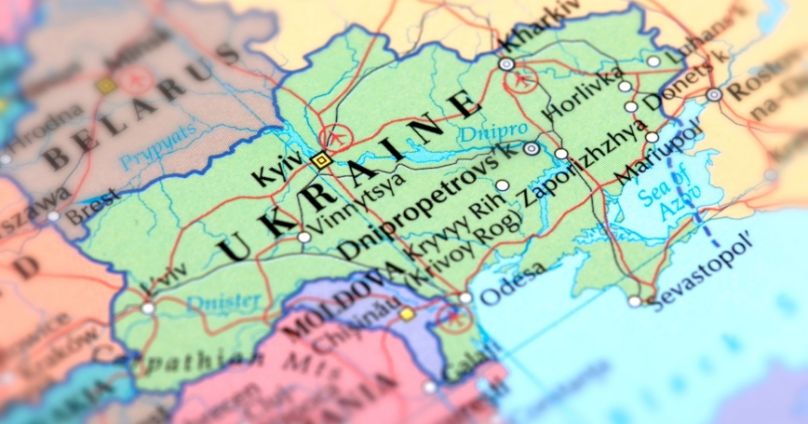
Ukrainian Cornellians Look Homeward

Ukrainian students and researchers at Cornell share their thoughts as they absorb the ongoing news of Russia’s invasion of Ukraine.
Additional Information
Emerging Markets Theme Research Seminar: Valentina Assenova
March 25, 2022
1:00 pm
Poised for Growth: Cohort Learning and Its Effects on Accelerated Startups’ Growth
Registration Link: https://cglink.me/2cm/r1538392
Startup accelerators have emerged as important loci for organizational learning among early-stage startups. These organizations use a cohort structure from which a focal startup can draw new knowledge, assimilate it, and apply it to commercial ends. We suggest that the quality and geographic diversity of a startup’s peers in the same cohort affect the value that entrepreneurs derive from accelerators and enable higher rates of post-acceleration startup growth. We use applicant-level data from 23,364 early-stage startups that applied to 408 accelerators in 177 emerging and developing economies across Latin America and the Caribbean, South Asia, and Sub-Saharan Africa between 2013 and 2019 and a matched case-control design to evaluate these cohort effects. Our results show that the quality and geographic diversity of peers in the same cohort were associated with higher perceived value among applicants from being in a cohort of like-minded entrepreneurs and higher rates of post-acceleration growth in equity funding, revenue, full-time employment, and wages paid among accelerated startups, compared to similar non-accelerated startups. These benefits varied widely across regions and programs and were greater for startups that had more traction and innovation coming into an accelerator.
Valentina A. Assenova is the Edward B. and Shirley R. Shils Assistant Professor of Management at the Wharton School, University of Pennsylvania. Her research centers on the formation, growth, and funding of early-stage firms, with a focus on emerging and developing economies. She has collaborated with organizations such as FINCA International and the U.S. International Development Finance Corporation on projects and initiatives that advance entrepreneurship and economic development in Sub-Saharan Africa and Southeast Asia. She holds a Ph.D., M.Phil., and M.A. from Yale University, an M.B.A. from the University of Cambridge, and a B.Sc. in Economics from the Wharton School.
Additional Information
Program
Einaudi Center for International Studies
Latin American and Caribbean Studies
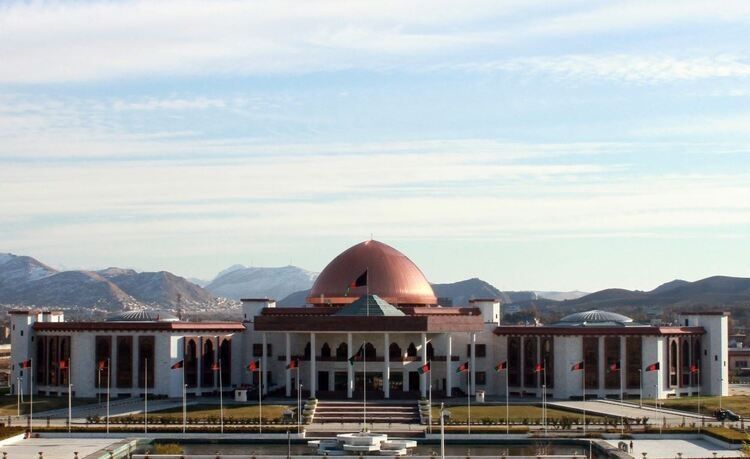
Political Elites Matter: An Inside-out Approach explaining the Peace, Conflict and Foreign Policy of Afghanistan
March 14, 2022
12:15 pm
Uris Hall, G08
Talk by Sharif Hozoori
Analyzing the situation of Afghanistan, its past struggle and instability, war and displacement, peace and conflict, scholars would argue that the external forces and power politics are influential and effective in articulation of events but the current research highlights a different scenario by proposing the role of political elites in bringing changes to the political environment. However, such change has a profound effect on domestic and foreign policy transformation as well. This study deals with the role of political elites in the changing domestic politics and transformation of foreign policy of Afghanistan from 1996 to 2014. It deals with two concepts: the political elite disunity and the political elite consensus. Accordingly, it tries to explain the two regimes: the Taliban’s first theocratic regime (1996-2001) and the democratic establishment after 2001. This study looks to answer that how political elite disunity contributed to the instability of Afghanistan from 1996 to 2001 which led to civil war and Islamization of foreign policy and how elite settlement and elite consensus led to democratic political establishment, domestic stability and caused for inclusionary foreign policy initiative post 9/11 in Afghanistan.
Sharif Hozoori is originally from Afghanistan. He holds PhD in International Relations from Centre for International Politics, Organization and Disarmament (CIPOD), School of International Studies, Jawaharlal Nehru University, New Delhi. His PhD thesis entitled Role of Political Elites in Foreign Policy Transformation: A Case Study of Afghanistan from 2001-2014. Mr Hozoori has earned his Master degree in International Relations from Department of International Relations, South Asian University in New Delhi. His dissertation was Radicalization of Muslims in South Asia: Implication for regional security. Upon his return to Afghanistan in 2019, He started teaching both in undergraduate and post graduates. At the same time, he has done administrative works as he was Vice Chancellor for Academic Affairs of Afghanistan University until recently before leaving the country in August 2021. Currently Mr. Hozoori is the IIE-SRF fellow and visiting scholar at South Asia Program, Mario Einaudi Center for International Studies, Cornell University. His area of research is Afghanistan politics and foreign policy, ethnic identity, South Asia politics, cultural studies and conflict resolution and peace.
Additional Information
Program
Einaudi Center for International Studies
South Asia Program
Reppy Institute for Peace and Conflict Studies
Atlantics screening with post-screening panel with Tristan Ivory
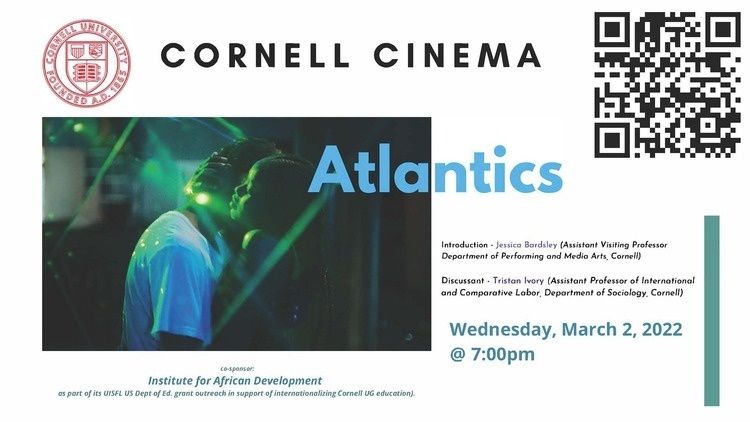
March 3, 2022
7:00 pm
Cornell Cinema
Join the Institute for African Development (IAD) at Cornell Cinema on 3/2 at 7pm for the screening of Mati Diop's Atlantics with a post-screening discussion with Tristan Ivory, Assistant Professor of International and Comparative Labor, Department of Sociology. This film is a part of the Sub-Saharan African film series presented by Cornell Cinema and sponsored by IAD and the UISFL grant.
Additional Information
Program
Einaudi Center for International Studies
"No Sign of Backing Down"

Former Ambassador Speaks on Ukraine Conflict at Feb. 22 Event
Former U.S. Ambassador to Ukraine Bill Taylor said Russian President Vladimir Putin appears intent on provoking a “horrific conflict.”