
Einaudi Center for International Studies
Detecting and Tracking Xenophobic Speech on Social Media to Inform Policy

February 7, 2022
1:00 pm
In this virtual talk, Professor Gilly Leshed will present the Xenophobia Meter Project (XMP), a cross-institutional collaboration that is responding to the rise of radical, racist, and nationalist politics. This global phenomenon has incited an unwitting habituation of the public toward hate-mongering against immigrants as part of normal political campaigns in many jurisdictions.
The Xenophobia Meter Project is funded by the Migrations initiative at Cornell, with additional support from an Einaudi Center seed grant. Read about it in the Chronicle.
Moderators:
Shannon Gleeson, co-chair of the Migrations initiative and professor of labor relations, law & history at the Cornell University School of Industrial and Labor RelationsWendy Wolford, vice provost for international affairs and Robert A. and Ruth E. Polson Professor of Global Development in the College of Agriculture and Life Sciences
Additional Information
Program
Einaudi Center for International Studies
Gatty Lecture: The Balete in the Forest: Superstition and the Menace of Field Labor in Colonial Philippine Botany

February 24, 2022
12:15 pm
Kahin Center
Kathleen "Kat" Cruz Gutierrez is Assistant Professor of History at the University of California, Santa Cruz, where she teaches courses on modern Southeast Asia, the Philippines, and the history of science and the environment. She completed her Ph.D. in Southeast Asian Studies with a Designated Emphasis in Science and Technology Studies (STS) at the University of California, Berkeley. Her dissertation on the international consolidation of botany in the Philippines was shortlisted for Best Dissertation in the Humanities by the International Convention of Asia Scholars in 2021. With Paul Michael Atienza, she is guest co-editing a special issue on STS for Philippine Studies: Historical and Ethnographic Viewpoints. Presently, Dr. Gutierrez is in residence at the Humanities Institute of the New York Botanical Garden completing her first book manuscript.
This Gatty lecture will take place in person at the Kahin Center, but people are also welcome to join us on Zoom. Please register here if you wish to attend via Zoom: https://cornell.zoom.us/meeting/register/tJ0rduioqzgpHNMTX31Z7KpbwfHg58…
For questions, please contact seapgatty@cornell.edu.
In accordance with university event guidance, all campus visitors who are 12 years old or older must also present a photo ID, as well as proof of vaccination for COVID-19 or results of a recent negative COVID-19 test. If you are not currently participating in the Cornell campus vaccination/testing program, please bring proof of vaccination or the results of a recent negative test.
More information on acceptable documentation is available here: https://covid.cornell.edu/visitors/
Additional Information
Program
Einaudi Center for International Studies
Southeast Asia Program
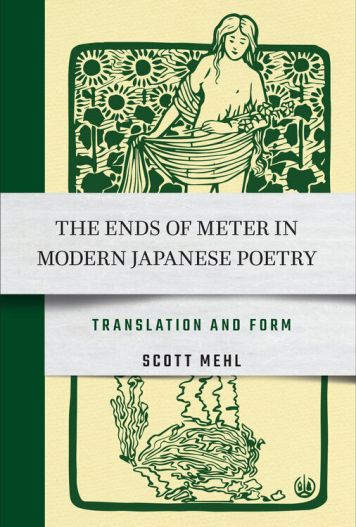
The Ends of Meter in Modern Japanese Poetry
February 25, 2022
4:45 pm
CEAS publications and EAP welcome author Scott Mehl, Colgate University to discuss his book, "The Ends of Meter in Modern Japanese Poetry."
In "The Ends of Meter in Modern Japanese Poetry", Scott Mehl analyzes the complex response of Meiji-era Japanese poets and readers to the challenge introduced by European verse and the resulting crisis in Japanese poetry. Amidst fierce competition for literary prestige on the national and international stage, poets and critics at the time recognized that the character of Japanese poetic culture was undergoing a fundamental transformation, and the stakes were high: the future of modern Japanese verse.
Additional Information
Program
Einaudi Center for International Studies
East Asia Program
Spring 2022 Einaudi Center News

Funding Opportunities, Signature Events, and Faculty in the News
Don't miss this spring's Global Hubs Salon Series and our signature Lund Debate on February 16.
Additional Information
Spirited Away

March 27, 2022
4:30 pm
Willard Straight Theatre
2002 > Japan > Directed by Hayao Miyazaki
An animated tale of a young girl named Chihiro whose fantastic adventures are reminiscent of those in Alice in Wonderland. Winner of Best Animated Feature Oscar in 2002. The original Japanese language will be shown on March 24 & 26, and the English dubbed version on March 27. Subtitled. More at gkids.com/films/spirited-away
2 hrs 5 min
Additional Information
Program
Einaudi Center for International Studies
Paprika

March 20, 2022
8:45 pm
Willard Straight Theatre
2007 > Japan > Directed by Satoshi Kon
With Megumi Hayashibara, Tru Furuya, Kichi Yamadera, Satomi Koorogi
In this masterly example of Japanese anime that looks at the connection between movies and dreams, our heroine is a genius scientist by day, and an eighteen-year-old dream warrior named Paprika by night. Only Paprika, who has the ability to enter people's dreams, can save the world from an evil genius threatening to invade and destroy the world's dream life. Subtitled. More at www.sonyclassics.com/paprika/
1 hr 30 min
Additional Information
Program
Einaudi Center for International Studies
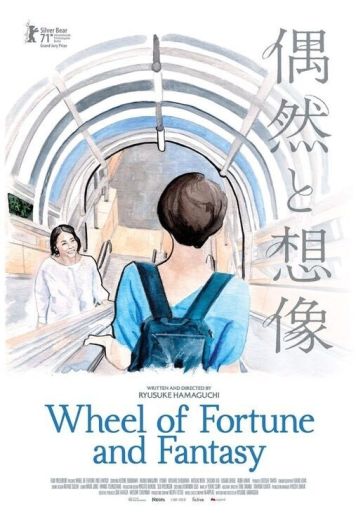
Wheel of Fortune and Fantasy (on demand Jan 26–Feb 6)
February 6, 2022
12:00 am
Ithaca Premiere
2021 > Japan > Directed by Ryusuke Hamaguchi
With Kotone Furukawa, Ayumu Nakajima, Hyunri
Hamaguchi (Drive My Car) spins three tales of chance meetings and the mysteries of desire in a film which is "Elegant and amusing, with a delicacy of touch and real imaginative warmth." (The Guardian) Subtitled. More at https://www.filmmovement.com/wheel-of-fortune-and-fantasy
2 hrs 1 min
Additional Information
Program
Einaudi Center for International Studies
Flowers of Shanghai (on demand Jan 26–Feb 6)

February 6, 2022
12:00 am
1998 > Taiwan > Directed by Hou Hsiao-hsien
With Tony Leung Chiu-wai, Michiko Hada, Carina Lau
Set in the world of 19th century courtesans, Flowers of Shanghai boasts a cast of Taiwanese stars and a remarkable long-take style that gives the impression of suspended time. Shown in a new restoration. Subtitled. More at https://www.janusfilms.com/films/2006
1 hr 53 min
Additional Information
Program
Einaudi Center for International Studies
The Olive Trees of Justice (on demand Jan 26–Feb 6)

February 6, 2022
12:00 am
Ithaca Premiere
1962 > France > Directed by James Blue
With Pierre Prothon, Jean Pélégri, Marie Decaître
Influential American documentarian James Blue's only narrative feature, drawn from Jean Jean Pélégri’s autobiographical novel, was shot in Algiers during the Algerian War. The story unfolds as Jean returns home to visit his dying father and recalls his childhood. "His memories of boyhood on his father's farm are told in flashbacks with a lush serenity that contrasts to the teeming, tank-filled streets of contemporary Algiers." (Kino Lorber) The film was the inaugural winner of the Critics Prize at Cannes (1962) and was recently restored. Subtitled. With a pre-recorded intro by Richard Herskowitz, former Cornell Cinema director, who works on the James Blue Project and was involved with the film’s restoration. More at https://www.kinolorber.com/film/the-olive-trees-of-justice
1 hr 21 min
Additional Information
Program
Einaudi Center for International Studies
Atlantics

March 3, 2022
7:00 pm
Willard Straight Theatre
2019 > Senegal > Directed by Mati Diop
With Mama Sane, Amadou Mbow, Ibrahima Traore
In a suburb of Dakar, workers on the construction site of a futuristic tower, without pay for months, decide to leave for Portugal in search of a better future. Among them is Souleiman, the lover of Ada. Though the men's small ship has disappeared at sea, Souleiman has recently been spotted in Dakar, upsetting the lives of the women who were left behind. Subtitled. More at netflix.com/title/81082007
1 hr 44 min
Additional Information
Program
Einaudi Center for International Studies
Institute for African Development