
Einaudi Center for International Studies
Gatty Lecture: What's Happening in Myanmar?: Women, Peace and Security
February 17, 2022
12:15 pm
102 Mann Library
This talk is co-organized by the Reppy Institute for Peace and Conflict Studies.
May Sabe Phyu is a women human rights defender leading civil society efforts to end discrimination against women and ethnic and religious minorities for more than 20 years in the development and humanitarian sector. She raises awareness of the human cost of conflict and advocates for peace and reconciliation. For her leadership in advocating for the full and equal rights of women and ethnic and religious minorities in Myanmar, she received the International Women of Courage Award in 2015. May Phyu is now in the United States after the military’s brutal violence crackdown in Myanmar. She is also a founding member of the Women’s Advocacy Coalition Myanmar connecting with her sisters inside the country and exile. May Phyu is currently hosted by the Dorothea S. Clarke Program in Feminist Jurisprudence at the Cornell Law School and is an active collaborator with Profs. Sandra Babcock and Elizabeth Brundige in the International Human Rights Clinic and the Gender Justice Clinic.
This Gatty lecture will take place in person at 102 Mann Library, but people are also welcome to join us on Zoom. Please register here if you wish to attend via Zoom: https://cornell.zoom.us/meeting/register/tJwsd-yvqjstGdKq7F0ZT1TqTd1iXr…
For questions, please contact seapgatty@cornell.edu.
In accordance with university event guidance, all campus visitors who are 12 years old or older must also present a photo ID, as well as proof of vaccination for COVID-19 or results of a recent negative COVID-19 test. If you are not currently participating in the Cornell campus vaccination/testing program, please bring proof of vaccination or the results of a recent negative test.
More information on acceptable documentation is available here: https://covid.cornell.edu/visitors/
Additional Information
Program
Einaudi Center for International Studies
Reppy Institute for Peace and Conflict Studies
Southeast Asia Program
Gatty Lecture: History from the Hills: Collectivized Agriculture and the Erasure of the Past in Cambodia's Northeast Highlands
February 10, 2022
12:15 pm
Kahin Center
Since 2005, Jonathan Padwe has studied the changing landscape of highland Cambodia as it is perceived by, and managed by, the Jarai people of the border region where Cambodia, Laos and Vietnam meet. His 2020 book Disturbed Forests, Fragmented Memories: Jarai and Other Lives in the Cambodian Highlands charts the ways that landscapes record memories, the partial and fragmentary nature of which allow for re-interpretation of dominant historical narratives, troubling understandings of the region's past. Prior to working in Cambodia, Dr. Padwe lived and worked for over seven years in eastern Paraguay.
This Gatty lecture will take place in person at the Kahin Center, but people are also welcome to join us on Zoom. Please register here if you wish to attend via Zoom: https://cornell.zoom.us/meeting/register/tJYtceCsqz0sHtR6L7IjZQhuLQu3iy…
For questions, please contact seapgatty@cornell.edu.
In accordance with university event guidance, all campus visitors who are 12 years old or older must also present a photo ID, as well as proof of vaccination for COVID-19 or results of a recent negative COVID-19 test. If you are not currently participating in the Cornell campus vaccination/testing program, please bring proof of vaccination or the results of a recent negative test.
More information on acceptable documentation is available here: https://covid.cornell.edu/visitors/
Additional Information
Program
Einaudi Center for International Studies
Southeast Asia Program
Gatty Lecture: Pro Environmental Behavior Consumption of Indonesian Consumers
February 4, 2022
8:00 pm
*Note: This Gatty Lecture will be entirely virtual, with no hybrid presence at the Kahin Center as usual. It will be held at 8pm instead of the usual 12:15pm.
Harriman Samuel Saragih is an Assistant Professor in Business Innovation, Monash University Indonesia. He currently teaches the course of Theory and Practices of Innovative Marketing where previously he taught courses related to Data-Driven Marketing, Strategic Marketing Management, Arts Marketing, and Music Business Ecosystem to undergraduates and masters degree in business (Supervisor to C-Level Executives). He is a former Fulbright Visiting Scholar in the Mario Einaudi Center for International Studies, Cornell University. He holds Applied Data Science certification from Columbia Engineering & Emeritus and Data Science Practitioner from IBM. He earned his BSc and PhD from Engineering Management and Management Sciences, Institut Teknologi Bandung and he earned his Masters from Binus University while he was working in China National Offshore Oil Corporation SES Ltd as Project Officer and Training Analyst. He received an Emerald Literati Award as one of the Outstanding Reviewers in the journal Arts and the Market. His methodological expertise is in qualitative case research methods and two stage disjoint approach partial least square structural equation modeling.
This Gatty lecture will take place in person at the Kahin Center, but people are also welcome to join us on Zoom. Please register here if you wish to attend via Zoom: https://cornell.zoom.us/meeting/register/tJcrceirpzkvGdD16vw1SiuxcEXwbU…
For questions, please contact seapgatty@cornell.edu.
In accordance with university event guidance, all campus visitors who are 12 years old or older must also present a photo ID, as well as proof of vaccination for COVID-19 or results of a recent negative COVID-19 test. If you are not currently participating in the Cornell campus vaccination/testing program, please bring proof of vaccination or the results of a recent negative test.
More information on acceptable documentation is available here: https://covid.cornell.edu/visitors/
Additional Information
Program
Einaudi Center for International Studies
Southeast Asia Program
Gatty Lecture: Stories from an Ancient Land: The Wa of the Burma-China Borderlands
January 27, 2022
7:15 am
Kahin Center
**Due to unforeseen circumstances, Arnika Fuhrmann will no longer be presenting. The speaker and title of this Gatty Lecture have changed.**
Magnus Fiskesjö's research concerns ethnic relations and political anthropology in China and Southeast Asia. His research and teaching interests include historical and political anthropology; civilizations and barbarians; sovereignty, citizenship, and state formations; autonomy and dependence; ethnopolitics, ethnicity, and ethnonymy in interethnic relations; cultural heritage and archaeology; museums and modernity; and East and Southeast Asia (including China and Burma).
This Gatty lecture will take place in person at the Kahin Center, but people are also welcome to join us on Zoom. Please register here if you wish to attend via Zoom: https://cornell.zoom.us/meeting/register/tJctd-uqqDsuHNKMibs8l_WoFPStOI…
For questions, please contact seapgatty@cornell.edu.
In accordance with university event guidance, all campus visitors who are 12 years old or older must also present a photo ID, as well as proof of vaccination for COVID-19 or results of a recent negative COVID-19 test. If you are not currently participating in the Cornell campus vaccination/testing program, please bring proof of vaccination or the results of a recent negative test.
More information on acceptable documentation is available here: https://covid.cornell.edu/visitors/
Additional Information
Program
Einaudi Center for International Studies
East Asia Program
Southeast Asia Program
Global Summer Internships 2022

Apply by March 9!
Undergrads: Meet mentors working in the international arena, use your real-world skills and languages, and advance your career goals this summer.
Additional Information
Sectarianism or Separatism: The Shia Dilemma and the Discourse of Azadi in Kashmir

April 25, 2022
12:15 pm
Uris Hall, G08
Talk by Syed Jaleel Hussain
The ethnic, linguistic and religious diversity has been an essential feature of life in Kashmir for centuries. The majority of the muslim population is Sunni along with sizeable pockets of Shia minority. Shias have played a critical role in the socio-political and cultural life of Kashmir. They were part of the valiant defiance of the Mughal designs in the Chak and post-Chak Kashmir, were involved with the resistance against Dogra oppression, and actively participated in the political struggle against Indian rule after 1947. The overall political posture of Shias regarding the essential elements of the resolution of Kashmir conflict is not starkly different from the majority Sunnis. For most part of the modern history Shias have supported the azadi movement towards a sovereign and independent Kashmir. However, after the 1980s, the Shia discourse about azadi and insurgency gradually turned ambivalent with the growing internal group contestation amongst Shias due to internal and external factors. The internal factors include the growing electoral competition and a rise in the incidents of sectarian violence in Kashmir. The political developments in Pakistan, Iran and the Arab world have become the external determinants of Shia thinking about the Kashmir issue.
Syed Jaleel Hussain is a Fulbright post-doctoral fellow at the South Asia Program, Mario Einaudi Center for International Studies at Cornell University. He is an Assistant Professor at Nelson Mandela Centre for Peace and Conflict Resolution, Jamia Millia Islamia, New Delhi. He is a University Gold Medalist, an ICSSR doctoral fellow, a recipient of UGC’s Senior Research Fellowship and Gandhi Smriti Fellowship for Masters Programme. His research articles have been published in national and international peer reviewed journals like the Journal of Asian Security and International Affairs, Journal of Defence Studies, Economic & Political Weekly and South Asian Journal of Diplomacy. His op-ed articles have appeared in Indian English dailies like the Indian Express, the Sunday Guardian, Afghan Zariza, Greater Kashmir and others. He has previously been associated with Delhi Policy Group, a think tank based in Delhi. His primary research interests are in the areas of culture and strategy, global nuclear issues, ethnic conflicts and issues of conflict & security in South Asia and West Asia.
Additional Information
Program
Einaudi Center for International Studies
South Asia Program
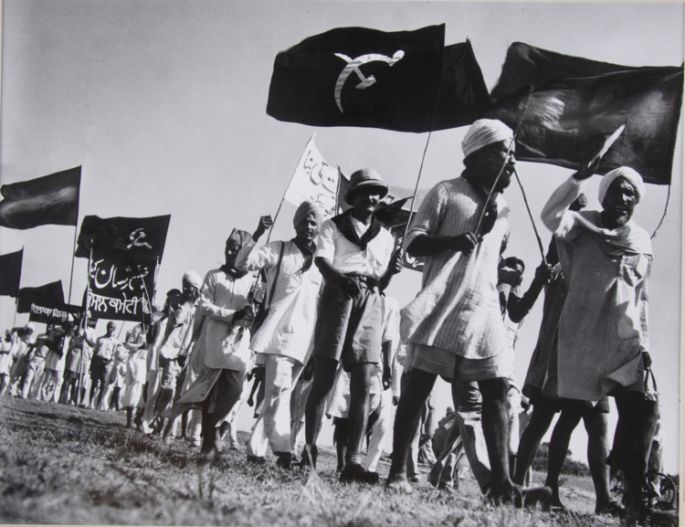
Futures Past: Revolution, Communism, and Decolonization in Colonial India
April 11, 2022
11:00 am
Talk by Ali Raza
This work reveals the lives, geographies, and anti-colonial struggles of Indian revolutionaries and how they sought to remake the world. Driven by the utopian dreams of Communist Internationalism, Indian communists yearned for a revolutionary upheaval that would overthrow European imperialisms and radically transform their societies and the world. In doing so, they joined millions around the world equally invested in the transformative project of Communist Internationalism, by far one of the largest, and most radical, anti-colonial projects of the twentieth century. I present this global story from the vantage point of South Asia from the 1910s to the 1950s.
Ali Raza, Associate Professor, is a historian of South Asia at the Lahore University of Management Sciences (LUMS). His research and teaching interests include the social and intellectual history of South Asia, comparative colonialisms, 20th century internationalisms, and decolonization. Raza’s work has appeared in Comparative Studies of South Asia, Africa, and the Middle East; South Asia: Journal of South Asian Studies; Itinerario; South Asian History and Culture; and Contemporary South Asia. He is the co-editor of The Internationalist Moment: South Asia, Worlds, and World Views, 1917-39 (Sage, 2014) and the author of Revolutionary Pasts: Communist Internationalism in Colonial India. (Cambridge, 2020; Folio Books 2021; Tulika Books 2022)
Additional Information
Program
Einaudi Center for International Studies
South Asia Program
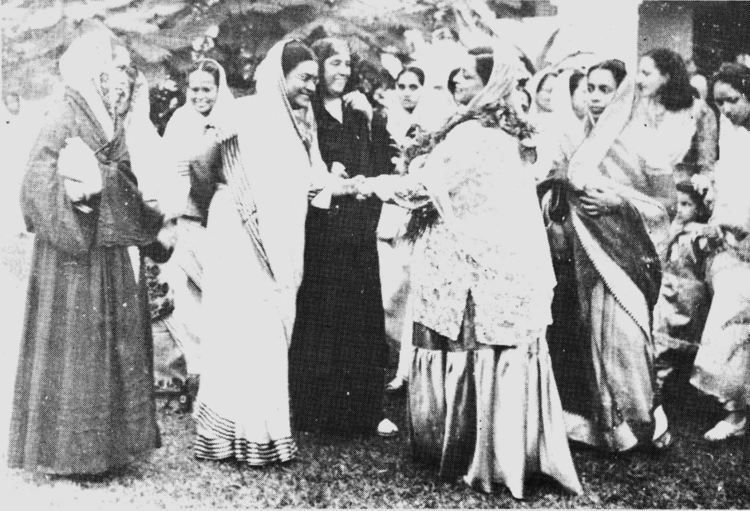
Collision Amid Collusion: Women’s Activism Across the Wings of Pakistan
April 18, 2022
11:00 am
Talk by Elora Shehabuddin
This paper analyzes the relationship between women’s rights advocates in East and West Pakistan in 1947–71, in an effort to contribute to the small but growing body of scholarship complicating Bangladesh’s linear nationalist narrative as well as recent scholarship on the history of united Pakistan in this period that pays serious attention to the country’s eastern wing. I show how, during the Pakistan amal, not only did many Bengali women engage with the central state as Pakistani citizens alongside West Pakistani women activists in order to elicit resources and favorable policies, but they also took pride in being citizens of a new nation that had overthrown its colonial rulers. I show this engagement with the state through their involvement in electoral politics, their activism for the reform of personal laws, and their pride in the nation in their willingness to serve as representatives of Pakistan in delegations overseas, even as they organized and published in opposition to state policies such as the imposition of Urdu as the state language and growing economic and political disparities between the two wings.
Elora Shehabuddin is Professor of Transnational Asian Studies and Core Faculty in the Center for the Study of Women, Gender, and Sexuality at Rice University. She received her A.B. in social studies from Harvard University and Ph.D. in politics from Princeton University. She is the author of Sisters in the Mirror: A History of Muslim Women and the Global Politics of Feminism (California, 2021), Reshaping the Holy: Democracy, Development, and Muslim Women in Bangladesh (Columbia, 2008), and Empowering Rural Women: The Impact of Grameen Bank in Bangladesh (Grameen Bank, 1992). She has published in numerous journals and edited books and co-edited a special issue of Feminist Economics on “Gender and Economics in Muslim Communities.” Her research has been supported by the National Endowment for the Humanities, the Carnegie Corporation, the Woodrow Wilson Foundation, the American Association of University Women, the Social Science Research Council, the Andrew W. Mellon Foundation, and the US Institute of Peace. Professor Shehabuddin currently serves on the editorial board of the Journal of Bangladesh Studies, as an Associate Editor of the Encyclopedia of Women and Islamic Cultures (Brill), and as an elected member (and current chair) of the South Asia Council of the Association for Asian Studies.
Additional Information
Program
Einaudi Center for International Studies
South Asia Program
Anthropology Colloquium: Austin Lord
April 15, 2022
3:00 pm
Herding in the Wake: Afterlives and Material Ethics Within Unsettled Moral Ecologies
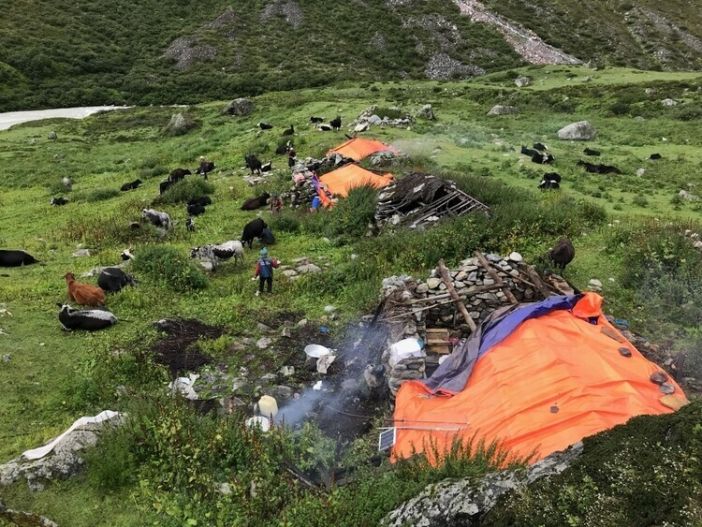
Herding was still a vibrant aspect of life in the Langtang Valley at the moment the Gorkha Earthquake struck Nepal on April 25, 2015, triggering a series of co-seismic avalanches and landslides that killed nearly half of the herding community and over four hundred yak and yak hybrids. As the aftermath continued to unfold, more and more herders sold their animals and left herding, and five years later as the COVID-19 pandemic began to unfold, only twelve herders remained. Many Langtangpas speak of herding as a lifeway at risk, since most of those who remain in the gorey (herding hut) are elders and the younger generations have no interest in carrying on this work - they fear that the potential ‘end’ of herding is just a few years away.
In this talk, based on a chapter of my forthcoming dissertation, I offer an ethnographic portrait of “living in the gorey” (herding hut) which examines the seven year period in the the disaster - a critical moment in the history of Langtangpa herding suffused with the losses of 2015, historically constituted precarities, the struggles of post-disaster recovery, nostalgia for herding pasts, and even feelings of anticipatory grief. The current crisis in herding, as many Langtangpas see it, is an ethical one that reflects broader concerns about the erosion of traditional lifeways and deteriorating social relations. By contextualizing current concerns within the historical morphologies of herding in Langtang and ongoing debates about the social and material impacts of the tourism economy, I show how the remaining goreypa are herding in the wake of many different events still taking their toll within unsettled moral ecologies. How do people conceptualize and anticipate the uncertain futures of herding amid broader patterns of development, vulnerability, and intergenerational change?
Austin Lord is a PhD Candidate in the Department of Anthropology whose research focuses on lived experiences of disaster and aftermath, questions of time and temporality, political ecologies of the water-energy nexus, infrastructural politics, the impacts of climate change and climate science, and the construction of environmental knowledge in the Himalayan region. Austin's dissertation research focuses on the afterlives of disaster in the Langtang Valley of Nepal – where a massive co-seismic avalanche occurred during the 2015 Gorkha earthquake. Drawing from over five years of research and volunteer work, his work carefully examines the ways that the Langtangpas conceptualize recovery, resilience, and uncertainty as they seek to rebuild their lives in the wake of an unthinkable disaster.
This event is co-sponsored by the South Asia Program. Thank you.
Additional Information
Program
Einaudi Center for International Studies
South Asia Program
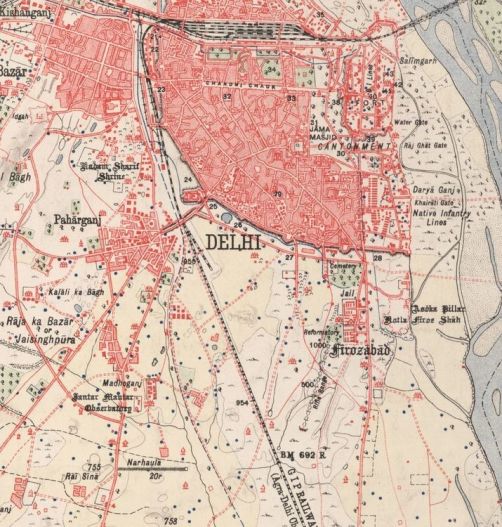
An ‘Unlawful Object of Gathering’: Stealing a Corpse in 1927 Delhi
February 7, 2022
11:00 am
Talk by Kelsey Jane Utne
This talk explores the disrupted burial of convicted murderer Abdul Rashid in 1927 in order to understand how urban expansion altered and constrained commemorative praxis in late colonial India. Because of the subsequent criminal prosecutions for corpse theft and official inquiry, we have access to an incredibly detailed account of the movements of the police, the so-called “mob,” and Rashid’s body through space. In turn, the case study reveals an alternative necrogeography imagined by Delhi’s Muslim community – one closed off by the built infrastructure of the colonial city.
Kelsey J. Utne is a prison educator, digital humanities scholar, and 2021-22 ACLS Dissertation Completion Fellow in Modern South Asian History at Cornell University. She is finishing her dissertation, Corpse Politics: Disposal and Commemoration of the Indian Interwar Dead.
Additional Information
Program
Einaudi Center for International Studies
South Asia Program