Einaudi Center for International Studies
Global Public Voices Fellow on Hulu
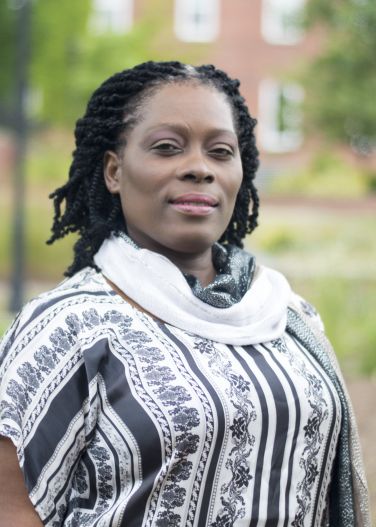
Initiative 29 Features Tao Leigh Goffe
Journey through time with Tao Leigh Goffe as she uncovers her story at the intersection of Black and Chinese culture. Watch for free on YouTube.
Additional Information
Post-Pandemic Whiplash Awaiting World's Poor
Kaushik Basu, SAP
Kaushik Basu (Carl Marks Professor of International Studies/SAP) writes this opinion piece about the looming economic crisis for poor countries and the poor within strong economies.
Additional Information
President Calls for Solidarity
Cornell Responds to Rise in Anti-Semitic Hate Crimes
President Pollack's statement highlights reported bias incidents on campus amid ongoing tensions in the Middle East.
Additional Information
Perspectives 360 Film Festival: Virus Has No Nationality
June 11, 2021
7:00 pm
The Ithaca Asian American Association invites you to share your story through your lens, as you interpret and express your meaning of "Virus Has No Nationality."
You are encouraged to be bold in challenging issues of racism, sexism, xenophobia, ableism, heterosexism, classism, and all -isms. Through a five-minute film, we hope your creative expressions will inspire hope and possibilities for a better tomorrow.
The film festival is open to everyone regardless of age, experience, and status. All you need is a video recording device such as your phone. Films can be completed as an individual or group and must be submitted through FilmFreeway by Monday, May 31 to be screened on Friday, June 11, 2021, at 7:00 p.m. An award presentation will follow.
Filmmaking Criteria
Must be less than 5 minutes longCan be of any genreCan be created on mobile devices or digital camerasMust align with the “Virus Has No Nationality” campaign and feature a mask as a special propMust be submitted on FilmFreeway no later than May 31, 2021Awards
Six $500 Scholarship Prize awarded to best high school and college studentsTen $100 Gift Certificates to local businesses and eateries for best general submissionsSponsors
The film festival is made possible by the Park Foundation, and it is supported by:
Building BridgesCAN Cooperative Media/Sustainability SentinelCommunity Leaders of Colors (CLOC)Cornell Asian and Asian American Center (A3C)Dorothy Cotton InstituteGlobal CornellGreater Ithaca Activities Center (GIAC)Ithaca Mural AssociationKhuba InternationalLearning FarmsTompkins County's Office of the Human Rights.Please contact Ithaca Asian American Association at iaaa607@yahoo.com for more information and with any questions.
Additional Information
Program
Einaudi Center for International Studies
East Asia Program
Southeast Asia Program
South Asia Program
Language Resource Center Speaker Series - Elvia Andía Grágeda
September 1, 2021
4:30 pm
"Designing (Indigenous) Language Classes Rooted in ACTFL Standards to Promote Spoken Proficiency"
Elvia Andía Grágeda
Lecturer, The Ohio State University
Unlike commonly taught languages, most Indigenous ones share a particular characteristic: The lack of material for language instruction and the challenge of identifying abundant sources of input for their classes. In many cases, it is necessary to adapt existing materials from other languages to achieve language learning goals, but in doing so, we usually find materials lacking the cultural knowledge of Indigenous people. In addition, many major languages have established proficiency standards (e.g., CEFR and ACTFL). Are these standards applicable to Indigenous languages?
While Indigenous language courses may be similarly designed to those of major languages in their application of real-world language use and content organization, differences arise when defining levels of proficiency which must be culturally appropriate. As such, the active participation of a culturally competent language instructor in the course design process is imperative for the development of effective and relevant proficiency standards unique to the language.
This talk will discuss best practices in designing Indigenous language classes rooted in ACTFL standards to promote oral proficiency. While examples will be drawn from Quechua, the topic is applicable to all languages.
Bio: Elvia Andía is a linguist specializing in the study and instruction of Bolivian Quechua and Spanish. She holds a Master's degree in Linguistic Policy of Indigenous Languages in Higher Education. Her research investigates the role of Quechua in such policies, particularly in the Quechua Public Indigenous University in Bolivia. She has worked as the Departmental Coordinator in the Ministry of Education for the country of Bolivia in Intra- and Intercultural Multilingual Education. Andía joined Ohio State in 2016 and coordinates the Quechua program for both undergraduate and graduate students across six institutions.
She is the world's first certified OPI tester for Quechua and has published on teaching methods and Indigenous stories. In 2019, she won the Premio Guamán Poma de Ayala in Indigenous Language, a national literature prize in Bolivia, for her novel written in Quechua.
Co-sponsored by the Language Resource Center and Latin American and Caribbean Studies Program.
This event will be streamed live over Zoom.
Additional Information
Program
Einaudi Center for International Studies
Latin American and Caribbean Studies
Language Resource Center Speaker Series - Karen Lichtman
October 4, 2021
4:00 pm
Stimson Hall, G25
"Acquisition vs. Learning in 2021"
Karen Lichtman
Associate Professor of Spanish Linguistics and Director of Educator Licensure in the Department of World Languages & Cultures, Northern Illinois University
In the late 1970s and early 1980s, Stephen Krashen put forward a model of language learning distinguishing between language acquisition (acquiring a language by listening or reading and understanding) and language learning (conscious, effortful study and practice of language). Today, many people look at Krashen’s monitor model as just a "method from the past." However, most of these ideas are still very much present in contemporary research — just under different names, such as implicit vs. explicit language teaching and learning.
This talk will share three of my studies using the acquisition/learning, or implicit/explicit, framework: one on elementary students learning Spanish, another with children and adults who were taught an artificial mini-language in the laboratory, and finally, a study currently in progress comparing two different teaching methods in beginning classes. Each study has different implications for teaching: (1) grammar instruction can be delayed to the end of years of input-based language study, (2) grammar instruction may have a negative effect on learners' speaking fluency, and (3) a "narrow and deep" curriculum using high-frequency structures in context could be more effective than a traditional grammar-based curriculum... but since this last study is still in progress, attend the talk to find out if this is really the case!
Bio: Dr. Lichtman is Associate Professor of Spanish Linguistics and Director of Educator Licensure in the Department of World Languages & Cultures at Northern Illinois University. Her research focuses on instructed second language acquisition. Specifically, she studies implicit and explicit language learning in children and adults, questioning the conventional wisdom that children learn languages implicitly whereas adults need explicit grammar instruction. She recently wrote Teaching Proficiency through Reading and Storytelling (TPRS): An Input-Based Approach to Second Language Instruction. Dr. Lichtman teaches methods courses for pre-service teachers and upper-level Spanish Linguistics courses.
This event will be held in person in G25 Stimson and will also be streamed live over Zoom. Join us at the LRC or on Zoom.
The event is free and open to the public. Campus visitors and members of the public must adhere to Cornell's public health requirements for events, which include wearing masks while indoors and providing proof of vaccination or a recent negative COVID-19 test.
Additional Information
Program
Einaudi Center for International Studies
Latin American and Caribbean Studies
Naomi Egel, PACS/IES: Einaudi Student Path (video)
"One of the strengths of the Einaudi Center and Reppy Institute is how they bring together scholars working on related issues, but from a variety of perspectives," says Naomi Egel, a PhD student in government at Cornell. She participated in the Einaudi Dissertation Proposal Development Program and received Einaudi Center, Reppy, and IES financial support for research travel to Geneva, Switzerland.
Additional Information
Eun A Jo, PACS/EAP: Einaudi Student Path (video)
Eun A Jo is a PhD student in government and a Peace and Conflict Studies Fellow with the Einaudi Center's Judith A. Reppy Institute for Peace and Conflict Studies. Through support from the Reppy Institute, East Asia Program, and Einaudi Center more broadly, she has been able to travel for research to explore comparative questions of peace and conflict.
Additional Information
Einaudi Student Path Video: FLAS Recipient Nisa Burns '21
Nisa Burns '21 received a Foreign Language and Area Studies Fellowship to learn Burmese.
Due February 16: Apply for FLAS support to study a language of South Asia or Southeast Asia.
Nisa studied linguistics at Cornell and minored in Southeast Asian Studies. Her connection to the Southeast Asia Program is personal to her as a Thai American. The program has fostered her love for the region and language learning generally, and she's been able to study Burmese, Thai, and even Hungarian at Cornell.
Nisa says, "I really appreciate that SEAP is here and has this volume of knowledge and expertise to allow me to learn more about the world."
Additional Information
Virtual Research Seminar on The COVID-19 Crisis: Policies, Outcomes, and Lesson Drawing
May 14, 2021
8:30 am
Cornell University and Tsinghua University are cohosting this international seminar with papers exploring policy responses to COVID-19 from across the world. The papers are featured in a special issue of the Journal of Comparative Policy Analysis, just published.
Special Issue on The COVID -19 Crisis: Policies, Outcomes, and Lesson Drawing, Journal of Comparative Policy Analysis: Research and Practice, 2021, 23 (2) https://www.tandfonline.com/toc/fcpa20/current
Dr. Xue Zhang (Global Dev) and Dr. Mildred Warner (City and Reg Planning and Global Dev) have a paper in this collection based on work supported by the Cornell Center for Social Sciences and Cornell Center for Inequality.
This seminar is funded in part by a Cornell China Center-East Asia Program grant.
Program (US Eastern Time)
8:30am-8:35am Introduction Welcome Remark Mildred Warner, Cornell University Introduction of the Program Zhilin LIU, Tsinghua University
8:35am-9:35am Session I - Crisis Agenda Setting and Inter-connectedness of Crisis and Non-Crisis Policy Making Moderator: Xue ZHANG, Cornell University COVID-19, federalism, and health care financing in Canada, the United States, and Mexico. Presenter: Gregory MARCHILDON, University of Toronto, Canada Government-led or public-led? -- Chinese policy agenda setting during the COVID-19 pandemic. Presenter: Yixin DAI, Tsinghua University, China Social safety nets and COVID-19 stay home orders across US states: A comparative policy analysis. Presenter: Mildred WARNER, Cornell University, USA
9:35am-9:40am Break (5 minutes)
9:40am-10:50am Session II – Politics of COVID-19 Responses: Partisanship, Inter-governmental Relationship, and State-Society Tension Moderator: Mildred WARNER, Cornell University Comparing motivations for including enforcement in US COVID-19 state executive orders. Presenters: Cali CURLEY, University of Miami, USA; Peter Stanley Federman, Indiana University - Purdue University Indianapolis (IUPUI), USA Multi-Level governance, policy coordination and subnational responses to COVID-19: Comparing China and the US. Presenter: Zhilin LIU, Tsinghua University, China Coordination and health policy responses to the first wave of COVID-19 in Italy and Spain Presenter: Paola MATTEI, University of Milan, Italy Community health workers as street-level quasi-bureaucrats in the COVID-19 Pandemic: The cases of Kenya and Thailand. Presenter: Tatchalerm SUDHIPONGPRACHA, Thammasat University, Thailand
10:50am-10:55am Break (5 minutes)
10:55am-12:05pm Session III – Categorizing and Contextualizing COVID-19 Responses: Looking Forward Moderator: Yixin DAI, Tsinghua University Culture, institution, and COVID-19 first response policy: A qualitative comparative analysis of thirty-one countries. Presenters: Bin CHEN, City University of New York, USA; Bo YAN, Xi’an Jiaotong University, China “Measuring the mix” of policy responses to COVID-19: Comparative policy analysis using topic modelling. Presenter: Nihit GOYAL, Delft University of Technology, Netherlands A cross-country comparison of fiscal policy responses to the COVID-19 pandemic. Presenter: Can CHEN, Florida International University, USA Policy responses to the COVID-19 pandemic and potential outcomes in Central and Eastern Europe: Comparing the Czech Republic, the Russian Federation, and the Slovak Republic Presenter: Juraj NEMEC, Masaryk University, Czech Republic
12:05pm-12:10pm Wrap Up Concluding Remarks:Iris GEVA-MAY, JCPA/ICPA-Forum Zhilin LIU, Tsinghua University
Additional Information
Program
Einaudi Center for International Studies
East Asia Program