
Einaudi Center for International Studies
Indigenous Knowledge for Climate Adaptation
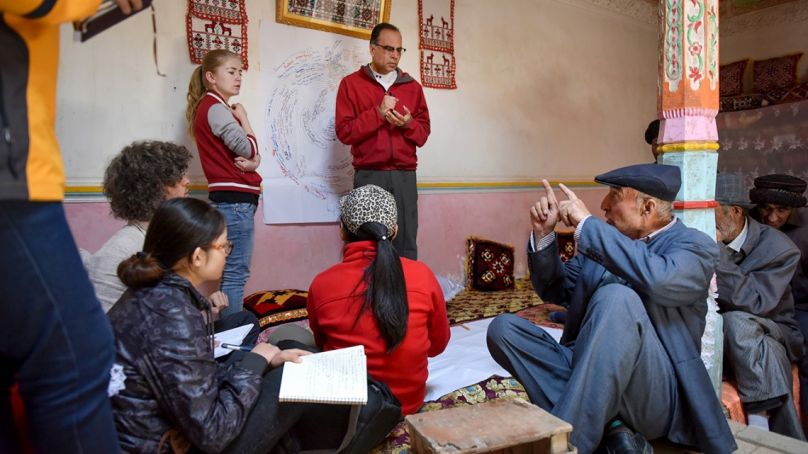
Kassam Develops Climate Calendars
Global Public Voices fellow Karim-Aly Kassam works with Indigenous and rural people to create community-specific ecological calendars.
Additional Information
Refuge, Refusal, Rights: A Conversation with Lamis Abdelaaty and Rebecca Hamlin

October 28, 2021
1:00 pm
Clark Hall, 700
Political scientists Rebecca Hamlin and Lamis Abdelaaty are migration scholars whose work has broad implications for the study of asylum and migrant rights. In their new books, they look closely at the categories and labels that we assign to people on the move, how states respond to refugees, and how these labels and asylum systems affect people on the move.
They'll join Cornell's Migrations initiative and a small panel of Cornell scholars to discuss their new books and the future of asylum and immigration systems across multiple countries and world regions. This event is co-sponsored by the Center for the Study of Inequality and The Department of Government.
Speakers
Rebecca Hamlin, Associate Professor of Legal Studies and Political Science at the University of Massachusetts Amherst, author of Crossing: How We Label and React to People on the MoveLamis Abdelaaty, Assistant Professor of Political Science at Syracuse University, author of Discrimination and Delegation: Explaining State Responses to RefugeesPanel
Chiara Galli, Klarman Postdoctoral Fellow, Department of Sociology at Cornell Ian Kysel, Visiting Assistant Clinical Professor of Law at CornellModerator
Rachel Beatty Riedl, Director of the Mario Einaudi Center for International Studies; John S. Knight Professor of International Studies
Hybrid Event: Members of the Cornell community are welcome and encouraged to join in person. Those outside Cornell can join us via Zoom webinar.
Please note: For those joining in-person please bring your Cornell ID per University COVID-19 guidelines as of September 24th.
Additional Information
Program
Einaudi Center for International Studies
(Re)collecting Southeast Asian Art at Cornell

December 14, 2021
10:00 am
Johnson Museum of Art
The Museum will be closed beginning Tuesday, December 14. Visit museum.cornell.edu/faq for information.
“(Re)collecting” signifies the active process of remembering and draws attention to the power of collections to elicit memories and histories and to act as participants in social and political change. This special installation showcases a collection of objects at the Johnson Museum that have been donated by alumni and faculty of the Cornell Southeast Asia Program (SEAP), beginning in the 1970s with gifts of Buddhist sculpture from Alexander Brown Griswold, SEAP visiting professor.
This installation was curated by Anissa Rahadiningtyas, curatorial assistant for Asian art at the Johnson and SEAP graduate student; Alexandra Dalferro, SEAP graduate student; and Astara Light, SEAP graduate student; under the supervision of Ellen Avril, chief curator and the Judith H. Stoikov Curator of Asian Art.
Visit the online exhibition here.
Additional Information
Program
Southeast Asia Program
Einaudi Center for International Studies
Language Resource Center Speaker Series - Mariame Sy

November 4, 2021
4:30 pm
Stimson Hall, G25
"Critical Thinking in World Language Teaching"
Mariame Sy
Director of the African Language Program and Lecturer of Wolof and Pulaar, Columbia University
Critical thinking, an essential element across academic fields, has been at the heart of education for decades. While research on language education and critical thinking remains somewhat timid, it continues to gain ground among academic communities. Available studies strongly suggest that pedagogical practices that wed world language teaching and critical thinking can facilitate language acquisition and enhance general proficiency. Despite this progress in the research field, there is nonetheless a general reluctance to integrate critical thinking in language teaching practices (Li, 2011; Pica, 2000) because, arguably, its integration presents more challenges for language educators than for teachers in other fields (Lin, Preston, Kharrufa, & Kong, 2016). However, while this statement may be true for teachers of major languages, teachers of the so-called less commonly taught languages (LCTLs) might be more inclined to take on these challenges. As decision-makers of their courses, teachers of LCTLs have opportunities to create innovative practices by engaging in three types of decisions: educational outcomes (what learners can do), content (what should be/is taught), and manner (how the goals of teaching language are achieved).
While recognizing the many challenges – including historical marginalization and inadequate institutional support – in this presentation I aim to shed light on the importance of integrating critical thinking in the language teaching and to explore models and ways of designing materials that can facilitate the integration of critical thinking in the African language classroom. While examples are provided from African languages classrooms, the principles and ideas are applicable to all languages.
Bio: Dr. Mariame Sy is a Lecturer in African Languages and the Director of the African Language Program in the Department of Middle Eastern South Asian and African Studies at Columbia University. She began teaching Wolof in 2001 in the Linguistics Department at UCLA and has since taught Wolof and Pulaar at several institutions, including the Summer Cooperative African Language Institute (SCALI) and The Colorado Project study abroad program in Senegal. She also teaches French in the African Languages Flagship Initiative summer program. Her publications include academic articles on the morpho-phonology and syntax of Wolof and she has two upcoming elementary-level textbooks in Wolof and Pulaar (with Africa World Press and the National African Language Resource Center).
She is also a co-developer of a Wolof video course and has designed a flipped classroom for beginning Introductory Wolof to provide students with supplemental technology-based opportunities to enhance proficiency in key areas of difficulty by practicing outside the classroom setting. Her current work focuses on developing a curriculum based on performance assessments and what learners should understand, know, and be able to do.
She is the current President of the African Language Teachers Association (ALTA) and the Vice President of the Senegambian Studies Group.
This event will be held in person in G25 Stimson and will also be streamed live over Zoom. Join us at the LRC or on Zoom.
The event is free and open to the public. Campus visitors and members of the public must adhere to Cornell's public health requirements for events, which include wearing masks while indoors and providing proof of vaccination or a recent negative COVID-19 test.
Co-sponsored by the Language Resource Center and the Institute for African Development at Cornell University.
Additional Information
Program
Einaudi Center for International Studies
Latin American and Caribbean Studies
Institute for African Development
Netflix's 'Bridgerton' Welcomes the Sharma Family in Season 2 Photos

Durba Ghosh, PACS and SAP
Durba Ghosh, professor of history, explains that adding the Sharma family to season two of the Netflix show “Bridgerton” is historically accurate as British officials between 1811 and 1820 involved with the East India Company often raised families with Indian women and sometimes brought their children back to England to be immersed in English culture.
Additional Information
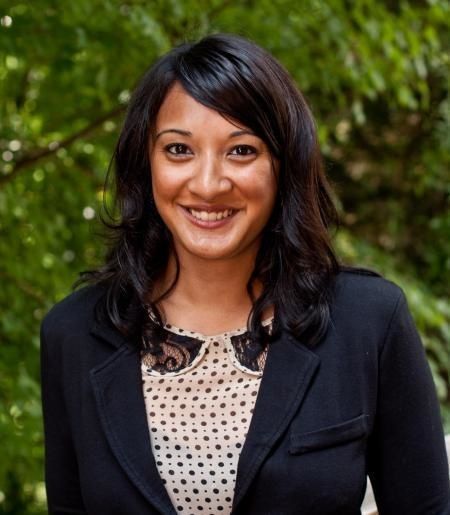
How Gender Shapes Security Sector Restraint
October 14, 2021
11:25 am
Dr. Sabrina Karim, the Hardis Family Assistant Professor in Government, will present preliminary research from the Gender and Security Sector Lab that she runs at Cornell University. The presentation will focus on how gender equality within the security forces affects personnel’s beliefs and norms about the use of violence as well as how different forms of socialization, such as through participation in United Nations Peacekeeping Operations, affects the same outcomes. The research draws on surveys conducted with the security forces in Ghana, Zambia, Senegal, and Uruguay.
This seminar is part of a series organized by the Reppy Institute for Peace and Conflict Studies (PACS) and the Gender and Security Sector (GSS) Lab. Download the Fall 2021 Seminar Series schedule here.
Additional Information
Program
Reppy Institute for Peace and Conflict Studies
Einaudi Center for International Studies
Oct. 1 Skytte Award Ceremony

Peter Katzenstein, Johan Skytte Prize Laureate
Oct. 1 at 11:30 a.m. ET: Tune in to Katzenstein's Skytte Prize lecture, “Thinking about Spaghetti—Served by German and Italian Waiters.”
Additional Information
Meet Our New Program Directors

New Directors Take Helm at LACS, IES, SEAP
New program directors Ernesto Bassi, Mabel Berezin, and Tom Pepinsky share their programs' plans for this academic year.
Additional Information
Tumbuka: Cultural Orientation and Elementary Language Elements
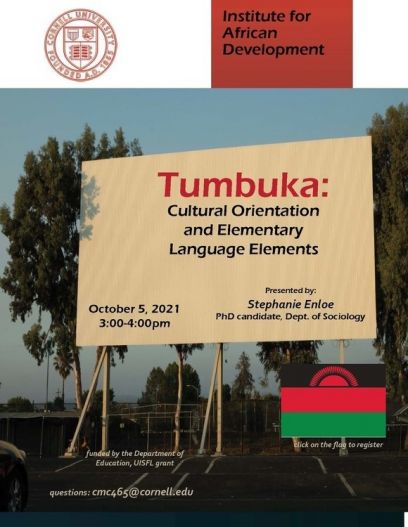
October 5, 2021
3:00 pm
Join the Institute for African Development for our conversation hour in Tumbuka on 10/5! Learn about traditional and cultural norms in Malawi as well as greetings, basic vocabulary and phrases in Tumbuka! (No previous knowledge of Tumbuka or African languages necessary!)
Additional Information
Program
Einaudi Center for International Studies
Latin American and Caribbean Studies
Institute for African Development
This Obscure, Now Contentious Law Is Being Used To Expel Thousands of Migrants

Stephen Yale-Loher, Immigration
“The problem is that it only protects people who were already in the United States,” says Stephen Yale-Loehr, professor of immigration law. “People who are entering now are not eligible for TPS."