
Einaudi Center for International Studies
Meet Political Cartoonist Pedro X. Molina

Incoming Visiting Scholar Fights for Fair Elections in Nicaragua
The Nicaraguan cartoonist joins Einaudi's Latin American Studies Program this fall as an IIE Artist Protection Fund Fellow. Listen to an interview.
Additional Information
Amor and Exile: True Stories of Love Across America’s Borders
July 7, 2021
2:00 pm
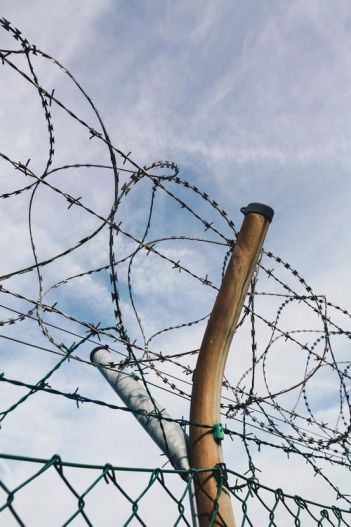
In this eCornell Keynotes event, Nicole Salgado '98, an advocate for environmental conservation and migrants’ rights based in Querétaro, México, and journalist Nathaniel Hoffman '99 will discuss their chronicle of a highly underreported aspect of our country’s punitive immigration system: the often insurmountable process faced by couples of mixed immigration status.
Their 2013 book, Amor and Exile: True Stories of Love Across America’s Borders, documents the experiences of three couples, including Ms. Salgado’s first-person account of life in the U.S. with her husband while he was undocumented, her tortured decision to leave the country with him, and their seven years of exile and starting over together in Mexico.
Mr. Hoffman and Ms. Salgado will examine how little has changed policywise in the years since their book’s publication. They will also highlight current proposals for legislative reform that could provide relief to millions of U.S. citizen partners and families of undocumented immigrants who are languishing in legal limbo, driven underground, exiled abroad, and/or separated.
This event is co-sponsored by eCornell and the Migrations initiative.
Additional Information
Program
Einaudi Center for International Studies
Latin American and Caribbean Studies
PACS Faculty Appointed Dean of Cornell Law
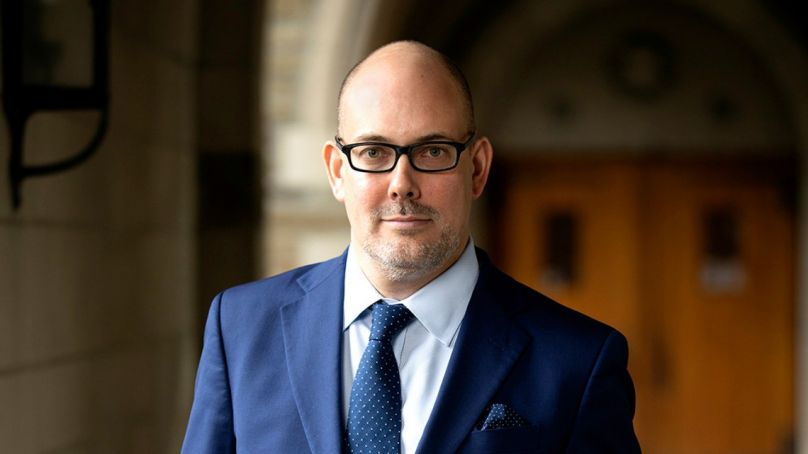
Jens David Ohlin Begins "Labor of Love" on July 1
Cornell Law School's new Allan R. Tessler Dean is a core faculty member in Einaudi's Reppy Institute for Peace and Conflict Studies.
Additional Information
Competence and Control: The Effect of Democratization on the Civil Service

June 24, 2021
10:00 am
Join the Southeast Asia Program (SEAP) and the Sydney Southeast Asia Centre for our upcoming IS4 webinar exploring the effect of democratization on Indonesia's civil service.
Does democratization lead to more meritocracy in the civil service? In this webinar, Associate Professor Jan Pierskalla argues that electoral accountability increases the value of competence over personal loyalty in the civil service. While this resembles an application of merit principles, it does not lead to an automatic reduction in patronage politics. In the context of elections in low-income countries, competent civil servants are used to facilitate the distribution of clientelistic goods at mass-scale to win competitive elections. The selection of competent but less loyal civil servants also requires the increased use of control mechanisms, like the timing of promotions, to ensure compliance by civil servants. Associate Professor Jan Pierskalla tests these claims using novel micro-level data on promotions in Indonesia's civil service before and after democratization in 1999.
We warmly invite you to join Associate Professor Jan Pierskalla, Ohio State University, in conversation with Professor Tom Pepinsky, Cornell University to explore the effect of democratization on Indonesia's civil service. The conversation will be moderated by Assistant Professor Jessica Soedirgo from the University of Amsterdam.
Additional Information
Program
Einaudi Center for International Studies
Southeast Asia Program
Global Public Voices Fellow on Hulu

Initiative 29 Features Tao Leigh Goffe
Journey through time with Tao Leigh Goffe as she uncovers her story at the intersection of Black and Chinese culture. Watch for free on YouTube.
Additional Information
Post-Pandemic Whiplash Awaiting World's Poor
Kaushik Basu, SAP
Kaushik Basu (Carl Marks Professor of International Studies/SAP) writes this opinion piece about the looming economic crisis for poor countries and the poor within strong economies.
Additional Information
President Calls for Solidarity

Cornell Responds to Rise in Anti-Semitic Hate Crimes
President Pollack's statement highlights reported bias incidents on campus amid ongoing tensions in the Middle East.
Additional Information
Perspectives 360 Film Festival: Virus Has No Nationality

June 11, 2021
7:00 pm
The Ithaca Asian American Association invites you to share your story through your lens, as you interpret and express your meaning of "Virus Has No Nationality."
You are encouraged to be bold in challenging issues of racism, sexism, xenophobia, ableism, heterosexism, classism, and all -isms. Through a five-minute film, we hope your creative expressions will inspire hope and possibilities for a better tomorrow.
The film festival is open to everyone regardless of age, experience, and status. All you need is a video recording device such as your phone. Films can be completed as an individual or group and must be submitted through FilmFreeway by Monday, May 31 to be screened on Friday, June 11, 2021, at 7:00 p.m. An award presentation will follow.
Filmmaking Criteria
Must be less than 5 minutes longCan be of any genreCan be created on mobile devices or digital camerasMust align with the “Virus Has No Nationality” campaign and feature a mask as a special propMust be submitted on FilmFreeway no later than May 31, 2021Awards
Six $500 Scholarship Prize awarded to best high school and college studentsTen $100 Gift Certificates to local businesses and eateries for best general submissionsSponsors
The film festival is made possible by the Park Foundation, and it is supported by:
Building BridgesCAN Cooperative Media/Sustainability SentinelCommunity Leaders of Colors (CLOC)Cornell Asian and Asian American Center (A3C)Dorothy Cotton InstituteGlobal CornellGreater Ithaca Activities Center (GIAC)Ithaca Mural AssociationKhuba InternationalLearning FarmsTompkins County's Office of the Human Rights.Please contact Ithaca Asian American Association at iaaa607@yahoo.com for more information and with any questions.
Additional Information
Program
Einaudi Center for International Studies
East Asia Program
Southeast Asia Program
South Asia Program
Language Resource Center Speaker Series - Elvia Andía Grágeda
September 1, 2021
4:30 pm
"Designing (Indigenous) Language Classes Rooted in ACTFL Standards to Promote Spoken Proficiency"
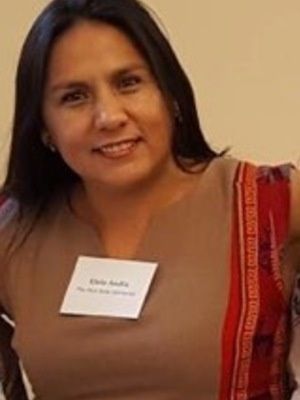
Elvia Andía Grágeda
Lecturer, The Ohio State University
Unlike commonly taught languages, most Indigenous ones share a particular characteristic: The lack of material for language instruction and the challenge of identifying abundant sources of input for their classes. In many cases, it is necessary to adapt existing materials from other languages to achieve language learning goals, but in doing so, we usually find materials lacking the cultural knowledge of Indigenous people. In addition, many major languages have established proficiency standards (e.g., CEFR and ACTFL). Are these standards applicable to Indigenous languages?
While Indigenous language courses may be similarly designed to those of major languages in their application of real-world language use and content organization, differences arise when defining levels of proficiency which must be culturally appropriate. As such, the active participation of a culturally competent language instructor in the course design process is imperative for the development of effective and relevant proficiency standards unique to the language.
This talk will discuss best practices in designing Indigenous language classes rooted in ACTFL standards to promote oral proficiency. While examples will be drawn from Quechua, the topic is applicable to all languages.
Bio: Elvia Andía is a linguist specializing in the study and instruction of Bolivian Quechua and Spanish. She holds a Master's degree in Linguistic Policy of Indigenous Languages in Higher Education. Her research investigates the role of Quechua in such policies, particularly in the Quechua Public Indigenous University in Bolivia. She has worked as the Departmental Coordinator in the Ministry of Education for the country of Bolivia in Intra- and Intercultural Multilingual Education. Andía joined Ohio State in 2016 and coordinates the Quechua program for both undergraduate and graduate students across six institutions.
She is the world's first certified OPI tester for Quechua and has published on teaching methods and Indigenous stories. In 2019, she won the Premio Guamán Poma de Ayala in Indigenous Language, a national literature prize in Bolivia, for her novel written in Quechua.
Co-sponsored by the Language Resource Center and Latin American and Caribbean Studies Program.
This event will be streamed live over Zoom.
Additional Information
Program
Einaudi Center for International Studies
Latin American and Caribbean Studies
Language Resource Center Speaker Series - Karen Lichtman
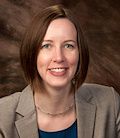
October 4, 2021
4:00 pm
Stimson Hall, G25
"Acquisition vs. Learning in 2021"
Karen Lichtman
Associate Professor of Spanish Linguistics and Director of Educator Licensure in the Department of World Languages & Cultures, Northern Illinois University
In the late 1970s and early 1980s, Stephen Krashen put forward a model of language learning distinguishing between language acquisition (acquiring a language by listening or reading and understanding) and language learning (conscious, effortful study and practice of language). Today, many people look at Krashen’s monitor model as just a "method from the past." However, most of these ideas are still very much present in contemporary research — just under different names, such as implicit vs. explicit language teaching and learning.
This talk will share three of my studies using the acquisition/learning, or implicit/explicit, framework: one on elementary students learning Spanish, another with children and adults who were taught an artificial mini-language in the laboratory, and finally, a study currently in progress comparing two different teaching methods in beginning classes. Each study has different implications for teaching: (1) grammar instruction can be delayed to the end of years of input-based language study, (2) grammar instruction may have a negative effect on learners' speaking fluency, and (3) a "narrow and deep" curriculum using high-frequency structures in context could be more effective than a traditional grammar-based curriculum... but since this last study is still in progress, attend the talk to find out if this is really the case!
Bio: Dr. Lichtman is Associate Professor of Spanish Linguistics and Director of Educator Licensure in the Department of World Languages & Cultures at Northern Illinois University. Her research focuses on instructed second language acquisition. Specifically, she studies implicit and explicit language learning in children and adults, questioning the conventional wisdom that children learn languages implicitly whereas adults need explicit grammar instruction. She recently wrote Teaching Proficiency through Reading and Storytelling (TPRS): An Input-Based Approach to Second Language Instruction. Dr. Lichtman teaches methods courses for pre-service teachers and upper-level Spanish Linguistics courses.
This event will be held in person in G25 Stimson and will also be streamed live over Zoom. Join us at the LRC or on Zoom.
The event is free and open to the public. Campus visitors and members of the public must adhere to Cornell's public health requirements for events, which include wearing masks while indoors and providing proof of vaccination or a recent negative COVID-19 test.
Additional Information
Program
Einaudi Center for International Studies
Latin American and Caribbean Studies