
Einaudi Center for International Studies
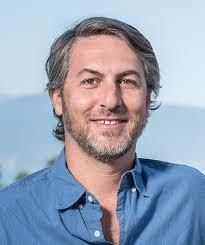
Emerging Markets Theme Research Seminar—Claudio Ferraz
April 2, 2021
12:00 pm
The research seminar series is an initiative of the Emerging Markets Theme of the Cornell S.C. Johnson College of Business, which focuses on engaging students and faculty in discourse over the role of emerging markets in an increasingly connected world.
Every month, we will host a speaker to expand our understanding of emerging economies through research and diverse perspectives. Join us in welcoming Claudio Ferraz on April 2 at 12pm ET.
Claudio Ferraz is a Professor of Economics at the Vancouver School of Economics, University of British Columbia. He is also a part-time professor at the Department of Economics of the Pontifícia Universidade Católica do Rio de Janeiro (PUC-Rio). He currently serves as Scientific Director of J-PAL Latin America & Caribbean and as co-director of the Political Economy Network of LACEA. He is an honorary member of LACEA, fellow of the Econometric Society and currently an Associate Editor of Econometrica, Journal of Political Economy, and Journal of Development Economics. His academic research focuses on economic development, political economy, and public economics.
Additional Information
Program
Einaudi Center for International Studies
Latin American and Caribbean Studies
Image, Stories, and Silences of North Korean “Ex-Returnees” Soni Kum artist talk

April 2, 2021
10:00 am
Image, Stories, and Silences of “Ex-Returnees” Who Defected from North Korea to Japan: Artist Talk with Soni Kum
Kum will discuss her installation work, Morning Dew-The Stigma of Being "Brainwashed" exhibited in Tokyo in November 2020. It is based on interviews conducted with North Korean ex-“returnees” now living in Tokyo. Most are zainichi Koreans (“ethnic Koreans resident in Japan”) or their children, who from 1959 to 1984 moved to North Korea as part of the Repatriation Program. They thought the DPRK was ‘a paradise on earth,’ only to experience the severe living conditions of North Korea’s recovery from the Korean War. They are compelled to hide the fact that they left, or fled from, North Korea, or experience discrimination and other troubling consequences. Facing these fears of her interviewees, Kum’s work weaves together archival images, text, and silences to artistically evoke their hidden stories.
Discussants include Brett de Bary, Professor Emerita, Cornell, and Rebecca Jennison, Art Critic, Kyoto, Japan.
This event is co-sponsored by the Central New York Humanities Corridor from an award by the Andrew W. Mellon Foundation. This event is also co-sponsored by the Migrations initiative and the Reppy Institute for Peace and Conflict Studies (PACS).
The event image is from the installation named, 'Morning Dew-the stigma of being brainwashed'. To learn more about artist Soni Kum, please visit her website: http://www.sonikum.com/
Additional Information
Program
Einaudi Center for International Studies
East Asia Program
Reppy Institute for Peace and Conflict Studies
Links and Fractures - Southeast Asia Graduate Student Conference 2021

March 21, 2021
9:00 am
The time of global pandemic presented many obstacles for communities engaged with Southeast Asia to stay connected and thrive. At the same time, the limitations upon meeting in person or conducting fieldwork inspired new ways to forge dialogues, shake old conventions, and embrace creative, often technological, change. As graduate students, we witnessed a boom of new and revamped platforms that emerged to connect those separated geographically by COVID-19 and enable academic, social, and professional relations. On the other hand, physical limitations within our communities have produced severe economic and personal fractures that have not yet been remediated. These patterns of Links and Fractures have long existed before COVID-19 in Southeast Asia, arising out of historical processes of colonization and decolonization, religion, commodity and cultural exchanges, migration, language, information technology, economic expansion, social unrest, political upheaval, and more. Within these patterns are both opportunities and losses for a wide range of diverse Southeast Asian communities, creating “new normals” before the “new normal” instigated by COVID-19.
The Graduate Student Conference will be held March 19-21, 2021 online, catering to the opportunity to bring together participants and attendees from all over the world, and powered by SEAP web-platforms. PhD and Master students will present their research united by this common theme across all academic disciplines, presenting their work on how these Links and Fractures have shaped communities in Southeast Asia as part of a panel with faculty discussants. Over this immersive three-day period, the sharing of related research with Cornell SEAP faculty, academics and fellow peers within the graduate community will be facilitated.
- Keynote by Prof. Juno Salazar Parreñas (STS/FGSS), "Fracture or Linked? Southeast Asia after Area Studies Died"
- Full listing of Speakers and Abstracts
- Overview and registration links for each panel: Conference Schedule
Quick panel registration links:
SEA and the Indian Ocean: flows of ideas, goods, and labourState-making and resistancePolitics and gender in religion: entangled text and imageMemory: in poetics, battles, and campsEducating modernity, teaching nationalismMigrated Culture: politics of diaspora across generations This conference is organized by the Southeast Asia Graduate Student Committee
Additional Information
Program
Einaudi Center for International Studies
Southeast Asia Program
South Asia Program
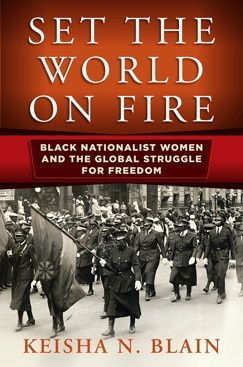
Set the World on Fire: Black Nationalist Women and the Struggle for Global Freedom
March 25, 2021
11:25 am
Keisha Blain leads a discussion of excerpts from her book "Set the World on Fire: Black Nationalist Women and the Struggle for Global Freedom" published by University of Pennsylvania Press, 2018.
Note: The author will join for a conversation about their work. No formal presentation will be given; please read in advance. A link to the reading will be sent with the registration confirmation.
Part of the Reppy Institute for Peace and Conflict Studies (PACS) seminar series.
About the author
Keisha N. Blain is an award-winning historian of the 20th century United States with broad interests and specializations in African American History, the modern African Diaspora, and Women’s and Gender Studies. She is an Associate Professor of History at the University of Pittsburgh and the president of the African American Intellectual History Society. She is currently a 2020-2021 fellow at the Carr Center for Human Rights Policy at Harvard University. She also serves as an editor for the Washington Post’s ‘Made by History’ section.
Blain has published extensively on race, gender, and politics in both national and global perspectives. She is the author of the multi-prize-winning book Set the World on Fire: Black Nationalist Women and the Global Struggle for Freedom (2018) and co-editor of three books: To Turn the Whole World Over: Black Women and Internationalism (University of Illinois Press, 2019); New Perspectives on the Black Intellectual Tradition (Northwestern University Press, 2018); and Charleston Syllabus: Readings on Race, Racism, and Racial Violence (University of Georgia Press, 2016).
Her latest books are Four Hundred Souls: A Community History of African America, 1619-2019, edited with Ibram X. Kendi (Penguin Random House/One World, February 2, 2021); and Until I Am Free: Fannie Lou Hamer's Enduring Message to America (Beacon Press, October 5, 2021).
Follow her on Twitter @KeishaBlain and on Instagram @KeishaNBlain.
Additional Information
Program
Einaudi Center for International Studies
Reppy Institute for Peace and Conflict Studies
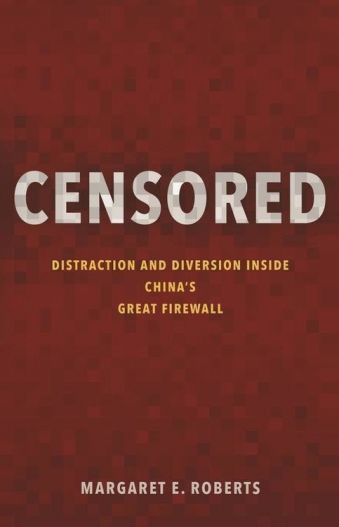
Censored: Distraction and Diversion Inside China's Great Firewall
March 18, 2021
11:25 am
Margaret E. Roberts, Associate Professor of Political Science at University of California at San Diego, discusses her book Censored: Distraction and Diversion Inside China's Great Firewall (Princeton University Press, 2018).
The author will join for a conversation about their work. No formal presentation will be given; please read in advance. A link to the reading will be sent with the registration confirmation.
Part of the Reppy Institute for Peace and Conflict Studies (PACS) seminar series.
About the author
Margaret E. Roberts is an Associate Professor of Political Science at University of California at San Diego. Her research interests lie in the intersection of political methodology and the politics of information, with a specific focus on methods of automated content analysis and the politics of censorship in China. She received a PhD from Harvard in Government (2014), MS in Statistics from Stanford (2009) and BA in International Relations and Economics (2009). Currently, she is working on a variety of projects that span censorship, propaganda, topic models, and other methods of text analysis. Her work has appeared or is forthcoming in the American Journal of Political Science, American Political Science Review, Political Analysis, and Science.
Additional Information
Program
Einaudi Center for International Studies
Reppy Institute for Peace and Conflict Studies
East Asia Program
Institute for African Development Seminar: Moving Worlds, Moving Words - featuring Patricia Jabbeh Wesley

March 19, 2021
4:00 pm
Poetry is sometimes viewed as the least directly political of literary genres, yet the political and other forms of exile have encroached on the lives of writers. Forced to flee their homeland, writers have chosen to make exile a vital theme as well as a practical condition. The IAD Migration Poetry Hour will highlight poets whooften straddle two worlds, seeking truth in experience as theirpoetry bear witness to new beginnings, new experiences and new stories.
Dr. Patricia Jabbeh Wesley, a Liberian civil war survivor and poet, who immigrated with her family to the US during the Liberian civil war. Her books of poetry have been critically reviewed by literary critics and scholars in Europe, Africa, South America, America, and elsewhere. A regular interviewee on her poetics by NPR affiliate TV and Radio stations around the US, Dr. Wesley is also a public speaker on topics about the Liberian civil war, the plight of women, and African and African Diaspora poetics. She is the author of six books of poetry and a children's book, including, Praise Song for My Children: New and Selected Poems (Feb, 2020) When the Wanderers Come Home, (2016), Where the Road Turns, (2010), The River is Rising, (2007), Becoming Ebony, (2003), and Before the Palm Could Bloom: Poems of Africa, (2012). Jabbeh Wesleys individual poems and nonfiction articles have been published in numerous magazines, including Harvard Review, Harvard Divinity Review, Transition Magazine, Prairie Schooner, Crab Orchard Review, New Orleans Review, Black Renaissance Noire, among others. Her poetry and nonfiction pieces have been anthologized in dozens of books in the US and across the world, and her work has been translated in Spanish, Finnish, and Hebrew. She is Professor of English, Creative Writing, and African Literature at Penn State Universitys Altoona campus. Conversations from Penn State | Patricia Jabbeh Wesley | Season 7 | Episode 11 | PBS
The event will be moderated by Naminata Diabate, Associate Professor, Comparative Literature, Cornell
Additional Information
Program
Einaudi Center for International Studies
Institute for African Development
Hyper Education: Why Good Schools, Good Grades, and Good Behavior Are Not Enough, by Pawan Dhingra

March 31, 2021
4:30 pm
Beyond soccer leagues, music camps, and drama lessons, today’s youth are in an education arms race that begins in elementary school. Tutoring companies were already growing rapidly before Covid-19, and remote learning has accelerated this trend. While often associated with Asian Americans, this has expanded widely. The result is not only a threat to public education but also has implications for childhood and academic inequality. Drawing on over 100 in-depth interviews with teachers, tutors, principals, children, and parents, Pawan Dhingra explains how the motivations for “hyper education” extend beyond that of so-called “tiger parents” committed to education and, in addition, involve parents’ moral concerns, including anti-blackness. Teachers resent this trend but their efforts to tamp down will not work. Meaningful changes will require re-envisioning what we want public education to be.
Pawan Dhingra is Professor of American Studies and Faculty Equity and Inclusion Officer at Amherst College. He is Former Curator at the Smithsonian Institution for Beyond Bollywood. An award-winning author and teacher, his most recent book is Hyper Education: Why Good Schools, Good Grades, and Good Behavior Are Not Enough. His bylines include The New York Times, CNN, and elsewhere, and his work has been profiled in The Washington Post, National Public Radio, The Guardian, and other venues.
He is also the author of the multiple award-winning Life Behind the Lobby: Indian American Motel Owners and the American Dream, and the award-winning Managing Multicultural Lives: Asian American Professionals and the Challenge of Multiple Identities . He is the co-author of widely-used Asian America: Sociological and Interdisciplinary Perspectives, with its second edition forthcoming. Dhingra earned his Ph.D. in Sociology from Cornell University.
Additional Information
Program
Einaudi Center for International Studies
South Asia Program
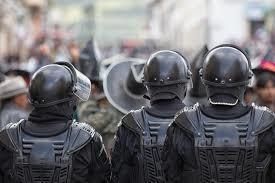
Mano Dura: An Experimental Evaluation of Military Policing in Cali, Colombia by Robert A. Blair and Michael Weintraub, LASP Seminar Series
March 8, 2021
12:00 pm
Governments across the developing world rely on their armed forces for domestic policing operations. Advocates of these “mano dura” (iron fist) policies view them as necessary to control crime, while detractors claim they undermine human rights. We experimentally evaluate a military policing intervention in Cali, Colombia, the country’s third largest city and among its most violent. The intervention involved recurring, intensive military patrols targeting crime hot spots, randomly assigned at the city block level. Using administrative crime and human rights data, surveys, a conjoint survey experiment, a costly behavioral measure, qualitative interviews, and firsthand observations from civilian monitors, we find some suggestive evidence that military policing reduces crime, but only on days and times when soldiers are physically present on the streets. Despite these weak or null effects, we find strong evidence of increased demand for more aggressive military involvement in policing and other aspects of governance, including increased support for military coups. We also find some suggestive evidence of increased human rights abuses committed by police officers in particular a large, significant, and lasting increase in citizens’ reports of witnessing crime, and a correspondingly large, significant, and lasting increase in their willingness to report crimes to the authorities. We interpret this as evidence of increased vigilance by citizens and increased coproduction of security not just between the military and the police, but between civilians and the authorities as well.
Register to attend: https://bit.ly/3kLlHCT
Michael Weintraub is an Associate Professor in the Escuela de Gobierno Alberto Lleras Camargo at Universidad de los Andes in Bogotá, Colombia; Director of the Security and Violence Area of the Center for the Study of Security and Drugs (CESED) at the same university; and Senior Researcher at Peace Research Institute Oslo (PRIO). His research agenda focuses on crime and political violence in Latin America, particularly in Colombia, Central America, and Mexico. He is also interested in historical legacies of violence and how they affect contemporary outcomes. To study these and other topics he uses a combination of experimental and quasi-experimental methods, as well as qualitative case studies. While he wrote my dissertation on Colombia, and live in Bogotá, he also studies Mexico and the three countries in the so-called "Northern Triangle" of Central America: El Salvador, Guatemala, and Honduras. Prior to graduate school,heI worked for three years on human rights and development, primarily in East and Southern Africa. In May 2014 he received my Ph.D. in Government from Georgetown University and has been a Predoctoral Fellow at Yale University’s Program on Order, Conflict, and Violence (2013-2014) and a Jennings Randolph Peace Scholar at the United States Institute of Peace (2012-2013). He was an Assistant Professor of Political Science at Binghamton University (SUNY) from 2014-2016. His articles have been published or are forthcoming in the Journal of Politics, Journal of Conflict Resolution, Journal of Peace Research, Conflict Management and Peace Science, Terrorism and Political Violence, Research & Politics, Journal of Theoretical Politics, and Critical Review.
Robert A. Blair is an Assistant Professor of Political Science and International and Public Affairs at Brown University. His research focuses on international intervention and the consolidation of state authority after civil war, with an emphasis on rule of law and security institutions. He also coordinates the Democratic Erosion consortium, which spans over 50 universities in the US, UK, Ireland, Israel, Turkey, Romania, South Korea, Australia, and the Philippines. The consortium combines research, teaching, and civic and policy engagement to address threats to democracy in the US and around the world.
Additional Information
Program
Einaudi Center for International Studies
Latin American and Caribbean Studies
Rough Work: Loopholes for Lawmakers: Symbolic Prohibition of Bribery

March 30, 2021
11:30 am
Rough Work: Adoree Kim, Ph.D. student, Government
Loopholes for Lawmakers: Symbolic Prohibition of Bribery
Adoree Kim writes: This chapter process-traces the enactment of the 2016 Improper Solicitation and Graft Act in the wake of the Sewol Ferry tragedy. The Improper Solicitation Act, as introduced by the Anti-Corruption and Civil Rights Commission (ACRC), was intended to reduce public official corruption. National Assembly lawmakers revised provisions they believed would restrict their access to political resources or increase their likelihood of becoming targets of enforcement. Stripped of restrictions on third-party petitioning, the law became a “cheap signal” with limited ability to constrain politician corruption. Indeed, the majority of those investigated and prosecuted for violating the Improper Solicitation Act are low-level public officials. This chapter uses legislative records and in-depth interviews with South Korean National Assembly members and ACRC officials to demonstrate how lawmakers discreetly shape institutions to reflect status-quo preferences.
ROUGH WORK: Discussing research in progress, hence the term, rough work. This rough work session is hosted by the East Asia Program's Graduate Student Steering Committee (GSSC).
Additional Information
Program
Einaudi Center for International Studies
East Asia Program
Institute for African Development Seminar: Surviving the Pandemic: An Exploration of the Socio-Economic Impact of COVID-19 on Ghanaians
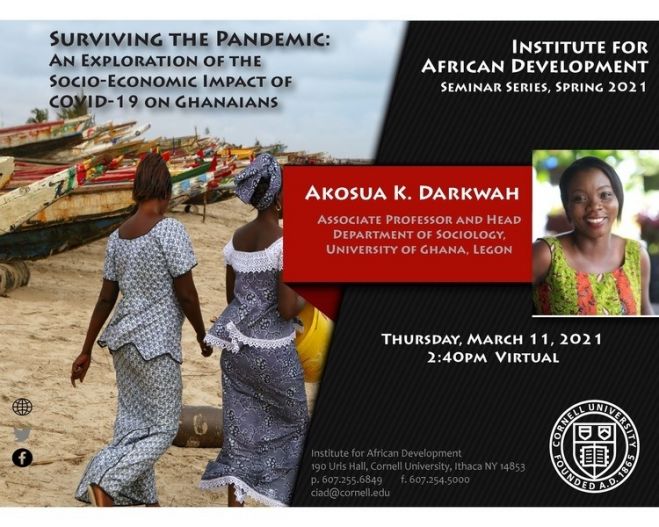
March 11, 2021
2:40 pm
Issues in African Development Seminar Series examines critical concerns in contemporary Africa using a different theme each semester. The seminars provide a forum for participants to explore alternative perspectives and exchange ideas. They are also a focal activity for students and faculty interested in African development. In addition, prepares students for higher level courses on African economic, social and political development. The presentations are designed for students who are interested in development, Africa’s place in global studies, want to know about the peoples, cultures and societies that call Africa home, and explore development theories and alternate viewpoints on development.
Additional Information
Program
Einaudi Center for International Studies
Institute for African Development