
Einaudi Center for International Studies
Cambodia's Angkor Temples as a Military Prize: The World War II Experience

February 25, 2021
12:30 pm
Part of the Ronald and Janette Gatty Lecture series
John Burgess, independent author and journalist, former Washington Post journalist and author of Angkor's Temples in the Modern Era: War, Pride, and Tourist Dollars
Angkor, capital of the Khmer Empire for close to six centuries, has had a rich and varied history since the French reintroduced it to the outside world in the 1860s. Amateur archaeology, steamboat tourism, the temples’ emergence as a symbol of the Cambodian nation, and repeated military struggles for control of the site have shaped its past century and a half. Angkor’s ability to draw people from beyond Cambodia’s borders has resulted in conservation and economic gain but also in conflicts, both among the foreigners and with Cambodians for whom Angkor was and is home.
Additional Information
Program
Einaudi Center for International Studies
Southeast Asia Program
Beyond Bloody Reds: Notes on the Significance of Morinda in the Bagobo Textile Hierarchy

February 18, 2021
12:30 pm
Part of the Ronald and Janette Gatty Lecture series
Cherubim Quizon, Associate Professor of Anthropology in the Department of Sociology, Anthropology, Social Work and Criminal Justice, Seton Hall University
The magical and spiritual power of red cloth has a long and complex story in the Philippines and Southeast Asia. The revolutionary reds in flags, banners and amulets that sustained indigenous bodies in colonial struggles have been broadly approached through the lens of history and philology. Depending on political exigency, they are associated with valor or insurrection; when approached as antiquities, they are valued as chiefly markers often mapped to the killing of men. How do these ideas hold up when understanding the significance of red cloth among indigenous peoples in Mindanao? Focusing on Bagobo textile practices, the paper suggests that the dye plant Morinda sp. when applied to indigenous thread creates conditions that metonymically and procedurally link redness with effort and efficacy that operates within a larger indigenous semantic category of prestige cloths. Comparing Mindanao textile practices to Indonesia and Malaysia suggest broader semantic implications. In seeking to expand semiogenesis beyond the anecdotal dependence on redness and bloodshed that has dominated the literature on Bagobo “warrior” textiles, this paper argues that perspectives from the domain knowledge of the women who make such cloths provides a more robust understanding of textiles as material culture practice in general, and the meanings that we can reasonably associate with indigenous cloth and dress in particular.
Additional Information
Program
Einaudi Center for International Studies
Southeast Asia Program
Old Thai and the Arrival of Thai in Central Thailand

February 12, 2021
8:00 pm
Part of the Ronald and Janette Gatty Lecture series
Pittayawat (Joe) Pittayaporn, Associate Professor, Department of Linguistics; head of the Southeast Asian Linguistics Research Unit, Faculty of Arts, Chulalongkorn University
The linguistic landscape of central Thailand prior to the 13th century was radically different from today. It is generally believed that the area was pre-dominantly Mon-Khmer speaking. O’Connor (1995) suggests that the Tai migration into Southeast Asia started in the first millennium A.D. Diller (2000) similarly suggests that the southwest-ward migration of Tai speakers started in the 10th century. In this talk, I discuss when and how Old Thai, the language attested in 14th-15th century inscriptions, came to replace aboriginal languages of the area. By examining its development from Proto-Southwestern Tai (Pittayaporn 2009), I argue that Old Thai was first spoken in central Thailand some time before the oldest surviving Thai text was inscribed, perhaps in the 13th century. In addition, I hypothesize based on linguistic and genetic evidence that the Thai language came to dominate central Thailand mainly through migration of Tai-speaking population, rather than ethnolinguistic assimilation of indigenous non-Tai speakers.
Additional Information
Program
Einaudi Center for International Studies
Southeast Asia Program
Portrait of a Lady on Fire

March 1, 2021
12:01 am
2019 > France > Directed by Cline Sciamma
With Noemie Merlant, Adele Haenel, Luana Bajrami
In the late 18th century, Marianne, a young painter, recalls being commissioned to secretly paint a wedding portrait of Heloise, the daughter of a French aristocrat and reluctant bride. As the bond between the women grows deeper, the portrait becomes a collaborative testament of their love. In French. Subtitled. More at portraitmovie.com
2 hrs 1 min
We will start taking reservations one week in advance of a film's first play date.
Reservations can be made here:
https://cinema.cornell.edu/virtual-cinema-order-form
Additional Information
Program
Einaudi Center for International Studies
The Freshmen

February 25, 2021
12:01 am
Ithaca Premiere>2018 > France > Directed by Thomas Lilti
With Vincent Lacoste, William Lebghil, Michel Lerousseau
The Freshmen follows Antoine, who is about to start his first year of medical school... for the third time. Meanwhile, Benjamin, fresh out of high school, will have his first stab at it. He soon realizes that it's not exactly a walk in the park. With nights dedicated to hard studying, rather than hard partying, the two freshmen will have to adapt and find a middle ground between despair for the present and hope for the future. In French. Subtitled. More at www.distribfilmsus.com/portfolio/the-freshmen-french-film
1 hr 32 min
We will start taking reservations one week in advance of a film's first play date.
Reservations can be made here:
https://cinema.cornell.edu/virtual-cinema-order-form
Additional Information
Program
Einaudi Center for International Studies
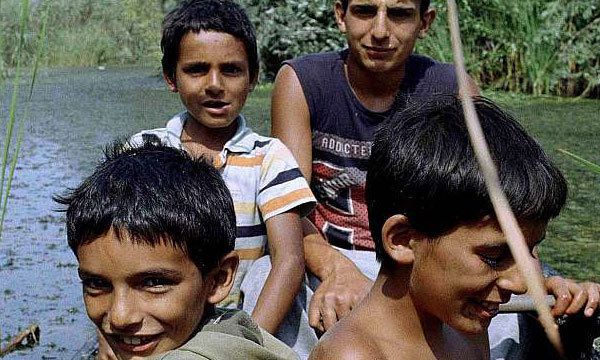
Acasa, My Home
February 22, 2021
12:01 am
Ithaca Premiere>2020 > Romania/Germany > Directed by Radu Ciorniciuc
With an empathetic and cinematic eye, filmmaker Radu Ciorniciuc offers viewers a compelling tale of an impoverished family living in the wilderness on the fringes of society in Romania, fighting for acceptance and their own version of freedom. Shortlisted for the 2021 International Documentary Association (IDA) Awards for Best Feature. In Romanian & English. Subtitled. More at zeitgeistfilms.com/film/acasamyhome
1 hr 26 min
We will start taking reservations one week in advance of a film's first play date.
Reservations can be made here:
https://cinema.cornell.edu/virtual-cinema-order-form
Additional Information
Program
Einaudi Center for International Studies
Institute for European Studies
Chungking Express

February 18, 2021
12:01 am
1994 > Hong Kong > Directed by Wong Kar Wai
With Brigitte Lin Ching-hsia, Tony Leung Chiu-wai, Takeshi Kaneshiro, Faye Wong
The film tells two stories, both set in contemporary Hong Kong, of young policemen trying to get over bad relationships and having crazy encounters with other women: a hit woman for the mob and an obsessive fast-food waitress. Fabulous soundtrack. The film that introduced American audiences to Hong Kong auteur Wong Kar Wai. In Cantonese & Mandarin. Subtitled. Cosponsored with the East Asia Program.
1 hr 37 min
WORLD OF WONG KAR WAI - COMING SOON! from Janus Films on Vimeo.
Additional Information
Program
Einaudi Center for International Studies
East Asia Program
“‘They brought them from the Palenque in Jamaica’: Human Trafficking and the Conquest of Jamaica,” by Casey Schmitt, LASP Weekly Seminar Series

March 8, 2021
4:00 pm
Following the 1655 invasion of Spanish Jamaica, English forces waged guerilla warfare on two fronts. The first was against a small Spanish resistance that maintained a toehold on the island despite the initial Spanish surrender. The defeat of that beleaguered resistance, however, depended on the outcome of the second front, a conflict waged between the English and several autonomous communities of African descent. Far deadlier and more threatening for the English, that front waged on until the leader of one of these communities, Juan Lubolo, switched sides, forcing the remaining Spanish resistance to abandon Jamaica and giving the English an invaluable ally in the continuing war against the palenques that continued to fight for autonomy on the island. In this presentation, I will trace the history of the Afro-descended captives seized by Lubolo and his forces. Securing Jamaica for English settlement depended on transforming these captive enemies into enslaved people through inter- and intra-imperial human trafficking. Africans and Afro-Jamaicans, the majority of Spanish Jamaica’s population on the eve of the invasion, proved too dangerous for the English to enslave, in part due to their knowledge of the topography, flora, and fauna of the island as well as their likely connections to armed, autonomous communities. In order to transform Lubolo’s prisoners of war into enslaved laborers, English officials in Jamaica used human traffickers to smuggle the Afro-Jamaican captives into neighboring Spanish colonies. The goal was to create wealth that English colonists, in turn, could use to purchase enslaved Africans from the transatlantic slave trade. And, by 1671, English Jamaican lawmakers codified this practice of trafficking “dangerous” captives “to foreign parts” into law, turning an illicit, wartime practice into a method of social control in Jamaica’s burgeoning slave society.
Professor Schmitt a historian of early America and the Caribbean, with particular interests in human trafficking, colonization, and illicit economies over the course of the sixteenth and seventeenth centuries. In her research and her teaching, she is interested in tracing individuals who crossed imperial boundaries—by choice and by coercion—in order to understand how processes like colonialism, imperialism, slavery, and trade functioned in the interstices of early modern empires. Professor Schmitt is currently at work on her book manuscript, tentatively titled The Predatory Sea: Human Trafficking, Colonization, and Trade in the Greater Caribbean, 1530-1690, which analyzes the ubiquity of human trafficking and captivity in the greater Caribbean and North America from the 1530s until the 1690s and what that meant for colonization, trade, and warfare in the region. At Cornell, she teaches classes on colonialism, imperialism, slavery, and corruption.
Additional Information
Program
Einaudi Center for International Studies
Latin American and Caribbean Studies
Info Session: Fulbright U.S. Student Program for Undergraduates
April 12, 2021
4:30 pm
The Fulbright U.S. Student Program supports college graduates conducting research or teaching in any field in more than 150 countries. Applications are due in the fall; students who wish to begin the program immediately after graduation are encouraged to start the process in their junior year.
United States citizens in any field of study are eligible.
Contact: fulbright@einaudi.cornell.edu, https://einaudi.cornell.edu/fulbright-us-student-program
Additional Information
Program
Einaudi Center for International Studies
Reppy Institute for Peace and Conflict Studies
East Asia Program
Southeast Asia Program
Latin American and Caribbean Studies
Institute for African Development
Institute for European Studies
South Asia Program
Info Session: Fulbright U.S. Student Program for Undergraduates
March 3, 2021
4:30 pm
The Fulbright U.S. Student Program supports college graduates conducting research or teaching in any field in more than 150 countries. Applications are due in the fall; students who wish to begin the program immediately after graduation are encouraged to start the process in their junior year.
United States citizens in any field of study are eligible.
Contact: fulbright@einaudi.cornell.edu, https://einaudi.cornell.edu/fulbright-us-student-program
Additional Information
Program
Einaudi Center for International Studies
Reppy Institute for Peace and Conflict Studies
East Asia Program
Southeast Asia Program
Latin American and Caribbean Studies
Institute for African Development
Institute for European Studies
South Asia Program