
Einaudi Center for International Studies
CANCELED - AI and the Nuclear Enterprise

September 18, 2025
12:00 pm
Uris Hall, G08
How AI might be used in nuclear command and control is the subject of much discussion in national security circles. But this debate—important though it has been—obscures many other ways that AI could be used or should not be used across the entire nuclear weapons enterprise. (In this talk, the nuclear weapons enterprise also encompasses nuclear weapons, their delivery systems, the associated command and control and the links of these entities to AI in systems not usually associated with nuclear weapons.) Key attributes of AI and the nuclear weapons enterprise will be reviewed, principles for thinking about AI in the nuclear weapons enterprise discussed, and specific guidelines for assessing the wisdom of AI in any given nuclear application proposed.
About the speaker
Herbert Lin is a senior research scholar at Stanford University's Center for International Security and Cooperation and a research fellow at the Hoover Institution. His work focuses on the national security impact of emerging technologies, especially digital technologies such as cyber, artificial intelligence, and influence operations. He directs and serves as editor-in-chief of the Stanford Emerging Technology Review (setr.stanford.edu). Lin is Chief Scientist, Emeritus for the Computer Science and Telecommunications Board of the National Research Council, leading key studies on public policy and information technology from 1990 to 2014. He served on President Obama’s Commission on Enhancing National Cybersecurity in 2016, was named a fellow of the American Association for the Advancement of Science in 2019, participated in the Aspen Commission on Information Disorder in 2020, and was on the Bulletin of Atomic Scientists’ Science and Security Board from 2016 to 2025. Previously, he was a professional staff member for the House Armed Services Committee, focusing on defense policy and arms control. Lin holds a doctorate in physics from MIT.
Avocationally, he is a longtime folk and swing dancer (and sometimes dance teacher), a very mediocre magician (https://www.youtube.com/watch?v=zqgpaiK1xh8), and a connoisseur of dim sum.
Host
Reppy Institute for Peace and Conflict Studies, part of the Eianudi Center for International Studies
Co-host
Cornell Brooks School Tech Policy Institute
Additional Information
Program
Einaudi Center for International Studies
Reppy Institute for Peace and Conflict Studies
IAD Colloquium Series: Decolonizing Media Narratives on Africa

September 17, 2025
3:00 pm
Africana Studies and Research Center, Multipurpose Room (AFC 120)
Since the inception of Hollywood, U.S. media has often and continues to reduce Africa to singular stories about poverty, conflict, crisis, death, famine etc. overlooking the complexities that shape the continent and its people. What these media stereotypes fail to foreground are the complexities of the continent and how these harmful representations of the continent date back to colonial times. This colloquium presents a keynote presentation and panel that problematizes these harmful tropes about the continent while presenting alternative frames that complicate the reality of the 50+ countries in Africa. Key among topics to be explored in the keynote are the way that narratives around war and genocide in Africa are framed in news media. The panel will bring attention to the potential of African pop culture such as music, film and television to not only challenge stereotypes about the continent but also present the rich tapestry of African cultures. The colloquium will demonstrate how presenting nuanced and dignified narratives about the continent can connect Africa’s diaspora to their roots and ancestry. https://new.express.adobe.com/webpage/85MY9tr1q2KcU
Register
Additional Information
Program
Einaudi Center for International Studies
Institute for African Development
Errant youth: Circling the subcontinent, 1968
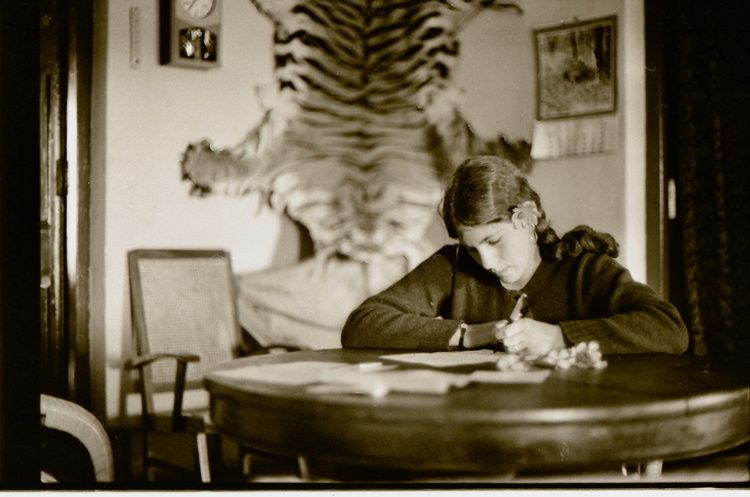
September 15, 2025
12:15 pm
Uris Hall, G08
Talk by Ann Gold (Religion, Syracuse University)
On March 1, 1968 my first husband and I, both college drop-outs, set forth on the now stereotypical overland journey from Europe to South Asia. We reached Pakistan in mid-April at the peak of the hot season, and walked across the border into India about three weeks later. Well into August we literally circled the subcontinent: from Lahore to Kashmir, gradually southward all the way to Rameshwaram, north again briefly visiting Nepal. We moved constantly -- riding ordinary buses and 3rd-class trains, rarely stopping anywhere more than 2-3 nights, rarely spending more than 5-10 rupees for a night’s lodging. In letters home I repeatedly lament my ignorance and express my yearning to remain in one place, even as I rush to the next destination. While observant, I never contemplate how privileged are my hardships and the mobility I take for granted. I learn to love South Asian culture, meals, and people. Numerous strangers exert themselves to welcome, teach and feed us. Today’s presentation draws on Chapter 6 of a memoir manuscript describing my seven years as a college dropout. Chronologically it falls about two years into that chaotic period of my life. When I resumed my education in 1973 I chose to study anthropology and eventually to focus on India. My memoir wonders how I found my way into a fulfilling career without any prior plan through a fortuitous combination of aptitude, affinity, ancestry and dumb luck. Emerging retrospective anthropological themes in the South Asia chapter are the privilege of mobility and the “banquet of hospitality.”
Ann Grodzins Gold is emerita Thomas J. Watson Professor of Religion and Professor of Anthropology at Syracuse University. Her research in North India focused on pilgrimage, gender, expressive traditions, environmental history, and most recently landscape and identity in a small market town. She has authored or co-authored numerous articles and five books all based on fieldwork in provincial Rajasthan, including Shiptown: Between Rural and Urban North India (University of Pennsylvania Press, 2017). Her book, In the Time of Trees and Sorrows: Nature, Power and Memory in Rajasthan (Duke University Press, 2002, co-authored with Bhoju Ram Gujar) was awarded the Ananda Kentish Coomaraswamy Book Prize from the Association for Asian Studies. During her career as an anthropologist of religion, Gold has held awards from the Fulbright Foundation, Guggenheim Foundation, National Endowment for the Humanities, and National Humanities Center, among others. In 2025 she was elected to membership in the American Academy of Arts and Sciences.
Additional Information
Program
Einaudi Center for International Studies
South Asia Program
Bande Mataram!: Song, Slogan, Sentiment

September 8, 2025
12:15 pm
Uris Hall, G08
Talk by Ronojoy Sen (Institute of South Asian Studies, National University of Singapore)
When Prime Minister Narendra Modi declared victory in the Indian general elections for the third time at the Bharatiya Janata Party (BJP) headquarters in New Delhi, he ended his speech by chanting Bande (bow) several times in rapid succession, getting the audience to reply Mataram (mother) on each occasion. The chants of Bande Mataram and Bharat Mata ki jai (Victory to Mother India) were common to most campaign rallies by Modi as well as other senior BJP leaders during the six-week election. The song Bande Mataram can be traced to Bankimchandra Chattopadhyay’s well-known novel, Anandamath (1892). Bankim is also central to the powerful formulation of the nation as mother goddess. This presentation looks at the many strands of the intellectual journey of the song Bande Mataram, which is independent India’s official song (as opposed to the national anthem), from the pages of Bankim’s novel to becoming a defining feature of Hindu nationalism. There were several personalities who carried forward the ideas of Bankim in different ways and turned Bande Mataram into a potent political slogan during the Swadeshi movement. Some of the central figures in this story are Aurobindo Ghose, who was inspired by both the slogan Bande Mataram, and the connection between the nation and the mother goddess, as well as his contemporary Bipin Chandra Pal. Rabindranath Tagore, too, is a critical figure both as the person who set the song to tune and as someone who was alive to its communal interpretation.
Dr Ronojoy Sen is a Senior Research Fellow at the Institute of South Asian Studies and the South Asian Studies Programme, National University of Singapore. He has worked for over a decade with leading Indian newspapers, most recently as an editor for The Times of India. His latest book is House of the People: Parliament and the Making of Indian Democracy (Cambridge University Press, 2022). He is also the author of Nation at Play: A History of Sport in India (Columbia University Press/Penguin, 2015) and Articles of Faith: Religion, Secularism, and the Indian Supreme Court (Oxford University Press, 2010; revised ed. 2018). He has edited several books, the latest being Media at Work in China and India (Sage, 2015). He has a Ph.D. in political science from the University of Chicago and read history at Presidency College, Calcutta. He has held visiting fellowships at the Wilson Center, the National Endowment for Democracy, the East-West Center, Washington, and the International Olympic Museum.
Additional Information
Program
Einaudi Center for International Studies
South Asia Program
AI Models Make Precise Copies of Cuneiform Characters
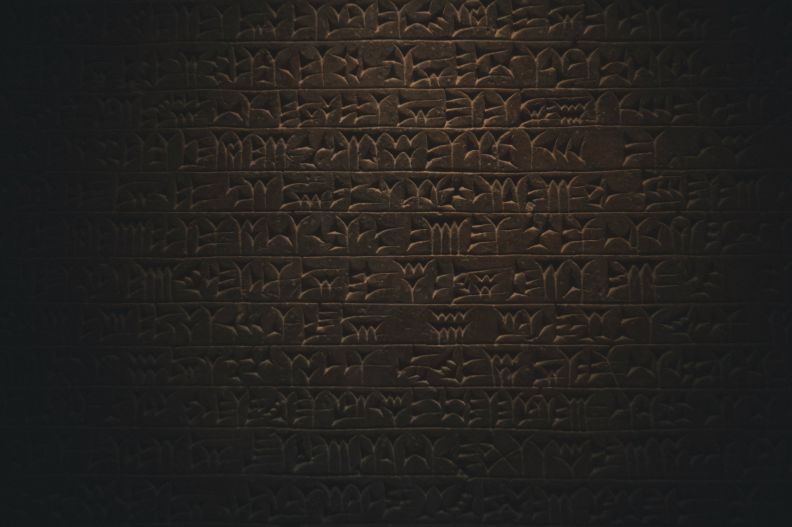
Deciphering some people’s writing can be a major challenge – especially when that writing is cuneiform characters imprinted into 3,000-year-old tablets.
Now, Middle East scholars can use artificial intelligence (AI) to identify and copy over cuneiform characters from photos of tablets, letting them read complicated scripts with ease.
Additional Information
Islamic Mysticism Shows the Limits of Knowledge in an Unstable World
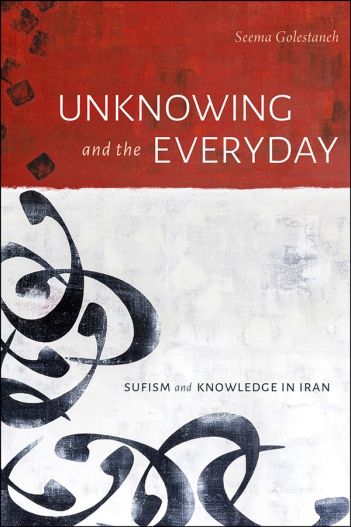
Seema Golestaneh, SWANA Director
Seema Golestaneh came to the study of Sufism – a form of Islamic mysticism – in a roundabout way. An assistant professor of Near Eastern studies in the College of Arts and Sciences, she was initially interested in musicians and artists in contemporary Iran, and the intersection between aesthetics and meaning-making in everyday life. When she got to know some of these musicians, she learned they were Sufis, and she became fascinated by some of their ideas concerning Islam.
Soon she found herself falling down “the rabbit hole of studies of modern mysticism,” she said.
Additional Information
Donald Trump to Raise Tariffs on India Over Russian Oil Purchases

Eswar Prasad, SAP
“So much for the bromance between Modi and Trump and the ostensibly close relationship between two budding geopolitical allies,” says Eswar Prasad, senior professor of international trade policy.
Additional Information
7 Indian-Origin Economists in the US: A Look at the Schools They Went To

Kaushik Basu, SAP
Kaushik Basu, professor of international trade, is featured in the list for his work on welfare economics, game theory, political economy and development, in addition to the “traveler’s dilemma” paradox.
Additional Information
Trump to Impose Sweeping New Tariffs on Much of the World

Eswar Prasad, SAP
Eswar Prasad, professor of trade policy, calls the latest move “a dark day in the annals of global trade integration, which was once seen as having so much promise in bringing countries together around a vision of shared prosperity.”
Additional Information
Information Session: Global Internships
December 3, 2025
4:30 pm
Uris Hall, G02
Go global in summer 2026! Global Internships give you valuable international work experience in fields spanning global development, climate and sustainability, international relations, communication, business, governance, and more.
Applications are open now.
Can’t attend? Contact programs@einaudi.cornell.edu.
***
The Mario Einaudi Center for International Studies hosts info sessions for graduate and for undergraduate students to learn more about funding opportunities, international travel, research, and internships. View the full calendar of fall semester sessions.
Additional Information
Program
Einaudi Center for International Studies
Reppy Institute for Peace and Conflict Studies
East Asia Program
Southeast Asia Program
Latin American and Caribbean Studies
Institute for African Development
Institute for European Studies
South Asia Program
Migrations Program
Southwest Asia and North Africa Program