
Einaudi Center for International Studies
Inside the Yellow Cocoon Shell

January 26, 2025
7:30 pm
Willard Straight Hall Theatre
Winner of the Camera d’Or at the Cannes Film Festival and the prestigious André Bazin Prize from Cahiers du Cinema, both celebrating outstanding feature debuts, this enthralling work from Vietnamese filmmaker Pham Thien An is a reverie on faith, loss, and nature expressed with uncommon invention and depth.
The sudden death of his sister-in-law brings unexpected responsibilities to Thien (Le Phong Vu), who is reluctantly tasked with bringing his five-year-old nephew Dao to their countryside hometown. On the road, Thien is drawn into a search for his long-missing older brother, haunted and spurred forward by a series of sublime dreams that reignite suppressed memories, forbidden desires, and specters of his own youth. What began as a journey home becomes a pilgrimage marked by visual splendor and mystical overtones, a quest for understanding and certainty in a Vietnam that seems unable to provide any clear answers. As Thien battles with the existential question of what is worth living for, Inside the Yellow Cocoon Shell interrogates the persistence and complexity of faith, not only in the spiritual but in the delicate beauty of earthly existence.
Part of our "New Visions, New Voices" series. Courtesy of Kino Lorber. In Vietnamese with English subtitles.
Additional Information
Program
Einaudi Center for International Studies
How To End a War? Conflicts and Transitions to Peace in Africa
January 22, 2025
11:00 am
Uris Hall, G08
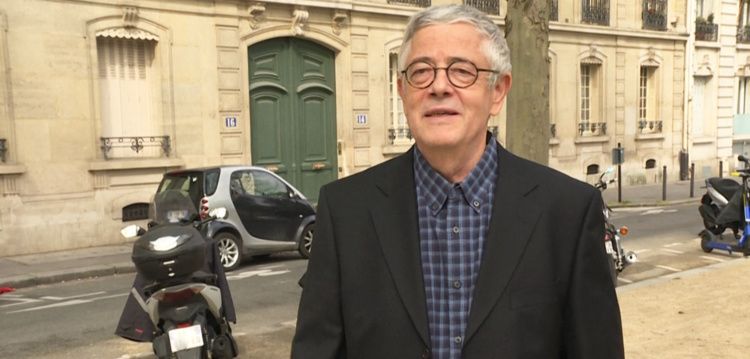
Roland Marchal, CNRS, SciencesPo
For a longtime observer of armed conflicts in Central and Eastern Africa, it is striking that we are witnessing a higher number of conflicts than in 1991. This presentation will address several recurrent aspects. First, Marchal will address the intricacies of violence and local politics. Second, the organization of armed groups frequently does not correspond to the kind of violence they are exercising on the population. And third, paradoxically, the international community has often been unable and unwilling to frame its understanding of conflict, with the consequence that transitions to peace are becoming more problematic, while international support for conflict grows.
Hosted by Brooks Center on Global Democracy with support from the Reppy Institute for Peace and Conflict Studies and the Institute for African Development.
Additional Information
Program
Einaudi Center for International Studies
Reppy Institute for Peace and Conflict Studies
Institute for African Development
Maritime History from Latin American Shores (In Spanish)
March 3, 2025
4:45 pm
Uris Hall, Uris G08
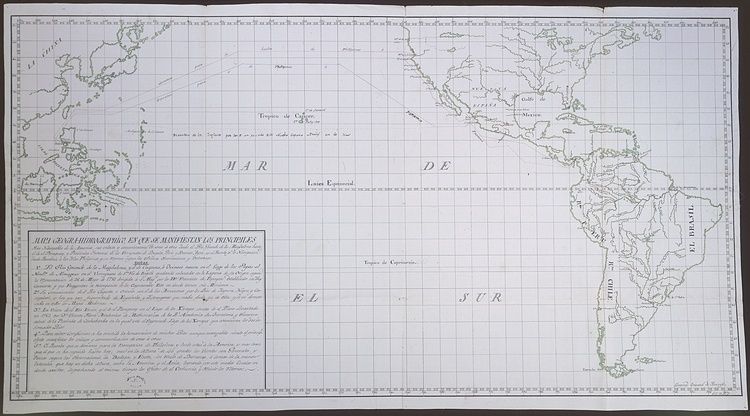
Guadelupe Pinzón is one of Mexico’s leading maritime historians. Her work expands Mexico’s territory into both the Caribbean and the Pacific, thus offering an uncommon approach to Mexican history. In this conversation Dr. Pinzón and Ernesto Bassi will speak about how thinking of Mexico’s maritime space reframes Mexican history, as well as about the opportunities and challenges of doing maritime history from Mexican shores and the prospects of a maritime history of Latin America. Monday's conversation will be in Spanish, and Pinzón will also be giving a talk in English on Tuesday, March 4 titled "From the Atlantic to the Pacific: Interoceanic Connections through Tehuantepec and Nicaragua in the Late 18th Century."
Guadalupe Pinzón Ríos is a Doctor in History from the Faculty of Philosophy and Letters of the UNAM, where she is currently a researcher and professor at the Institute for Historical Research. Pinzón Ríos is also a member of the National System of Researchers and an advisor of the graduate program in history. She has been studying maritime port activities throughout the Pacific, especially in New Spain, and has published Acciones y reacciones en los puertos del Mar del Sur. Desarrollo portuario del Pacífico novohispano a partir de sus políticas defensivas (1713-1789) and Hombres de mar en las costas novohispanas. Trabajos, trabajadores y vida portuaria en el departamento marítimo de San Blas (siglo XVIII). She also has various published works, articles, and book chapters.
Co-sponsored by Romance Studies, Science & Technology Studies, and Society for the Humanities.
Additional Information
Program
Einaudi Center for International Studies
Latin American and Caribbean Studies
Nuclear Colonialism and Its Discontents

February 6, 2025
12:00 pm
Nuclear weapons and associated technologies have been primarily developed by and for Global North nations, often using the labor and natural resources of indigenous populations around the world, and often doing violence to those populations and their environments. As a result, many scholars analyze the development of nuclear technologies–including uranium mining, the processing and production of fissile materials, nuclear weapons testing, and use–as a form of colonialism. But as a state-centric framework, colonialism does not always capture practices that transcend national boundaries; radioactivity does not respect borders. This panel will elucidate the uses and limitations of the colonial framework for understanding the social and political implications of nuclear technologies. The panel will discuss how nuclear technologies have been developed in ways that are both locally specific and globally-interconnected, and the implications of this history for social and environmental justice.
Virtual panel discussion with-
Vincent Intondi, PACS Domestic Affiliate Scholar
Myrriah Gomez, Associate Professor at University of New Mexico
Mary Mitchell, Assistant Professor at New Jersey Institute of Technology and Rutgers Newark
Magdalena Stawkowski, Assistant Professor at University of South Carolina
Hirokazu Miyazaki, Former Director of the Einaudi Center, Professor at Northwestern University
Register here.
Host
Reppy Institute for Peace and Conflict Studies
Additional Information
Program
Einaudi Center for International Studies
Reppy Institute for Peace and Conflict Studies
Institute for African Development
Institute for European Studies
East Asia Program
Latin American and Caribbean Studies
What About the Land? Reframing Palestine as a Question of Land Justice
February 20, 2025
5:00 pm
Uris Hall, G08
Additional Information
Program
Einaudi Center for International Studies
Southwest Asia and North Africa Program
Lao Buddhist Portraits: Making Merit in Memory of Eminent Monks in Luang Prabang.
February 7, 2025
3:00 pm
Kahin Center
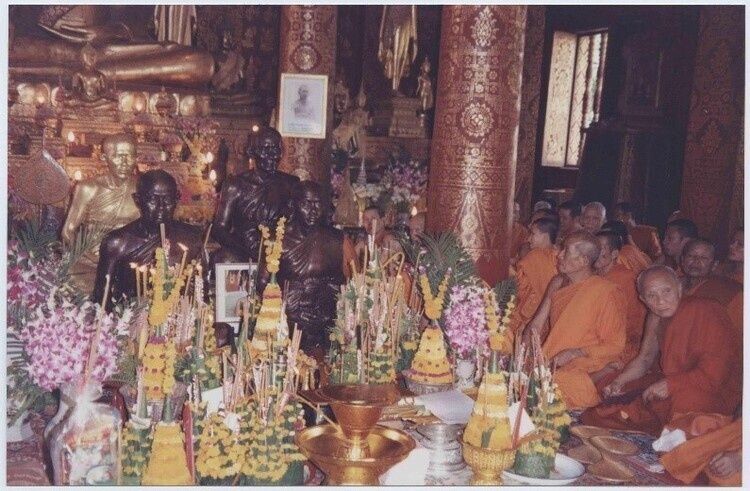
In this talk, Conan Cheong investigates the desire of eminent Lao Buddhist monks to photograph and be photographed by examining the monk portraits kept in the Buddhist Archive of Luang Prabang, Laos. The Archive, housed in a Buddhist monastery, preserves over 35,000 photographs taken and collected by monks from 1890. It was founded in 2005 by Sathu Nyai Khamchan Virachitta Maha Thela, head of the Sangha in Luang Prabang (1953-2007), and a German photographer, Hans Georg Berger.
Conan addresses monks’ photographic practices in relation to other objects collected in Buddhist temple contexts which may be described as “sacred” (Lao: sing saksit) — bone relics, Buddha images, ritual offerings, and particularly the life-sized monk portrait statues modeled naturalistically in wax, resin, or bronze.
Monks are indispensable in Buddhist ritual as the “highest field of merit (anuttaraṁ puññakkhettaṁ)”, where ritual giving (dāna) to them produces the highest level of soteriological benefit for the devotee. Drawing from his doctoral field research in Laos, Conan opens up a discussion on how the photographs of Luang Prabang monks might be seen as expressions of this meritorious giving, corresponding with Buddhological research into how the Buddha, as the quintessential monastic, is made a living presence in material things.
Additional Information
Program
Southeast Asia Program
Einaudi Center for International Studies
Democratic Resistance and International Policy
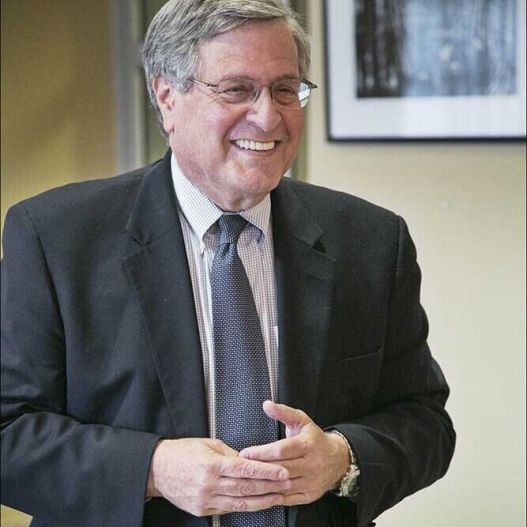
January 28, 2025
3:00 pm
ILR Conference Center, 423
Cornell Center on Global Democracy presents: Democratic Resistance and International Policy
Jan 28 3 – 4:30
ILR conference room 423
Brief Welcome and Introduction: Rachel Beatty Riedl, Peggy J. Koenig ’78 Director of the Center on Global Democracy
Opening Remarks: Kenneth Wollack, Chairman of the Board of the National Endowment for Democracy
Faculty Panelists:
Thomas Garrett, Einaudi Center Lund Practitioner in Residence and Distinguished Global Democracy Lecturer in the Cornell Jeb E. Brooks School of Public Policy Siba Grovogui, Professor of International Relations Theory and Law at Cornell UniversityThomas Pepinsky, Walter F. LaFeber Professor of Government and Public Policy at Cornell University Bryn Rosenfeld, Assistant Professor of Government at Cornell University
About Kenneth Wollack:
Kenneth Wollack has, for the past four years, served as chairman of the National Endowment for Democracy. He is now a vice chair of the endowment and is a member of the George W. Bush Institute’s Advisory Council. Mr. Wollack served as co-chair of the Commission on Presidential Debates for the presidential and vice presidential debates during the lead up to the 2020 election.
Mr. Wollack has been actively involved in foreign affairs, journalism, and politics over the past five decades. For more than 25 years, he served as president of the National Democratic Institute (NDI), a nongovernmental organization dedicated to advancing democracy worldwide. He retired in September 2018, after 32 years at the Institute.
Mr. Wollack joined NDI in 1986 as executive vice president. The Institute’s board of directors, then chaired by former Vice President Walter Mondale, elected him president in March, 1993.
Mr. Wollack traveled to more than 100 countries, many on multiple occasions, in every region of the world on behalf of the Institute’s democratic development programs.
Chaired by former Secretary of State Madeleine Albright from 2001 until her death in 2022, NDI maintains offices in more than 50 countries and works to support democratic elections, political parties, parliaments, civic engagement and women’s political empowerment. NDI was established as the result of a 1983 Act by the US Congress.
Before joining NDI, Mr. Wollack co-edited the Middle East Policy Survey, a Washington- based newsletter. He also wrote regularly on foreign affairs for the Los Angeles Times. From 1973 to 1980, he served as legislative director of the American Israel Public Affairs Committee (AIPAC).
Mr. Wollack has been active in American politics, serving on the national staff of the McGovern presidential campaign in 1972. He graduated from Earlham College in Richmond, Indiana, and was a senior fellow at UCLA’s School for Public Affairs.
He has testified before congressional committees, appeared on national television and radio, and spoken before world affairs councils across the country. He has served on task forces sponsored by the Brookings Institution, the United States Institute of Peace, the Council on Foreign Relations, the Center for U.S. Global Engagement, the Bipartisan Policy Center and the Atlantic Council. He was chairman of the U.S. Committee for the United Nations Development Program (UNDP), served on the Secretary of State’s Advisory Committee on Democracy Promotion, and was a member of the advisory committee for the U.S. Agency for International Development and a senior associate at the Center for Strategic and International Studies. He also co-chaired the Ronald Reagan Institute’s bi-partisan Working Group on advancing freedom and promoting democracy in the 21st century.
For his efforts on behalf of democracy, Mr. Wollack was the recipient of NDI’s W. Averell Harriman Democracy Award, the Presidential Order of Excellence as well as Honorary Citizenship from the Republic of Georgia, the National Order “Faithful Service” from the government of Romania, and the Medal of Honor “Lithuanian Millennium Star” from the government of Lithuania.
Additional Information
Program
Einaudi Center for International Studies
Information Session: Einaudi Center Undergraduate Opportunities

March 11, 2025
5:00 pm
Uris Hall, G08
Join us to learn about opportunities for undergraduate students with the Einaudi Center for International Studies! This session will discuss how to successfully apply for programs like Global Internships and Laidlaw Scholars, and how to discover or strengthen global interests, including academic minors, weekly seminars, and language study.
Can't attend? Email programs@einaudi.cornell.edu for more information.
Additional Information
Program
Einaudi Center for International Studies
Reppy Institute for Peace and Conflict Studies
East Asia Program
Southeast Asia Program
Latin American and Caribbean Studies
Institute for European Studies
South Asia Program
Migrations Program
Information Session: IES & PACS Undergrad and Grad Opportunities

February 18, 2025
3:00 pm
Uris Hall, G08
This session will describe opportunties for undergraduate and graduate students in the Institute for European Studies and the Reppy Institute for Peace and Conflict Studies.
IES offers a minor in European Studies, Global Summer Internships, a Graduate Fellows Program, and research funding for both undergraduate and graduate students. PACS offers fellowships, funding, and research travel grants for undergraduate and graduate students.
Register for virtual attendance here. Can't attend? Contact ies@cornell.edu or pacs@cornell.edu.
Additional Information
Program
Einaudi Center for International Studies
Reppy Institute for Peace and Conflict Studies
East Asia Program
Southeast Asia Program
Latin American and Caribbean Studies
Institute for African Development
Institute for European Studies
South Asia Program
Migrations Program
Information Session: Fulbright U.S. Student Program for Undergraduates

March 19, 2025
4:45 pm
The Fulbright U.S. Student Program supports U.S. citizens to study, conduct research in any field, or teach English in more than 150 countries. Students who wish to begin the program immediately after graduation are encouraged to start the process in their junior year. Recent graduates are welcome to apply through Cornell.
The Fulbright program at Cornell is administered by the Einaudi Center for International studies. Applicants are supported through all stages of the application and are encouraged to start early by contacting fulbright@einaudi.cornell.edu.
Register here. Can't attend? Contact fulbright@einaudi.cornell.edu.
Additional Information
Program
Einaudi Center for International Studies
Reppy Institute for Peace and Conflict Studies
East Asia Program
Southeast Asia Program
Latin American and Caribbean Studies
Institute for African Development
Institute for European Studies
South Asia Program
Migrations Program