
Einaudi Center for International Studies
Information Session: Fulbright Opportunities for Graduate Students

March 5, 2025
4:45 pm
The Fulbright U.S. Student Program provides full funding for graduate and professional students conducting research in any field or teaching in more than 150 countries. Open to U.S. citizens only. The Fulbright-Hays Doctoral Dissertation Research Abroad program supports doctoral students conducting research in modern languages or area studies for six to 12 months.
Open to U.S. citizens and permanent residents of the United States. Travel to Western European countries is not eligible.
Register here. Can’t attend? Contact fulbright@einaudi.cornell.edu.
Additional Information
Program
Einaudi Center for International Studies
Reppy Institute for Peace and Conflict Studies
East Asia Program
Southeast Asia Program
Latin American and Caribbean Studies
Institute for African Development
Institute for European Studies
South Asia Program
Migrations Program
IAD Spring 2025 Seminar: Futures of Lushness: Innovative Efforts to Reimagine Healing as Land Relations in Tanzania

February 20, 2025
11:15 am
115 Sibley Hall
This talk is part of a forthcoming book entitled, Medicines that Feed Us, in which Langwick examines the shifting, multiple relationships between toxicity and remedy in the face of the environmental and health crises shaping the 21stcentury. Broadly, she is interested in how that which counts as “therapeutic” is shifting with the growing acknowledgment that the extractive relations, which fuel contemporary economies and animate modern life, undermine possibilities for ongoing survival. In this seminar, Langwick thinks together with TRMEGA, a small vibrant NGO in northern Tanzania. TRMEGA’s plant(ing) remedies apprehend illness as an effect of long histories of dispossession, slow violence, and social-ecological abandonment. Herbal formulas intervene not only in depleted, suffering bodies but also in the affective and material relations that concretize people’s alienation from the forces of life. TRMEGA draws on traditional medicine, global herbalism, functional foods, agroecology, organic agriculture, and food sovereignty to cultivate forms of care that draw people closer to the soil and to each other. This work suggests a redefinition of the terms of health and healing. Lifestyle diseases are reimagined through what Langwick calls landstyles. Sharing seeds and cuttings, tending to compost, and building communities of multispecies support, are activities that together address the chronic injury and persistent vulnerability that shape the distribution of disease. Through the extension of their gardens, TRMEGA unsettles the boundaries between medicine and agriculture, redefines healing (as) land relations, and conceptualizes health as a quality of lushness in everyday life.
Public Registration
Additional Information
Program
Einaudi Center for International Studies
Institute for African Development
IAD Spring 2025 Seminar: Place Attachment, Regional Identity and Perceptions of Urbanization in Moshi, Tanzania
February 6, 2025
11:15 am
115 Sibley Hall
In rural areas on the peri-urban fringe of rapidly expanding African cities, urbanization can be interpreted and conceived as an unwelcome change threatening traditional ways of life and personal and community cultural identity of rural areas with customary land tenure arrangements and generally ethnically homogenous populations. We examine the relationship between place attachment and residents’ perceptions of various aspects of urban life, using Moshi, Tanzania, located in a region long identified with the Chagga people, as a case study. We utilize a survey of approximately 700 respondents, stratified by location, and use principal component analysis to construct variables for place attachment, perceptions of cities, and perceived risks associated with urbanization. Utilizing stepwise regression techniques, we find that there was a significant decrease in levels of place attachment between rural, per-urban, and urban locations. We also find that residents who associate the city with more negative characteristics report higher levels of place attachment. This suggests that urbanization is perceived as a threat to people’s sense of place. Finally, we find that place attachment is positively associated with age, while being Chagga, owning land, and being native to the area are associated with greater levels of place attachment.
Public Registration
Additional Information
Program
Einaudi Center for International Studies
Institute for African Development
Beyond Mere Inconvenience: Civilian Casualties and Civilian Harm
February 27, 2025
12:00 pm
Uris Hall, G08
In December of 2023, the United States Department of Defense released its detailed Instruction on Civilian Harm Mitigation and Response (CHMR DoD-I), as stipulated by Section 936 of the 2019 National Defense Authorization Act. The CHMR DoD-I formalizes and institutionalizes the recommendations of the earlier 2022 DoD Civilian Harm Mitigation and Response Action Plan (CHMR DoD-AP).
In this exploratory discussion, Helen Kinsella, University of Minnesota, seeks to identify the stakes of the 2022 and 2023 DoD guidance by drawing out the implications for conceptualizing CHMR as a strategic and moral military imperative and assessing the preeminent role of the United States. She charts the introduction of the concept of CHMR, its recent formulation in policy and guidance documents from the Biden administration, and critically assesses its potential; namely, the work it does, in whose service, and to what ends.
If, as its proponents claim, it is a manifestation of the U.S. understanding of a rules-based order, it can and should be analyzed for the “set[s] of material, ideational, and normative interests congealed into institutions and practices,” some of which bear the racialized and gendered histories of its conceptualization thus far, and result in a still troubling understanding of democratic accountability for and engagement with civilian casualties and civilian harm
About the Speaker
Helen M. Kinsella is a Political Science and Law Professor at the University of Minnesota, Twin Cities. She holds affiliate faculty positions in the Department of Gender, Women & Sexuality Studies, the Hubert H. Humphrey School of Public Affairs, the Human Rights Center at the Law School, and the Interdisciplinary Center for the Study of Global Change.
Host
Reppy Institute for Peace and Conflict Studies
Cosponsors
Cornell Law School
Department of Government
Feminist, Gender, and Sexuality Studies
Additional Information
Program
Einaudi Center for International Studies
Reppy Institute for Peace and Conflict Studies
Summer Program in India Info Session
February 12, 2025
5:30 pm
Uris Hall, G24
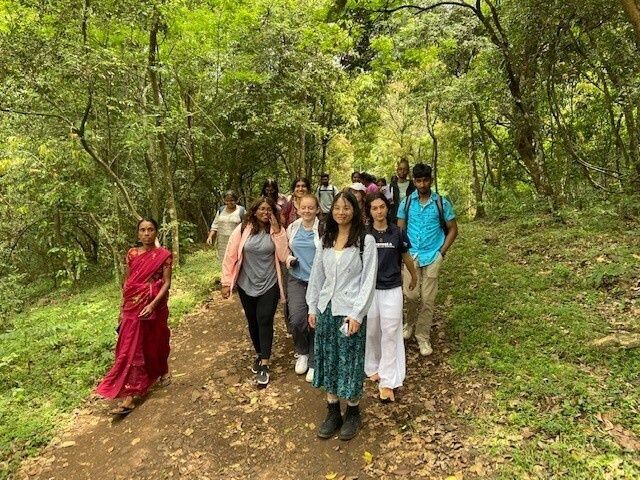
Are you interested in the intersection of mental health and culture, global health, and community engagement? Do you want to gain field research skills and learn about indigenous communities in South India’s beautiful and fragile Nilgiris Biosphere Reserve? If so, the Cornell-Keystone Nilgiris Field Learning Program might be for you!
Additional Information
Program
Einaudi Center for International Studies
South Asia Program
How Unequal Resources Shape Flood Migration

Sociologist Tracks Climate Risk Decisions in Pandemic
Rising Seas in Southeast Asia
Floods vastly outnumber weather disasters of all other types—and disasters are hitting vulnerable coastal regions more often, with climate change driving higher sea levels and extreme weather. As a coastal nation, the Philippines ranks third among the world’s countries most vulnerable to weather-related risk.
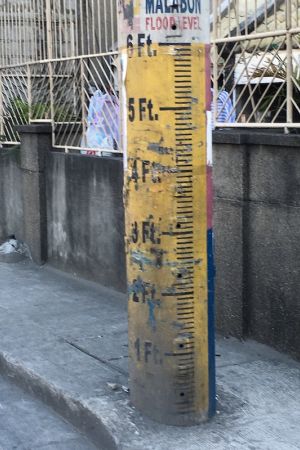
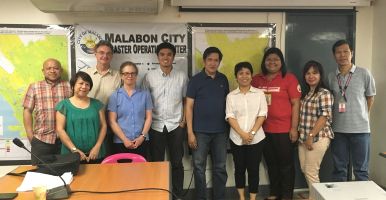
Following decades of research in the Philippines, Migrations lab member Lindy Williams, professor of global development, has witnessed the effects on public safety in two cities in the provinces of Luzon and Bulacan .
In a November 2020 article in the International Journal of Disaster Risk Reduction, Williams and her colleagues profile these coastal communities as they face the risks and consequences of frequent flooding.“Many people say that climate migration is down the road. We wanted to see if that was true in these communities and how people were thinking about it,” says Williams.
She and her team collected data over the course of two years, engaging with a range of community members including local residents, government officials, flood evacuation workers, and health workers. Each stakeholder offered a different perspective, allowing Williams and her team to dig deeper into the history and experiences of the communities.
The researchers found that government officials and residents generally agree about the serious problems the towns face. “They gave quite consistent answers,” says Williams.
They cited widespread and ongoing problems like garbage in waterways that contaminate water, safety concerns related to evacuation, negative health effects from flooding, saltwater incursion from routine tidal flooding, and tidal incursion affecting burial options.
Responses to Flooding
Despite these problems, “climate-driven migration is not yet widespread,” Williams said. “It is on a lot of people’s minds, but is not currently the main risk mitigation strategy they are trying to engage."
Ties to family and friends and community familiarity continue to motivate most people to stay. In the recent article, Williams writes, “Most focus group participants had a strong sense of place and occupational attachment, and said that if they had the money they would prefer to use it to elevate or otherwise modify their current homes than to move away.”
Staying often involved demanding adaptions, such as changing livelihoods, taking on extensive infrastructure projects to elevate homes, and relying on both the government and peers in the community for aid. Through installations of flood gates, walls to block water, and drainage system cleaning, members of both communities worked to remain in place amid evolving risk.
Thus far, retreat has not been managed in a systematic way.
People who did opt to migrate to safer localities often left suddenly—and only when climate impacts grew to an intolerable level. “Thus far, retreat has not been managed in a systematic way,” Williams said. During field visits, she and her team were shown abandoned housing in standing water that still held ruined belongings.
One set of families who had been at heightened risk of flooding due to their proximity to the river had been relocated to other communities that could offer housing and employment. During her next visit to the field, however, Williams learned that most of the families had moved back.
Primary among the reasons cited for their return moves was missing the home community. This raises a new set of questions about the complex factors that influence migration, as well as about potential conflicts within neighborhoods that accept climate migrants. Williams’s ongoing research is urgently needed, as other research suggests that the Philippines is expected to experience a five- to tenfold increase in the number of people living below the projected high-tide line.
Flooding and Inequity
Conversations with participants show that reluctance to move is linked to complex social, political, and economic realities. Community members mentioned not having enough money, not having the capacity to move, or being unsure about where they would live.
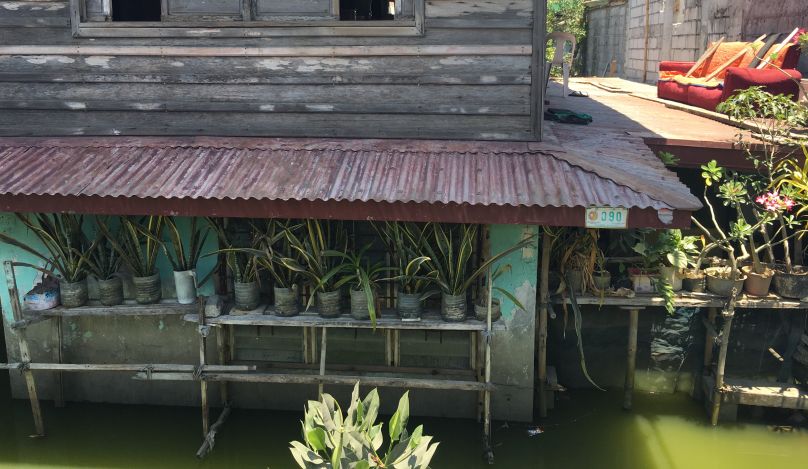
As often happens with migration patterns, said Williams, people who have resources fare better. They can leave and have other places to go. If they stay, those who have sufficient financial resources can build second stories on their homes, add layers to their ground-level flooring, or make other home modifications. Those with limited means, however, are often unable to make even minor modifications to their homes that could reduce their exposure to flooding events.
As one research participant noted: “If the person has money, then he will raise his house up. If you don’t have the money, then you have to suck it up and deal with what you have.”
“Those who made good money left the community,” said another. “They moved to another place.”
The people that remain in place face onset rising sea levels and minor flood occurrences, in addition to more intense flooding events and disaster. Unsurprisingly, the poorest people are often most adversely affected, according to Williams.
During more intense flooding events, authorities often call for local residents to evacuate. However, many people reported resistance to evacuation because they fear that their homes might be looted. Some families evacuate but leave behind one member who keeps an eye on the home and belongings.
Evacuation has likely become even more complicated in recent months, according to Williams’s article, with the “2019 novel coronavirus raising new questions regarding the costs and benefits of taking shelter in crowded evacuation centers.”
Flood Risk and COVID-19
More recently, Williams began working with John Zinda, assistant professor of global development, senior extension associates Robin Blakely-Armitage and David Kay, and graduate student Sarah Alexander to similarly study perceptions of flood risk closer to home—in Troy, New York, a city on the Hudson River.
The coronavirus is raising new questions regarding the costs and benefits of taking shelter in crowded evacuation centers.
When the pandemic hit, the researchers decided to include questions on COVID-19 in a survey that was about to go out as a way to gauge how perceptions of flood risks and pandemic risks relate to one another and how they each shape behavioral responses.
In a new 750-household questionnaire, questions about flooding and the pandemic examine how people assess risk and respond to it. The team also collected demographic data, as well as information on preferred news sources and political affiliation, to allow them to understand any correlation between these factors and perceptions of risk and associated behavior.
In preliminary research, the team has identified a number of reasons for low uptake of flood insurance. They are now hoping to contribute further to knowledge about flood risk, risk perception, and adaptive measures taken along the Hudson in New York State, and eventually beyond.
By Megan DeMint for Global Cornell

Lindy Williams is a professor of global development at Cornell University and a member of the Cornell Migrations lab. She conducts research primarily in Southeast Asia and North America, with interests in the areas of family sociology and population studies and the importance of changing social, economic, and environmental conditions in relation to both.
Williams received her doctorate in sociology from Brown University in 1987. Her early research focused on reproductive health and family dynamics in Southeast Asia and the United States. She joined Cornell in 1993. Her recent collaborative work has focused mainly on migration: labor migration systems in Thailand, effects of overseas labor migration on families from the Philippines, and uneven returns to migration for those with and without citizenship. Her current research examines exposure to coastal flooding in the Philippines and adaptation to that risk. She is also working with a team of researchers assessing flood risk and adaption in Upstate New York.
Additional Information
Program
How Global Actions Can Benefit Multiple Ecosystems

Ecologist Studies Bird Migration, Biodiversity, Environment, Communities
Looking for Win-Win Outcomes for People and Planet
For Amanda Rodewald, migratory birds are emblematic of a world on the move. In one year, a single warbler may spend 80 days in boreal forests in Canada, 30 days in the United States, resting and refueling during migration, and more than 200 days in Central America.
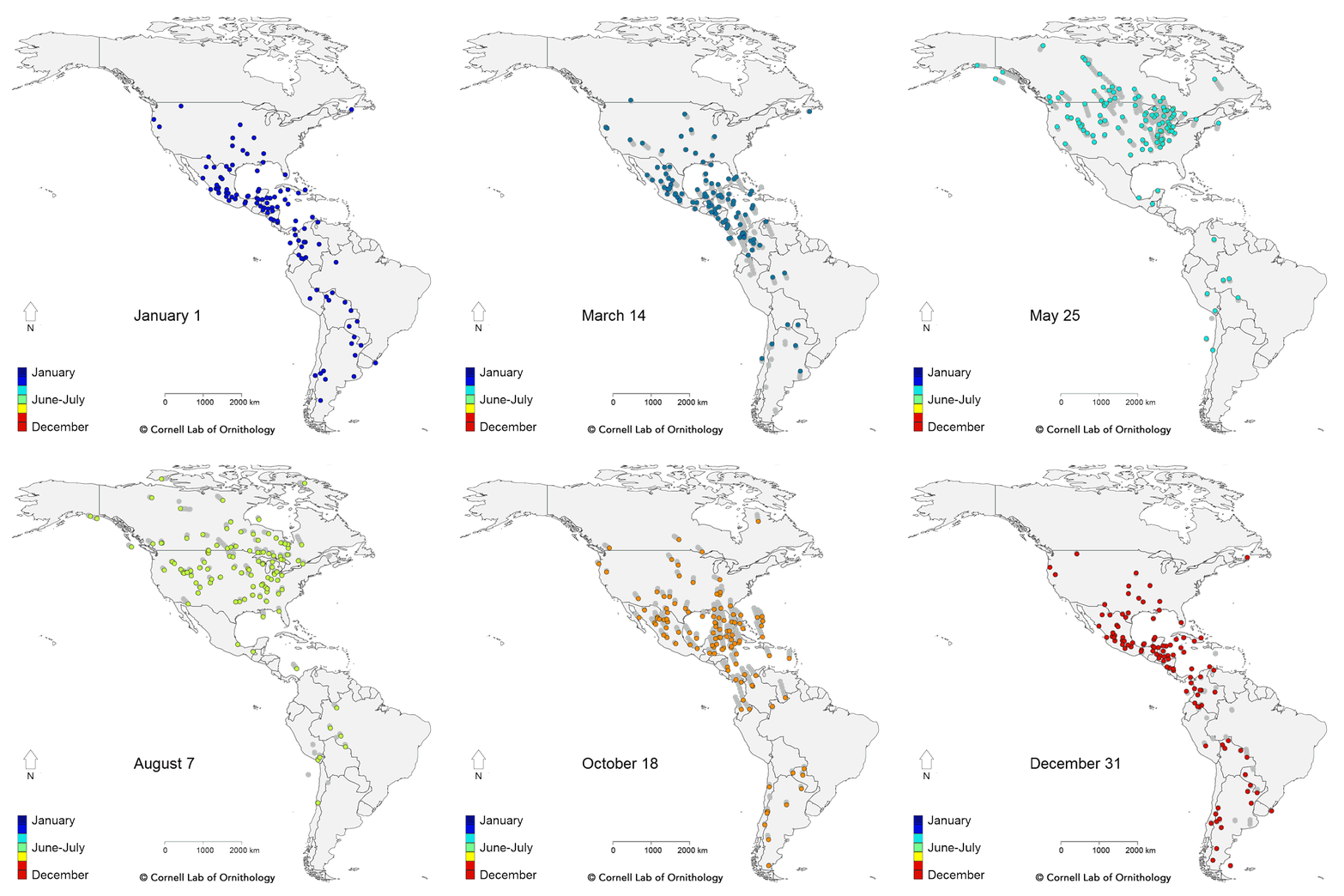
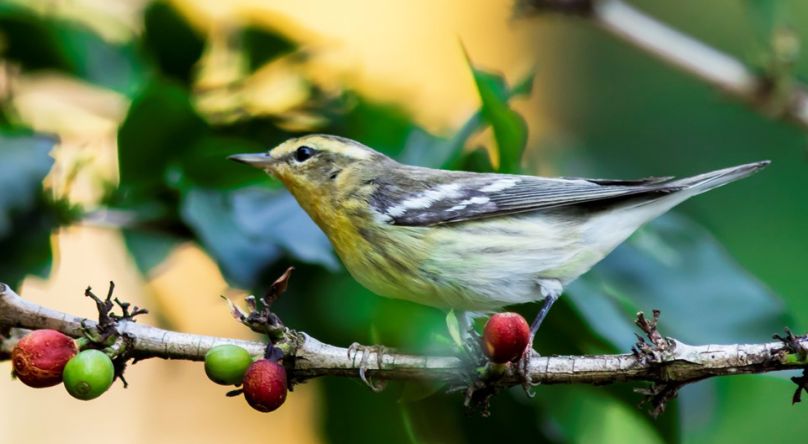
Neotropical migratory birds, which breed in North America and winter in Central and South America as well as the Caribbean, are of special interest to Rodewald, an ecologist and conservation biologist. She and her colleagues study birds and the ecosystems on which they depend in order to understand their needs and movements, the impact of human activities and global change on their populations, and ways that we can safeguard the healthy environments they—and we—require.
As part of her work, Rodewald looks for win-win outcomes for people and the planet, and this turned her attention to coffee farms.
Growing coffee under trees—a practice called shade-grown coffee—results in a wide variety of social and environmental benefits.
As she explains, “Whether you care about supporting the livelihoods of farmers, conserving biodiversity, maintaining productive and healthy environments, or enjoying a great-tasting cup of coffee, it all points to shade-grown coffee.”
Coffee and Sustainable Ecosystems
Many migratory birds spend the winter on shade-coffee farms, and they can return to the same farms year after year. But widespread deforestation and agricultural intensification has reduced the amount of suitable habitat for migrating birds and other species. As forests were cleared and as the traditional practice of growing coffee under shade trees gave way to environmentally harmful monocultures of “sun coffee,” migratory birds have suffered. Rodewald says, for example, that the population of one vulnerable songbird species, the small blue-and-white Cerulean Warbler, has declined by 70 percent in the past 50 years, coinciding with the widespread conversion of shade to sun coffee.
“I advocate for the use of science in planning, policy, and decision-making processes.”
Fortunately, shade coffee is starting to make a comeback.
In addition to the idea that more shade-grown coffee farms would be beneficial for birds, Rodewald’s collaborative research is helping show co-benefits for farmers and their families. Trees improve soil health and farm conditions, and the shade-grown coffee beans produced are a higher quality, which can bring the farmer a higher price. With the forest acting as natural fertilizer, there is little need for chemicals, which is a positive impact on water quality. Forests are sustained, not cut down. Coffee plants grown under trees produce beans for two or three times longer than sun-grown coffee plants.
“We’re focused on finding ways to conserve species and protect biodiversity,” she says. “To do that, we need to understand the migratory patterns of birds. We also need to understand the social and economic choices that people make, and what the full impacts of those choices are. Then we can recommend sustainable solutions—changes to systems and resources and incentives at local and global scales—that will contribute to the health of the planet for all species.”
Rodewald integrates her research and outreach efforts to inform policy and management. She regularly interacts with government agencies, conservation organizations, and private landowners.
“I advocate for the use of science in planning, policy, and decision-making processes,” she says.
It was her childhood love of the outdoors that first got Rodewald interested in the bigger issues she studies now. “My love of being outside seeded a very deep thinking about conservation, and that led me to develop an ethic for stewarding the planet,” she says.
Holistic Views Can Lead to Workable Solutions
Rodewald’s research naturally touches on a variety of sub-disciplines: conservation biology, community ecology, landscape ecology, population demography, behavioral ecology, ecological restoration, and sustainability science. “This may surprise people, but some of our most important partners here at Cornell are in the social sciences, including economics and business,” she says.
In the five-minute video Conservation Science and Shade-Grown Coffee by Cornell's Lab of Ornithology, Amanda Rodewald explains how conservation can work for people and the planet.
“The interdisciplinary thinking that my research team gains from these collaborations,” Rodewald explains, “helps us focus on the broader ecosystem: What are people’s needs? What drives their decisions? What are the kinds of incentives that we can use for interventions that might help them make choices that support their families and their communities but also are positive steps for the environment as well?”
“Some of our most important partners here at Cornell are in the social sciences, including economics and business.”
“We can make improvements and shift outcomes to support biodiversity if we focus on human decisions and actions—needs, drivers, incentives, interventions,” she says. “Forest restoration, habitat management, sustainable agricultural practices—all of these can be workable solutions. If we want to fully understand the realities and the possibilities for change, then we need to be taking a more holistic view of the interactions of all the players in the ecosystem.”
Migrations research takes these connections into consideration—humans, animals, plants, nonliving things.
“Until you have the spark that actually moves research from ideas to action, nothing happens,” Rodewald says. “The Migrations global grand challenge is going to help move people into action, people who maybe have ideas that have been lying in wait for the right opportunity. It is a spark to generate connections.”
A priority of the Migrations initiative is to facilitate new collaborative projects.
“We’ll be funding faculty and student projects that will demonstrate how to work in interdisciplinary space,” Rodewald, a co-chair of the Migrations taskforce, explains. “This will make explicit the connections, the causes, and consequences. It will give us, as researchers, a more holistic view. There is power in that systems-level approach.”
That type of collaboration is paramount to Rodewald.
“I’m personally interested in working across boundaries to identify some points of connection,” she says, “along with evidence-based strategies that reflect community values and worldviews—and that can be applied in the real world.”
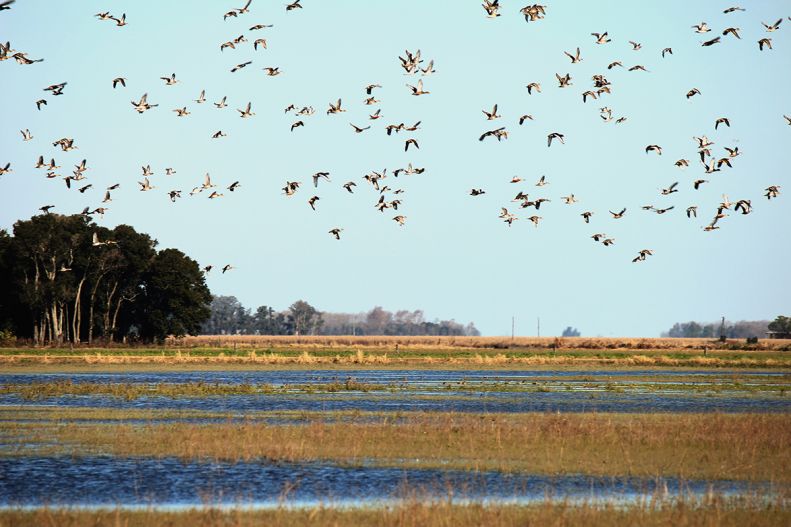
In a new collaboration with Ivan Rudik (assistant professor in the Dyson School of Applied Economics and Management at the Cornell S.C. Johnson College of Business), Alison Johnston (research associate at the Lab of Ornithology), and Catherine Kling (Tisch University Professor in Dyson), Rodewald will study the Farm Bill’s Conservation Reserve Program, which pays farmers for taking farmland out of rotation.
“We will quantify the ways in which the program contributes to bird conservation,” she says, “and provides other benefits such as clean air and water, habitat protection, and recreation.” They’ll also investigate how benefits might flow across states, changing with enrollment patterns, and moving with migratory birds.
In another project led by Filiz Garip (professor of sociology in Cornell’s College of Arts and Sciences), Rodewald and colleagues focus on human movement ecology. They study how different environmental shocks or changing climates in Mexico affect individual decisions about migrating, and ultimately aims to inform policy and humanitarian efforts.
“Finding working solutions to real-world problems is both a challenge and a fascination for me,” Rodewald says. “Through authentic ways, how can we increase caring and therefore positive action? It’s about building empathy.”
by Jeri Wall for Global Cornell
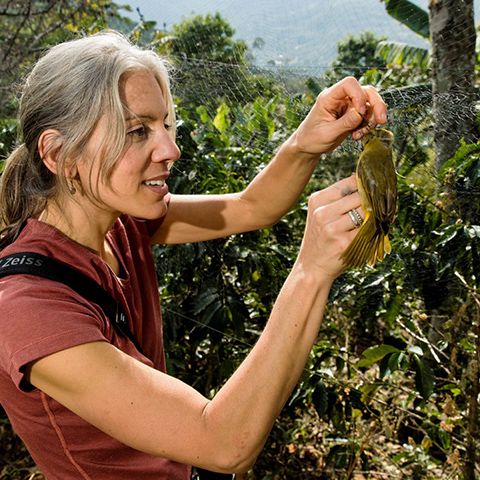
Amanda D. Rodewald (PhD, Pennsylvania State University) is the Garvin Professor of Ornithology in the Department of Natural Resources in Cornell’s College of Agriculture and Life Sciences, and senior director of conservation science at the Cornell Lab of Ornithology. She is a faculty fellow at Cornell's Atkinson Center for a Sustainable Future, an affiliate faculty member at the Cornell Institute for Public Affairs, a member of the Cornell graduate field of natural resources, and co-chair of the Migrations Taskforce.
Rodewald is a fellow of the American Association for the Advancement of Science and the American Ornithological Society. She has provided national leadership and service to U.S. federal agencies, including testifying to Congress as well as over a decade of service with the Science Advisory Board of the U.S. Environmental Protection Agency. She has a strong record of publication for scientific and lay audiences: more than 140 peer-reviewed scientific articles, 10 book chapters or edited volumes, and more than 50 op-eds or popular articles.
Additional Information
Program
How International Law Can Protect Migrants
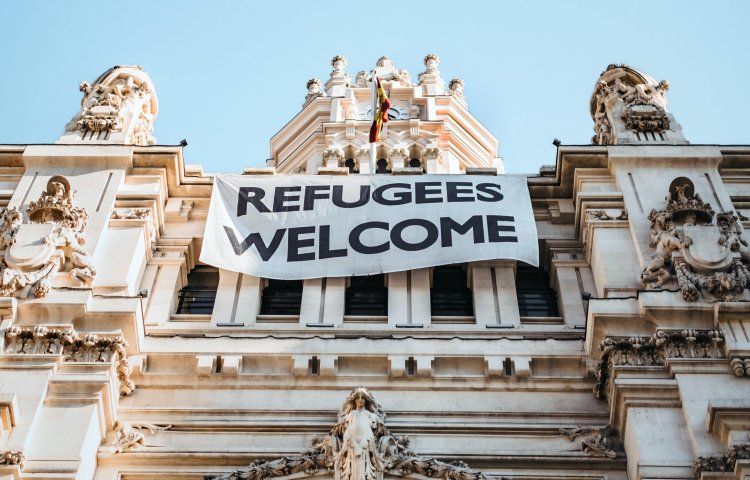
Human Rights Expert Advocates for Migrants and Refugees
A Bill of Rights for Migrants
In a world on the move, what can international lawyers do to safeguard the rights of all migrants?
Ian Kysel, visiting assistant clinical professor teaching in Cornell Law School's Asylum and Convention Against Torture Appellate Clinic, brought the International Migrants’ Bill of Rights (IMBR) initiative to Cornell in July 2019, continuing a project that began at Georgetown University in 2008. The IMBR is both a global collaboration supporting human rights research and advocacy and a nonbinding declaration of basic human rights for people who cross borders for any reason.
The project takes a new approach to expanding protections for migrants. Kysel and Georgetown colleague T. Alexander Aleinikoff recognized that existing treaty law already provides a basic level of rights protection, but is often challenged by states and ignored in practice. So Kysel and a team of law students—which soon expanded beyond Georgetown Law to include faculty and law students across institutions and borders—drafted the IMBR as a comprehensive “soft-law” tool designed to be informally adopted by nation-states and international or regional organizations. Key IMBR principles include:
- Every migrant has the right to recognition everywhere as a person before law.
- Every migrant has the right to an effective remedy.
- Every migrant has the right to liberty and security of person.
The bill of rights is accompanied by legal commentaries identifying the sources for each provision in existing law and practice. The IMBR is not a legally binding document, although many of the human rights it restates are drawn from widely-ratified treaties. It is intended to focus public attention on migrants' entitlements in the international sphere.
Kysel says, "For me, the IMBR is a constant reminder of the power of student-led activism and research to make an impact."
Expanding the Migration Vocabulary
Evidence of this impact came at the end of 2019, when the human rights arm of the Organization of American States—the world's oldest regional organization, uniting all 35 independent nations of the Americas—adopted a version of the IMBR. The 80 principles in the resolution of the Inter-American Commission on Human Rights, called the Inter-American Principles on the Human Rights of all Migrants, Refugees, Stateless Persons, and Victims of Human Trafficking, arguably represent the most comprehensive articulation of the rights of all migrants ever adopted by an international body.
By carving out a common language for advocacy, the IMBR has become a tool that can be incorporated at the national level through amicus briefs, litigation, and public comments on changes in regulations or legislation. An important next step for the project is building broader partnerships with civil society, states, and international organizations to expand adoption of the IMBR's soft-law framework.
While every state may not be compelled by these arguments, Kysel finds potential for growth among states that are. In these places, the IMBR project promotes practices consistent with existing law, strengthening recognition and solidification of international legal rights.
"I think being in an academic environment and having the opportunity to collaborate with Cornell's Migrations initiative is vital," Kysel says, "because it will allow us to work to expand the vocabulary that we use to talk about these kinds of protections."
A Database for Migrants' Rights
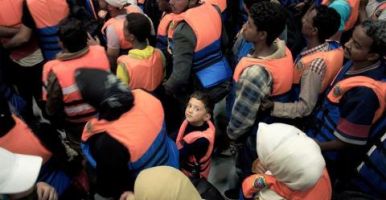
The IMBR team's legal research initially focused on articulating how different areas of law—such as human rights law, refugee law, and labor law—apply to all international migrants and refugees. In some locations, migrants are protected at an even higher level. The IMBR highlights these areas of progressive development to encourage nation-states to expand their view of the law and strengthen the worldwide architecture of protection. Now the team is at work on developing the first migrant rights database. The database will use fixed indicators to code and evaluate how effectively states are protecting migrants' rights and complying with international law.
The set of 65 indicators has been pilot tested by the World Bank's Global Knowledge Partnership on Migration and Development, with the first findings published in the journal International Migration. Kysel's team is working with funding from the Swiss Agency for Development and Cooperation to expand the coding to 35 cases.
"Our goal is to create a policy-relevant tool that can be implemented relatively quickly," says Kysel. "But nothing like this tool currently exists."
"The migrant rights database will be a vital baseline for evaluating how governance changes affect the protection of rights."
Kysel closely watches policy changes on the international level. The Global Compact on Refugees and Global Compact for Safe, Orderly, and Regular Migration were both endorsed by the United Nations General Assembly in December 2018. The two compacts are nonbinding but represent the most significant recent U.N. effort to promote more cohesive governance of migration and refugees. The United Nations also recently created a U.N. Network on Migration to coordinate implementation and promote data-driven migration policy and planning.
"As these initiatives continue to bring more harmony to the field, we think that the migrant rights database will be a vital baseline for evaluating how governance changes affect the protection of rights," Kysel says.

Old Frameworks, New Challenges
Kysel believes that one of the IMBR's key contributions is prompting conversations about how legal principles can accommodate new rights or norms, as changing conditions in the world push or pull more people across international borders.
Kysel and an international group of colleagues have just released a set of principles reminding states of their obligations to refugees and migrants during the coronavirus pandemic. More than 800 experts around the world signed on in April to support the statement.
"Recognizing the way that the new challenges can be met by complying with old frameworks is key," Kysel notes.
Kysel and his team treat asylum as a legal institution that provides protection to those with any basis for protection under international law. In this sense, asylum is not limited by the five grounds recognized in 1951 as part of the Geneva Convention Relating to the Status of Refugees—race, religion, nationality, membership in a particular social group, or political opinion—but also about a right to seek and enjoy new forms of protection, such as protection for victims of trafficking or for those displaced by global climate change.
Thinking about migrants' rights in a broad way is a prerequisite to creating legal and policy change that will provide effective protection to meet new challenges, according to Kysel.
"Some states can seem, in the present moment, almost allergic to rights."
There are states that have long been champions of migrants' rights at the international level, but the current nationalist, xenophobic political dynamics in a number of countries create new obstacles for protecting migrants' rights.
"The biggest challenge is always from states," he says. "We have to think about how to overcome misconceptions that a bill of rights would inevitably undermine sovereignty, create new rights to which states haven't consented, or even create a right to migrate."
"These are just some of the ways in which some states can seem, in the present moment, almost allergic to rights," he observes.
Identifying and building on areas of consensus among a pool of states that are not dominated by xenophobic dynamics can help strengthen the global architecture of human rights as political dynamics shift. It's a step in the right direction for our world on the move.
By Claudia Ro and Megan DeMint for Global Cornell

Ian Kysel (LLM, JD, Georgetown University Law Center) is a visiting assistant clinical professor of law teaching in Cornell Law School's Asylum and Convention Against Torture Appellate Clinic.
Kysel’s research interests lie in public and private international law, including international migration and human rights law, constitutional law, civil rights/civil liberties law, U.S. immigration law, and property law. His recent scholarship has focused on children’s rights and the rights of migrants. Kysel has published in the Georgetown Journal of International Law, New York University Journal of Law & Social Change, International Migration, and Journal on Migration and Human Security. He has written several human rights reports; his opinion articles have appeared in the New York Times and the Washington Post.
Kysel has argued or participated in litigation before immigration, federal and state courts, and international tribunals. He has provided testimony to various legislative bodies and executive or international commissions. He currently sits on the advisory committee of Human Rights Watch’s Children’s Rights Division and is a co-organizer of the ACLU’s national Youth Justice Network.
Additional Information
Program
How the Seas Shape Civilizations
Historian of Water Studies the Movement of People
The Role of the Seas in Southeast Asia
The seas play a significant role in life on Earth—this is as true today as it has been for millennia.
Eric Tagliacozzo knows this. As a professor of history at Cornell University, he studies Southeast Asia, one of the largest maritime arenas on the planet. He focuses on the movements of people, objects, and ideas throughout the region from the Colonial Age to contemporary times. Indonesia (the largest country in Southeast Asia) is also the world’s largest archipelago, Tagliacozzo explains, comprising some 17,000 islands. Connections forged across the seas here shaped Southeast Asia, but not always in ways that were foreseen, he says.
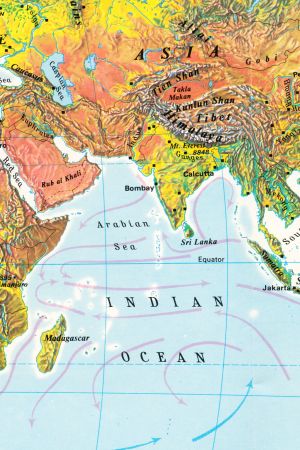
For example, the early great civilizations of the region built their prosperity on maritime trade, notably the selling of spices, which were readily produced throughout the eastern Indian Ocean and in demand outside the area. As colonization of the region by the British and Dutch increased, the trade arenas initially carved out along the coast by local merchants and local princes were absorbed by state actors as they established new political borders. Local people responded: to skirt the rules, avoid tariffs, and maximize their profits, traders began to smuggle commodities across boundaries—not just spices, but contraband that included opium, counterfeit currency, human beings, and more. The sea played a major part in the smugglers’ success.
“People across history have journeyed in many directions—sometimes simply to explore, other times to find better ways to live,” Tagliacozzo says.
He describes Bukit Cina (China Hill) in Malacca, Malaysia, to illustrate how “people wandered long distances—most often by traveling over the sea.” Bukit Cina is the location of one of the world’s largest Chinese cemeteries outside of China, with 12,000 graves, some of which date to the 15th century. There are accounts that the hillside had been first settled in the mid-1400s by a sultan of Malacca who married a Chinese woman. Historical records show that, by that time, Chinese had traveled to Malaysia for centuries, mainly for purposes of trade. (The distance from the Ming Dynasty capital in Nanjing to Malacca is more than 2,000 nautical miles.)
Unexpected Connections
“Waterways connect societies and geographies,” Tagliacozzo says. “By moving over water from place to place, people share commodities and knowledge. These connections shape local economies, cultures, and politics.”
In one of his research pursuits, Tagliacozzo studied the confluence of maritime travel and religion. He analyzed the significance of people making the Hajj (Muslim pilgrimage) from lands in the Indian Ocean to Mecca, beginning in the 13th century. They first traveled on sailing ships, and later (by the 19th century) on steamships. The pilgrimage aggregated many people from many different societies in the same place. As part of their experience, he explains, these religious wanderers—in some years half of the global total could come from Southeast Asia — prayed together, and they also traded goods such as carpets, brassware, gems, and spices. Their trade helped many pay for their voyages, and also helped begin the formation of important economic links, as well as religious ones, between Southeast Asia and Arabia. One result: Islam spread across Africa and Asia. Today, some 80 percent of Muslims are non-Arabic speakers, who live outside the Middle East.
“By moving over water from place to place, people share commodities and knowledge. These connections shape local economies, cultures, and politics.”
Another, perhaps more surprising result of this religious travel was the spread of cholera, Tagliacozzo says. The mass movement of people on Hajj became one of the main pathways for the disease, which moved from India to the Hejaz in the 19th and early 20th centuries, and then back with pilgrims on the transoceanic steamships to their home countries. The epidemic, which killed catastrophic numbers of people, spurred the European powers who controlled colonies in Southeast Asia to develop sanitary conventions to check the spread of infection.

Historical and Contemporary Perspectives
Maybe unsurprisingly, Tagliacozzo spends a good deal of time reading and discussing historical texts, as well as contemporary writings on Southeast Asia. (Among the Cornell courses he is teaching in 2019–20: The History of Exploration: Land, Sea, and Space—which he co-teaches with Steven Squyres, James A. Weeks Professor of Physical Sciences, who is known for his work as scientific principal investigator for the Mars Exploration Rover Project. Tagliacozzo also will teach Transnational Local: Southeast Asian History from the Eighteenth Century, and a first-year writing seminar called Global Islam.)
“Because my research shows the connections forged among peoples and cultures, one of the things that it addresses is the need for tolerance and equality.”
What methodologies empower researchers to study people on the move through geographical spaces and time periods such as these? Tagliacozzo’s research interests draw on numerous disciplines in addition to history—anthropology, geography, oceanography, epidemiology, ethnolinguistics, and more. He has helped assemble international networks of scholars, collaborators, and subject-matter experts on the ground in specific regions around the world. They serve as consultants and partners, providing information, varying perspectives, and leads on a wide variety of topics—including, for instance, the names of currency collectors who might be able to provide examples of old counterfeit currencies. When necessary (especially in areas of strife or armed conflict), these contacts also have served as guides who can vouch for him with local communities.
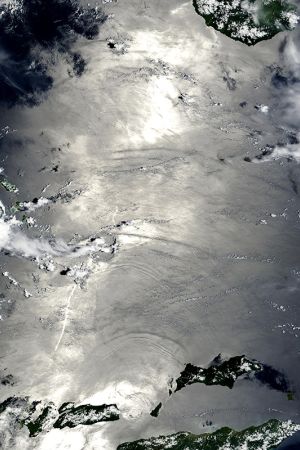
“Other times, I wander around and talk with chance acquaintances, such as people on the street, or sailors on the docks and ships,” he says. “I’m pretty okay with getting dirt under my fingernails. I want to understand some of the things they already know, living and working where they do. I’m interested in speaking with all types of people related to my topic, folks who are spread across socio-economic divides and geographical ranges of all sorts.”
“I’ve always been interested in how societies connect, and how people moved,” he says. “I’m fascinated with stories of how people end up where they do.”
Tagliacozzo credits this curiosity to his high school years in New York City, where he studied at the Bronx High School of Science with people whose backgrounds were from all over the planet. Then, as a graduating college senior, he received a Thomas Watson Fellowship in a national competition—he used the grant to travel the Indian Ocean and South China Sea to interview spice traders for a year. From then on, he was sold on seafaring.
“Because my research shows the connections forged among peoples and cultures, one of the things that it addresses is the need for tolerance and equality,” he says. “I’m not a fan of the thinking that is rooted in the concept of ‘the West and the rest’—that is not a useful paradigm for humanity.”
Tagliacozzo explains that his biggest challenge is often one of national boundaries.
“My work, by its very nature, has been transnational,” he says. “My research has moved across many of the borders and boundaries of time and space, just like the subjects I study—whether they are adventurers, spice traders, smugglers, religious pilgrims, or people migrating out of a desire for better lives.”
His purpose, Tagliacozzo says, has often been to humanize the movement of people, to tell the stories of their common humanity. “There’s a kind of sadness to history; it is often melancholic and quiet. But it also can force broad thinking—about others’ lives and about our own.”
by Jeri Wall for Global Cornell
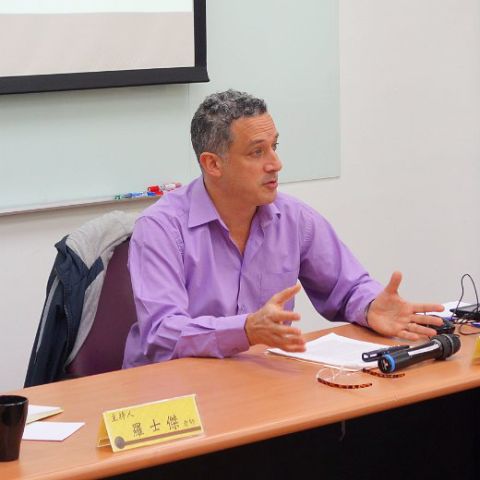
Eric Tagliacozzo (PhD, Yale University) is a professor of history in Cornell University’s College of Arts and Sciences. He is the director of the Comparative Muslim Societies Program, as well as the Cornell Modern Indonesia Project, both part of the Mario Einaudi Center for International Studies. He also is a co-chair of the Migrations Taskforce.
He is one of two co-editors of the journal Indonesia. His most recent books include Secret Trades, Porous Borders: Smuggling and States Along a Southeast Asian Frontier: 1865–1915 (Yale University Press, 2005), and The Longest Journey: Southeast Asians and the Pilgrimage to Mecca (Oxford University Press, 2013)—and he is currently finishing work on In Asian Waters: Charting Maritime Histories of Asia. He is also the editor or co-editor of 10 other books in print, and he is one of four co-editors of the forthcoming Cambridge History of Global Migration, a huge, sprawling project that brings together many dozens of scholars to rewrite the history of modern migration on a planetary scale.
Additional Information
Program
Power, Inequality, and Immigrant Worker Rights

Labor Relations Expert Examines What Works, What Doesn’t
Immigration Status and Workplace Inequalities
“The study of migrations in the contemporary world is central to my research,” says Shannon Gleeson. She is an interdisciplinary social scientist, in conversation with migration debates across disciplines—ranging from sociology to law and society, Latin American and Latinx studies, and industrial and labor relations.
“I’m interested especially in inequality at the workplace, and the ways that vulnerable workers—including migrants—navigate power at work, as individuals and collectives,” she says. “The current state of inequality, which affords some groups rights while criminalizing others, is rooted in a long history of racism, xenophobia, and misogyny. In my work, I seek to understand how these dynamic immigration policies and worker protections came to be, and what are the factors that ensure that they are implemented or disregarded.”
“I’m interested especially in ... the ways that vulnerable workers—including migrants—navigate power at work, as individuals and collectives.”
For Gleeson, the Migrations global grand challenge is innovative in putting the movement of different species, capital, ideology, and forms of power in conversation with each other.
“The success of this initiative takes a delicate balance. The goal is not, for example, to suggest a false equivalency between bird migration and the flow of refugees,” she explains. “Instead, the aim is to put different researchers across the life sciences, humanities, and social sciences in conversation with each other to better understand the systems that spur migration, attempt to regulate it, and to what effect, and to whose benefit.”
“To work, this conversation must include expertise from a broad set of disciplinary approaches, with equal respect and deference to each," Gleeson says. "Direct collaboration need not always necessarily be the goal, but we must talk to each other to understand, for example, the full impact of border militarization here and beyond.”
Gleeson has worked across a range of disciplines in her own research. “The disciplinary spine of my work is sociology and demography,” she says, “but the mix of my colleagues and collaborators has always been interdisciplinary and multi methods. I find utility in being informed by other theoretical traditions and empirical approaches. This helps me understand the storied history of the labor movement with regard to immigrant workers, the lasting effects of decades-long U.S. interventionism that fuel the current exodus of Central American migrants, and the political and demographic forces that drive immigration policymaking at the national, state, and local level in the United States and beyond.”
Gleeson is engaged in various interdisciplinary collaborative projects that touch on these themes.

Studying the Role of Civil Society in Ensuring Immigrant Labor Rights
In her longest-standing collaboration, with Xóchitl Bada, associate professor of Latin American and Latino Studies at the University of Illinois, Chicago, Gleeson is researching the role of the Mexican Consulate in enforcing the rights of their emigrants abroad.
Through interviews with consular officials, U.S. labor standards enforcement agents, and more than 160 civil society groups across the United States and Mexico, the goal is to see how advocates are working to hold both the U.S. and Mexican governments accountable for the rights of migrant workers. The two sociologists also are attuned to differences across place, and are examining how local context shapes the specific challenges facing the local Mexican migrant population, which priorities enforcement officials adopt, which battles advocates take up, and to what effect.
The goal, Gleeson says, is to “spark conversation among interdisciplinary scholars, practitioners, and advocates — and ultimately shine a light on best practices of consular collaborations and the key role that civil society must play in ensuring immigrant labor rights on both sides of the border.
In their recent edited volume, Accountability across Borders: Migrant Rights in North America (University of Texas Press, 2019), Bada and Gleeson dive into these conversations with an interdisciplinary set of authors across the United States, Mexico, and Canada.
Analyzing DACA Implementation at the Local Level
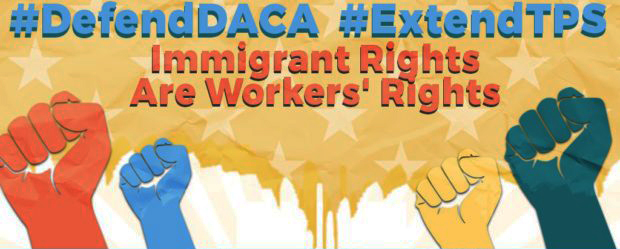
With support from the National Science Foundation, Gleeson and Els de Graauw, associate professor of political science, Baruch College, City University of New York, are conducting an institutional analysis of the implementation of the 2012 Deferred Action for Childhood Arrivals (DACA) program in three metropolitan regions: San Francisco Bay area, Greater Houston area, and New York City Metro area.
Their goal is to better understand how the localities are implementing DACA, and how that policy implementation is shaped by the characteristics of each community.
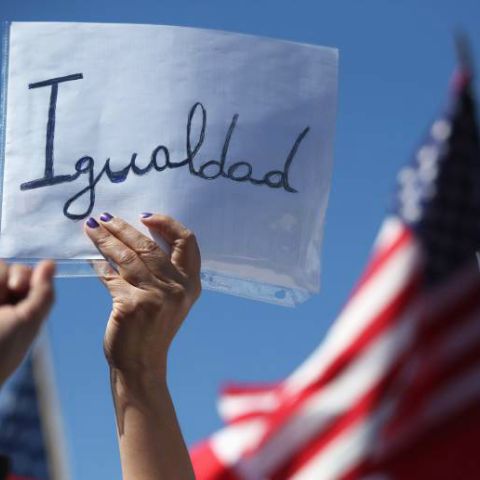
"We conducted 300+ interviews (some in Spanish) to better understand how place matters for the local implementation of immigration law—a federal prerogative in the United States,” Gleeson says.
Their study engages three main stakeholder groups in each location: elected and appointed government officials, civil society, and individuals who applied for and benefited from the DACA program.
“All of this work was undertaken during a time of changing political climate and immigration regulations,” Gleeson adds. She and de Graauw have completed data collection and are now synthesizing data analysis for publication.
Examining Impacts on NYC's Migrant Workers
In another project, Gleeson is working with Kati Griffith, associate professor of labor and employment law, Cornell University School of Industrial and Labor Relations. With support from the Russell Sage Foundation, they are examining the effects of immigration status — for legal permanent residents, undocumented immigrants, and those with temporary protected status—on migrant workers in the New York City region.
“We are looking at how immigrants think about their rights at work and how immigrant status impacts their ability to make claims on those rights,” says Gleeson. “This project is a way to understand how inequality functions in the current moment. Immigration is a lens that helps me discern the role of the state, both in creating greater equity and in creating greater forms of division and inequality.”
One thing they find, Gleeson explains, is that workers with Temporary Protected Status face a unique set of challenges. “Despite having work authorization and protection from deportation, immigration enforcement at the workplace and the complex TPS bureaucracy make it difficult for them to get and keep a job.”
Considering Precarities Beyond Workplace Experiences
Over the years, Gleeson has come to understand that the study of migration cannot happen in a vacuum from other aspects of peoples’ lives.
She recalls a routine interview 15 years ago in the midst of her dissertation work, which included interviews with migrant back-of-house restaurant workers in California and Texas. She met up with a dishwasher, and the two discussed the man’s workplace experiences — fair wages, overtime pay, safety issues. This was a difficult conversation — because of his undocumented status, the questions were both hard for her to ask him, and hard for him to answer.
In the process of trying to document details about his work, this respondent — a migrant, a worker, a renter, a diabetes patient, a father to his daughter who was playing nearby — revealed a lot more about his life.
“You can’t isolate labor issues from the broader context of life—you can’t analyze just one covariate ...”
“I learned about the multiple forms of precarity he faced,” Gleeson says, listing the details he told her about: the abscess in his leg that made standing all day at his job difficult, his inability to get healthcare for himself or his family, the unbearable Houston summers inside his non-air-conditioned apartment.
“I realized from that interview that you can’t isolate labor issues from the broader context of life,” she says, “that you can’t analyze just one covariate — even though, as scholarly researchers, we try.”
Gleeson says that she often thinks about that man and his daughter now and wonders how their lives have unfolded and how they have navigated the various challenges in their lives.“Immigrant status is like a canary in a coal mine,” she says. “It forces us to think about the other precarities that will affect individual immigrants and immigrants at large.”
Given that the U.S. workforce is nearly 18 percent foreign-born and five percent undocumented, Gleeson says, the ways in which we think about and understand these issues is critical.
“Like humans, practices of the state and practices of civil society also can cross borders. And how policy is implemented—in punitive or rights-based ways—affects the well-being of individuals on the ground,” she says. “That means we must consider the dynamic between immigrant rights on the books and how that plays out in practice, especially for the most vulnerable groups—migrants, racial minorities, women, and others.
“The people who agree to participate in her research are often struggling with a range of challenges, Gleeson says, “but they are also agentic—executing survival strategies and thriving. ”Throughout her work, Gleeson and her collaborators also have learned a great deal about how to gain access to communities and the best ways to partner with gatekeepers. This requires, she explains, “money, language capacity, cultural brokerage, and time to gain each other’s respect and trust.” But also, she adds, “it requires the humility of knowing that not all communities will want to participate in our research, and that is valid.”
“The Migrations global grand challenge asks us to think in expansive ways.”
Gleeson is optimistic about the potential long-term impact of the research she conducts, but she notes that change takes both action and ongoing reflection.
“What I am hoping is that we can illuminate a series of important questions for broader public debate — within the academy and with students,” she says. However, she cautions linking all of academic inquiry to the policy debate of the day or hour. “The more you tether yourself to the here and now of policy, the more you limit yourself from the long shadow of history and transformative thinking about the future. It is a critical balance, but also the purview and responsibility of academic inquiry.”
For her research to be meaningful, she says, approaches that are interdisciplinary, multiscalar, and multitemporal are crucial.
“The Migrations global grand challenge asks us to think in expansive ways,” Gleeson says. “We need to question and analyze human migration and consider what infringes on peoples' right to stay home, or their rights to make a safe life elsewhere. We need to engage in research and pedagogy that asks what it takes to realize changes on the ground—and who will bear the costs and benefits of these changes.”
by Jeri Wall for Global Cornell
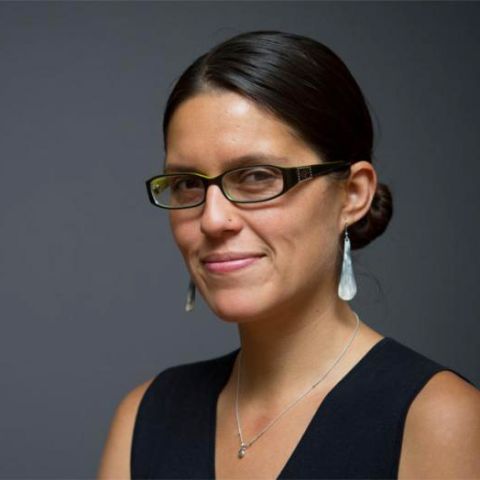
Shannon Gleeson (PhD, University of California, Berkeley) is an associate professor of labor relations, law, and history in the School of Industrial and Labor Relations at Cornell University. She also is a co-chair of the Migrations Taskforce.
Gleeson's most recent books include Accountability Across Borders: Migrant Rights in North America, with Xóchitl Bada (University of Texas Press, 2019); Citizenship from Below: Precarity, Migration, and Agency, with Marcel Paret (Routledge, 2017); Precarious Claims: The Promise and Failure of Workplace Protections in the United States (University of California Press, 2016). She also has authored numerous journal articles.