
Einaudi Center for International Studies
TikTok Supreme Court Clash Pits Free Speech Against US Security

Sarah Kreps, PACS
Sarah Kreps, director of the Tech Policy Institute, discusses the Supreme Court's hearing on the TikTok ban.
Additional Information
Worrying ‘Fine Print’ of Growth Story: Economist Kaushik Basu's Take on India's Economy

Kaushik Basu, SAP
Kaushik Basu, professor of economics, talks about India’s growth rate at the Ramakrishna Mission Institute of Culture.
Additional Information
How Le Pen Used Populism to Fuel His Far-Right Agenda

Mabel Berezin, IES
IES director Mabel Berezin joined Here & Now to talk about the legacy of Jean-Marie Le Pen. The segment aired on January 7.
Additional Information
Craft and learn: Chinese guardian figures

January 24, 2025
12:00 pm
Johnson Museum of Art
Come learn about Cornell-China art connections and play with clay. You're invited to learn about the museum's connection to China via artwork and scholarship, view guardian figures in the museum, and create your own guardian figure from clay. Much of this time will be hands-on in the art studio. Facilitated by art museum staff: Saraphina Masters (Coordinator of Student Engagement and Public Programs), Wendy Kenigsberg (Assistant for School Programs), and Andrea Murray (Lead Educator and Pre-K–12 Curriculum Development Specialist). Co-organized by the Johnson Museum of Art, the Cornell China Center, and the Einaudi Center for International Studies' East Asia Program. Limited to 18 participants; registration required. Registrants should meet in the museum lobby.
Registration has reached full capacity. Please email chinacenter@cornell.edu to be added to the waitlist.
Additional Information
Program
Einaudi Center for International Studies
East Asia Program
Sri Lanka in Context: Critical Perspectives

May 3, 2025
9:00 am
Kahin Center
As in years prior, this conference, cosponsored by the American Institute for Sri Lankan Studies, provides an opportunity for graduate students to critically engage with the particularities of Sri Lanka and its diasporas; particularities often sacrificed to make our work speak clearly to non-specialist audiences. While we acknowledge the many benefits of such generalized engagement, we also recognize a keen need to build community around a shared sense of context. If there is something unique about the field of Sri Lankan Studies, then gathering in a common space to discuss the specificities of a local context offers opportunities to consider not only how this material contributes to the academic conversations in which it tends to be subsumed, but also how conventions of rigor, generosity, and accountability might best be achieved amongst scholars most intimately familiar with the conditions of producing this material. This conference will feature papers from within Sri Lanka; papers that engage with contemporary Sri Lankan scholarship, recognizing that the study of Sri Lanka within Sri Lanka often finds nuances lost in generalized or comparative disciplines around the globe; and reflections on the ways in which our institutional locations determine our approach to the study of Sri Lanka.
CONFERENCE SCHEDULE
9:00-9:15 am Welcome
Anne Blackburn (Asian Studies, Cornell University)
9:15-10:30 am Panel 1
“These drifting Somalis”: Migration and Identity Formation in the Talaimannar-Djibouti circuit, 1919–1946
Ifadha Sifar (History, Columbia University)
Tangible and Intangible Freedom: Manumission and Emancipation in the late 18th and early 19th century Colombo
Sanayi Marcelline (History, University of Leiden)
Discussant: Durba Ghosh (History, Cornell University)
10:45 am-12:00 pm Panel 2
On Absences and Presences: A Speculative Reading of Disappearance under Liberal Modernity
Themal Ellawala ( Anthropology, University of Illinois at Chicago)
Hustling Through A Pandemic: The Implications of COVID-19 on Sex Work in Urban Sri Lanka
F. Zahrah Rizwan (Women's, Gender & Sexuality Studies, Ohio State University)
Discussant: Lucinda E. G. Ramberg (Anthropology, Cornell University)
1:30-2:00 pm Resources for Sri Lankan Studies
Daniel Bass (South Asia Program, Cornell University)
2:00-3:15 pm Panel 3
The Black Legend in/of Ceylon: Kaffrinha, Créolité, and Imperial Difference between the 19th Century and the Present
Praveen Tilakaratne (Comparative Literature, Cornell University)
What Remains? Genealogy, Language, and the Politics of Un/belonging
Deborah Philip (Anthropology, City University of New York)
Discussant: Hadia Akhtar Khan (Future of Work, Cornell University)
Additional Information
Program
Einaudi Center for International Studies
South Asia Program
Migrations Program
Paradise film screening

May 2, 2025
5:00 pm
Goldwin Smith Hall, 142
An Indian tourist couple arrive in the hill country of crisis ridden Sri Lanka to celebrate their 5th wedding anniversary. But, when things take an unexpected turn, conflicts deepen revealing cracks in their relationship.
Paradise is a 2023 Sri Lankan-Indian co-produced film co-written and directed by Prasanna Vithanage. This 93-minute film stars Roshan Mathew, Darshana Rajendran, Shyam Fernando and the tells the story of a married couple whose anniversary vacation goes awry in Sri Lanka. It had its world premiere at the 28th Busan International Film Festival on 7 October 2023, where it won the Kim Jiseok Award.
Additional Information
Program
Einaudi Center for International Studies
South Asia Program
Book Talk: Seeing China’s Belt and Road

February 3, 2025
4:30 pm
Goldwin Smith Hall, 142
East Asia Program Lecture Series presents "Book Talk: Seeing China’s Belt and Road."
Speaker: Rachel Silvey, Professor, Department of Geography & Planning, University of Toronto
Description: Launched in 2013, the Belt and Road Initiative (BRI) is China's signature trillion-dollar global policy. Based on infrastructure development assistance and financing, the BRI quickly set in motion a possible restructuring of the global economy and indeed the world order. In Seeing China's Belt and Road, Edward Schatz and Rachel Silvey assemble leading field researchers to consider the BRI from different "downstream" contexts, ranging from Central and Southeast Asia to Europe and Africa. By uncovering perspectives on the BRI from Chinese authorities, local businesses, state bureaucrats, expatriated migrants, ordinary citizens, and environmental activists, Seeing China's Belt and Road shows the BRI's dynamic, multidimensional character as it manifests in specific sites. A timely analysis of the BRI, this book moves beyond polarized debates about China's rise and offers a grounded assessment of the dynamic complexity of changes to the world order.
About East Asia Program
As Cornell’s hub for research, teaching, and engagement with East Asia, the East Asia Program (EAP) serves as a forum for the interdisciplinary study of historical and contemporary East Asia. The program draws its membership of over 45 core faculty and numerous affiliated faculty, graduate, and undergraduate students from eight of Cornell’s 12 schools and colleges.
Additional Information
Program
Einaudi Center for International Studies
East Asia Program
Southeast Asia Program
Migrations Program
The Rule of Law in Political Conflicts: How Taiwanese Courts Respond to Disobedience in Political Polarization

March 24, 2025
5:00 pm
Goldwin Smith Hall, 64
East Asia Program Lecture Series presents "The Rule of Law in Political Conflicts: How Taiwanese Courts Respond to Disobedience in Political Polarization."
In a severely polarized polity, political actors are sometimes driven to take extra-legal actions to secure their political goals. Such actions, often self-proclaimed as “civil disobedience”, pose serious challenge to the rule of law. How should the courts respond? What does the rule of law mean in such circumstances? Taiwan’s experience in the past two decades offer precious lessons.
Taiwan experienced a surge of social and civic movements since 2008, which culminated in the Sunflower Movement in 2014. It resulted in a series of judicial decisions showcasing the courts’ dynamic interactions with the civil society. Based upon comprehensive study of judicial decisions in Taiwan for over a decade, Hsu identifies evolving patterns of judicial response to disobedience. He argues that the rule of law plays an important role in maintaining fair political competition and facilitating political reconciliation.
Jimmy Chia-Shin Hsu is Research Professor at the Institute of Law, Academia Sinica, Taiwan. He received LL.B. from National Taiwan University, LL.M. and J.S.D. from the University of Chicago Law School. He was Harvard Yenching Scholar 2016-2017. His research includes legal philosophy, comparative constitutional law, civil disobedience, and transitional justice. He has published widely in international journals and books. He is the President of IVR (International Association for the Philosophy of Law and Social Philosophy) Taiwan Section. He recently published edited volumes such as Human Dignity in Asia: Dialogue between Law and Culture (Cambridge University Press, 2022) and The Ethics of Historical Memory: From Transitional Justice to Overcoming the Past (National Taiwan University Press, 2024, in Chinese). He is currently working on comparative judicial responses to civil disobedience, theories of human dignity in East Asian contexts, and post-transition justice and ethics of historical memory.
About the East Asia Program
As Cornell’s hub for research, teaching, and engagement with East Asia, the East Asia Program (EAP) is a forum for the interdisciplinary study of historical and contemporary East Asia. Part of the Mario Einaudi Center for International Studies, the program draws its membership of over 45 core faculty and numerous affiliated faculty, graduate, and undergraduate students from across Cornell's colleges and schools.
Additional Information
Program
Einaudi Center for International Studies
East Asia Program
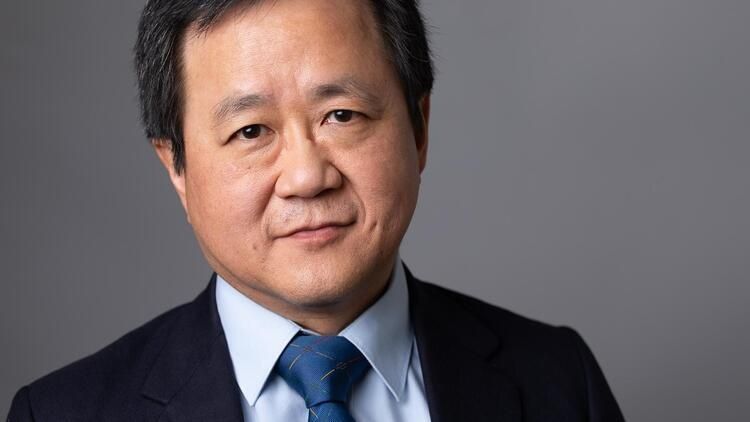
The Political Thought of Xi Jinping
February 13, 2025
3:00 pm
East Asia Program Lecture Series presents "The Political Thought of Xi Jinping."
Speaker: Steve Tsang, University of London
Description: This talk offers a comprehensive examination of the official dogma shaping today's China. Professor Steve Tsang, Director of SOAS China Institute at the University of London, will delve into Xi Jinping's personal words and writings, unraveling his ambitious plan to achieve the "China Dream of national rejuvenation". Discover how Xi Jinping's transformative leadership has profound global implications and learn about the evolution and significance of his ideology. This session provides an essential understanding of the ideological revolution under Xi Jinping and its impact on China's future trajectory.
Registration required: https://cornell.zoom.us/webinar/register/WN_duULB4NUShunou6Nb3anZw#/reg…
About East Asia Program
As Cornell’s hub for research, teaching, and engagement with East Asia, the East Asia Program (EAP) serves as a forum for the interdisciplinary study of historical and contemporary East Asia. The program draws its membership of over 45 core faculty and numerous affiliated faculty, graduate, and undergraduate students from eight of Cornell’s 12 schools and colleges.
Additional Information
Program
Einaudi Center for International Studies
East Asia Program
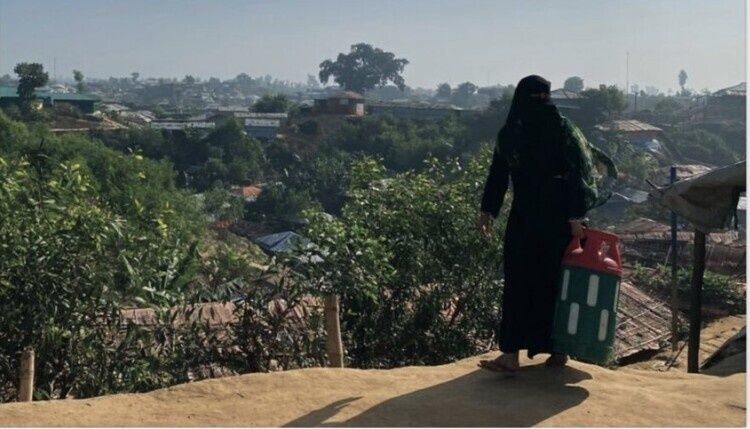
Positioning Women in Conflict Studies: How Women's Status Affects Political Violence
March 6, 2025
12:00 pm
Uris Hall, G08
Book launch with a panel discussion
Sabrina Karim, Cornell University, will give a brief presentation of her book Positioning Women in Conflict Studies: How Women’s Status Affects Political Violence (Oxford University Press 2024), followed by a discussion with gender and conflict experts Summer Lindsey, Rutgers University, and Kanisha Bond, Binghamton University (SUNY).
About the Book
Authored by Dr. Sabrina Karim and Dr. Daniel Hill Jr., the book Positioning Women in Conflict Studies: How Women’s Status Affects Political Violence (Oxford University Press 2024), explores how the conflation of “gender equality” with “women” has inhibited progress on understanding how variation in women’s status in countries affects levels of political violence.
The second half of the book then delves into the pathways through which different aspects of women’s status—women’s inclusion, women’s rights, harm to women, and beliefs about women’s roles—affects levels of political violence globally.
About the Speaker
Dr. Sabrina Karim is an associate professor in the government department. Her research focuses on conflict and peace processes, particularly state building in the aftermath of civil war. Specifically, she studies international involvement in security assistance to post-conflict states, gender reforms in peacekeeping and domestic security sectors, and the relationship between gender and violence. She directs the Gender and the Security Sector Lab.
Panelists
Dr. Summer Lindsey is an assistant professor of political science at Rutgers University. Her research focuses on the enduring implications of armed conflict for women’s security. Her work combines experimental approaches with quantitative and qualitative observational work to understand when and how social norms related to violence against women change.
Dr. Kanisha Bond is an Assistant Professor of Political Science. Her work orbits one central research question: How do organization and identity influence the dynamics of political challenges in polarized societies? She uses quantitative and qualitative methods to examine specifically mobilization and institution-building among radical socio-political groups around the world, particularly in North America, Latin America, and Africa.
Co-Hosts
Reppy Institute for Peace and Conflict Studies
Gender and the Security Sector Lab
Co-Sponsors
Department of Government
Feminist, Gender & Sexuality Studies
Additional Information
Program
Einaudi Center for International Studies
Reppy Institute for Peace and Conflict Studies