
Einaudi Center for International Studies
Unions, Military View Immigrants as Vital and as Threats
Shannon Gleeson, Migrations
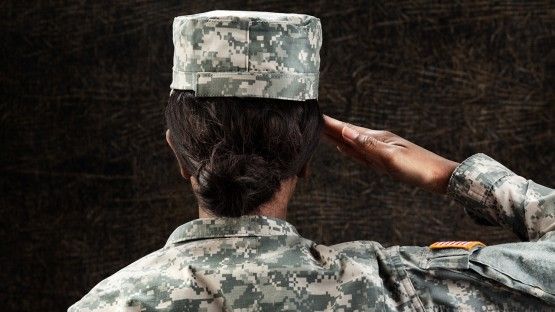
New research from Shannon Gleeson (Migrations) in the peer-reviewed journal Critical Sociology explores how unions and the military frame the role of immigrants within their institutions and shape U.S. attitudes.
How unions and the military frame the role of immigrants within their institutions and help influence attitudes in U.S. society is the focus of new collaborative research by Shannon Gleeson, the Edmund Ezra Day Professor of Labor Relations, Law and History in the ILR School.
Additional Information
Cornell Classical Chinese Colloquium: “Biographies of Exemplary Women” in 19th century Vietnam
January 31, 2025
3:30 pm
Rockefeller Hall, 374 (Asian Studies Lounge)
Speaker: Kathlene Baldanza, Associate Professor of History and Asian Studies, Penn State University
Description: In China, Korea, and Vietnam, the genre of “biographies of exemplary women” (列女傳) served both to celebrate individual women for their virtue and to promote widow chastity more broadly. The dozen or so biographies of women collected in Đại Nam hành nghĩa liệt nữ truyện (大南行義列女傳) are quite similar on the surface to Chinese and Korean examples. A closer reading shows elements that are perhaps unique to Vietnam, and certainly reflect the political situation during the Minh Mạng reign period (1820-1839), when many of these biographies were collected.
About Cornell Classical Chinese Colloquium
The group meets monthly during the semester to explore a variety of classical Chinese texts and styles. Other premodern texts linked to classical Chinese in Japanese, Korean, and Vietnamese have also been explored. Presentations include works from the earliest times to the 20th century. Workshop sessions are led by local, national, and international scholars. Participants with any level of classical Chinese experience are welcome to attend.
At each session, a presenter guides the group in a reading of a classical Chinese text. Attendees discuss historical, literary, linguistic, and other aspects of the text, working together to resolve difficulties in comprehension and translation.
No preparation is required; all texts will be distributed at the meeting.Refreshments will be served.
Additional Information
Program
Einaudi Center for International Studies
East Asia Program
Southeast Asia Program
States without Armies: Why They Exist and How They Survive

February 13, 2025
12:00 pm
Uris Hall, G08
Can a state exist without a military in an increasingly divided and heavily militarized world? The answer is “yes.”
Twenty-one sovereign countries – one-ninth of the United Nations’ roster – do not maintain standing armies. Many of them are small island states in the Caribbean and the South Pacific and the majority chose not to create armed forces upon attaining independence. Demilitarization, the act of abolishing an extant army, occurs much more infrequently, because it clashes with the interests of powerful organizations, especially the armed forces themselves. Some European mini states – Andorra, Liechtenstein, Monaco – scrapped their armies centuries ago. But two Central American countries, Costa Rica and Panama, and two small Caribbean Island nations, Dominica and Grenada, dispensed with their militaries after World War II.
Armyless states share some important commonalities: (1) the decision to demilitarize or not to have an army always follows a pivotal moment (military coup, foreign invasion, reaching independence) in history; (2) they have bilateral security arrangements and/or an alliance with a regional hegemon; (3) they have not been attacked or invaded; (4) they maintain public safety and border security organizations; (5) they are consolidated democracies; and (6) they are more prosperous and spend more on healthcare, education, and socioeconomic development than their neighbors with armed forces. While States without Armies engages all twenty-one demilitarized states, it focuses on the experiences of Costa Rica, Iceland, Mauritius, Panama, and the Solomon Islands.
About the Speaker
Zoltan Barany is the Frank C. Erwin Professor of Government at the University of Texas where he has been a faculty member since 1991. He is a student of military politics and sociology and the author of Armies of Arabia: Military Politics and Effectiveness in the Gulf (Oxford, 2021), How Armies Respond to Revolutions and Why (Princeton, 2016), The Soldier and the Changing State: Building Democratic Armies in Africa, Asia, Europe, and the Americas (Princeton, 2012), and other books. Barany held visiting and research appointments at CSIS, the Hoover Institution, the universities of Oxford and Edinburgh in the UK, and the East-West Center in Honolulu. He was elected to a Life Membership in the Council on Foreign Relations in 2007.
Host
Reppy Institute for Peace and Conflict Studies
Additional Information
Program
Reppy Institute for Peace and Conflict Studies
Einaudi Center for International Studies
Borrowing Paradise: A Balinese Ritual Story
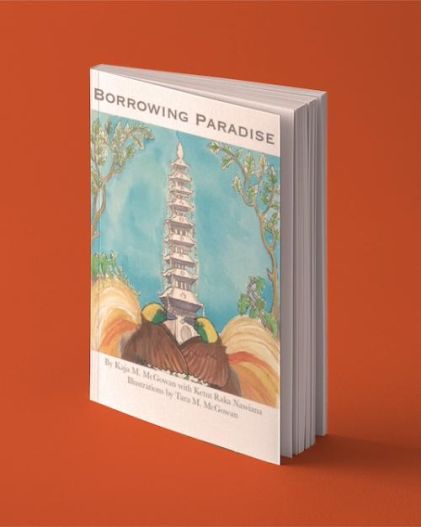
Review of Kaja McGowan's new children's book
“Borrowing Paradise,” a new children’s book by art historian Kaja McGowan (SEAP/SAP), takes young readers on a captivating journey to Bali, Indonesia, exploring Hindu cultural traditions surrounding death and rebirth.
Additional Information
Weeks of Upheaval Have Paralyzed This South American Nation. Here's Why.

Gustavo Flores-Macías, LACS
“I think the average Bolivian just feels like these leaders have forgotten about the average person, that they’re more focused on holding on to power," says Gustavo Flores-Macías.
Additional Information
Why Spanish Firms Have Cooled Towards Latin America
Lourdes Casanova, LACS
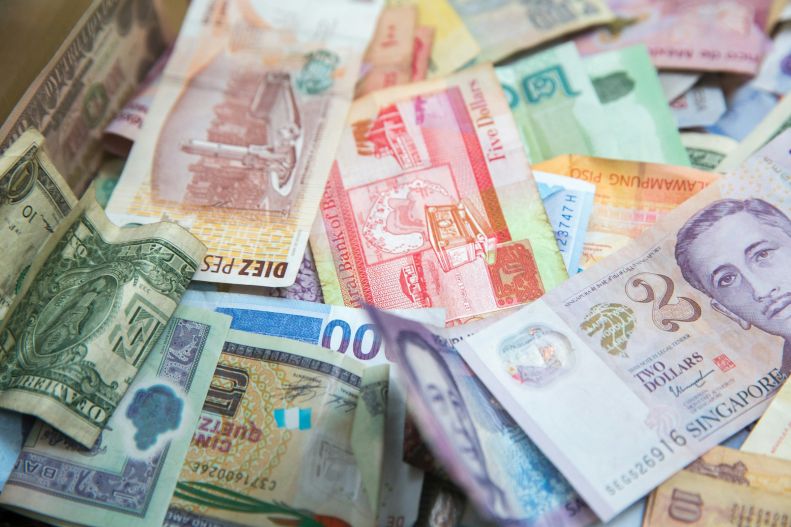
Lourdes Casanova, senior lecturer of management, explains why Spain no longer views Latin America as a land of opportunity.
Additional Information
Why the U.S. Could Come Out Ahead in a Tariff War

Eswar Prasad, SAP
Eswar Prasad, senior professor of international trade policy, pens this opinion essay on Donald Trump's proposed tariffs.
Additional Information
Teaching Global Democracy
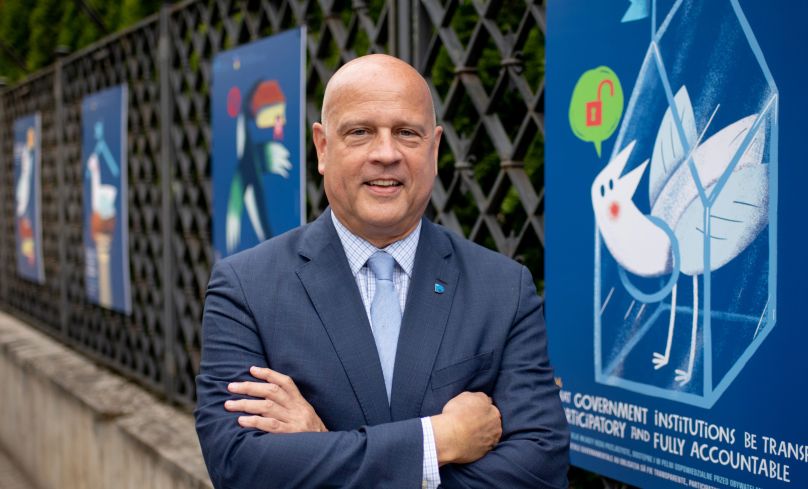
Tom Garrett, Einaudi Center Lund Practitioner in Residence
At the Einaudi Center, Garrett mentored this year’s Undergraduate Global Scholars, informed by his decades of experience promoting democracy.
Additional Information
The Names of Water: China’s Nanyang Project and Other Vernacular Imaginaries of the Southern Seas

May 1, 2025
6:00 pm
Gatty Lecture Series
Join us for a talk by Dr. Rachel Leow from University of Cambridge. Dr. Leow is an Associate Professor in Modern East Asian History at Faculty of History, University of Cambridge.
This Gatty Lecture will take place on Zoom, but will only be open to current Cornell students, faculty, and staff. Please register using your Cornell email address. It will be held at 6pm Eastern Time, not the usual 12:15pm. For questions, contact seapgatty@cornell.edu.
About the Talk
Southeast Asia and the maritime worlds which surround it have always been a zone of dense inter- and intra-Asian mobilities, among which the entangled histories of diasporic, settling, embedded and indigenous Chinese communities across the region have been especially significant. Its waters have been known by many names, testifying to its complex nature as a space of overlapping diasporas, empires and flows. Yet the historiographies of this region reflect its fragmentation. Histories of one nation-state seem to exist in parallel to each other, or in a national vacuum; even when studying the region's many transnational migrants and diasporas, different flows are rarely brought into dialogue; beyond European encounter, entanglements between migrant and indigenous groups—and the complex hierarchies of race, gender and culture between them—remain underexplored; linguistic silos remain formidable. This lecture critically examines the historical construction of “Southeast Asia” as a bounded geographic and disciplinary category, and offers the Southern Seas as a capacious alternative. It explores a range of competing names of water, and the vernacular political and intellectual projects they represent — from Chinese and Japanese oceanic, colonial and neo-imperial projects to Chinese migrant creole imaginaries and Malay revolutionary socialist visions — and in doing so, reveals a complex intellectual and political seascape that challenges contemporary national and regional boundaries, and pushes migrant histories beyond commerce, capital and commodities into the realm of ideas. In asking how might we do justice to the expansive migratory histories trapped within the siloed geographies of the Southern Seas, it calls for a rethinking of what it means to study ‘Chinese diaspora’ in Southeast Asia.
About the Speaker
Rachel Leow is Associate Professor of Modern East Asian History at the University of Cambridge, and a Fellow of Murray Edwards College. Her first book, Taming Babel: Language in the Making of Malaysia, explored the ethnolinguistic constructions of Chineseness and Malayness over the colonial-postcolonial transition in Malaysia; it was published in 2016 and won the 2018 Association for Asian Studies Harry J. Benda Prize. Her recent work explores transregional and transnational connections between China and Southeast Asia, and her research has been published in academic venues, including Twentieth-Century China, Itinerario, the Journal of World History, Modern Asian History, as well as in literary venues such as the LA Review of Books China Channel and the Mekong Review, and in film. With her collaborator Professor Emma Teng, she is currently co-editing the Oxford Handbook of Asian Migration and Diaspora, c. 1300s-2000s, and her next monograph, tentatively titled Southern Seas: Chinese encounters on diaspora's horizons, is under joint contract with University of California Press and Penguin Allen Lane.
Additional Information
Program
Einaudi Center for International Studies
Southeast Asia Program
East Asia Program
Bad Lieutenants: The Khmer Rouge, United Front, and Class Struggle, 1970–1997
April 24, 2025
12:15 pm
Kahin Center
Gatty Lecture Series
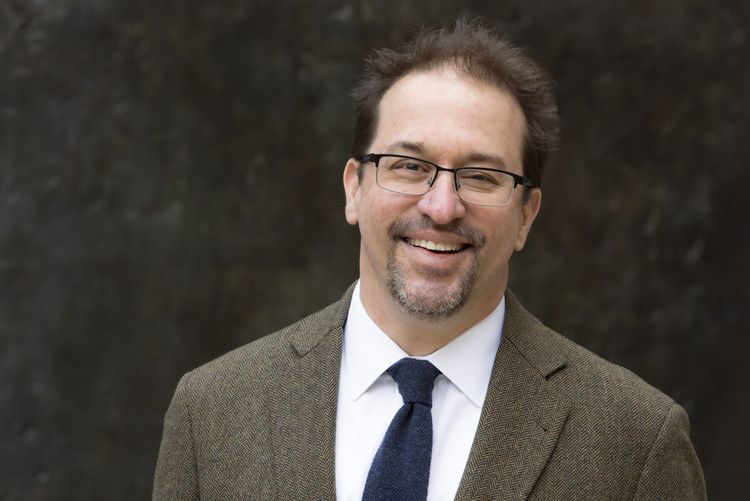
Join us for a talk by Dr. Andrew Mertha from Johns Hopkins School of Advanced International Studies, who will discuss Khmer Rouge, revolution, and leadership struggles. Dr. Andrew Mertha is the George and Sadie Hyman Professor of China Studies at Johns Hopkins School of Advanced International Studies.
This Gatty Lecture will take place at the The Kahin Center, 640 Stewart Ave. Lunch will be served. For questions, contact seapgatty@cornell.edu.
About the Talk
In 1979, the Vietnamese army seized Phnom Penh, toppling Pol Pot's notoriously brutal regime. Yet the Khmer Rouge did not disintegrate. Instead, the movement continued to rule over swathes of Cambodia for almost another two decades even as it failed to become a legitimate governing organization. In this talk, I argue that the Khmer Rouge's successes and failures were both driven by a refusal to dilute its revolutionary vision. Rather than take the moderate tack required for viable governance, it pivoted between only two political strategies: united front and class struggle. Through the stories of three key leaders—Ieng Sary, Son Sen, and Ta Mok—I track the movement's shifting from one strategy to the other until its dissolution in the 1990s.
About the Speaker
Andrew Mertha is the George and Sadie Hyman Professor of China Studies, Director of the China Studies Program, and Director of the SAIS China Research Center at the Johns Hopkins University School of Advanced International Studies (SAIS). From 2019 to 2021, Mertha served as the Vice Dean for Faculty Affairs and International Research Cooperation at SAIS. He is formerly a professor of Government at Cornell University and an assistant professor of Political Science at Washington University in St. Louis. Mertha is the author of Brothers in Arms: Chinese Aid to the Khmer Rouge, 1975-1979 (Cornell University Press, 2014) and the editor of May Ebihara’s Svay: A Cambodian Village, with an Introduction by Judy Ledgerwood (Cornell University Press/Cornell Southeast Asia Program Press, 2018). His forthcoming book, Bad Lieutenants: The Khmer Rouge, United Front, and Class Struggle, 1970–1997, will be published by Cornell University Press in May 2025. Mertha is on the Editorial Committee for the Journal of Comparative Politics, The China Quarterly, and Asian Survey. He is vice president of the Center for Khmer Studies (CKS), a member of the National Committee on U.S.-China Relations, and an alumnus of the NCUSCR Public Intellectuals Program, 2008-2010. He received his PhD from the University of Michigan and is originally from New York City.
Additional Information
Program
Einaudi Center for International Studies
Southeast Asia Program