
Einaudi Center for International Studies
"Very strong but also extremely fair”: Masculinity and Football in the Dutch East Indies, 1870-1942
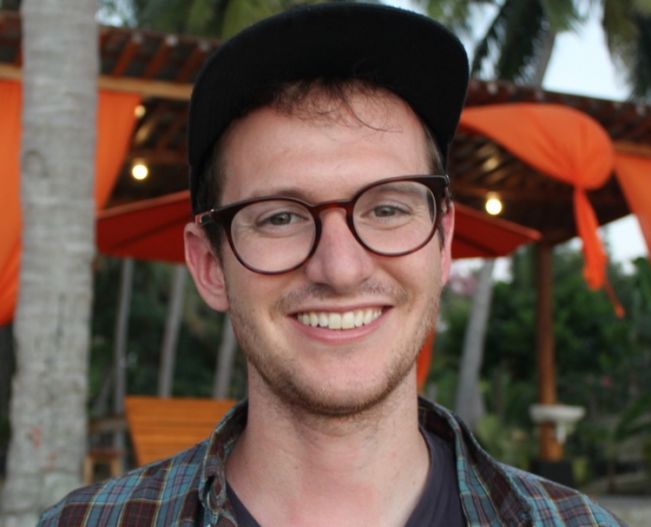
April 17, 2025
12:15 pm
Kahin Center
Gatty Lecture Series
Join us for a talk by Michael Kirkpatrick Miller from Cornell University, who will discuss Ambonese masculinity and colonialism. Michael Kirkpatrick Miller is a PhD candidate in the Department of History at Cornell University.
This Gatty Lecture will take place at the The Kahin Center, 640 Stewart Ave. Lunch will be served. For questions, contact seapgatty@cornell.edu.
About the Talk
In the East Indies, Dutch colonial culture mythologized and racialized the men of the Spice Islands, namely the men from Ambon, as a “martial race.” According to the Dutch colonial state, the Ambonese needed to be cultivated as loyal colonial subjects, collaborating soldiers. During the late nineteenth century, and especially during and after the Aceh War, Christian Ambonese men were actively recruited into the Dutch colonial army, aiding the Dutch in deepening their empire through conquest and the quelling of unrest across the Indonesian archipelago. This talk attempts to unravel the discourse of martialness placed upon these indigenous soldiers in order to understand how this ideology of Ambonese masculinity was experienced by the Ambonese outside of their home island in the early twentieth century. Through an analysis of Dutch-language sporting magazines and the Malay-language popular press in cities with a major colonial army presence, I argue that Ambonese loyalty, and indeed Ambonese “martialness” was never fully accepted by Ambonese soldiers, and instead was contingent on the Dutch colonial state’s economic support of the soldiers and their families. While Dutch reporters constantly praised the fitness, athleticism, and fierceness of Ambonese football teams in Dutch-language magazines, Ambonese men in Malay-language newspapers complained about their station within the Dutch army, keeping one foot placed on the side of the nationalist revolutionaries in Ambon. Further, stadium-wide brawls between Ambonese teams and European teams in colonial Batavia undergirded Dutch anxieties that these soldiers would become revolutionaries fighting against, not with, the colonial state. Indeed, as one Dutch sporting magazine put it, the Ambonese footballers needed to be “under constant and good leadership” from a European coach. Finally, I also consider what non-Ambonese Indonesians wrote about their experiences living near Ambonese barracks on the islands of Java and Sumatra and what they thought of Ambonese footballers and Ambonese football teams. The discourse of the fierce, martial, Ambonese footballer was a critical site of debate about empire and revolution in colonial Indonesia. This racialized discourse of the Ambonese as more fit and more athletic than other Indonesian ethnic groups continues in Indonesia today.
About the Speaker
Michael Kirkpatrick Miller is a PhD Candidate in the Department of History at Cornell University, where he studies histories of masculinity, empire, and animals in Southeast Asia and the Pacific. At Cornell, he teaches courses on the global history of food, the history of animals, and the history of masculinity. His research has been funded by the US Department of State, the American Institute for Indonesian Studies (AIFIS), and the Library of Congress.
Additional Information
Program
Einaudi Center for International Studies
Southeast Asia Program
Writing in Drag: Nguyễn Văn Vĩnh, Gender, Patriarchy, and Speaking for Vietnamese Women, 1907-1917
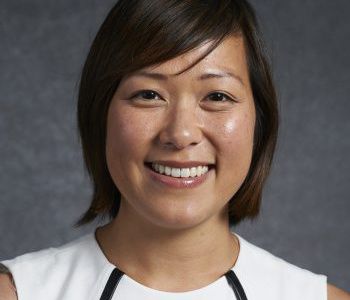
April 10, 2025
12:15 pm
Kahin Center
Gatty Lecture Series
Join us for a talk by Martina Thucnhi Nguyen from Baruch College at City University of New York, who will discuss Nguyễn Văn Vĩnh's gendered writing strategy. Dr. Nguyen obtained PhD from the University of California, Berkeley. Currently, Dr. Nguyen serves as Associate Professor of History at Baruch College at City University of New York.
This Gatty Lecture will take place at the The Kahin Center, 640 Stewart Ave. Lunch will be served. For questions, contact seapgatty@cornell.edu.
About the Talk
In 1907, a series of articles titled “Women’s words” (Nhời Đàn Bà) appeared in Đăng Cổ Tùng Báo (Old Lantern Miscellany) under the name Đaò Thị Loan. Loan was arguably one of the earliest female voices in the modern Vietnamese vernacular press, covering a wide range of women’s issues such as concubinage, childbirth, hygiene, etiquette, and parenting. As it turns out, Đào Thị Loan was not a woman, but in fact, a man writing under a female pseudonym. And not just any man, but Nguyễn Văn Vĩnh, one of the most illustrious Vietnamese intellectuals of the early 20th century. Vĩnh would go on to write this column under the same pseudonym in two subsequent journals he founded, Đông Dương Tạp Chí (Indochina Journal, 1913-14) and Trung Bắc Tân Văn (Central and Northern News, 1915-17). In this 10 year period, Vĩnh penned over 100 articles on women’s issues, one of his most sustained bodies of writing. This paper delves into the column’s content and context to argue that Vĩnh’s adoption of a female persona–that is, writing betwixt and between genders–can be read as both a political and creative act, one which projected an idealized vision of modern Vietnamese gender relations that ultimately benefited men.
About the Speaker
Martina Thucnhi Nguyen is Associate Professor in the Department of History at Baruch College, City University of New York. An historian of modern Southeast Asia, her research focuses on colonialism, intellectual life, social and political reform, and gender in twentieth century Vietnam. Her first book, On Our Own Strength: The Self-Reliant Literary Group (Tu Luc Văn Đoàn) and Cosmopolitan Nationalism in Late Colonial Vietnam, was published in 2021 by University of Hawai’i Press as part of Columbia University’s Weatherhead East Asian Studies Institute book series. She is currently working on her second book, a gender history of patriarchy, examining how Vietnamese during the late colonial period actively constructed ideologies of sexual difference and wove these gendered categories into the very fabric of Vietnamese national identity.
Additional Information
Program
Einaudi Center for International Studies
Southeast Asia Program
Climate Change and Internal Displacement in Colombia: Chronicle of a Tragedy Foretold

April 24, 2025
12:00 pm
Uris Hall, G08
One of the key challenges stemming from climate change will be climate displacement, as sudden and gradual events disrupt livelihoods and force millions to leave their homes. Despite the existing scholarship’s focus on cross-border movement, the majority of climate displaced people will move internally instead of or before seeking refuge outside their nation’s borders. What obligations do states owe to their citizens when those states have historically not been emitters but have still failed to protect domestic populations from displacement related to environmental disasters and climate change impacts? Through exploring the disaster management framework in Colombia and conducting a case study of the town of Gramalote, this talk discusses the obligations that states like Colombia owe to their internally displaced populations in the context of climate change. Given the inexorability and foreseeability of climate displacement, this talk argues that states have an obligation to recognize climate displacement, plan ahead to protect their populations’ rights, and implement best practices under international human rights law throughout relocation and resettlement processes. Irrespective of the driver of displacement, displaced individuals should not be subject to a bifurcated regime of protection that treats displacement due to civil disruption, violence, or armed conflict distinctly from displacement in the context of climate change and environmental disasters.
About the Speaker
Camila Bustos is an Assistant Professor at the Elisabeth Haub School of Law at Pace University. Before joining Haub Law, Professor Bustos was a Visiting Assistant Professor of Human Rights at Trinity College and a Clinical Supervisor in human rights practice at the University Network for Human Rights. She also served as a term law clerk to Justice Steven D. Ecker of the Connecticut Supreme Court and as a consultant with the International Refugee Assistance Project (IRAP).
Professor Bustos graduated from Yale Law School, where she received the Francis Wayland Prize and was a Switzer Foundation Fellow and a Paul & Daisy Soros Fellow. She worked at the Center for Climate Integrity, the Climate Litigation Network, and EarthRights International during law school. Professor Bustos also co-founded Law Students for Climate Accountability, a national law student-led movement pushing the legal industry to phase out fossil fuel representation and support a just, livable future. Prior to law school, she worked as a human rights researcher at the Center for the Study of Law, Justice, and Society (Dejusticia) in Colombia.
Professor Bustos’s research and scholarship focus on human rights law, environmental law, legal ethics, and climate change law.
Host
Reppy Institute for Peace and Conflict Studies
Co-sponsor
Migrations Program
Cornell Law School
Cornell Atkinson Center for Sustainability
Additional Information
Program
Einaudi Center for International Studies
Reppy Institute for Peace and Conflict Studies
Migrations Program
Did Democracy Survive the 2024 Global Election Marathon?

Rachel Beatty Riedl, Former Einaudi Director
Article highlights Cornell’s 2024 report on global democracy, and Rachel Beatty Riedl, director of the Center on Global Democracy, says “We’ve seen some real possibilities for hope.”
Additional Information
U.S. Exports Grew in Q3, Including in Computer Parts
Eswar Prasad, SAP
“When the rest of the world is in crummy shape, economically speaking, the reality is that they’re just not going to be able to buy much stuff or services from the U.S.,” says Eswar Prasad, senior professor of international trade policy.
Additional Information
Biden's Immigration Legacy is a Complex One

Marielena Hincapié, Migrations
Marielena Hincapié, distinguished immigration scholar, discusses President Biden's immigration legacy.
Additional Information
The Politics of the Amazon Strike Hinge on Trump

Patricia Campos-Medina, Migrations
Patricia Campos-Medina, executive director for The Worker Institute, explains why Trump is expected to be more pro-union in his second term.
Additional Information
US Supreme Court to Hear TikTok Challenge to Potential Ban

Sarah Kreps, PACS
Sarah Kreps, director of the Tech Policy Institute, says "The case has already gone through the executive branch, the legislative branch, and the lower court, all of which upheld the argument that TikTok's ownership by China-based ByteDance poses a national security risk.”
Additional Information
Is Francafrique Ending? Why Senegal is Cutting Military Ties with France

Oumar Ba, IAD
Oumar Ba, assistant professor of government, says “They have quietly let the CFA question die down, and there is no renegotiations of the extractive contracts with foreign companies that they had promised.”
Additional Information
Syrians Have Big Plans for Life After Assad. But Their Neighbours Might Have Other Ideas
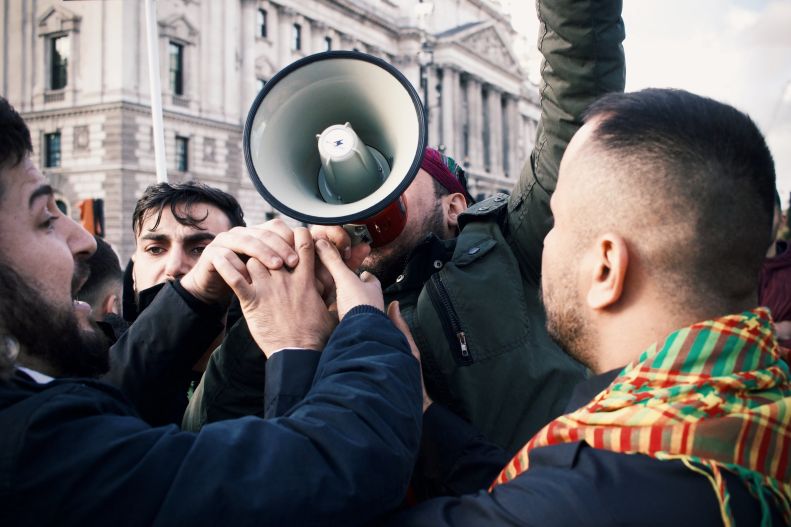
Mostafa Minawi, COPOS
“We all want this to be a moment of liberation and self-determination” for Syrians, says Mostafa Minawi, associate professor of history.