
Einaudi Center for International Studies
The Obstacle Course of Jumia, the African Amazon, to Overcome the Lack of Infrastructure and Internet Access

Lourdes Casanova, LACS
Lourdes Casanova, senior lecturer of management, discusses Jumia.
Additional Information
Weeks of Upheaval Have Paralyzed This South American Nation. Here’s Why.

Gustavo Flores-Macías, LACS
Gustavo Flores-Macías, professor of government, talks about the political landscape in Bolivia.
Additional Information
The Night Shift

Mary Jo Dudley, Migrations
“This transition to a nighttime schedule pushes an extremely vulnerable population into more difficult work conditions that have significant mental and physical health impacts,” says Mary Jo Dudley, director of the Cornell Farmworker Program.
Additional Information
TikTok’s Future in Jeopardy as US Ban Looms

Sarah Kreps, PACS
“There’s a reason the law stipulated that the ban would take effect the day before the new administration is inaugurated and a new Congress begins. No one wanted to relitigate this with a new set of political actors, but TikTok thinks that’s its best hope,” says Sarah Kreps, director of the Tech Policy Institute.
Additional Information
Trump Says He Supports DREAMers. His Past Actions Say Differently.

Stephen Yale-Loehr, Migrations
Stephen Yale-Loehr, professor of immigration law, discusses DACA support when Republicans control the House and Senate.
Additional Information
China May Use Rare Earth to Retaliate Against US, Say Analysts

Lourdes Casanova, LACS
Lourdes Casanova, senior lecturer of management, discusses rare earth reserves.
Additional Information
In Georgia Protests, Echoes of Ukraine’s Past Revolutions

Cristina Florea, IES
Cristina Florea, assistant professor of history, says “The government is trying to turn the country back to the Russian sphere of influence against the will of the people, who were moving toward the West, which felt almost inevitable.”
Additional Information
Do You Copy? The Racialized Masquerade of K-pop and Filipino Variety Show Cover Dance

March 27, 2025
12:15 pm
Rockefeller Hall, 374
Gatty Lecture Series
Join us for a talk by Elissa “E” Domingo Badiqué from Cornell University, who will discuss Filipinx mimicry and queer self-fashioning through dance. Elissa is a PhD candidate in the Department of Performing and Media Arts at Cornell University.
This Gatty Lecture will take place in Rockefeller Hall 374, NOT the Kahin Center. It will also be available in a hybrid format here. Lunch will be served. For questions, contact seapgatty@cornell.edu.
About the Talk
For Filipinx, there is a strange familiarity in the practice of the Korean pop (K-pop) dance cover which can be traced to Philippine variety show dance crazes of the 1990s. Recreating the choreography of Filipino variety show dance crews has long been a national pastime for the Philippines and its diaspora. However, in looking beyond the country’s reputation as the “land of the great imitators” we can instead examine Filipinx mimicry as a powerful myth-making medium. In reproducing racialized masculine iconography through the “splendid dancing” of aspirational Asian male figures, Filipinx have established a decades-long repertoire of playful queer self-fashioning.
About the Speaker
Elissa “E” Domingo Badiqué (they/she) is a 6th year PhD candidate at Cornell University’s Department of Performing and Media Arts. Their project explores race, gender, and fandom with a particular interest in racialized performances of Asianness within short form popular dance on New Media platforms such as TikTok and YouTube. They are a Deans Scholar and a FLAS (Foreign Language and Area Studies) Fellow. You can find them performing on stage with Cornell Filipino Association’s traditional and Sinigang dance troupes, exhibiting Filipino martial arts with Kali Club at Cornell, and creating content on New Media platforms in the form of dance, animation, and comedy shorts. E’s research has been supported by the Dean’s Excellence and Martin F. Hatch Dissertation Research Fellowships.
Additional Information
Program
Einaudi Center for International Studies
Southeast Asia Program
Urban Ecologies on the Edge: Making Manila's Resource Frontier
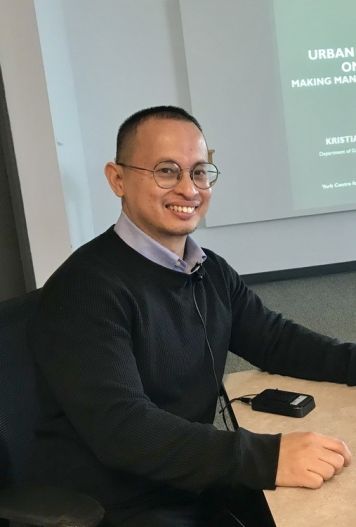
March 20, 2025
12:15 pm
Kahin Center
Gatty Lecture Series
Join us for a talk by Dr. Kristian Saguin from the University of the Philippines Diliman, who will discuss urbanization and resource flows in Metro Manila. Currently, Dr. Saguin serves as Associate Professor of Geography at the University of the Philippines Diliman.
This Gatty Lecture will take place at the The Kahin Center, 640 Stewart Ave. Lunch will be served. For questions, contact seapgatty@cornell.edu.
About the Talk
In this presentation, I examine urbanization as a frontier-making process through stories from Metro Manila in the Philippines and its convenient resource frontier, Laguna Lake. Drawing from ethnographic and historical accounts in and beyond the city, I track two particular resource flows - fish and floodwaters - that have shaped Manila’s twentieth century urban development and environmental trajectory. Making visible the constellation of actors, practices, desires and materialities brought together to deliver these vital resource flows for the city underscores the shifting assemblages and politics that sustain life in the city and produce imaginaries for possible urban futures.
About the Speaker
Kristian Karlo Saguin is an Associate Professor of Geography at the University of the Philippines Diliman who has engaged with various political ecological dimensions of urban and environmental change in the Philippines. He is the author of the Urban Ecologies on the Edge: Making Manila's Resource Frontier (University of California Press, 2022), which received the Harry J. Benda Prize from the Association for Asian Studies and the American Association of Geographers Meridian Book Award for Outstanding Scholarly Work in Geography.
Additional Information
Program
Einaudi Center for International Studies
Southeast Asia Program
Tuning to Colonial Approval: Anxieties for Musical Knowledge Production in Siam
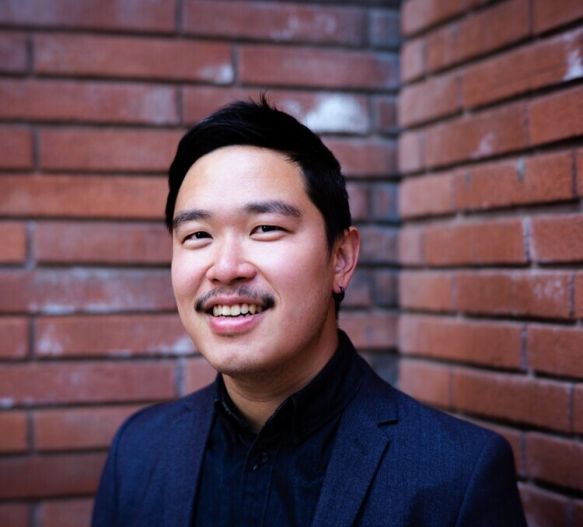
February 27, 2025
12:15 pm
Kahin Center
Gatty Lecture Series
Join us for a talk by Dr. Parkorn Wangpaiboonkit from Washington University in St. Louis, who will discuss Siamese responses to European colonial music theory. Dr. Wangpaiboonkit obtained PhD from the University of California, Berkeley. Currently, Dr. Wangpaiboonkit serves as Assistant Professor in the Department of Music at Washington University in St. Louis.
This Gatty Lecture will take place at the The Kahin Center, 640 Stewart Ave. Lunch will be served. For questions, contact seapgatty@cornell.edu.
About the Talk
My talk examines how Siamese thinkers worried over the European study of Siamese music as a measure of racial-civilizational worth, and how they sought to harness the perceived prestige of European comparativism rather than counter its inconsistencies with local forms of knowledge production.
I begin with a focus on the British theorist Alexander J. Ellis in a quintessential moment of colonial encounter: his 1885 examination of Siamese court musicians, where Ellis declared that Siamese music utilized seven-tone equidistant tuning, regulating its non-harmonic character to the racial-developmental equivalent of Europe’s past. I am not ultimately interested, however, in understanding Ellis’s project on his own terms, nor in exposing the inconsistencies in his methods to uncover what Siamese tuning really was. The fantasy of the European intellectual’s control of knowledge over the colonial world, whether it involved careful ethnography or mere guesswork, has been extensively scrutinized in music studies. I am interested in following, rather, what the aftereffects of European colonial knowledge production meant for its subjects of research: the anxious reception and lineage of theorizing about Siamese music as it took hold within Siam itself. Tracing the anxiety-ridden history of musical knowledge production about “seven-tone tuning” through the court of Chulalongkorn and the regime of Phibunsongkram, I show how musical tuning shifted from an embodied practice of pedagogy and performance into an extraneous object of knowledge entangled in the construction of race and nationhood. The racial science of music comparison – the idea that quantifiable knowledge about a people’s musical organization reveals essential value about their race – was not a one-sided concern of European intellectuals. It was also localized in Thai musical thought as a matter of reflexive self-fashioning.
About the Speaker
Parkorn Wangpaiboonkit is Assistant Professor of Musicology at Washington University in St. Louis. His research focuses on music, race, and imperialism in nineteenth-century Siam. He is interested in issues of aesthetic commensurability, comparativism and the production of knowledge about non-European musics, and opera as a racializing global-colonial form. Parkorn’s book project, Race and Sovereignty in the Imperial Music of Siam, examines the localization of European music and sound practices at the Siamese court as a means of negotiating new conceptions of sovereign personhood in colonial contest. His Opera Quarterly article “Voice, Race, and Imperial Ethnology in Colonial Siam” received the 2023 Alfred Einstein Award from the American Musicological Society. His other writings have appeared in Cambridge Opera Journal and Journal of Musicology. As a recipient of an ACLS Fellowship, Parkorn is spending this academic year at the Heyman Center for the Humanities, Columbia University. He is thrilled to be joining the Department of Music at Cornell University in Fall 2025.
Additional Information
Program
Einaudi Center for International Studies
Southeast Asia Program