Frontpage News
Election Alert
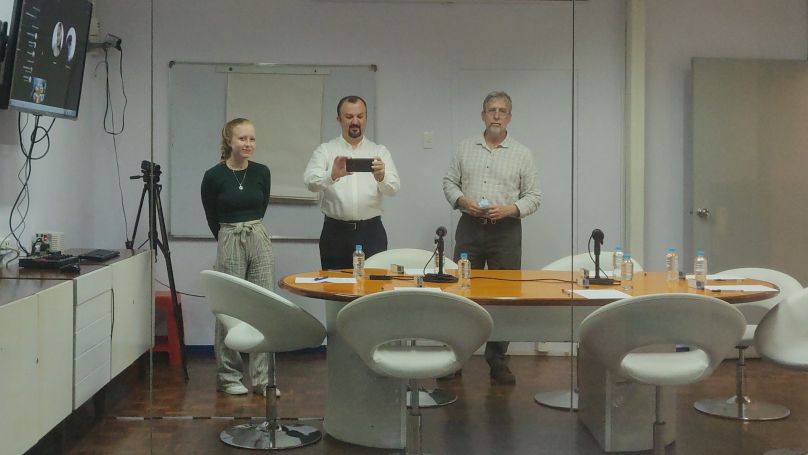
Polarization in Ecuador Highlights Risks for U.S. Democracy
"The basic rules of the electoral process are no longer mutually recognized,” says Kenneth Roberts, based on research at the Ecuador Global Hub.
Additional Information
International Cornell Curriculum Grants
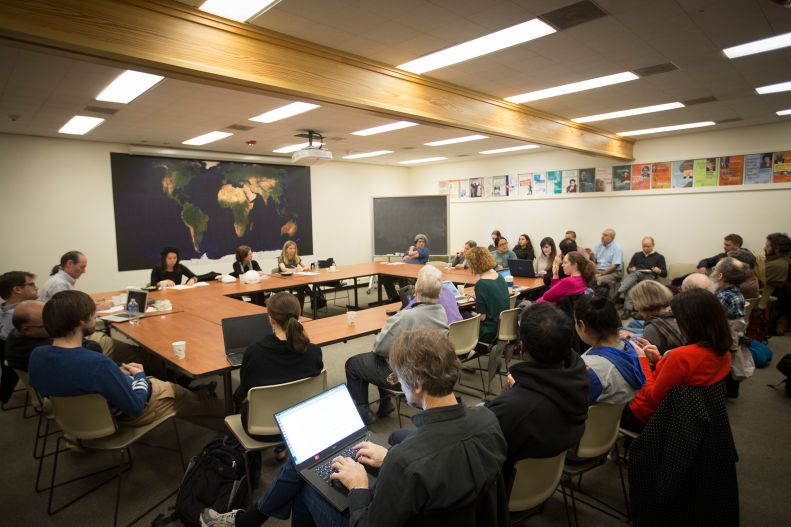
Einaudi Faculty Receive Global Cornell Awards
Faculty projects add short-term international experiences to existing courses or create new courses in tandem with partners abroad.
Additional Information
International Archives Explainer

Tips for Grad Students from a Global PhD Research Scholar
Government PhD candidate Vincent Mauro shares his strategies for making the most of your time at an international collection of primary materials.
“The scope did not change much, but the methodological approach evolved. This development was ultimately fruitful for my project’s strength and depth.”
Vincent Mauro’s 2021–22 Amit Bhatia ’01 Global PhD Research Award from the Einaudi Center took him to archival collections in Brazil and Colombia to study how Latin American party systems shape social reform and economic inequality. He was new to archival research when he started his fieldwork.
Mauro’s research aligns with Einaudi’s work on Democratic Threats and Resilience. Read about his research experiences in Latin America.
On this page: Mauro shares what he learned when the pandemic forced him to shift from primarily in-person interviews to archival data.
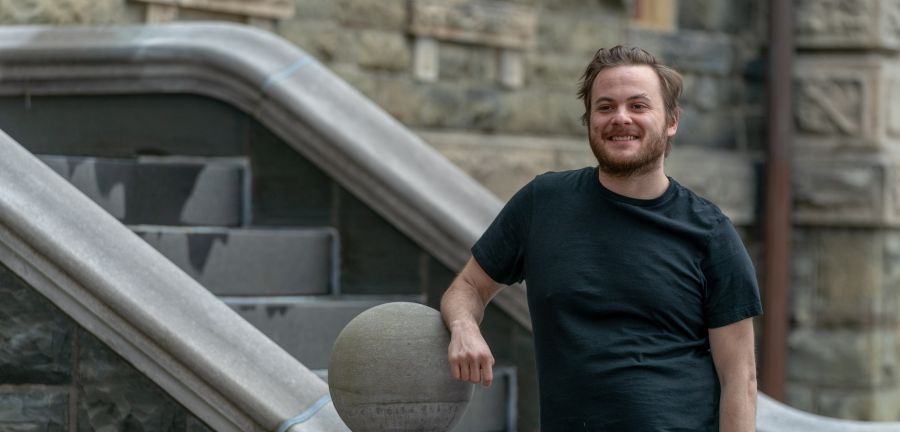
A Conversation with Vincent Mauro
Briefly set the stage for us: What question is at the center of your dissertation?
At its core, my research seeks to understand why certain democracies are able to redistribute income and ameliorate inequality more effectively than others.
Party systems are present in virtually every democracy and are the key set of organizations that link society to formal political systems. The project draws on an eclectic array of cross-national data and two longitudinal case studies—Brazil and Colombia—to test how dynamics within party systems affect the advance of social reforms, income redistribution, and levels of inequality.
What did you find in the archives you explored?
I was able to find extremely rich collections of primary sources that provide significant access to the inner world of political parties, allowing me to trace how dynamics such as elite capture, intraparty factionalism, and party organization contributed to the advance or inhibition of redistributive social reforms.
I primarily analyzed private correspondence among political elites and party members from the major parties in Brazil and Colombia’s traditional party systems (1946–64 and 1930–2002, respectively).
What would you tell a graduate student planning a similar field experience?
I had no formal training or experience in archival methods, so I didn’t have clear expectations going into the field—and I underestimated how much time the analysis of archival materials would take. To make the most of limited time and resources, I have four major pieces of advice to share.
- Stay Nearby
It’s best to find accommodation as close to the archives as possible. Some archives are essentially first come, first served, and there may be fewer spots than people who want to use them. Staying nearby makes it easier to arrive early. More importantly, spending hours in the archives each day is incredibly draining. Adding on a commute wastes unnecessary energy.
- Get Acquainted in Advance
Try to get a strong grasp of the contents of the archives before you arrive. This is not always possible, but depending on the archive, there may be guidebooks that give you some details.
Portions of the archive may also be online. Spending a couple of weeks going through these before you arrive is extremely helpful for getting a feel for other parts of the collection. Lastly, consider contacting the head archivist or librarian to inquire about individual collections.
- Develop Filters for Speed
Archives always contain a large amount of material that is wholly irrelevant to your project. You need a set of heuristics or “filters” that help you zero in on pertinent materials. As you cull through materials, try to limit how much you allow yourself to thoroughly analyze, since this level of attention is the most time-consuming. You may need multiple rounds of applying different sets of filters to reach a manageable set of highly relevant materials to analyze closely.
For example, I found that telegrams rarely, if ever, contained enough substantive information to make it worth the time it took to read or analyze them—which meant I saved a substantial amount of time simply skipping stacks of telegrams and moving on to other documents in the box. Another filter I used was to have a set of keywords in my head—for instance, “parties,” “divisions,” and “factions”—that I would scan for when quickly going through documents.
- Balance Collection and Analysis
Understand that collecting materials is infinitely faster than analyzing them. If you spend too much—or all—of your time each day simply collecting, you will quickly overburden yourself with material that needs to be analyzed.
Make the conscious decision to split your time into separate collection and analysis blocks. There are different ways to do this—blocks of time each day, alternating weeks, or other approaches. Staying on top of analysis as you go along also helps you refine your filters for more efficiency.
Learn more about Einaudi's Latin American and Caribbean Studies Program, including graduate funding opportunities.
Additional Information
Einaudi Welcome Reception

150 Guests Celebrated Einaudi's Impact
The Einaudi Center's annual reception on October 3 connected faculty, staff, campus leaders, and friends from across Cornell.
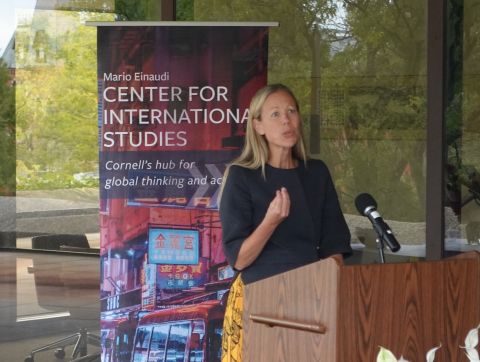
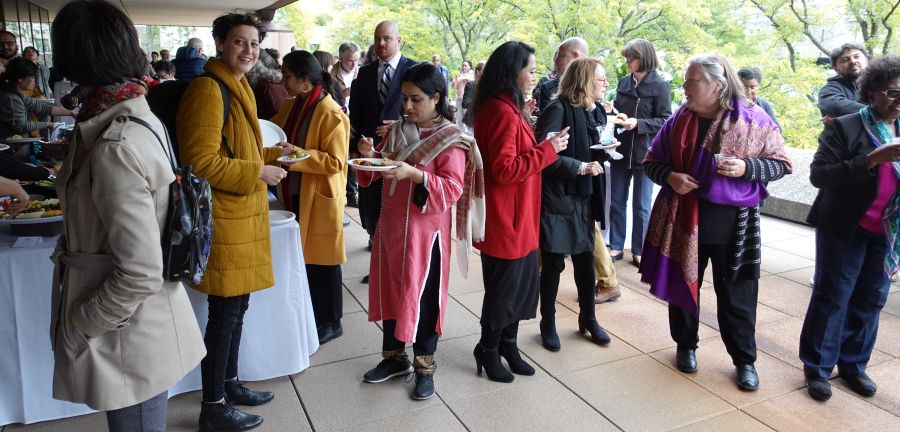
The Einaudi Center welcomed 150 guests to Uris Hall Terrace for a fall gathering celebrating Einaudi's vibrant intellectual community. The well-attended event brought together affiliated faculty and faculty new this year to Cornell in numbers not seen since 2019. Their research interests and expertise span the globe. Learn more about Einaudi's regional and thematic programs and initiatives.
The attendees enjoyed a sunny afternoon with a playlist of world music from Einaudi's own Daniel Bass, South Asia Program manager and Monsoon Radio DJ.
“The Einaudi Center's transnational perspective, the diversity and depth of our faculty expertise, and the range of our partnerships drive innovative collaborations and let us see new solutions.”
Einaudi Center director Rachel Beatty Riedl kicked off the event with remarks highlighting the center's core commitments: collaborations that advance knowledge, advocacy and thought leadership to inform global publics, and teaching and learning that open doors to new worlds.
Riedl highlighted a range of ways for faculty to get involved, including applying for Global Public Voices (due October 13) and exploratory seed grants with Cornell Global Hubs partners (due October 21).
She invited attendees to join Einaudi, the Cornell community, and representatives from Global Hubs around the world at the Global Grand Challenges Symposium: Frontiers and the Future on November 16–17. Register for the symposium.
Additional Information
Congratulations, Eleanor Paynter!
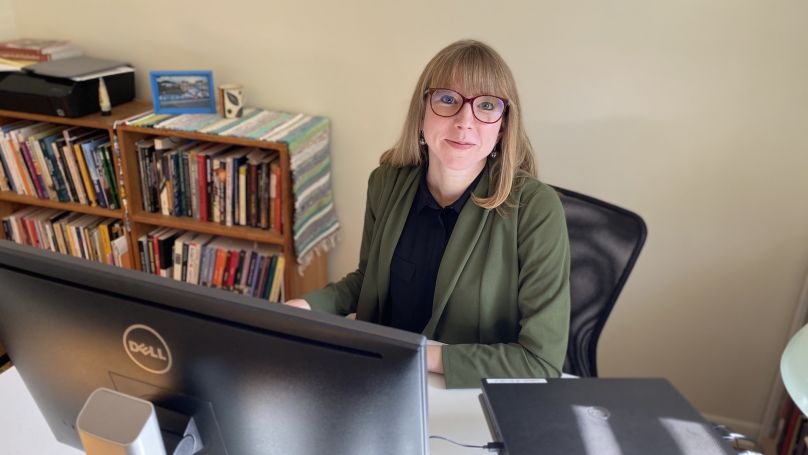
Einaudi Migrations Postdoc Receives Postdoc Achievement Award
"Supporting students has been a highlight of my time at Cornell," says Paynter, winner of the Postdoc Achievement Award for Excellence in Mentoring.
Additional Information
Cornell Global Hubs
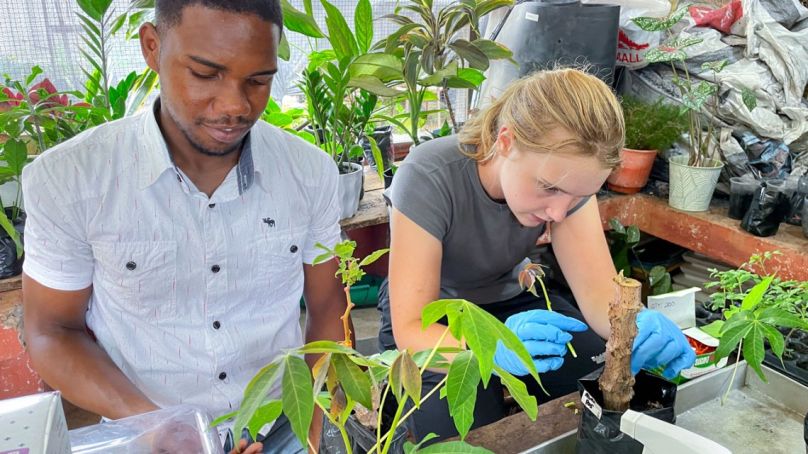
20 partner universities in 11 locations
New initiative expands opportunities, provides infrastructure, and greases the wheels for faculty, alumni, and students across the university.
Additional Information
Former IAD Director Celebrated in Zambia
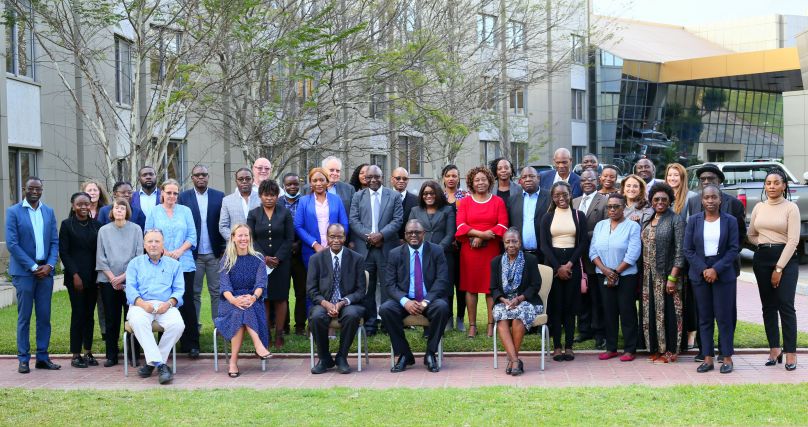
"Intellectual Giant" Muna Ndulo
Ndulo led and strengthened faculty research partnerships, cooperative events, and internships for Cornell students across 20 years.
Additional Information
Afghan Students Look to Future
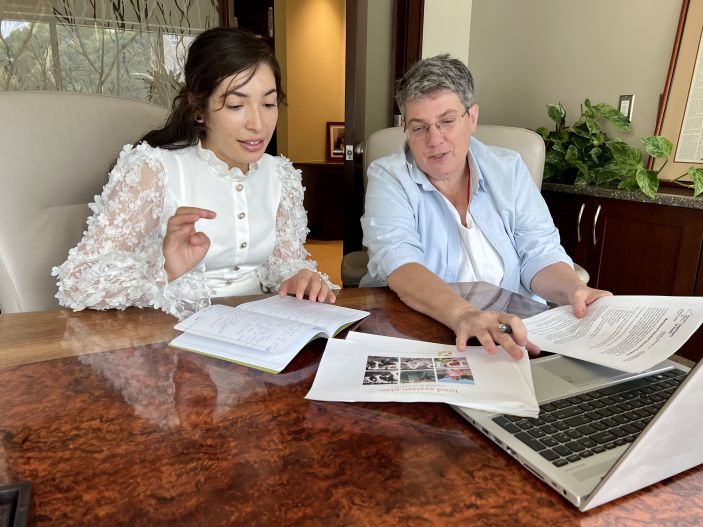
Nine Undergraduates Become Cornellians
"I’m now living in a bigger world, with a different view than the world I was in."
Additional Information
Einaudi Congratulates Dr. Gunisha Kaur
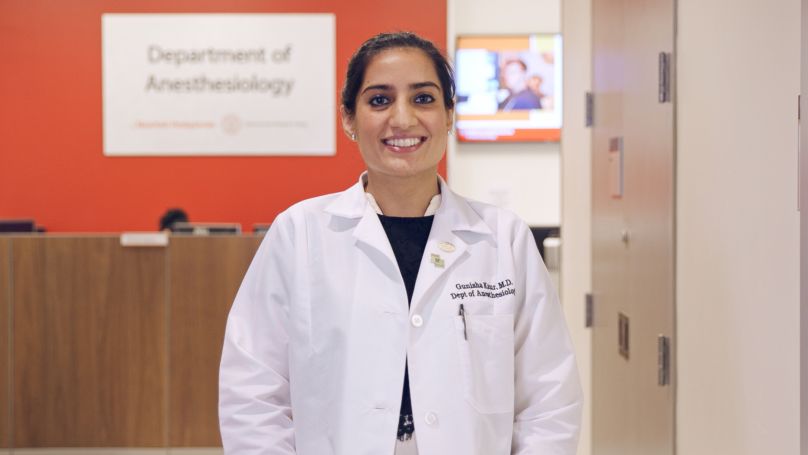
Honored as Emerging Leader by National Academy of Medicine
One of Einaudi's Migrations faculty fellows, Kaur has "dedicated her career to advancing the health of forcibly displaced individuals."
Additional Information
Topic
Undergraduates: Apply Now to Go Abroad
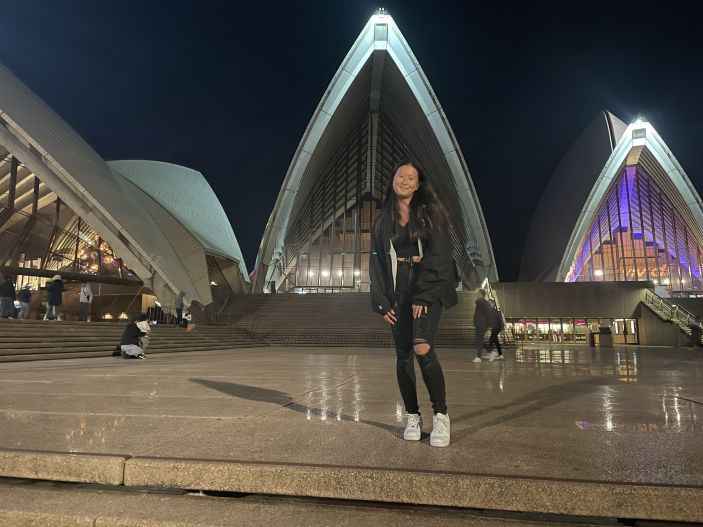
LACS and SEAP January Programs
Short-term and semester options include new Cornell Global Hubs and winter opportunities in Ecuador and Cambodia facilitated by Einaudi programs.