
Institute for European Studies
13 Cornellians Awarded Fulbright U.S. Student Awards

Thirteen Cornell students have been selected to research and teach English abroad with funding from the Fulbright U.S. Student Program.
Cornell's 2023–24 Fulbright students include six graduate students and seven graduating undergraduates whose time abroad will increase mutual understanding between the people of the United States and the people of other countries.
They will join the ranks of over 500 Cornellians who have traveled across the globe as Fulbrighters since the 1940s.
Fulbright Students 2023–24
Graduate Students
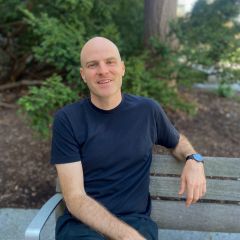
Michael Cary, Development Sociology
Paraguay
Project Title: Remaking Ñeembucú: Infrastructure, Rice Production, and Wetland Conversion in Paraguay
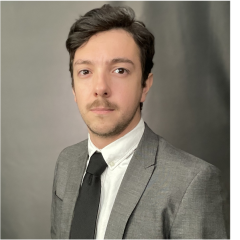
Duncan Eaton, History
Slovak Republic
Project Title: Nation-Building and Agrarian Politics in Interwar Eastern Slovakia
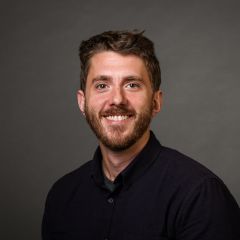
Jarvis Fisher, Development Sociology
Senegal
Project Title: Rice Production and Agroecology in the Senegal River Valley

Giselle Hobbs, Painting and Print Making
France
Project Title: The Aftermath of the Lockdown: Comparative Study of Paris, France, and the U.S.
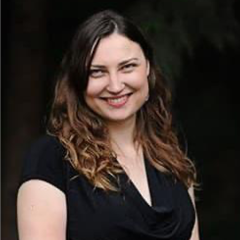
Sasha Prevost, Religious Studies
Israel
Project Title: On the Path of Two Abrahams: Contemporary Jewish Sufism in Israel
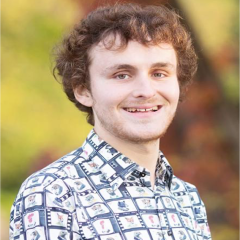
David Rubinstein, History
Poland
Project Title: Coal Town Cosmopolitanism: Jews, Germans, and Poles's Visions of Home in Postwar Walbrzych
Undergraduate Students
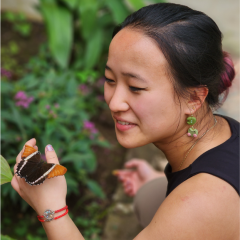
Laura Chang '23, Anthropology
Ecuador
Project Title: Intersections in Reproductive Health: The Integration of Kichwa and Western Medicines
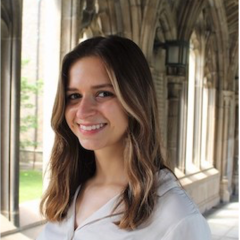
Maria DiGiovanni '23, Development Studies
Italy
Project Title: How Young Italians in Cosenza, Calabria Maintain Sustainable Rural Livelihoods
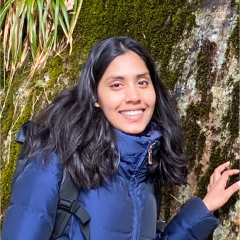
Farzana Hossain '23, Architecture
India
Project Title: Cultivated Landscapes: The Making and Remaking of Agriculture
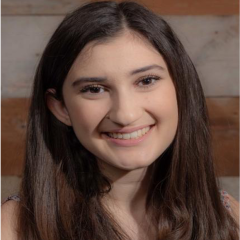
Sarah Hughner '23, Government and English
Timor-Leste
English Teaching Assistantship

Catherine Kopp '23, Applied Economics and Management
Czech Republic
English Teaching Assistantship
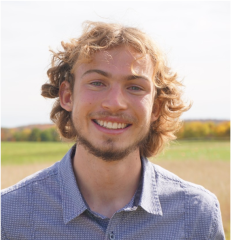
Dylan Rodgers '23, Agriculture
Nepal
Project Title: Feasibility of Small-Scale Recirculating Aquaculture Systems in Nepal
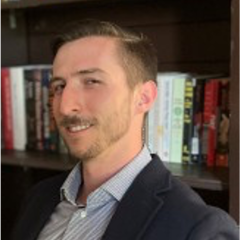
Evan Sierra '23, Government
Kazakhstan
English Teaching Assistantship
Will you be next?
Fulbright at Cornell is administered by the Einaudi Center. There are opportunities for undergraduate students, graduate students, and recent Cornell alumni to apply—Einaudi supports you throughout the process!
Additional Information
The Political Legacy of Forced Migration: Looking at Evidence from a Post-WWII Germany
May 4, 2023
12:00 pm
Uris Hall, Einaudi Conference Room 153
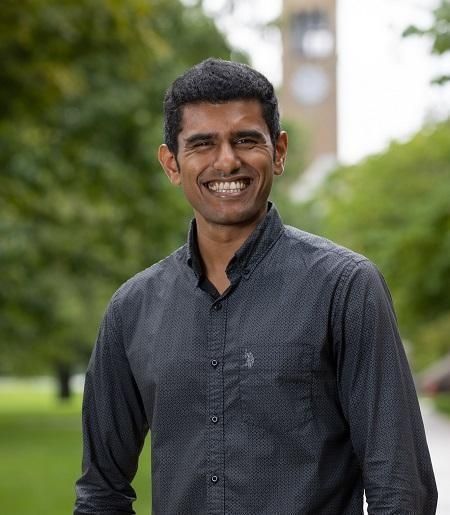
Dr. Anil Menon argues that "forced migration can foster a strong group identity among refugees, which can mobilize them toward political parties that champion their identity-based grievances." Join us to discuss and hear Dr. Menon present his methodologies, analysis, and results of this argument in his recently published work The Political Legacy of Forced Migration: Evidence from Post-WWII Germany.
Dr. Anil Menon is a Klarman Postdoctoral Fellow in the Department of Government at Cornell University. His research examines how traumatic experiences – ranging from interstate wars and forced migration to public health crises – shape short- and long-term political attitudes, behaviors, and institutions. Dr. Menon's work on these issues has been published at both academic and policy journals – American Political Science Review, Comparative Political Studies, The Economic Journal, PLOS ONE, International Journal of Public Health, and Current History – and has been featured in popular press outlets like the Washington Post: Monkey Cage and The Conversation.
In-person capacity for this event will be limited, please register using the Zoom link below. Lunch will be provided.
Additional Information
Program
Institute for European Studies
Einaudi Center for International Studies
Fractured Futures: Armenians and the Fall of the Ottoman Empire (1918-1923)
April 25, 2023
4:30 pm
White Hall, 106
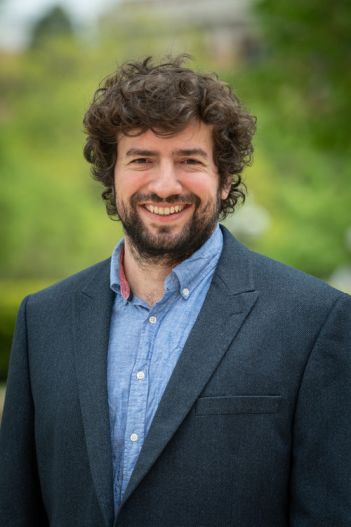
The Armistice of Mudros was signed on 30 October 1918 and on the morning of 13 November 1918, a mighty fleet of battleships from Britain, France, Italy and Greece sailed to Istanbul, and dropped anchor without encountering resistance. This day marked the beginning of the end of the Ottoman Empire, a dissolution that would bring great suffering and chaos, but also new opportunities for all Ottomans, Muslim and non-Muslim alike. In this lecture, drawing upon a previously untouched collection of Armenian and Ottoman Turkish primary sources, Ari Şekeryan will analyze these understudied post-war years. Examining the Armenian community as they emerged from the aftermath of war and genocide, Şekeryan will outline their shifting political position and the strategies they used to survive this turbulent period. By focusing on an oft-neglected period in history, the Ottoman Armistice (1918–1923), Şekeryan presents a case study for understanding the political reactions of ethnic groups to the fall of empires and nation-states.
Speaker
Ari Şekeryan received his PhD from the University of Oxford in 2018 and has since held post-doctoral and visiting professorship positions at the University of Wisconsin-Madison, California State University-Fresno, the University of Michigan-Ann Arbor, and the University of Cambridge. His articles have been published in the British Journal of Middle Eastern Studies, Turkish Studies, the Journal of the Ottoman and Turkish Studies Association, and War in History. His latest book, The Armenians and the Fall of the Ottoman Empire: After Genocide, 1918-1923, published by the Cambridge University Press in January 2023.
Register for virtual viewing.
Additional Information
Program
Institute for European Studies
IES Announces 2023-24 Graduate Fellows

The Institute for European Studies announces the inaugural cohort of IES Graduate Fellows. Eight graduate students from various disciplines have been accepted as fellows for 2023-24.
The IES Fellows will advance their research and contribute to the European Studies community by attending and engaging in IES-hosted talks, and by organizing and taking part in collective activities such as a graduate research workshop or discussion group. The Institute supports these activities with a small research stipend to each Fellow. IES Fellows also receive priority for IES research and travel fellowships.
The 2023-24 IES Graduate Fellows are:
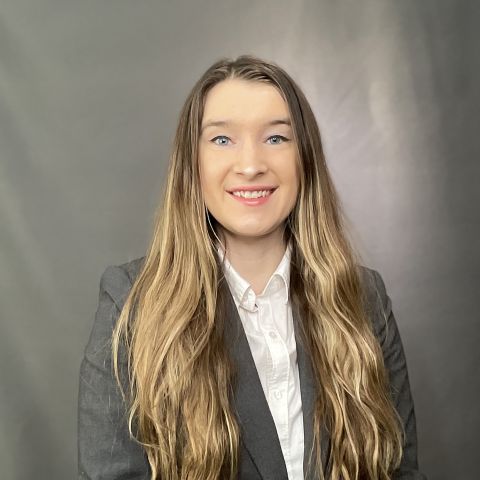
Savannah Caldwell
Medieval Studies

Frances Cayton
Government

Matt Finck
History

Stefan Ivanovski
Industrial and Labor Relations
Nora Siena
Romance Studies

Judith Tauber
Romance Studies
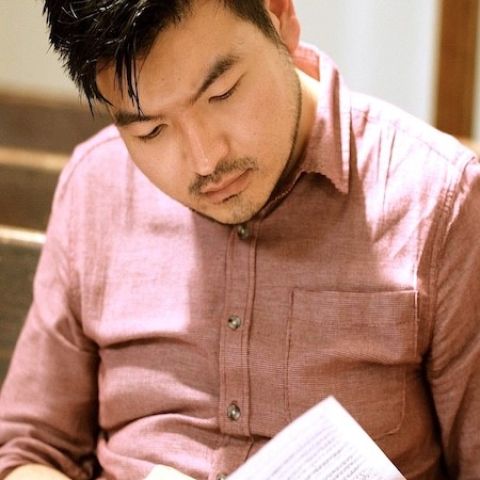
Morton Wan
Musicology

Thari Zweers
Medieval Studies
Additional Information
Program
Panel: Nationalism Unsettled

April 28, 2023
3:00 pm
Uris Hall, G08
Nationalism Unsettled presents a critical exploration of national imaginaries that disturb, defy or deviate from mainstream nation-state narratives, demanding renewed consideration of the nature of nationalism. In tackling this subject, we bring to the table speakers with cross-disciplinary expertise, spanning history, sociology, geography and the arts, and consider case studies spanning the Caribbean of the late 18th century, China under Mao, and contemporary Venezuela and Russia. At a time when nationalism globally is being re-energized through shifting and newly affecting forms, we invite you to join us in taking a deep dive into this vital subject, harnessing the power of a comparative perspective.
Discussant: Begüm Adalet, Department of Government
Format: 10 minute talk by each panelist on their individual research topic, followed by a 20 minute talk by the discussant, and up to 60 minutes for responses to the discussant and Q&A.
Presentations:
Ernesto Bassi, Department of History: Economic proto-nationalism or creole patriotism? Eighteenth-century visions of prosperity and the broken promises of empire
Mara Yue Du, Department of History: What Was Loving China: Revolutionizing Patriotism under Mao
Irina R. Troconis, Department of Romance Studies: Nation, Unsettled: Translucency, Memory, and Materiality in the Venezuelan Diaspora
Leila Wilmers, Department of Sociology: The myth of national resilience and non-statist imaginaries of the Russian nation
Register for viewing on Zoom.
This event is hosted by the Institute for European Studies as part of the Einaudi Center's democratic threats and resilience research priority. It is co-sponsored by Latin American and Caribbean Studies and the East Asia Program.
Additional Information
Program
Einaudi Center for International Studies
East Asia Program
Latin American and Caribbean Studies
Institute for European Studies
Uprooting and Rerouting: Migration and Relation in Modern and Contemporary Theatre

April 25, 2023
5:00 pm
Uris Hall, G08
Migration has defined human activity for millennia, illustrated by the fact that it constitutes the basis of many foundational texts: the Sanskrit Ramayana, the Old Testament, Homer’s Odyssey, the Aeniad, Icelandic sagas. In Poetics of Relation (1990), Martinican philosopher and poet Édouard Glissant distinguishes between "root identity," and "relation identity." While root identity is founded on plantedness in the past, claims to legitimacy, and entitlement to the possession of land, relation identity places emphasis on contact and circulation between cultures: "network of relation." In her presentation, Finburgh Delijani will demonstrate the centrality to contemporary theatre of the theme of migration. Exiles, immigrants, and refugees featuring across the plays examined by Finburgh Delijani show how belonging, legitimacy, and identity are uprooted via the often violent severance of migration. Concurrently, they illustrate how the trauma that characters suffer – which cannot be underestimated – is counterbalanced by the relational, transnational, cosmopolitan citizens they are able to become. With particular emphasis on women characters, Finburgh Delijani demonstrates how Glissant's notion of relation enables an appreciation of how theatre is promoting an understanding of the twentieth- and twenty-first-century worlds of mass migration, as post-national, transnational and fluid.
Hosted by the Einaudi Center as part of its inequalities, identities, and justice and migrations global research priorities, this event is co-sponsored by Migrations: A Global Grand Challenge.
Speaker
Clare Finburgh Delijani (Goldsmiths, University of London) is the recipient of a Leverhulme Major Research Fellowship (2023-26) and Professor in the Department of Theatre and Performance at Goldsmiths, University of London. She has edited many books and articles on theatre from the UK, France, and the French-speaking world. She is currently writing Spectres of Empire: Performing Coloniality in France (contracted with Liverpool University Press) on theatre that addresses France's colonial past, and postcolonial present.Moderator
Eleanor Paynter (Einaudi Center)Respondents
Sabine Haenni (Performing & Media Arts, A&S)Natalie Melas (Comparative Literature, A&S)Imane Terhmina (Romance Studies, A&S)
Additional Information
Program
Einaudi Center for International Studies
Latin American and Caribbean Studies
Institute for European Studies
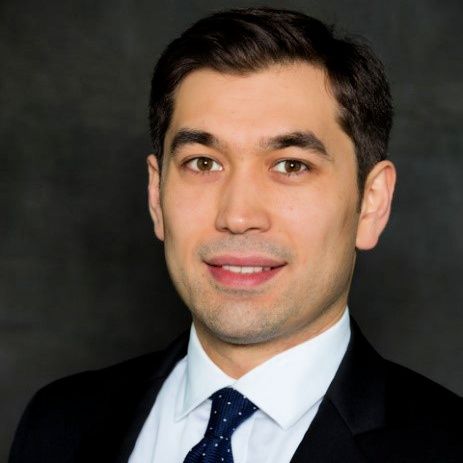
Bakhti Nishanov: Human Rights in Eurasia: A Progress Report
April 12, 2023
5:00 pm
Uris Hall, G08
World in Focus: Einaudi Center Democracy Roundtable
Join the Einaudi Center and Bakhti Nishanov of the Commission on Security and Cooperation in Europe for this dinnertime discussion about how human rights and democracy are faring in the former Soviet republics and across Eurasia.
We encourage undergraduate and graduate students to attend Nishanov's expert briefing from the policy world, with food, conversation, and informal Q&A. Hosted by the Mario Einaudi Center for International Studies, the event is part of Einaudi's work on democratic threats and resilience.
***
Speaker
Bakhti Nishanov joined the Commission on Security and Cooperation in Europe (CSCE)—also known as the U.S. Helsinki Commission—in 2021 as a senior policy advisor specializing in Turkey, Greece, Cyprus, and the Mediterranean. Previously Nishanov served as deputy director for Eurasia at the International Republican Institute, where he helped oversee a portfolio of democracy and governance programs. He has also held numerous consulting positions with the World Bank, USAID, and other organizations.
***
About Democratic Threats and Resilience
Democratic threats and resilience is one of the Einaudi Center's global research priorities. Researchers across the Einaudi Center are monitoring evolving democratic norms and threats to democracy in the United States and around the world. This work is vital today, as our ability to address a range of global challenges—from pandemics and climate change to human rights—often hinges on the strength of representative institutions that provide voice and access to diverse societal interests and actors.
Additional Information
Program
Einaudi Center for International Studies
Reppy Institute for Peace and Conflict Studies
Institute for European Studies
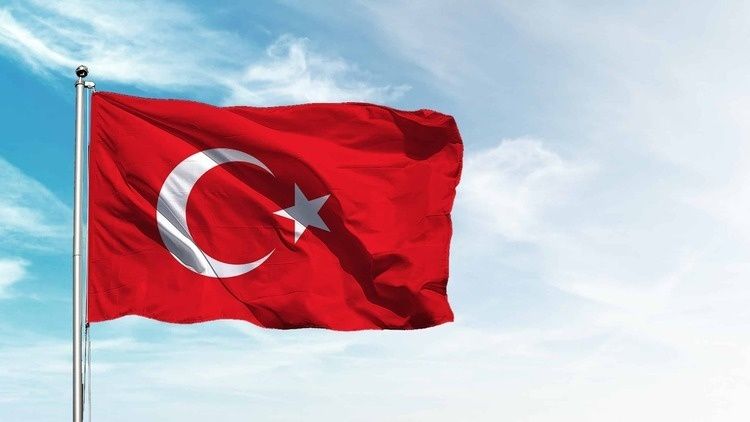
Turkish Elections: A Pivotal Change?
April 14, 2023
12:00 pm
Speakers
Dr. Soner Çağaptay, Beyer Family Fellow & Director of Turkish Research Program, The Washington Institute For Near East Policy
Dr. Lisel Hintz, Assistant Professor of European & Eurasian Studies School of Advanced International Studies, Johns Hopkins Univeristy
Moderator
Dr. Esra Akcan, Michael A. McCarthy Professor of Architecural Theory
Architecture Art and Planning, Cornell Univeristy
Register for the webinar.
Additional Information
Program
Institute for European Studies
Einaudi Center for International Studies
Grad Chats: Best Practices and Challenges in International Field Research (Rescheduled Event)

March 30, 2023
4:30 pm
Uris Hall, G-02
Conducting international fieldwork provides significant value for dissertation research in various disciplines. Panelists will share information, guidance, and lessons learned related to planning, preparing, and conducting fieldwork overseas. Topics include factors shaping field site location(s) and/or partner(s), handling the logistics of fieldwork, data accumulation and protection in varied contexts, models and practices of in situ collaborations, and planning for and getting acclimated to living and working in a new environment and culture.
Moderator
Chris Barrett (Dyson School)Panelists
Emily Dunlop (Government, A&S)Samantha Lee Huey (Nutritional Sciences, CHE)Stacey Langwick (Anthropology, A&S)***
Grad Chats: Conversations on International Research and Practice is a series hosted by the Mario Einaudi Center for International Studies to support graduate students with interdisciplinary training and planning around conducting international research.
Spring 2023 Schedule
From Plan A to Plan B: Designing Research for a Changing World (Thursday, February 16, 4:30 pm – 6:00 pm, Uris Hall G02)Beyond the IRB: Ethics and International Research (Wednesday, March 29, 4:30 pm – 6:00 pm, Uris Hall G08)Best Practices and Challenges in International Field Research (Thursday, March 30, 4:30 pm – 6:00 pm, Uris Hall G02)Finding a Research Focus through Creative Writing (Tuesday, April 18, 4:30 pm – 6:00 pm, Uris Hall G08)Travel Health and Safety Awareness for Conducting Research Abroad (Tuesday, May 9, 4:30 pm – 6:00 pm, Uris Hall G08)
Additional Information
Program
Einaudi Center for International Studies
East Asia Program
Southeast Asia Program
Latin American and Caribbean Studies
Institute for African Development
Institute for European Studies
South Asia Program
Displaced Detained Undeterred: A Creative/Critical Symposium

April 22, 2023
9:00 am
Scholars, artists, and organizers who understand the violence of displacement deeply and intimately narrate and theorize how borders, militarized imperialisms, and their colonial genealogies shape people’s lives and foreclose right to both home and refuge. Featuring presentations, performances, films, installations, conversations, and dialogues that reimagine connections between here and there, the past and present, personal and political.
This is an in-person symposium with a hybrid keynote. Register in advance to save your spot in person!
Thursday, April 20, 2023, 4.30pm, Physical Sciences Building 401: Opening Keynote
Opening Remarks
Saida Hodžić (Cornell University)
4.45 KEYNOTE DIALOGUE
On Refugee Grief: An Intergenerational Remembrance
Yến Lê Espiritu (University of California, San Diego)
Evyn Lê Espiritu Gandhi (University of California, Los Angeles)
This intergenerational remembrance is a portal to a discussion on refugee grief, not as a private or depoliticized sentiment but as a resource for enacting a politics that confronts the conditions under which certain lives are considered more grievable than others.
Moderator: Carla Hung (Cornell University)
6.15 pm Reception: Word of Mouth
To join the keynote virtually, register in advance.
Panels on Collaborations, Enclosures, Routes, Lives and Deaths, and Borders
FRIDAY April 21, AD White House
8.30am Breakfast: Cornell Express
9AM COLLABORATIONS: JOINING FORCES
Identity and the Search for Belonging: From Palestine to Syria, to Europe, and Back
Nell Gabiam (Iowa State University); Abu Salma Khalil and Adam Khalil (Toulouse, France)
A conversation about a documentary film about the journey of Palestinian refugees from Syria to Europe, narrating the experience of displacement of the Khalil family and that of other Palestinian refugees who shared this journey.
Letters from Inside U.S. Detention
Jane Juffer (Cornell University) and Carla
A dialogue that situates the letters Carla wrote Jane from inside immigration detention as a part of the genre of the testimonio.
Collaborative Advocacy against Toxic Land Use and Migrant Detention
Emma Shaw Crane (Columbia University) and Guadalupe De La Cruz (American Friends Service Committee)
A presentation about two collaborative research projects in South Florida investigating the intersection of confinement and environmental racism and a reflection on possibilities for just collaboration between researchers and organizers to end migrant detention.
Moderator: Chantal Thomas (Cornell University)
10.45am Break
11AM ENCLOSURES: MOVEMENTS
Re-Placing Memories through Land Based Practices
Troy Richardson (Cornell University)
A presentation on the layered histories of violence toward Indigenous peoples in the US southeast orchestrated to deny Indigenous peoples access to their homelands and the ongoing struggles for and successes in maintaining land-based practices for Indigenous resilience and resistance.
Barzakh as Method, Barzakh as Process: Making Sense with the In-between in the Strait of Gibraltar
A. George Bajalia (Wesleyan University)
Building from ethnographic work in Tangier, Bajalia presents on forms of being-in-common that exist outside of, or adjacent too, categories of belonging such as migrant, immigrant, refugee, and asylum-seeker.
Migrant Encounters in Bihać: Anthropologies of Dislocation, Extraction, and Refusal
Azra Hromadžić (Syracuse University)
A reflection on multiple dislocations –the migrants’, the locals’, and the author’s —to illuminate knowledge production, ethnographic extraction, and refusal in the Balkans and beyond.
Records in Limbo: On the Lore of Crossing Borders
Amir Husak (The New School)
A work-in-progress narrated/live documentary cinema performance about the experiences of refuge and displacement - including Husak's own - as a thorny body of knowledge in constant need of rethinking.
Short Film: The Stitch (2018, 8 min)
Asiya Zahoor (Cornell University)
This silent film portrays a challenging topography of a Kashmiri village near the Line of Control, a de facto border between India and Pakistan, as traversed and observed by a girl who engenders an alternative reality and cartography via her art.
Moderator: Masha Raskolnikov (Cornell University)
1.15pm Lunch: Angkor Cambodian
3PM ROUTES: KNOWLEDGES
Old Benjamin the Refugee
Vinh Nguyen (University of Waterloo)
A narration of Nguyen’s physical retracing of Walter Benjamin’s 1940 escape route via the Pyrenees across the French-Spanish border to explore Benjamin’s refugee experience, and in turn, the import of his thought for refugee studies.
Wanted: Refugee Returns to Germany
Saida Hodžić (Cornell University)
A reflection on the different meanings of the terms “wanted” and “return,” exploring refugees as deportable and criminalized legal subjects and former refugees/new precarious migrants as desired essential workers in the context of the German state and Bosnian post-war refugee returns.
Departure Scene: Redacted Intimacies among UnCitizens in Jordan
Eda Pepi (Yale University)
A reflection on the redaction of intimacies that arose during Pepi’s sudden departure from her fieldwork in Jordan, where dependent nationality forbids women, but not men, from passing their citizenship to children they have with foreigners.
The Place of Liminality in Writing Experiential History
Mostafa Minawi (Cornell University)
A reflection on liminality of existence as a multi-generational refugee and the author’s resulting interest in researching and writing about historical characters living inhabiting a liminal space.
Moderator: Nicole Thuzar Tu-Maung (Cornell University)
Defiant Dreams
Sharifa Elja Sharifi (Cornell University)
A depiction of multiple displacements from Afghanistan and the artist's defiant dreams.
Moderator: Nicole Thuzar Tu-Maung (Cornell University)
5.15PM GHOSTS: FILM SCREENING AND CONVERSATION WITH DIRECTOR
Jeff Palmer (Cornell University)
Ghosts tells the story of three Kiowa boys’ daring escape from a government boarding school in Anadarko, Oklahoma in 1891, to attend a ghost dance ceremony at a distant Kiowa encampment.
Moderator: Ami Yayra Tamakloe, Cornell University
6.15 Dinner: Asempe Kitchen
SATURDAY, April 22, AD White House
8.30am Breakfast: Gimme Coffee
9AM LIVES AND DEATHS
Stories No One Wants to Hear: Refugeehood and Diasporic Unbelonging in Bosnian Chicago
Larisa Kurtović (University of Ottawa)
A series of sketches of diasporic life of Bosnian refugees—including petty cigarette smugglers, truck drivers, and those taken by the precursors of what is today known as the opioid epidemic—in the late 1990s Chicago, asking what is left of the refugee experience in the absence of a happy end.
K’s Suicide
Milad Odabaei (Princeton University)
A narrativization of K.’s story of return to Iran and suicide relating the limits of language and legibility to the queer experience of refugees.
The Feeling of Interruption
Abosede George (Barnard College)
A reflection on the recurrent feeling of life being interrupted that was the author’s condition as an undocumented person.
Proactive Grief (A Second Installment)
Eman Ghanayem (Cornell University)
A reflection on how Palestinians grieve and anticipate death through the author’s personal reflections on family and community.
Moderator: Brian V. Sengdala (Cornell University)
11am Break
11.15AM BORDERS: ANCESTORS
Leave Not What You Carry: Reflections on Kinship, Belonging, and Identity at the Haitian-Dominican Border
Karina Edouard (Cornell University)
A reflection on the author’s grandparent’s migration and her experience at the Haitian-Dominican border exploring the contradictions, tensions, and afterlife of border crossing as an entry point into what it means to be of a community, not simply in one.
Un/Settling: Living Borders, Materializing Elsewheres
Aradhana Sharma (Wesleyan University)
An autoethnographic meditation on unsettled and disarticulated life alongside borders, examining family lore and ethnographic vignettes that emerge out of the division of Punjab and the construction of India and Pakistan in 1947, illuminating the condition of ongoing displacement and un/settlement in a world of ever-evolving borders.
An Un/Official Archive: Passports, Phone Diaries, and Prints
Natasha Raheja (Cornell University)
A reflection on how my Sindhi refugee grandmother's personal archive from the 1947 India-Pakistan Partition speaks to the ways nations, states, and families come together and fall apart across colonial borders in South Asia.
Connected Fields: Embodying Ethical Dhaqan in Canada
Hannah Ali (Cornell University)
A presentation on Somali-Canadians in the Greater Toronto Area who turn to dhaqan – an embodied African philosophy that prioritizes connections to ancestral land, elders, and the Somali language – to navigate social exclusions and craft ethical futures of community, family, and friendship that contest the modern Canadian state.
Moderator: Sarah R. Meiners (Cornell University)
1.15 pm Lunch: Loumies
2.15 PM WRITING SESSION FOLLOWED BY A CONVERSATION: YOUR PRESENTATION MAKES ME THINK OF
3.30 pm Symposium End
INSTALLATIONS
AD White House Room 109
Friday 9am-8pm; Saturday 9am-3.30pm
Refugees Know Things: Podcast Launch and Installation
Saida Hodžić (Cornell University)
Listen to podcast episodes featuring conversations with refugee scholars, artists, and activists.
“Refugee Patriots, Refugee Punks,” with Mimi Thi Nguyen (University of Illinois at Urbana Champaign)
“Building Power: Hope is a Verb,” with Zrinka Bralo (Migrants Organise, London)
“Critical Refugee Studies,” with Sabrina You and Yến Lê Espiritu (University of California San Diego)
Transnational Network and Conversations about Salvadoran/Central American Migration: Podcast Installation
Sofia Villenas (Cornell University) and Patricia Rodriguez (Independent Scholar and International Analyst/Advocate, Earthworks: Ending Oil & Gas Mining Pollution)
Listen to podcast episodes featuring stories of migration and the right to stay. A collaboration between Cornell University, Ithaca College, US-El Salvador Sister Cities, the Association for the Development of El Salvador (CRIPDES), and WRFI Community Radio in Ithaca.
Video Performance: Saltwater at 47 (2016, 5min 46 sec)
Selma Selman (Resident, Rijksakademie Amsterdam)
A video performance about a Roma woman getting her first passport and going on her first seaside vacation at age 47; addressing themes of dispossession, un/citizenship, and family love.
Video Performance: Haram (2019, 10 min)
Selma Selman (Resident, Rijksakademie Amsterdam)
Haram speaks of religion and waterboarding. No matter which God I believe in - as a woman who disobeys social rules that I’m subjected to, I am constantly making sins. In order to clean myself of my accumulated sins, I am washing myself with pure water. This work is also related to state practices of waterboarding and the struggle to maintain oneself while drowning in a foreign land as both refugee and immigrant.
Short Film: Sindhi Kadhi (2018, 8 min)
Natasha Raheja (Cornell University)
A short film about the intimate relationship between the filmmaker and her Partition refugee grandmother as they cook a traditional Sindhi recipe, recalling the quality of lotus root and other ingredients in Pakistan.
Cosponsored by Anthropology, Feminist, Gender, & Sexuality Studies, the Society for the Humanities, South Asia Program, Southeast Asia Program, History, Asian American Studies, American Studies, European Studies, Reppy Institute, Migrations Inititiative, Government, Performing and Media Arts, the Institute for Comparative Modernaties, the South Asia Program, the Latin American and Caribbean Studies Program, the American Indian and Indigenous Studies Program, Africana Studies, Near Eastern Studies, and the Latina/o Studies Program.
MITWSrg originated in the mid-1980s as a faculty caucus in the English Department. It is now a research group that includes faculty, graduate students, and undergraduate students in the humanities and the social sciences from various departments in the College of Arts and Sciences – and beyond. For more information, please email mitws@cornell.edu if you would like MITWSrg to be the sole or primary sponsor for an event you are planning to organize in minority, indigenous, or third world studies, please send a brief proposal to MITWS’s faculty coordinators Professor Helena Maria Viramontes at hmv2@cornell.edu, or Professor Satya P Mohanty, at mohanty@cornell.edu.
This is an in-person symposium with a hybrid keynote. Register in advance to save your spot in person! To join the keynote virtually, register here.
Additional Information
Program
Southeast Asia Program
Reppy Institute for Peace and Conflict Studies
Institute for European Studies
South Asia Program
Einaudi Center for International Studies
Latin American and Caribbean Studies