
Institute for European Studies
Student Conference Grant

Details
The Institute for European Studies invites applications from Cornell graduate and undergraduate students for a travel grant of up to $800 to support participation in a conference on a Europe-related theme, in the U.S. or abroad.
Eligibility
Eligibility is restricted to students enrolled in the European Studies Minor (for undergraduates) and to those accepted in the IES Graduate Fellows program (for graduate students).
Requirements
Applicants must have an accepted paper for presentation at the conference or show evidence of some other form of active participation in the conference (e.g. being part of a poster session).
The application consists in a statement of interest including the paper abstract, and explaining why participation in the chosen conference is important to the student’s academic and professional development, a brief CV/resume, a budget indicating the cost of travel, student membership and registration fees, as well as all other institutional sources of funding the student has applied, or is planning to apply to, and a brief letter of recommendation from a professor or academic advisor familiar with the student’s work. Evidence of paper acceptance or other active participation must also be included.
How to Apply
All application materials should be emailed to ies@cornell.edu, and will be reviewed on a rolling basis until the funding is exhausted. A brief written report of the experience as well as evidence of participation (such as boarding passes and conference name tag) must be submitted at the completion of the conference. Any publication or presentation should acknowledge the support of the Institute for European Studies at Cornell University.
Additional Information
IES Awards $160,000 in Student Research Fellowships
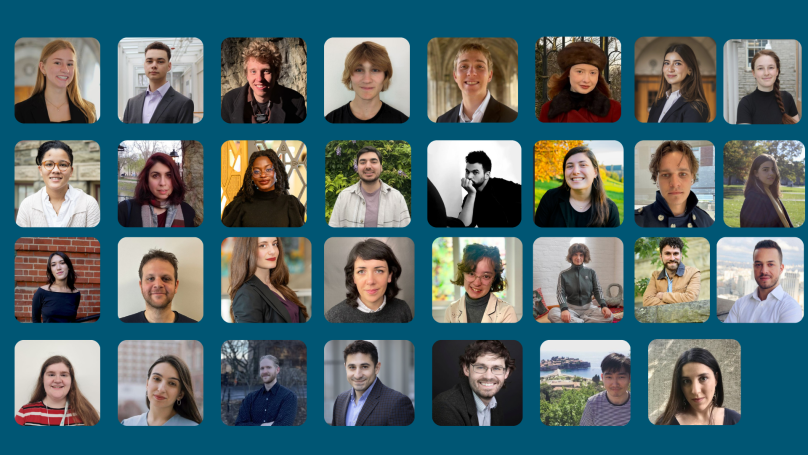
Thirty-two Cornell students from several colleges have been awarded IES graduate and undergraduate fellowships in 2026 to engage in research in and about Europe.
The disciplines represented by these students range from Government, History, and Economics, to Architecture, Communications, Music, and Art. Students will use IES funds to travel for research across the continent, from the United Kingdom, Spain, and France, to Germany, Italy, Romania, Bulgaria, Bosnia, Poland, Estonia, and Iceland.
Our largest award, the IES Luigi Einaudi Dissertation Fellowship, will fully fund one semester of field research for two graduate students: Rocio Salas-Lewin (Government), who will travel to Spain for research on her comparative politics project of citizen polarization and participation in Spain and Chile, and William Leigh Maines (History), who will spend a semester in the UK researching how sailors of Britain’s Royal Navy configured, experienced, and negotiated a uniquely naval version of Britain’s empire with the reform-minded Admiralty.
Find more information about the winners of our awards on our Recent Awardees page. We congratulate all IES awardees and wish them a productive summer and year ahead.
By Patricia Young, Senior Program Manager
Additional Information
Program
IES Awards $160,000 in Graduate and Undergraduate Research Fellowships in 2026
Thirty-two Cornell students from several colleges have been awarded IES graduate and undergraduate fellowships to engage in research in and about Europe.
Colombia’s Super‑rich Pack Their Bags Amid the Rise of the Left
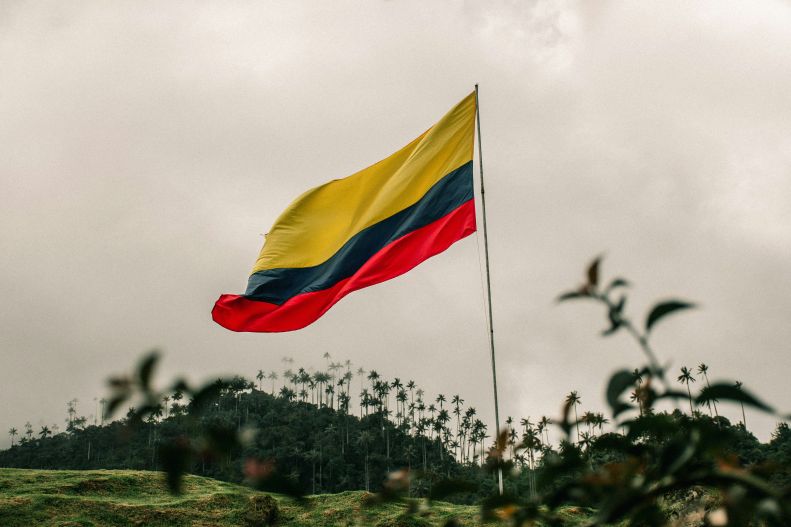
Cristóbal Young, IES
Cristóbal Young, a sociology professor at Cornell University, argues that the migration rates of the ultra-wealthy are very low and that the threat of millionaire tax flight is largely exaggerated.
Additional Information
Translation and Language Justice in and Beyond Europe

September 14, 2026
5:00 pm
Uris Hall, G08
My talk on "Translation and Language Justice in and Beyond Europe” will focus on “language justice,” (a term that does not as-yet refer to a clear field or critical problematic), as a rubric for a vision of language politics straddling law, official global language policy, and language rights under conditions of imperialism and cultural conquest. Drawing on Benjamin Constant’s anti-Napoleonic broadside The Spirit of Conquest and Usurpation in Their Relation to European Civilization,” (1814), which diagnosed the psychic violence of linguistic occupation, I will adapt and extend his association of cultural usurpation to contemporary cultural contexts in and beyond Europe. Constant associated usurpation with an existentially grave condition in which each act of articulation becomes a form of self-harming; attacking the site where individual consciousness, auto-identification and affective social ties constitute a fusional core of self and collective identity. The talk will consider the impact of an abrogated “right to language” on political life, from the targeting of languages spoken by immigrants, minorities and noncitizens to the hastening of language extinction as a global phenomenon particularly threatening to the survival of Indigenous languages. I also take up the matter of how generative AI, bolstering the kind of nationalist monolinguism that leads to “English only” language policies as well as the practice of instrumentalized linguistic streamlining conducive machine translation, is emerging as a new political force of linguistic usurpation and conquest.
About the speaker
Emily Apter is Julius Silver Professor of French and Comparative Literature at New York University. She earned her BA from Harvard University and PhD from Princeton University. In 2012, she was appointed Remarque-Ecole Normale Supérieure Visiting Professor; she has also taught at the University of California, Los Angeles; UC Davis; Cornell University; and Williams College. Apter was president of the American Comparative Literature Association in 2017-18. She is editor of the book series Translation/Transnation from Princeton University Press, and serves on the editorial boards of Publications of the Modern Languages Association of America, Comparative Literature, October, Diacritics, Sites, and Signs. A 2003 Guggenheim Fellow, Apter was awarded a two-year Mellon Grant (with Jacques Lezra) in 2011-12, for a seminar on “The Problem of Translation.” In fall 2014, she was a Humanities Council Fellow at Princeton University.
Apter’s books include Unexceptional Politics: On Obstruction, Impasse, and the Impolitic (Verso, 2018), Against World Literature: On The Politics of Untranslatability (Verso, 2013), and The Translation Zone: A New Comparative Literature (Princeton, 2006). She has also published extensively in Third Text, e-flux, October, boundary 2, New Literary History, Littérature, Artforum, Critical Inquiry, Translation Studies, Cabinet, The Global South, Grey Room, Boston Review, differences, and Public Culture, among others.
Additional Information
Program
Einaudi Center for International Studies
Institute for European Studies
Reppy Institute for Peace and Conflict Studies
European Studies Graduate Fellows’ Symposium Maps New Paths
Across Disciplines, Methods, and Archives
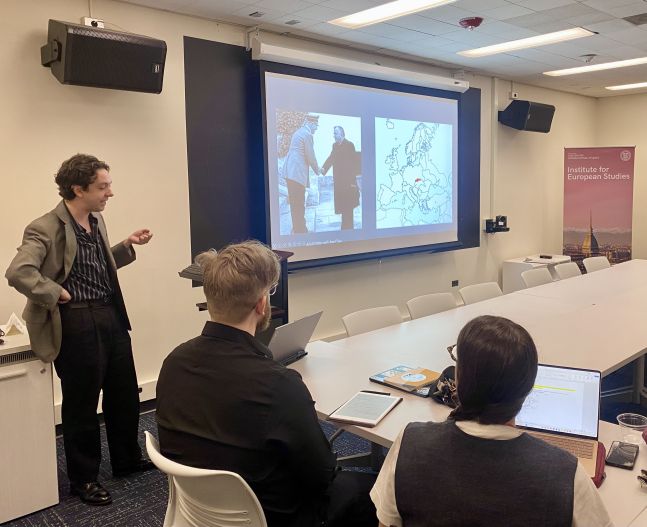
On May 7, 2026, the 2025-26 cohort of IES graduate fellows gathered for a symposium titled “Tracing Europe: Methods, Archives, and Interdisciplinary Encounters.”
The fellows showcased research they had been workshopping together, in smaller groups, throughout the year. The symposium continued these fruitful conversations in conference format, and expanded them to include a broader public of Cornell faculty and graduate students.
Through this event, IES fellows collectively reflected on the diversity of methodologies and archives across disciplines. This focus captured their common interest and curiosity for disciplinary practices other than one’s own, and a willingness to make their processes and assumptions clear to others. Participants covered diverse fields: History, Government, Communications, Music, Comparative Literature, German Studies, Romance Studies, Medieval Studies, and represented a wide variety of cutting edge work being done by PhD students across the university.
The first panel tackled the topic of community and exchange across Europe, stretching from Ancient Rome to the present. Angela Kothe (Government) opened with a presentation on mapping LGBTQ spaces and public houses across the UK over time. Duncan Eaton (History) explored the changes in sugar beet trade in Slovakia and its impact on economic and political exchange in the interwar period. Julia Sebastien (Communications) rounded out the panel with her research on a virtual reality re-creation of a site in ancient Pompei, Casa della Regina Carolina, combining archeology, communications, and pedagogy to bring this history to the present.
Next, a panel featuring graduate students from the history and government departments explored means of government and control in twentieth and twenty-first century states. Kaitlin Findlay (History) presented on the use of official photography as a reflection of evolving international humanitarian norms in the context of the internment of Japanese Americans and Canadians in the Second World War.
Madeleine Lemos (History) followed with an exploration of the tourism campaigns from the fascist Spanish state in the 1960s. Georgy Tarasenko (Government) presented the results of an experimental study on secular versus religious messaging within Russia related to the war with Ukraine, while Frances Cayton (Government) rounded out the panel with her work on civil society organizations and their relationship to democratic backsliding in Poland.
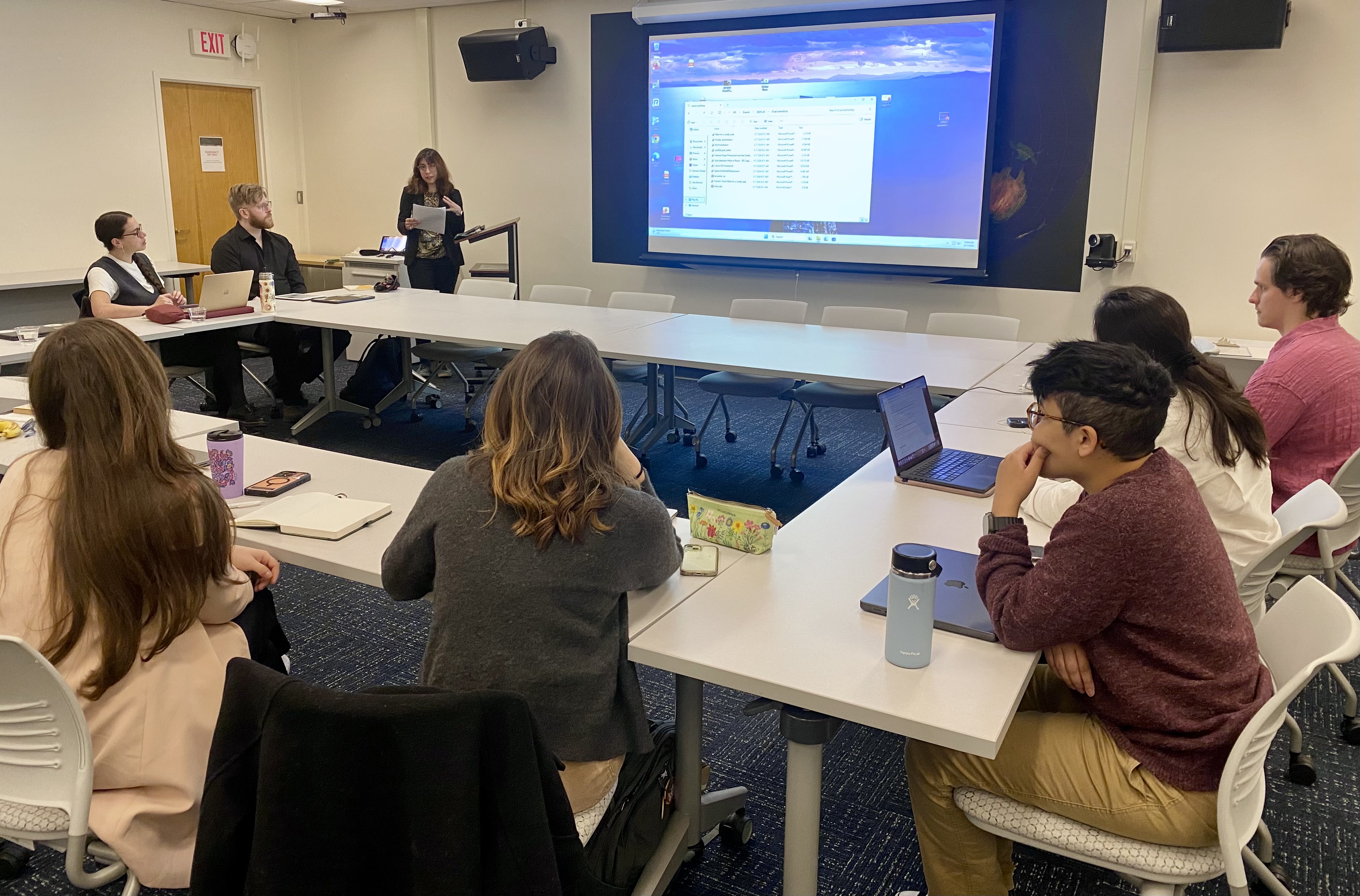
The symposium closed with a third panel exploring artistic expressions and their complex resonances in the context of European history and construction of identities. Xinyu Zhang (Comparative Literature) opened the panel with a theoretical contribution on “poignancy” interrogating fundamental structures of meaning of history relevant to the conceptualization of “Europe” through J. M. Coetzee’s and Fredric Jameson’s writing.
Spencer Hadley (German Studies) offered a microhistorical account of musician and activist Amiri Baraka’s 1977 performance at the Berliner Jazztage within shifting contexts of militancy in both Germany and the US. With Nora Siena (Romance Studies), the focus moved to Italy, as she analyzed the use of the cut-up literary technique by Italian writer and activist Nanni Balestrini in relation to the mobilizations of “Autunno Caldo” (“Hot Autumn”) in 1969. The panel concluded with Chiara Visentin (Medieval Studies) presenting on countess Marie of Champagne as an illustration of a noblewoman’s empowerment in the European Middle Ages through patronage of pioneering biblical adaptations in French.
With its wide-ranging chronological and geographical scope, this symposium offered a unique occasion to appreciate the fruitfulness and importance of bringing together European Studies scholars from across disciplines. The conversations sparked in Q&As engaged fellows and other attendees, both graduate students and faculty alike, in mutually enriching dialogues.
The event contributed to inspire European Studies young scholars at Cornell to embrace a larger repertoire of case studies, and crucially, of theoretical lenses and methodological and archival practices.
By Chiara Visentin and Madeleine Lemos, IES Director's Fellows
Additional Information
Program
Perera Wins European Studies and Political Science Book Awards
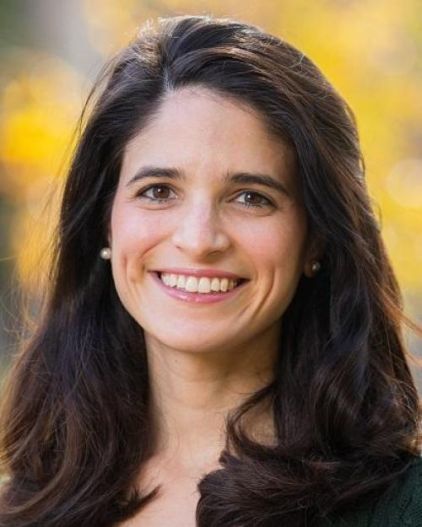
Isabel Perera, IES
Isabel Perera (IES) has won two prestigious book awards for “The Welfare Workforce: Why Mental Health Care Varies Across Affluent Democracies” (Cambridge UP).
Isabel Perera (IES) has won two prestigious book awards—the 2026 European Studies Book Award from the Council for European Studies and the Charles H. Levine Memorial Book Prize from the International Political Sciences Association—for “The Welfare Workforce: Why Mental Health Care Varies Across Affluent Democracies” (Cambridge UP).
Additional Information
IES Celebrates 2026 Graduating Minors in European Studies
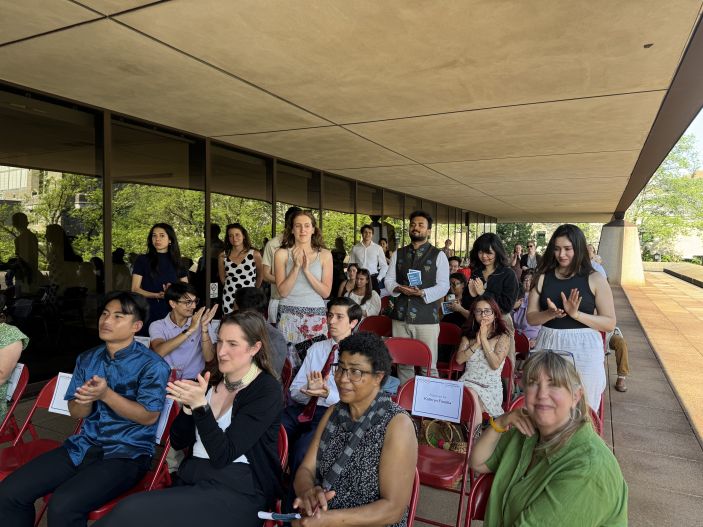
The Institute for European Studies recognized twenty-three graduating European Studies Minors on May 19, as part of an Einaudi-wide celebration of international studies minors.
The Minors have taken classes, at Cornell and abroad, in European politics, history, art, and ideas, and have studied various European languages: French was the clear winner this year, with more than half of graduating European Studies Minors studying it, followed by Spanish, Italian, Russian, and Turkish. Keeping with IES’s interdisciplinary tradition, the Minors come from several colleges and majors, including, beyond Government and History, Industrial and Labor Relations, Psychology, Philosophy, Economics, Comparative Literature, Information Science, and Environment and Sustainability. Some favorite Minor classes at Cornell have been: HIST 2860: The French Revolution, ROMS 3300: The Culture of Violence: Europe 1914-1945, COML 3012: Remembering Socialism: Literature and Film after the End of History, and ITAL 3010: Screening la Cosa Nostra.
Several students have taken advantage of opportunities offered by IES and by the broader Global Cornell, such as the IES/PACS-funded Global Internships in Spain and Bosnia Herzegovina, and the IES undergraduate Harum, Conger Wood, and Susan Tarrow research fellowships. European Studies minors have attended our Institute’s lectures and workshops and have travelled to study abroad in places like Oxford, Paris, Turin, Athens, and Berlin.
After graduation, our ES Minors have a variety of career plans, including work in finance, strategy consulting, teaching, book publishing, think tanks, and policy and foreign affairs, as well as further study in law or graduate school.
Three out of the four Cornellians who won Europe Fulbright student awards for 2026-27 are European Studies Minors, including two graduating Minors, Nina Davis ’26, who won an English Teaching Assistant Fulbright in Portugal, and Madeleine Kapsalis ’26, English Teaching Assistant Fulbright in Greece.
The Minor in European Studies is at the core of IES’s engagement with undergraduate students. We are delighted that our students have confidently sought and embraced knowledge about European cultures, histories, and societies. These studies offer a perspective for understanding ourselves, here in America, as well as for understanding the whole world better. This perspective will be useful to our students as they venture into the great, wide world beyond college.
By Patricia Young, Senior Program Manager for the Institute for European Studies
Additional Information
Program
Conference Brings Together Policy and Academic Insights on War in Ukraine
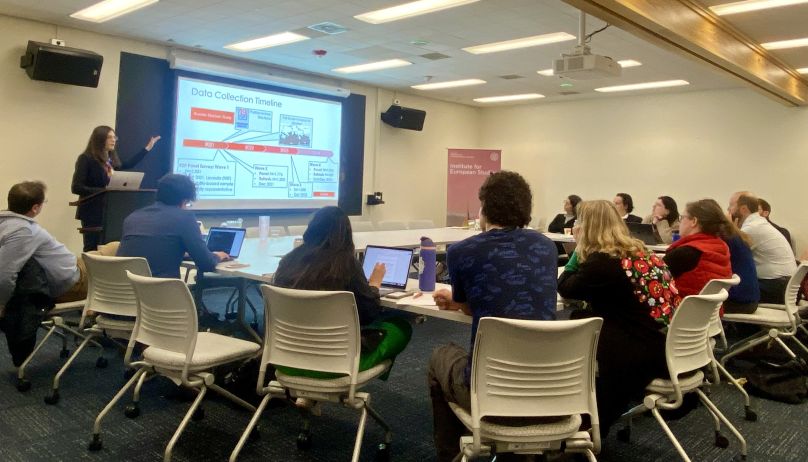
A daylong IES symposium on May 2 gathered academic and policy experts to share their perspectives on Russia’s invasion of Ukraine.
The event was guided by a set of questions including, how does political science research viably inform policymakers and practitioners? And how can partnerships between those in the policy and academic communities deepen research contributions? The symposium was organized by IES’s Eastern Europe faculty research pod, and led by Prof. Bryn Rosenfeld (Government).
The morning opened with a research panel featuring four scholars working across economics, political science, and public opinion. Charles Whitehead (Cornell, Law School) spoke about Ukraine's privatization landscape and the structural conditions needed to attract foreign capital into a postwar economy. Aaron Erlich (McGill, Political Science) traced a decade of survey research in Ukraine, from pen-and-paper surveys in 2015 to AI-assisted interviewing today, offering evidence from a series of publications that underscore the shifting landscape for survey research in a country reshaped by displacement and war.
Jordan Gans-Morse (Northwestern, Political Science) presented findings from an experimental mega-study on what anti-war messages can be the most persuasive for the Russian population. Bryn Rosenfeld (Cornell, Government) closed the panel with research on Russian public opinion, explaining how the government can lead people to express acceptance of a war that many had seemed unlikely to support before it began.
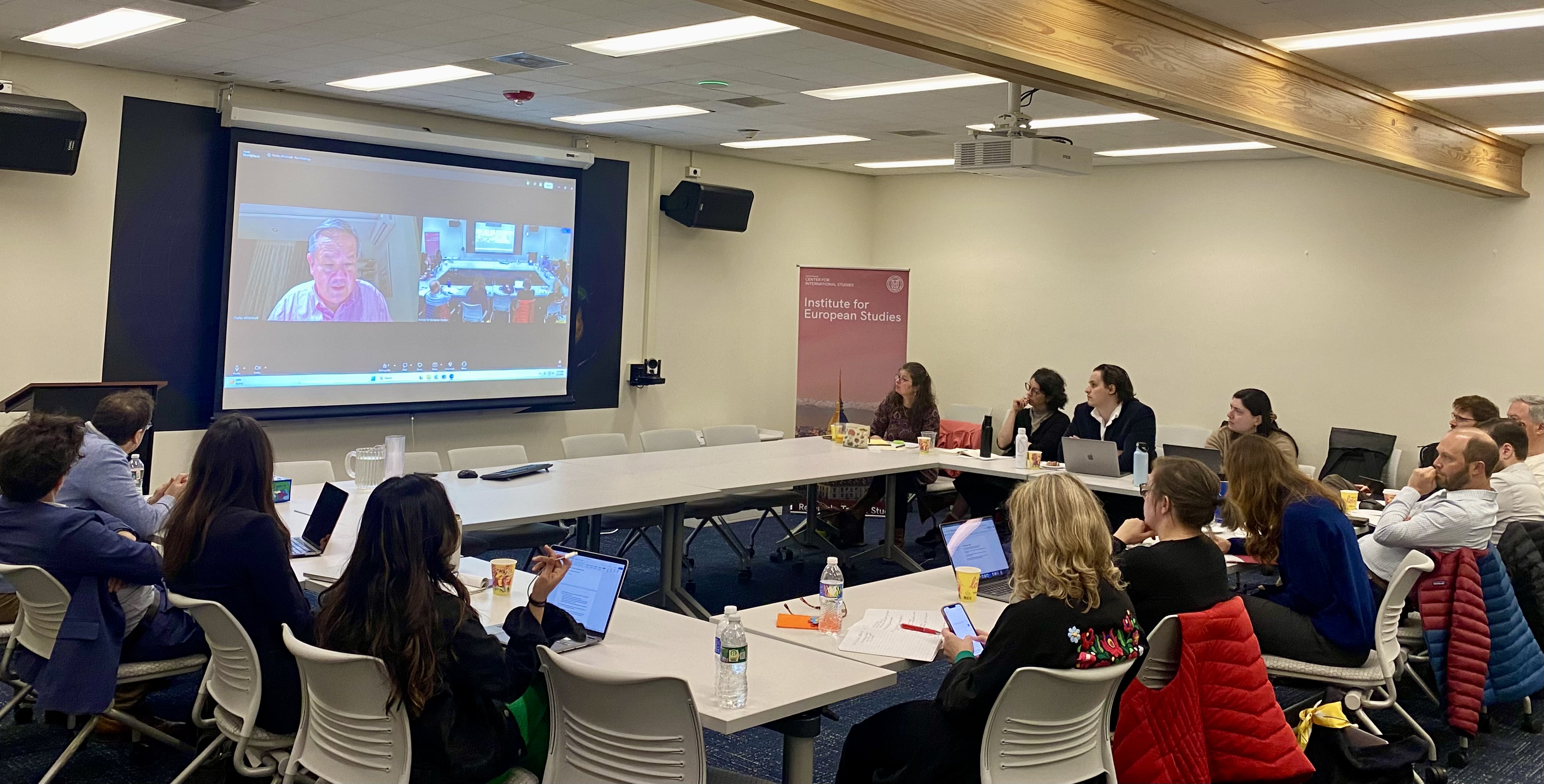
The afternoon roundtable shifted the focus from research findings to the harder question of how those insights reach decision-makers. Regina Faranda, former Deputy Assistant Secretary at the State Department's Bureau of Intelligence and Research, spoke from experience about what lands in policy circles — and what doesn't.
Kimberly O'Haver of the Open Society Foundation brought a concrete case study in drug policy reform in Ukraine, tracing the path from research to law on issues like medical cannabis and trauma-focused therapies for veterans.
In addition to panelists, participants included Cornell faculty, graduate students, and undergraduates, including several students from the region itself. Recognizing varied incentives, tools, and challenges that both sectors face, the group concluded that academic research must foster long-range relationships with policymakers that extend beyond moments of crisis or when a research area is in the news.
Through this sustained interaction, researchers are better able to inform practitioners during major events and to foster joint collaborations via new studies or other partnerships.
Story by Frances Cayton and Georgy Tarasenko, IES Graduate Fellows 2025-26.
Additional Information
Program
Do Higher Taxes Drive the Rich Away? Mamdani’s Plan Revives the Question

Cristobal Young, IES
Cristobal Young, a Cornell University associate professor of sociology, provides expert analysis on millionaire tax migration and its minimal historical impact.