
Latin American and Caribbean Studies
Amor and Exile: True Stories of Love Across America’s Borders
July 7, 2021
2:00 pm
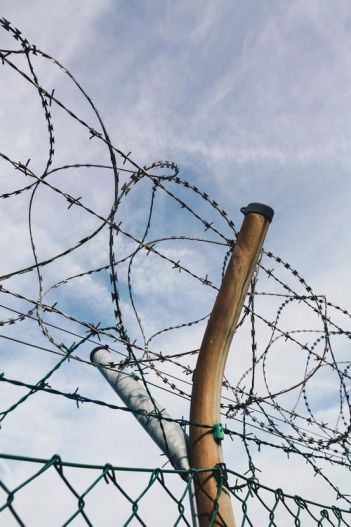
In this eCornell Keynotes event, Nicole Salgado '98, an advocate for environmental conservation and migrants’ rights based in Querétaro, México, and journalist Nathaniel Hoffman '99 will discuss their chronicle of a highly underreported aspect of our country’s punitive immigration system: the often insurmountable process faced by couples of mixed immigration status.
Their 2013 book, Amor and Exile: True Stories of Love Across America’s Borders, documents the experiences of three couples, including Ms. Salgado’s first-person account of life in the U.S. with her husband while he was undocumented, her tortured decision to leave the country with him, and their seven years of exile and starting over together in Mexico.
Mr. Hoffman and Ms. Salgado will examine how little has changed policywise in the years since their book’s publication. They will also highlight current proposals for legislative reform that could provide relief to millions of U.S. citizen partners and families of undocumented immigrants who are languishing in legal limbo, driven underground, exiled abroad, and/or separated.
This event is co-sponsored by eCornell and the Migrations initiative.
Additional Information
Program
Einaudi Center for International Studies
Latin American and Caribbean Studies
Casey Schmitt

Assistant Professor, History
Casey Schmitt is a historian of early America and the Caribbean, with particular interests in human trafficking, colonization, and illicit economies over the course of the sixteenth and seventeenth centuries. In her research and teaching, she is interested in tracing individuals who crossed imperial boundaries—by choice and by coercion—in order to understand how processes like colonialism, imperialism, slavery, and trade functioned in the interstices of early modern empires.
Additional Information
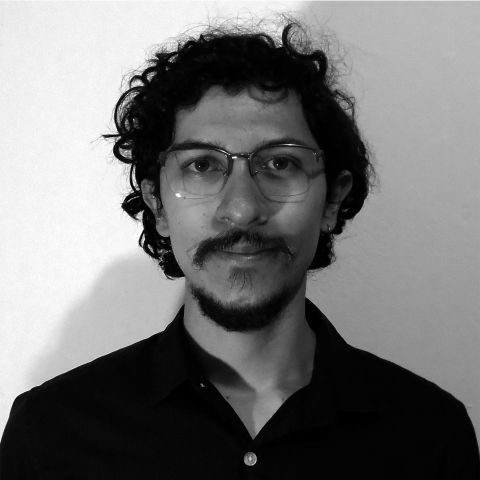
Leonardo Santamaría-Montero
LACS Graduate Fellow ’21-‘24
Leonardo Santamaría-Montero is a PhD student in the Department of History of Art and Visual Studies. He is interested in the study of 19th century Central American visual and material culture, with a focus on indigenous aesthetics and their representations.
Additional Information
Language Resource Center Speaker Series - Elvia Andía Grágeda
September 1, 2021
4:30 pm
"Designing (Indigenous) Language Classes Rooted in ACTFL Standards to Promote Spoken Proficiency"
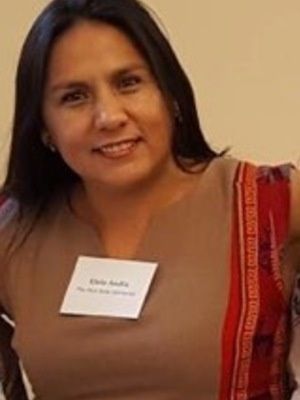
Elvia Andía Grágeda
Lecturer, The Ohio State University
Unlike commonly taught languages, most Indigenous ones share a particular characteristic: The lack of material for language instruction and the challenge of identifying abundant sources of input for their classes. In many cases, it is necessary to adapt existing materials from other languages to achieve language learning goals, but in doing so, we usually find materials lacking the cultural knowledge of Indigenous people. In addition, many major languages have established proficiency standards (e.g., CEFR and ACTFL). Are these standards applicable to Indigenous languages?
While Indigenous language courses may be similarly designed to those of major languages in their application of real-world language use and content organization, differences arise when defining levels of proficiency which must be culturally appropriate. As such, the active participation of a culturally competent language instructor in the course design process is imperative for the development of effective and relevant proficiency standards unique to the language.
This talk will discuss best practices in designing Indigenous language classes rooted in ACTFL standards to promote oral proficiency. While examples will be drawn from Quechua, the topic is applicable to all languages.
Bio: Elvia Andía is a linguist specializing in the study and instruction of Bolivian Quechua and Spanish. She holds a Master's degree in Linguistic Policy of Indigenous Languages in Higher Education. Her research investigates the role of Quechua in such policies, particularly in the Quechua Public Indigenous University in Bolivia. She has worked as the Departmental Coordinator in the Ministry of Education for the country of Bolivia in Intra- and Intercultural Multilingual Education. Andía joined Ohio State in 2016 and coordinates the Quechua program for both undergraduate and graduate students across six institutions.
She is the world's first certified OPI tester for Quechua and has published on teaching methods and Indigenous stories. In 2019, she won the Premio Guamán Poma de Ayala in Indigenous Language, a national literature prize in Bolivia, for her novel written in Quechua.
Co-sponsored by the Language Resource Center and Latin American and Caribbean Studies Program.
This event will be streamed live over Zoom.
Additional Information
Program
Einaudi Center for International Studies
Latin American and Caribbean Studies
Language Resource Center Speaker Series - Karen Lichtman
October 4, 2021
4:00 pm
Stimson Hall, G25
"Acquisition vs. Learning in 2021"
Karen Lichtman
Associate Professor of Spanish Linguistics and Director of Educator Licensure in the Department of World Languages & Cultures, Northern Illinois University
In the late 1970s and early 1980s, Stephen Krashen put forward a model of language learning distinguishing between language acquisition (acquiring a language by listening or reading and understanding) and language learning (conscious, effortful study and practice of language). Today, many people look at Krashen’s monitor model as just a "method from the past." However, most of these ideas are still very much present in contemporary research — just under different names, such as implicit vs. explicit language teaching and learning.
This talk will share three of my studies using the acquisition/learning, or implicit/explicit, framework: one on elementary students learning Spanish, another with children and adults who were taught an artificial mini-language in the laboratory, and finally, a study currently in progress comparing two different teaching methods in beginning classes. Each study has different implications for teaching: (1) grammar instruction can be delayed to the end of years of input-based language study, (2) grammar instruction may have a negative effect on learners' speaking fluency, and (3) a "narrow and deep" curriculum using high-frequency structures in context could be more effective than a traditional grammar-based curriculum... but since this last study is still in progress, attend the talk to find out if this is really the case!
Bio: Dr. Lichtman is Associate Professor of Spanish Linguistics and Director of Educator Licensure in the Department of World Languages & Cultures at Northern Illinois University. Her research focuses on instructed second language acquisition. Specifically, she studies implicit and explicit language learning in children and adults, questioning the conventional wisdom that children learn languages implicitly whereas adults need explicit grammar instruction. She recently wrote Teaching Proficiency through Reading and Storytelling (TPRS): An Input-Based Approach to Second Language Instruction. Dr. Lichtman teaches methods courses for pre-service teachers and upper-level Spanish Linguistics courses.
This event will be held in person in G25 Stimson and will also be streamed live over Zoom. Join us at the LRC or on Zoom.
The event is free and open to the public. Campus visitors and members of the public must adhere to Cornell's public health requirements for events, which include wearing masks while indoors and providing proof of vaccination or a recent negative COVID-19 test.
Additional Information
Program
Einaudi Center for International Studies
Latin American and Caribbean Studies
Race Matters: Research Questions in International Relations

May 20, 2021
11:00 am
The Einaudi Center’s global racial justice research team presents the inaugural session of Race Matters, a new webinar series that fosters in-depth conversations on colonial questions and racial justice across international relations.
This panel brings together global experts for a candid appraisal of disciplinary instruments (methods, archives, concepts, ontologies, and epistemologies) and institutions (practices of knowledge production and incorporation as policy). The debate centers the question: How effectively do our tools for producing and shaping knowledge and policy serve the cause of advancing racial equality and justice globally?
Some of the panelists critique methods and lines of inquiries in scholarship on race and racism. Others presume an insurgency by self-determining political communities—including in the academy—against colonizing institutional practices and in favor of the expansion of archives and imaginaries.
This conversation represents an initial framing of questions and critiques that will continue in four additional Race Matters panels through the fall 2021 semester. Read more about the series below.
Moderator: Siba Grovogui, Africana Studies, Cornell University
Panelists:
Daniel Bendix, Franziska Müller, and Aram Ziai, coeditors of Beyond the Master’s Tools? Decolonizing Knowledge Orders, Research Methods, and Teaching (2020)Mustapha K. Pasha, Meera Sabaratnam, and Robbie Shilliam, series editors of Kilombo: International Relations and Colonial QuestionsDiscussants: Oumar Ba, Political Science, Morehouse College; Sarah Then Bergh, Africana Studies PhD candidate, Cornell University
***
Race Matters: A webinar series sponsored by Cornell’s Mario Einaudi Center for International Studies, Africana Studies and Research Center, and Department of Government
Race Matters brings together international relations experts for critical conversations on colonial questions and racial justice across international relations. Join us to explore scholarship on race and racism and the policies, institutions, and systems that perpetuate racial inequality and violence worldwide. Continuing throughout 2021, Race Matters will identify opportunities for transformative change and highlight collective and individual actions toward a more just world.
Learn about the Einaudi Center’s work on racial justice and all of our global research priorities.
Register now: https://cornell.zoom.us/webinar/register/WN_hYI75wwITDOvrOW_ZTHY6Q
Additional Information
Program
Einaudi Center for International Studies
Reppy Institute for Peace and Conflict Studies
East Asia Program
Southeast Asia Program
Latin American and Caribbean Studies
Institute for African Development
Institute for European Studies
South Asia Program
LRC Happy Hour

August 11, 2021
11:00 am
Join us on Zoom throughout the summer for LRC Happy Hour. Every second Wednesday of the month. We'd love to hear how it’s going! All of it.
Bring your (language instruction) stories whether they be good, bad, amazing, or unusual. It takes all kinds of stories to make Happy Hour great!Bring your own coffee, tea, or mystery beverage.While we can't serve lunch, the LRC will provide fun, jokes, and laughs free of charge.Also, we just want to see your smiling faces, because we miss you.
More details and link posted on our website: https://lrc.cornell.edu/live-help-sessions
Additional Information
Program
Southeast Asia Program
Latin American and Caribbean Studies
South Asia Program
Language Resource Center Speaker Series - Jamie Rankin
September 13, 2021
4:00 pm
Stimson Hall, G25
"How Can I Learn All These Words?"
Research-Based Strategies for Teaching and Learning L2 Vocabulary
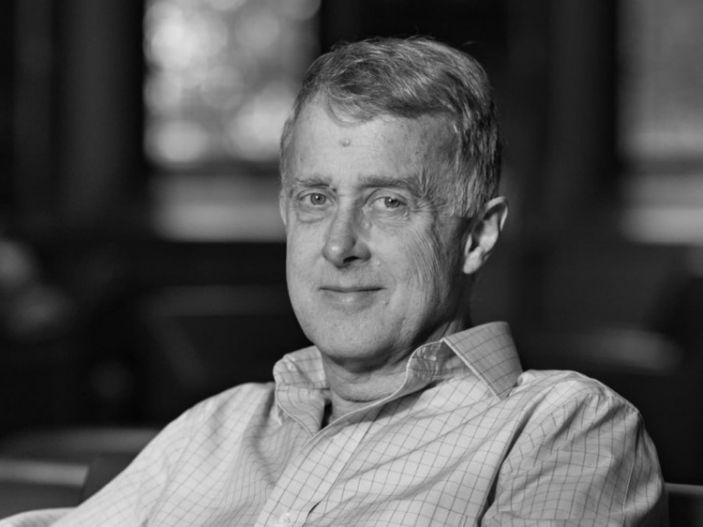
Jamie Rankin
Senior Lecturer, Princeton University
Second language (L2) classrooms have undergone radical changes during the past 50 years, moving away from formal linguistic structures to drills and habit formation, then to comprehensible input, focus on form, cultural integration, sociocultural perspectives, and social networking.
Throughout all of these shifts there has been surprisingly little emphasis on one aspect of L2 learning that all teachers and all students acknowledge as a critical factor in L2 communicative proficiency and literacy: Vocabulary.
As someone once quipped: “If you don’t know any grammar, you can’t say much; if you don’t know any vocabulary, you can’t say anything.” This applies to more than rudimentary spoken communication. A knowledge of vocabulary is as critical to interpreting texts as it is to interaction and presentation – that is to say, it lies at the heart of L2 proficiency as currently conceptualized.
This talk addresses three issues in L2 vocabulary acquisition:
What is the relationship between vocabulary, text coverage, and reading comprehension?What role does vocabulary currently play in L2 textbooks?How can research into L2 vocabulary inform classroom praxis?While the talk is grounded in current research, its goal is to provide instructors and students with strategies for classroom teaching, learning, and assessment.
Bio: Jamie Rankin (Ph.D., Harvard University) is co-director of the language program in the German Department of Princeton University. With published articles in Unterrichtspraxis and The Modern Language Journal, his work focuses on the intersection of research and curriculum development; the dynamics of corrective feedback in the classroom; training and mentoring graduate student TAs; and assessing classroom materials for beginning and intermediate language learners. After completing a Ph.D. in German literature at Harvard University, he went on to specialize in second language acquisition and pedagogy in the Department of Second Language Studies at the University of Hawaii, under Michael Long, Gabi Kasper, and Graham Crookes. A co-author of the Handbuch zur deutschen Grammatik (Cengage, now in its 6th edition), he has recently developed a first-year curriculum for Beginning German that integrates culture, grammar, and high-frequency vocabulary on an interactive online platform. In 2014 he was appointed as inaugural director of the Princeton Center for Language Study.
This event will be held in person in G25 Stimson and will also be streamed live over Zoom. Join us at the LRC or on Zoom.
Additional Information
Program
Einaudi Center for International Studies
Latin American and Caribbean Studies
Media Representation of Government Science Communication During Covid
Article Written by LASP Former Visiting Scholar and Cornell Faculty
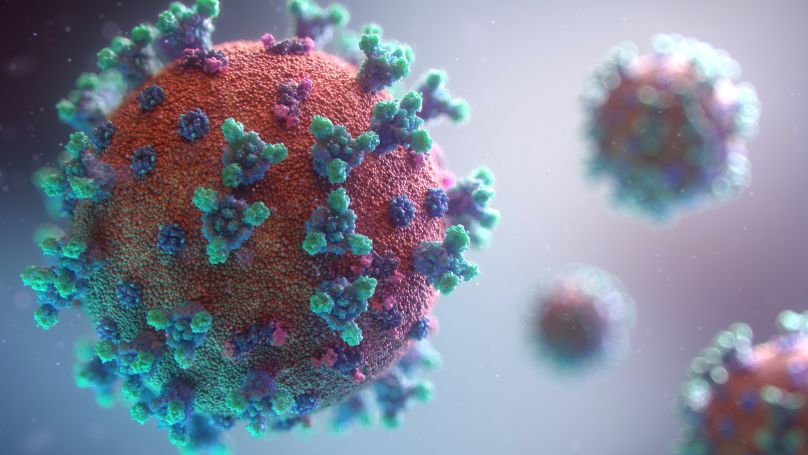
This article by former Cornell STS Visiting Scholar Diogo Loped de Oliveira, independent scholar Erik Moreno, and Cornell’s Bruce V. Lewenstein, discusses a case study that situates science communication within the interaction of the COVID-19 disease, scientific research about the disease, public statements by relevant officials, media messages, political actions, and public opinion in Brazil.
Additional Information
Unity Across Language/Unidad en Lenguaje
May 8, 2021
2:00 pm
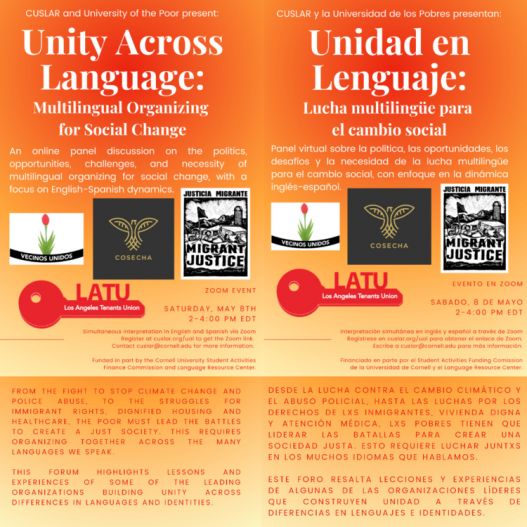
Unity Across Language: Multilingual organizing for social change
Unidad en Lenguaje: Lucha multilingüe para el cambio social
An online panel discussion on the politics, opportunities, challenges, and necessity of multilingual organizing for social change, with a focus on English-Spanish dynamics.
Panel virtual sobre la política, las oportunidades, desafíos y necesidad de la lucha multilingüe para el cambio social, con enfoque en la dinámica inglés-español.
From the fight to stop climate change and police abuse, to the struggles for immigrant rights, dignified housing and healthcare, the poor must lead the battles to create a just society. This requires organizing together across the many languages we speak.
Desde la lucha contra el cambio climático y el abuso policial, hasta las luchas por los derechos de lxs inmigrantes, vivienda digna y atención médica, lxs pobres tienen que liderar las batallas para crear una sociedad justa. Esto requiere luchar juntxs en los muchos lenguajes que hablamos.
This forum highlights lessons and experiences of some of the leading organizations building unity across differences in languages and identities.
Este foro resalta lecciones y experiencias de algunas de las organizaciones líderes que construyen unidad a través de diferencias en lenguajes e identidades.
Featuring leaders from/Con líderes de:
Los Angeles Tenants Union (California)/Sindicato de inquilinos de Los Ángeles (California)
Migrant Justice (Vermont)/Justicia Migrante (Vermont)
Movimiento Cosecha
Vecinos Unidos (Wisconsin)
Simultaneous interpretation in English and Spanish via Zoom.
Interpretación simultánea en inglés y español a través de Zoom.
Register at/Regístrese en cuslar.org/ual
Contact cuslar@cornell.edu for more information.
Escribe a cuslar@cornell.edu para más información.
Organized by CUSLAR and University of the Poor.
Organizado por CUSLAR y Universidad de los Pobres.
Funded in part by the Cornell University Student Activities Funding Commission and Language Resource Center.
Financiado en parte por Cornell University Student Activities Funding Commission y Language Resource Center.
Additional Information
Program
Einaudi Center for International Studies
Latin American and Caribbean Studies