
Reppy Institute for Peace and Conflict Studies
Berger International Speaker Series with Stephanie Schroeder – Bringing Human Rights Home: Representing Survivors of Military Sexual Trauma

March 19, 2024
12:15 pm
Myron Taylor Hall, MTH 184
This panel event will consider how domestic and international human rights advocacy can be used to support survivors of military sexual trauma (MST) and contribute to meaningful systemic change. Stephanie Schroeder, founder of the Eyes Right Veterans Foundation, will speak about her experiences in the U.S. Marines Corps and as a petitioner in a case before the Inter-American Commission on Human Rights that argues that the U.S. has failed adequately to prevent and respond to military sexual violence. Benjamin Pomerance, Deputy Counsel of the New York State Department of Veterans’ Services, will address the human rights implications of military sexual trauma for service members and Veterans. Pilar Narvarrine Gonzalez, JD Candidate ‘24, will discuss the work of the Cornell Gender Justice Clinic in supporting MST survivors through international and regional human rights litigation and advocacy, and Patrick George, JD Candidate ‘24, will discuss the work of the Veterans Law Practicum in supporting MST survivors through legal representation in seeking military discharge upgrades.
Trigger Warning: This panel discussion will include mentions and possibly descriptions of sexual violence
Additional Information
Program
Reppy Institute for Peace and Conflict Studies
Matthew Evangelista publishes "A Nuclear Umbrella for Ukraine?" in the forthcoming issue of the journal International Security.
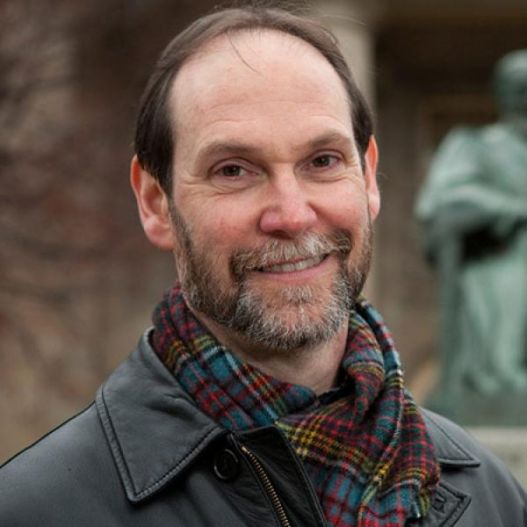
Matthew Evangelista, Government, and Reppy Institute for Peace and Conflict Studies Program (PACS) Steering Committee Member publishes.
Additional Information
Women in AI: Sarah Kreps, Professor of Government at Cornell

Sarah Kreps, PACS
TechCrunch highlights Sarah Kreps, professor of government, and her contributions to the AI revolution.
Additional Information
House Panel Unanimously Advances Bipartisan Bill that Could Ban TikTok

Sarah Kreps, PACS
“I’m just not confident that this will actually side-step the free speech concerns that have been raised with previous attempts to ban TikTok,” says Sarah Kreps, professor of government.
Additional Information
Preventing Nuclear Weapons Proliferation
March 28, 2024
12:00 pm
Uris Hall, G08
Diplomacy through Sanctions and Incentives
Although nuclear dangers have increased among the nine states that currently possess nuclear weapons, the proliferation of nuclear weapons to other states so far has been relatively contained. States are adhering to the 1970 Nuclear Nonproliferation Treaty. The global nonproliferation regime has effectively combined the threat of sanctions for violations with incentives for compliance. The offer to ease sanctions has been an effective inducement in several cases of negotiated nonproliferation. What are the lessons of these experiences for taming nuclear dangers today?
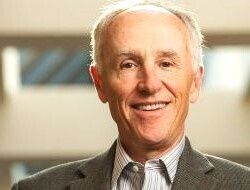
David Cortright, visiting scholar, Reppy Institute and Emeritus, University of Notre Dame, will discuss the chapter “Incentivizing Nuclear Nonproliferation: Theory, Policy and Experience” by David Cortright and Thomas Biersteker for a forthcoming volume edited by Peter Wallensteen and Armend Bikaj of the Alva Myrdal Center for Nuclear Disarmament in Sweden.
About the Speaker
David Cortright is a visiting scholar with the Reppy Institute of Peace and Conflict Studies program and professor emeritus of the practice at the Keough School of Global Affairs at the University of Notre Dame. Previously, Cortright was the director of policy studies at the Keough School’s Kroc Institute for International Peace Studies and director of the institute’s Peace Accords Matrix project, the largest existing collection of implementation data on intrastate peace agreements.
Cortright has written widely about nonviolent social change, nuclear disarmament, and the use of multilateral sanctions and incentives as tools of international peacemaking. He has provided research services to the foreign ministries of Canada, Denmark, Germany, Japan, the Netherlands, Sweden, and Switzerland, and has served as consultant or advisor to agencies of the United Nations, the Carnegie Commission on Preventing Deadly Conflict, the International Peace Academy, and the John D. and Catherine T. MacArthur Foundation.
Host
Judith Reppy Institute for Peace and Conflict Studies
Additional Information
Program
Einaudi Center for International Studies
Reppy Institute for Peace and Conflict Studies
Getting to Climate Justice: A Global Approach
April 11, 2024
5:00 pm
Rockefeller Hall, Schwartz Auditorium, Room 201
Lund Critical Debate
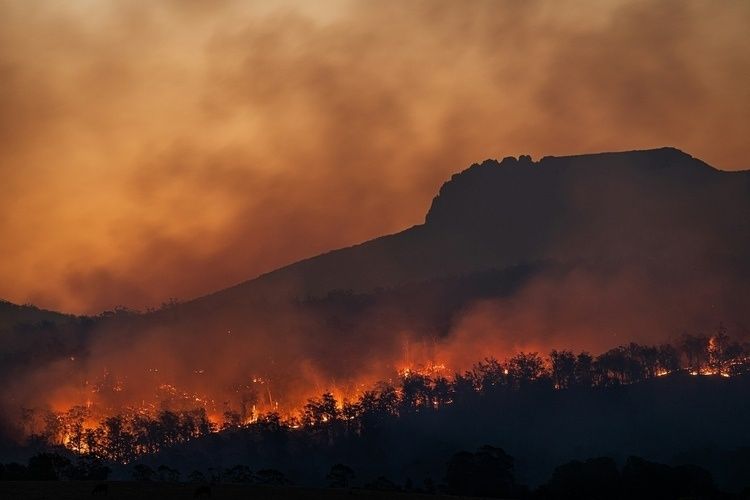
Climate change has a disproportionate impact on the world’s most vulnerable populations, yet climate crises also impact people across the full spectrum of wealth and power. How do we understand these varied impacts and design climate policy to maximize human well-being and justice on a global level?
As climate change accelerates, we see the rise of violent conflict and humanitarian emergencies in some places but not others. In some places but not others, we see disruptions in food security and forced migration. And around the world, debates rage about access to energy, the need to profit from valuable natural resources, and pressures to reduce extraction and consumption.
This year’s Lund debate from the Mario Einaudi Center for International Studies explores how citizens and policymakers worldwide can act to increase justice in our shared climate crisis. The panel will discuss key issues surrounding societies, governments, business, and labor and ways to share responsibilities globally to reduce emissions and mitigate climate change.
How can we imagine new strategies for reshaping global trade and finance, national and transnational security policies, and environmental protections that go beyond political borders? Join climate journalist Kate Aronoff and climate security expert Joshua Busby (LBJ School of Public Affairs, University of Texas) for a conversation on our climate’s state of emergency and how governments can help.
***
Livestream for National and International Viewers
Can't join in person? Register to attend virtually at eCornell.
***
Panelists
Kate Aronoff is a Brooklyn-based staff writer at The New Republic, covering climate and energy politics, and a fellow at the Roosevelt Institute. She is the author of Overheated: How Capitalism Broke the Planet and How We Fight Back (2021) and the coauthor of A Planet to Win: Why We Need a Green New Deal (2019). Aronoff serves on Dissent magazine's editorial board and the advisory board of Jewish Currents.
Joshua Busby is professor of public affairs in the University of Texas at Austin’s Lyndon B. Johnson School of Public Affairs. His research focuses on climate change, global health, transnational advocacy movements, and U.S. foreign policy. Busby was principal investigator on two multimillion-dollar climate and security grants from the U.S. Department of Defense. He served as senior advisor for climate at the U.S. Department of Defense from 2021 to 2023. His newest book is States and Nature: The Effects of Climate Change on Security (2022).
Moderator
Rachel Bezner Kerr is director of Einaudi’s Institute for African Development and professor of global development in the College of Agriculture and Life Sciences. She served as coordinating lead author for the United Nations’ Intergovernmental Panel on Climate Change sixth assessment report chapter on climate change impacts and adaptation of food systems.
***
About the Debate
The Lund Critical Debate is a signature event of the Mario Einaudi Center for International Studies. Established in 2008, Einaudi's Lund debate series is made possible by the generosity of Judith Lund Biggs '57.
Additional Information
Program
Einaudi Center for International Studies
Reppy Institute for Peace and Conflict Studies
East Asia Program
Latin American and Caribbean Studies
Institute for African Development
Institute for European Studies
South Asia Program
Senegal Elections: Why Has President Macky Sall Postponed Voting?

Oumar Ba, GPV Fellow
Oumar Ba, assistant professor of government, comments on Senegal’s President Macky Sall postponing presidential elections.
Additional Information
Information Session: Global PhD Research Awards

February 28, 2024
4:45 pm
The Amit Bhatia ’01 Global PhD Research Awards fund international fieldwork to help Cornell students complete their dissertations. Through a generous gift from Amit Bhatia, this funding opportunity annually supports at least six PhD students who have passed the A exam. Recipients hold the title of Amit Bhatia ’01 Global PhD Research Scholars. All disciplines and research topics are welcome. The award provides $10,000 to be used by the end of the sixth PhD year for international travel, living expenses, and research expenses.
Register for the information session. Can’t attend? Contact programs@einaudi.cornell.edu.
***
The Mario Einaudi Center for International Studies hosts info sessions for graduate and for undergraduate students. To learn more about funding opportunities, international travel, research, and internships, view the full calendar for spring semester sessions.
Additional Information
Program
Einaudi Center for International Studies
Reppy Institute for Peace and Conflict Studies
East Asia Program
Southeast Asia Program
Latin American and Caribbean Studies
Institute for African Development
Institute for European Studies
South Asia Program
Meta Will Label AI-Generated Images on Social Platforms

Sarah Kreps, PACS
Meta's decision is a step toward helping the social media giant show users that it is aware of the disruptiveness and some of the adverse effects of new AI technologies, according to Sarah Kreps, professor of government.
Additional Information
In Search of My Sister
April 24, 2024
7:00 pm
Willard Straight Theatre
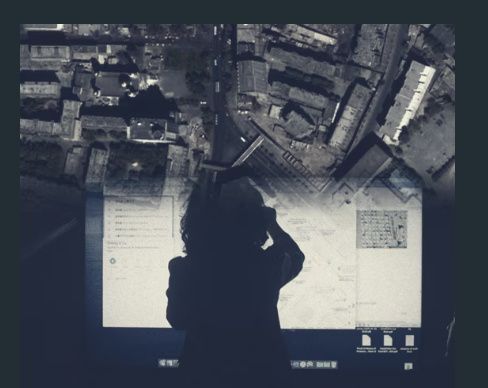
"In September 2018, Dr. Gulshan Abbas, sister of Rushan Abbas, was abducted by Chinese authorities shortly after Rushan's speech condemning the Uyghur genocide. The documentary "In Search of My Sister" chronicles Rushan's relentless pursuit of truth and justice, spanning multiple countries. The film also exposes the CCP's harrowing crimes against humanity through the personal story of Rushan and other Uyghurs in the diaspora. "In Search of My Sister" has been screened worldwide, shedding light on these atrocities."
This screening is followed by a Q&A Session with Rushan Abbas.
About the Speaker
Rushan Abbas’s activism started in the mid-1980s as a student at Xinjiang University, co-organizing pro-democracy demonstrations in Urumchi in 1985 and 1988. Since her arrival in the United States in 1989, Ms. Abbas has been an ardent campaigner for the human rights of the Uyghur people. Ms. Abbas is the founder and executive director of Campaign for Uyghurs (CFU) and became one of the most prominent Uyghur voices in international activism for Uyghurs following her sister’s detainment by the Chinese government in 2018. Ms. Abbas has spearheaded numerous campaigns, including the “One Voice One Step” movement, which culminated in a simultaneous demonstration in 14 countries and 18 cities on March 15, 2018, to protest China’s detention of millions of Uyghurs in concentration camps.
Ms. Abbas frequently briefs global lawmakers and officials on the Uyghur genocide and provides testimonies at legislative bodies worldwide, such as the U.S. Congress, and other parliaments. She advocates for raising awareness and engaging in discussions on policy options to address the challenges posed by the Chinese Communist Party and halt the ongoing Uyghur genocide. She also serves as the Chairperson for the Advisory Board of the Axel Springer Freedom Foundation and as a board member of the Task Force on Human Trafficking within the Parliamentary Intelligence-Security Forum.
In 2019, Ms. Abbas received the Freedom Fighter Award, and her work was recognized at the National Prayer Breakfast in February 2020. Under her leadership, CFU published the 'Genocide in East Turkistan' report in July 2020, leading to the organization receiving the World Democracy Courage Tribute in 2021 and a Nobel Peace Prize nomination in 2022.
Tickets
Order your free tickets
Host
Judith Reppy Institute for Peace and Conflict Studies
Co-Host
Cornell Cinema
Additional Information
Program
Einaudi Center for International Studies
Reppy Institute for Peace and Conflict Studies
East Asia Program
South Asia Program