
Reppy Institute for Peace and Conflict Studies
Ukrainian Refugee Crisis in Poland

May 11, 2022
11:00 am
A Conversation with Rep. Tom Malinowski & Consul General of Poland Adrian Kubicki
Join the Institute of Politics and Global Affairs as we welcome Rep. Tom Malinowski and Consul General Kubicki to discuss the Ukrainian refugee crisis in Poland, moderated by Rep. Steve Israel.
Speakers
Tom Malinowski, U.S. House of Representatives; Committee on Foreign Affairs
Adrian Kubicki, Consul General of Poland in New York
Moderator
Steve Israel, Director, Institute of Politics and Global Affairs at Cornell University and former U.S. Representative (D-NY)
The Institute of Politics and Global Affairs is a non-partisan institute dedicated to elevating public discourse and stimulating civic engagement.
Additional Information
Program
Reppy Institute for Peace and Conflict Studies
Institute for European Studies
Can Russia Be Prosecuted for War Crimes?

May 3, 2022
4:00 pm
Join the Institute of Politics and Global Affairs as we welcome Jens David Ohlin and Neta Crawford to discuss Russian war crimes in Ukraine. The event is moderated by Rep. Steve Israel and Prof. Doug Kriner. Speakers Neta Crawford, Professor and Chair of the Department of Political Science, Boston University Prof. Crawford's teaching focuses on international relations theory, international ethics, and normative change. Her research interests include international relations theory, normative theory, foreign policy decision making, sanctions, peace movements, discourse ethics, post-conflict peacebuilding, research design, utopian science fiction, and emotion. Crawford is also interested in methods for understanding the costs and consequences of war and is co-director of the Eisenhower Study Group “Costs of War” study (www.costsofwar.org) based at Brown University. Jens David Ohlin, Allan R. Tessler Dean and Professor of Law, Cornell Law SchoolDean Ohlin's scholarly work stands at the intersection of four related fields: criminal law, criminal procedure, public international law, and the laws of war. Trained as both a lawyer and a philosopher, his research has tackled questions as diverse as criminal conspiracy and the punishment of collective criminal action, the philosophical foundations of international law, and the role of new technologies in warfare, including cyberwar, remotely piloted drones, and autonomous weapons. Moderators Steve Israel, Director, Institute of Politics and Global Affairs at Cornell Brooks School of Public Policy and former U.S. Representative (D-NY)Douglas Kriner, Clinton Rossiter Professor in American Institutions in the Department of Government and Faculty Director, Institute of Politics and Global Affairs at Cornell UniversityThe Institute of Politics and Global Affairs is a non-partisan institute dedicated to elevating public discourse and stimulating civic engagement.
Additional Information
Program
Einaudi Center for International Studies
Institute for European Studies
Reppy Institute for Peace and Conflict Studies
Russia and Ukraine Peace Talks Likely Have Nothing to Do with 'Peace'

Barry Strauss, PACS
Barry Strauss, professor of history and classics, writes this analysis about peace talks between Russia and Ukraine.
Additional Information
Why the IMF, World Bank Important In Supporting Ukraine

Sarah Kreps, PACS
Sarah Kreps, professor of government, discusses sanctions and Russia’s assault on Eastern Ukraine.
Additional Information
Topic
- Development, Law, and Economics
Program
PACS Faculty Member Develops a Political Framework to Understand Police Violence
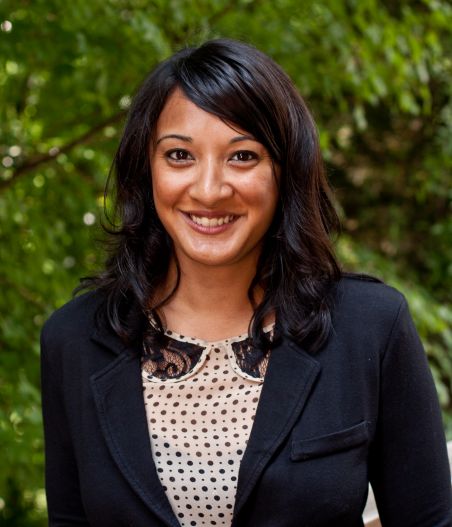
Sabrina Karim, PACS
Researchers will use cross-national, time-series data to identify domestic and international political conditions in which various forms of excessive and/or illegitimate violence are more likely to occur.
Additional Information
Bartels Explainer

How did Leymah Gbowee's protests lead to lasting peace?
Naminata Diabate outlines the movement's tactics and explains how womens' protests helped end the Liberian civil war.
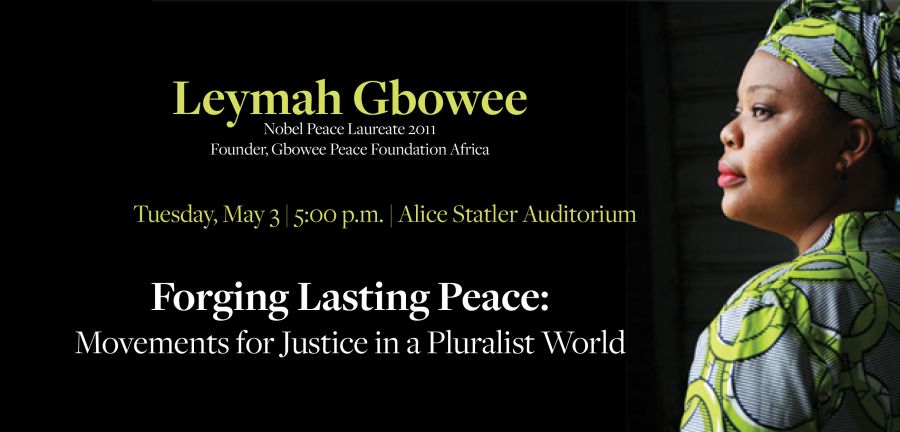
This year's Bartels lecturer, Nobel laureate Leymah Gbowee, led an interfaith women's peace movement that played a pivotal role in bringing warlords to the peace table and ultimately ending Liberia's bloody 14-year civil war in 2003. The movement's historic achievement earned Gbowee the Nobel Peace Prize in 2011. She continues her work as a global leader and activist for peace and women's rights.
"We need to specify that both a sex strike and the threat to strip naked are not nonviolent forms of protest."
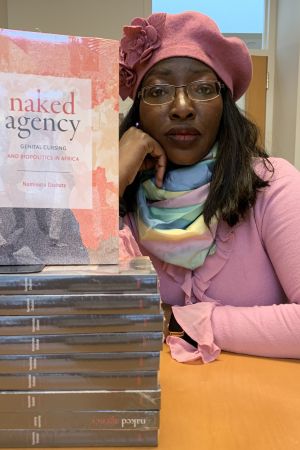
On this page: Naminata Diabate describes the tactics used by Women of Liberia Mass Action for Peace, the interfaith women's peace movement Gbowee led, and explains how the protests helped end the civil war. Diabate is an associate professor of comparative literature in the College of Arts and Sciences and member of the Institute for African Development's faculty steering committee.
Coming May 3: Reserve Your Free Ticket Today!
A Conversation with Naminata Diabate
What types of protests did Gbowee and the peace movement she led carry out?
Leymah Gbowee and the interfaith women wrote countless letters to major stakeholders, organized vigils, fasting, meetings, deliberations, sit-ins, dancing and chanting, a sex strike—and finally threatened to strip naked. Most importantly, they deployed determination to bring peace to their country.
Were these nonviolent protests?
We need to specify that both a sex strike and the threat to strip naked are not nonviolent forms of protest. In fact, they constitute the most violent types that women in specific communities (such as the ones Leymah Gbowee and her comrades worked in) can deploy against their menfolk, and by extension, their societies.
A sex strike—which we see organized around the world and even in the United States—is not peaceful because it reverses the gender expectation of the female body as available for procreation, male sexuality, and pleasure, and relatedly, it opposes procreation, which can endanger the life of the community.
As for defiant self-exposure—another name I use for naked protest—it constitutes the last resort in specific circumstances that allegedly cause the targeted males a myriad of misfortunes, including shame, impotence, infertility, incurable diseases, and literal or social death.
What were the protesters trying to accomplish?
With multiple strategies, both violent and nonviolent, the women tried to attract the attention of the international community and force the warring parties and strongmen such as Charles Taylor to understand the suffering of the Liberian people—and to bank on the women’s unfailing determination to bring about peace.
How was this group of women able to succeed against strongmen like Taylor?
This grassroots group of women was able to succeed against the warring factions and strongmen thanks to their unwavering resolve to matter as peace brokers in their country’s journey through war and toward peace. Additionally, their resourcefulness in deploying multiple conflict management tactics—both modern and indigenous—to make a difference remains remarkable.
Why do you think their protests were effective?
The women’s protest tactics were effective because they refused to be muzzled. Their journey was strewn with violent counterattacks, including verbal abuse, humiliation, dismissal, physical brutality, and even death threats. Although they were at times weakened, these exceptional women always came back with more tactics to achieve visibility. The stakeholders, including Charles Taylor, could not but work with these women who refused to go away.
Don't miss the Bartels World Affairs Lecture with Leymah Gbowee on May 3: Reserve your free ticket today!
Additional Information
Two Indian Half-Sisters are the Talk of 'Bridgerton' -- and of Modern-day India, too

Durba Ghosh, PACS and SAP
“While it’s impossible to say how many, there would have been South Asian aristocrats in these circuits as well. There are cases of [Indian] women who have traveled to Britain with their partners and who are a part of society and who have raised their children,” says Durba Ghosh, professor of history.
Additional Information
To Support Ukraine, the West Must Unleash Power of IMF and World Bank

Sarah Kreps, PACS
Richard Clark, incoming assistant professor of government, Sarah Kreps, professor of government and adjunct professor of law, and Don Casler, incoming assistant professor of political science at the University of Illinois at Urbana-Champaign, co-author this opinion piece about how the West should support Ukraine.
Additional Information
May 3: Bartels World Affairs Lecture
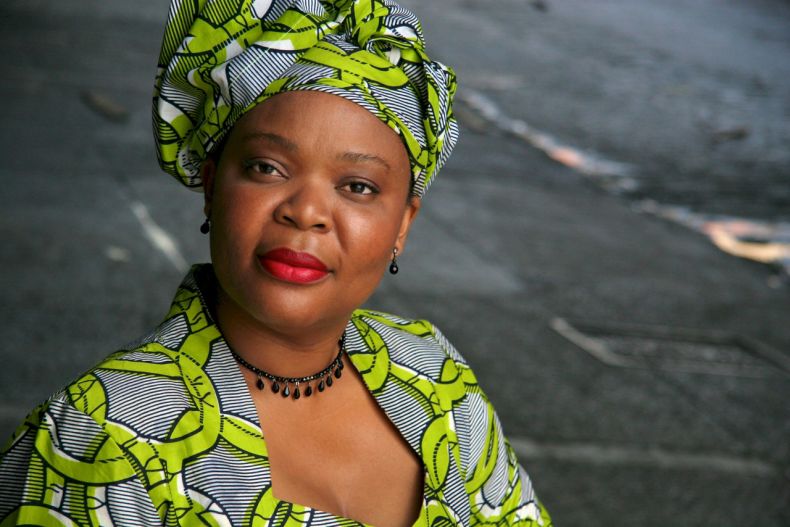
Nobel Laureate Leymah Gbowee: Forging Lasting Peace
Drawing on her experiences of mobilizing, demanding, and brokering peace, 2011 Nobel Peace Prize winner Leymah Gbowee shares how action and activism can shape a just world. Reserve your free ticket today!
Additional Information
How the UN Trusteeship Council might have shaped a substantive decolonization—and why it didn’t
April 28, 2022
11:25 am
Uris Hall, G08
This is a hybrid event. Registration information is below.
This talk sheds light on what various actors engaged with the United Nations trusteeship system wanted decolonization to mean, what they thought, or hoped, it should mean, and their contests of power over normalizing its meaning. The speaker will explain the importance of the UN trusteeship system in establishing decolonizing norms, particularly the meaning of universal rights within those norms. In opting not to address land claims and abuse of power complaints that petitioners brought to its attention, the Trusteeship Council created a precedent for excluding substantive rights from decolonization’s meaning in international law. This talk will elucidate what decolonization could mean within the trusteeship system, by examining the making of Italian Somaliland’s trusteeship agreement within the Trusteeship Council.
About the speakers
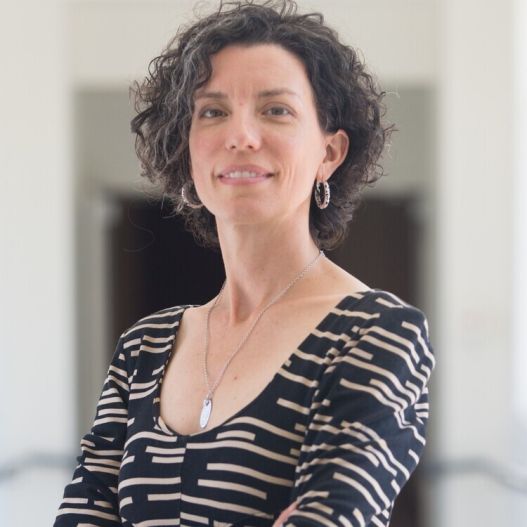
Meredith Terretta, is Professor of History at the University of Ottawa. She examines transregional legal and rights activism, both past and contemporary. Professor Terretta is now co-editing, with Dr. Samuel Moyn, The Cambridge World History of Rights, Volume 5: The Twentieth and Twenty-First Centuries. Her work appearing this academic year includes a special issue on African Refuge for the Canadian Journal of African Studies, co-edited with Dr. Philip Janzen, as well as single-authored articles on rights, international law, and decolonization in The Law and History Review; the Comparative Studies of South Asia, Africa and the Middle East; and the Humanity Journal: An International Journal of Human Rights, Humanitarianism, and Development.
This seminar is part of the spring seminar series with the Reppy Institute for Peace and Conflict Studies (PACS).
Register here
In accordance with university event guidance, all campus visitors who are 12 years old or older must also present a photo ID, as well as proof of vaccination for COVID-19 or results of a recent negative COVID-19 test. If you are not currently participating in the Cornell campus vaccination/testing program, please bring proof of vaccination or the results of a recent negative test.
Additional Information
Program
Einaudi Center for International Studies
Reppy Institute for Peace and Conflict Studies
Institute for African Development