
Reppy Institute for Peace and Conflict Studies
Watch Anthropic-Pentagon Feud Over AI Use Continues

Sarah Kreps, PACS
Sarah Kreps, director of the Tech Policy Institute at Cornell University, offers insight into the Anthropic-Pentagon debate over AI safeguards.
Additional Information
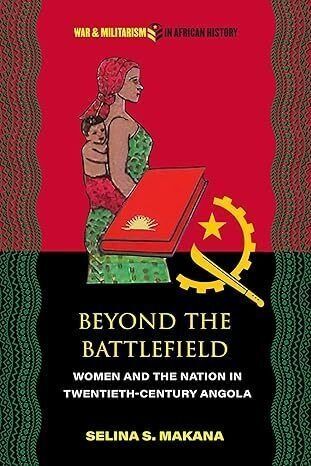
Beyond the Battlefield: Women and the Nation in Twentieth Century Angola
April 7, 2026
3:30 pm
Mann Library, 160
"This study contributes to scholarship in African history, gender studies, and postcolonial theory by offering a nuanced account of the intersections among militarism, nationalism, and gender. It invites readers to reconsider the frameworks through which political subjectivity and historical memory are constructed. Beyond the Battlefield is an essential resource for scholars and students interested in the gendered dimensions of colonialism, war, and state formation in modern Africa."Amazon.com: Beyond the Battlefield: Women and the Nation in Twentieth-Century Angola (War and Militarism in African History): 9780821426739: Makana, Selina S.: Books
cosponsored by the Institute for African Development, Department of History, and the Reppy Institute for Peace and Conflict Studies
Additional Information
Program
Einaudi Center for International Studies
Reppy Institute for Peace and Conflict Studies
Institute for African Development
Anthropic on Shaky Ground with Pentagon Amid Feud After Maduro Raid

Sarah Kreps, PACS
Sarah Kreps, director of the Tech Policy Institute in the Cornell Brooks School of Public Policy, provided expert analysis on the implications of Anthropic's AI contract with the Pentagon.
Additional Information
Probing War, Studying Peace

Reppy Faculty Lead Global Hubs Projects
With UK Hubs collaborators, Ruth Lawlor and Sabrina Karim study modern war and find ways for nations to keep the peace.
Additional Information
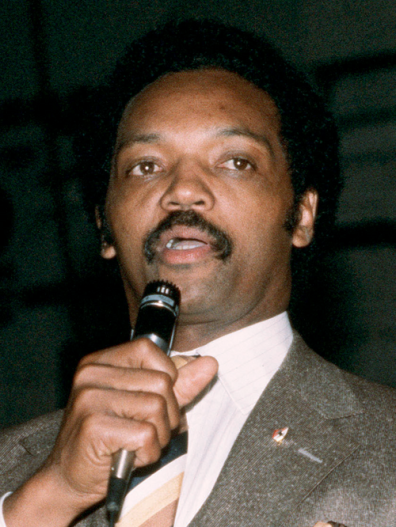
Rev. Jesse Jackson’s Deep Commitment to Peace
David Cortright, PACS
A fierce critic of U.S. imperialism and nuclear weapons, Jesse Jackson helped build a larger and more diverse peace movement.
Additional Information
Travel Grants Send Grad Students Abroad
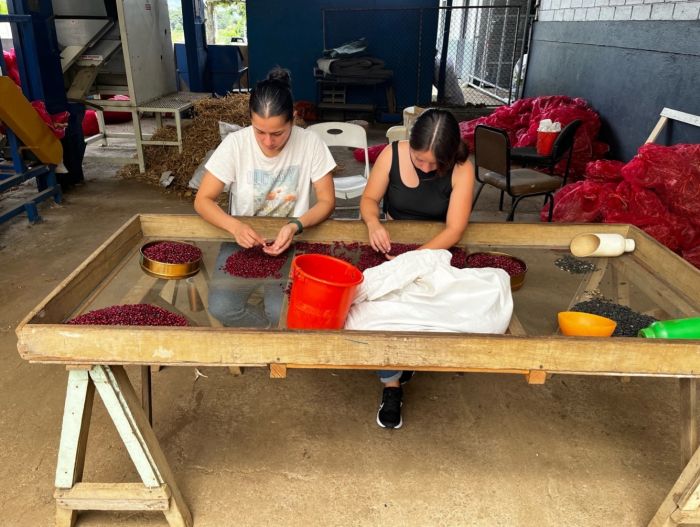
Eighty-three graduate students traveled internationally for fieldwork last summer with Einaudi Center support.
Additional Information
Venezuelan Perspectives on U.S. Interventionism
March 13, 2026
12:00 pm
Virtual
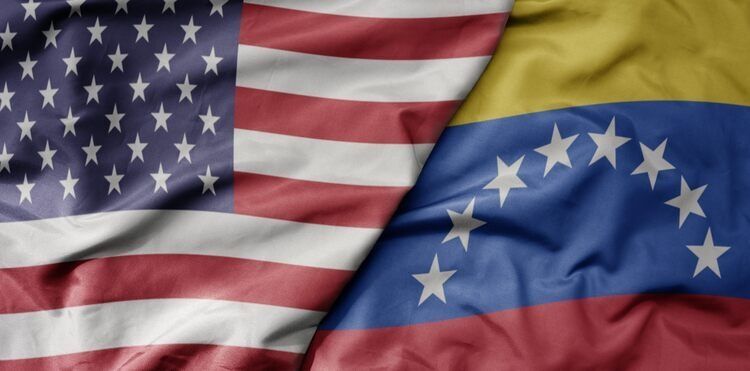
Recent U.S. military actions in Venezuela—including strikes on civilian boats, the seizure of oil tankers, and the abduction of President Nicolas Maduro—have raised questions about U.S. ambitions in Latin America and their implications for peace and international order. This panel brings together five prominent experts on Venezuelan history and politics, with the aim of deepening understanding of Venezuelan perspectives on recent events and their broader implications.
How are Venezuela’s political parties responding to shifting U.S. foreign policies? What are the likely effects of recent military actions on prospects for peace and stability in Venezuela and Latin America? Can the U.S. play a meaningful and legitimate role in helping Venezuelans restore democratic governance, and if so what policies might contribute to that goal?
Panelists
Irina Troconis, Professor, Cornell University (moderator)David Smilde, Professor, Tulane UniversityVeronica Zubillaga, Professor, Universidad Simón Bolívar, Caracas; Visiting Scholar, University of Illinois, ChicagoMargarita López Maya, Professor, Universidad Central de Venezuela
Register
Register here to join the virtual conversation.
***
Event Hosts
This virtual event is hosted by the Reppy Institute for Peace and Conflict Studies and cosponsored by the Latin American and Caribbean Studies Program. Both are part of the Einaudi Center for International Studies.
Additional Information
Program
Einaudi Center for International Studies
Reppy Institute for Peace and Conflict Studies
Latin American and Caribbean Studies
Migrations Program
Information Session: Fulbright U.S. Student Program

May 18, 2026
5:00 pm
The Fulbright U.S. Student Program supports U.S. citizens to study, conduct research in any field, or teach English in more than 150 countries. The program is open to graduate students, recent graduates, and young professionals. Undergraduate students who wish to begin the program immediately after graduation are encouraged to start the process in their junior year. Recent graduates are welcome to apply through Cornell.
The Fulbright program at Cornell is administered by the Mario Einaudi Center for International studies. Applicants are supported through all stages of the application and are encouraged to start early by contacting fulbright@einaudi.cornell.edu.
Register for the virtual session.
Can’t attend? Contact fulbright@einaudi.cornell.edu.
Additional Information
Program
Einaudi Center for International Studies
Reppy Institute for Peace and Conflict Studies
East Asia Program
Southeast Asia Program
Latin American and Caribbean Studies
Institute for African Development
Institute for European Studies
South Asia Program
Migrations Program
The Technopolitics of Nuclear Latency: How Isolated States Use Nuclear Technology to Engage the West
April 23, 2026
12:00 pm
Uris Hall, G08
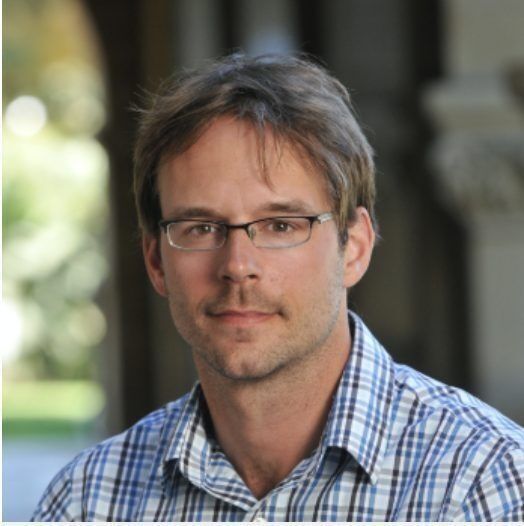
Why do isolated latent proliferators insist on retaining some of their nuclear capabilities in nonproliferation settlements? Prominent scholarship on nuclear proliferation shows that weak states have used latent nuclear capabilities like uranium enrichment and plutonium reprocessing to draw Western states into negotiations and extract concessions. But when theories of nuclear latency are applied to isolated states like North Korea and Iran, scholars undertheorize those regimes’ political aspirations and black box their demands as generic “rewards” for nuclear restraint. This leads scholars to overlook the credibility deficits of the political commitments that superpowers make in nonproliferation agreements, and to misinterpret the nuclear-latency strategies of isolated regimes seeking to address those credibility challenges. This article analyzes the technopolitical strategies that North Korea and Iran used as they sought to keep Western states engaged and hold them to their commitments. Through a mixture of technical and political analysis, I identify a repertoire of nuclear latency strategies by which both states have sought to simultaneously signal nuclear capability and restraint while retaining nuclear latency in reserve to incentivize future engagement from the West.
About the speaker
Christopher Lawrence is Assistant Professor of Science, Technology and International Affairs in Georgetown University's Walsh School of Foreign Service. He studies the histories of U.S. nonproliferation engagement with North Korea and Iran, as well as the epistemic communities in the West that create knowledge about those countries’ nuclear programs. His academic writing has been published in International Security, Social Studies of Science, Journal of Applied Physics, and IEEE Transactions on Nuclear Science. He has also written policy analysis for various online publications, including Bulletin of Atomic Scientists and War on the Rocks.
Host
Reppy Institute for Peace and Conflict Studies, part of the Einaudi Center for International Studies
Additional Information
Program
Einaudi Center for International Studies
Reppy Institute for Peace and Conflict Studies
Information Session: Fulbright U.S. Student Program

April 13, 2026
4:45 pm
The Fulbright U.S. Student Program supports U.S. citizens to study, conduct research in any field, or teach English in more than 150 countries. The program is open to graduate students, recent graduates, and young professionals. Undergraduate students who wish to begin the program immediately after graduation are encouraged to start the process in their junior year. Recent graduates are welcome to apply through Cornell.
The Fulbright program at Cornell is administered by the Mario Einaudi Center for International studies. Applicants are supported through all stages of the application and are encouraged to start early by contacting fulbright@einaudi.cornell.edu.
Register for the virtual session.
Can’t attend? Contact fulbright@einaudi.cornell.edu.
Additional Information
Program
Einaudi Center for International Studies
Reppy Institute for Peace and Conflict Studies
East Asia Program
Southeast Asia Program
Latin American and Caribbean Studies
Institute for African Development
Institute for European Studies
South Asia Program
Migrations Program