
South Asia Program
Rising Inequality: Oxfam’s Journey to Fight Inequality to End Poverty and Injustice, by Max Lawson and Amitabh Behar
February 22, 2021
11:00 am
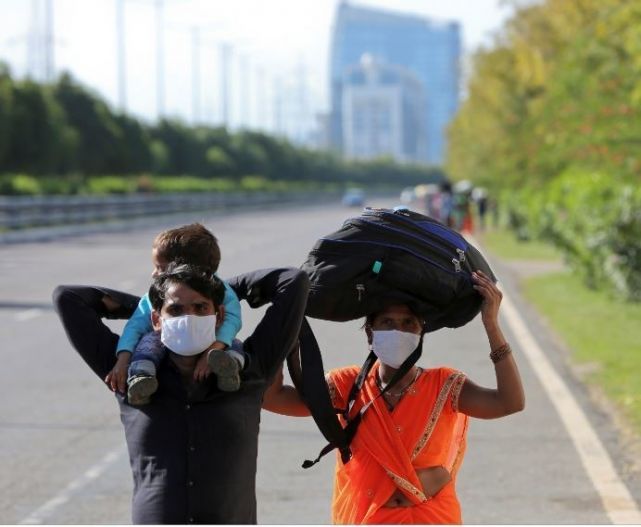
“The world’s ten richest men have seen their combined wealth increase by $540 billion during the pandemic, while the crisis threatens a lost decade in the fight against poverty,” revealed the Oxfam Inequality Report 2021, published on the opening day of the World Economic Forum’s ‘Davos Dialogues.' The India supplement of the Global Inequality Report highlighted “India’s 100 billionaires have seen their fortune increase by $178 billion since March 2020, enough to give every one of the 138 million poorest Indian people a cheque of $1,288."
Oxfam’s 2021 report “The Inequality Virus” found that Covid-19 has the potential to increase economic inequality in almost every country at once, the first time this has happened since records began over a century ago.
In this webinar Oxfam Inequality experts will talk about the journey of Oxfam’s Inequality work globally and in India, and whether it has been an effective strategy to advocate for a more just and sustainable society. Glimpses of Oxfam India’s work to address inequality will also be highlighted.
Max Lawson is Head of Inequality Policy for Oxfam International. He has previously Head of Policy and Campaigns at Oxfam Great Britain, and has helped author some of Oxfam’s most high profile papers. He also worked for Oxfam as governance adviser for some years, working in over 25 countries on budgets, governance and public spending. He moved to Nairobi in January along with Oxfam International’s whole headquarters.
Amitabh Behar, Chief Executive Officer of Oxfam India, is a global civil society leader, and an authority on tackling economic and gender inequality and building citizen participation. Mr. Behar currently serves as the Vice-Chair of the Board of CIVICUS, a global alliance of civil society organisations and activists dedicated to strengthening citizen action and civil society across the globe. He also serves on the boards of several other organisations, including the Centre for Budget and Governance Accountability, an Indian public policy think tank. Prior to Oxfam, Mr. Behar was the Executive Director of National Foundation for India and served as the Convener of National Social Watch Coalition and the Co-Chair of Global Call to Action Against Poverty, a network of over 11,000 civil society organisations.
Additional Information
Program
Einaudi Center for International Studies
South Asia Program
Infrastructures of Occupation: Dams, Development, and the Politics of Integration in Kashmir, by Mona Bhan
March 1, 2021
11:00 am
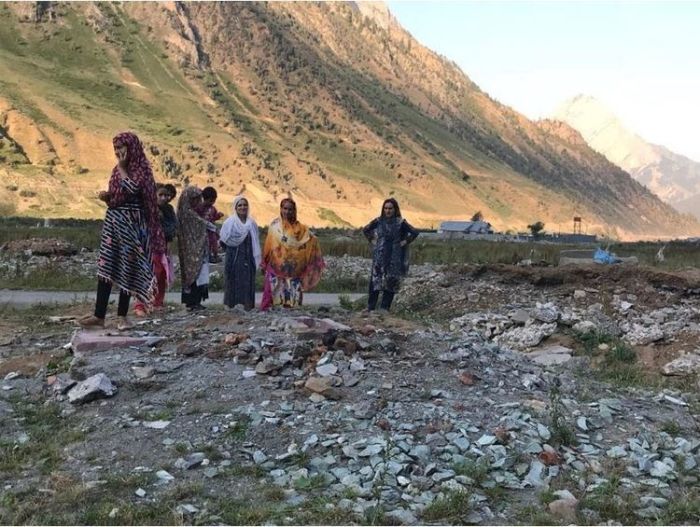
This talk analyzes the relationship between dam building, border wars, and India's settler colonial politics in Kashmir, particularly in the aftermath of the removal of Articles 370 and 35A that maintained Kashmir's semi-autonomous status in the Indian union. I will discuss how controlling vital Himalayan rivers fortifies Hindu reimagining of Kashmiri territory while forcibly integrating the region into India's extractive economy.
Mona Bhan is Ford Maxwell Professor of South Asian Studies in the Department of Anthropology at Syracuse University in Syracuse, New York. She is also the co-editor of HIMALAYA, the journal of the Association for Nepal and Himalayan Studies. Bhan has authored Counterinsurgency, Development, and the Politics of Identity: From Warfare to Welfare? (Routledge); and co-authored Climate without Nature: A Critical Anthropology of the Anthropocene (Cambridge). She also recently co-edited Resisting Occupation in Kashmir (University of Pennsylvania Press), with scholars from the Critical Kashmir Studies collective, of which she is a founding member.
Additional Information
Program
Einaudi Center for International Studies
South Asia Program
Terry Tucker

Associate Director, Global Development
Terry Tucker is a Professor of the Practice in the Department of Global Development. He serves as Co-Director of Graduate Studies for the MPS – Global Development program. His teaching and outreach work focuses on smallholder agriculture, especially farmers' adaptation to change, as well as their roles in research, innovation and social learning processes. He also collaborates on institution strengthening initiatives with universities and post-secondary educational institutions in South and Southeast Asia, particularly initiatives related to outreach and multi-institution dev
Additional Information
"Visual Anthropology Project: 'A Gregarious Species'," by Natasha Raheja, Border Environments, A Special Events Series
February 18, 2021
1:00 pm
Sponsored by the Central New York Humanities Corridor from an award by the Andrew W. Mellon Foundation
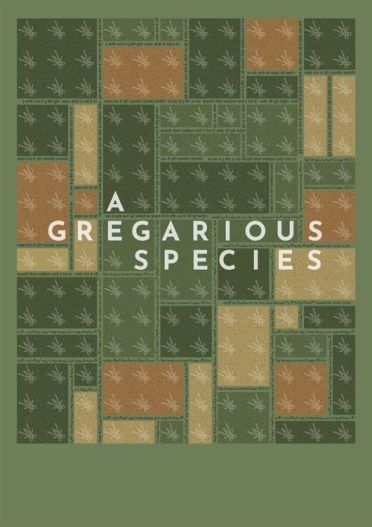
This found footage, single-channel video installation contemplates borders, migration, and human-animal relations in the context of bilateral management of “transboundary pests,” particularly gregarious desert locust swarms in South Asia. The piece brings together mobile phone videos of a series of desert locust swarms in 2019 shot by Indian Plant Protection Officers with rumors and allegations that Pakistan (an “enemy state”) sends swarms of locusts across the border to destroy Indian crops. The title, “Gregarious Species” is at once a celebration of the profuse force of human-animal sociality and also a critique of the ways border regimes deny a cross-border sociality to human migrants.
Natasha Raheja is an anthropologist working in the areas of migration, citizenship, and ethnographic film. Her current documentary video project, Kitne Passports? (How many Passports?), visualizes the migration trajectories of Pakistani Hindu families in India from different caste backgrounds. The documentary is a companion to her book manuscript, From Minority to Majority: Pakistani Hindu Claims to Indian Citizenship. The book is an ethnographic account of Pakistani Hindu migration to India and theorizes the flexibility of the religious minority form and the endurance of caste across state borders in South Asia. Together, this work explores the relationships between religious nationalism, state machinery, and modes of cross-border belonging in the context of majority-minority relations in liberal democracies. Extending her interest in uneven mobilities and borders, she is also completing an experimental short film series on the movement of non-human animals and everyday objects across the India-Pakistan border. Films in the series include: A Gregarious Species, Kaagaz ke chakkar, and Enemy Property. As part of her fieldwork, she has conducted collaborative documentary filmmaking workshops with Pakistani Hindu middle-school students to understand and amplify their perspectives on life in India. Professor Raheja’s scholarship has received generous support from the Fulbright Commission, the Wenner-Gren Foundation for Anthropological Research, the American Institute for Indian Studies, the NYU Vice Provost’s office and several other endowments. Her films have screened at colleges and festivals nationally and internationally and my publications have featured in the Journal of Refugee Studies, American Anthropologist, and Visual Anthropology Review.
Co-Sponsored by: Latin American Studies Program, Latina/o Studies Program, Department of Comparative Literature, Cornell Cinema, and the Migrations Initiative
Additional Information
Program
Einaudi Center for International Studies
Latin American and Caribbean Studies
South Asia Program
Agricultural Transformation in an Evolving Nepal, by Andrew McDonald
February 15, 2021
11:00 am
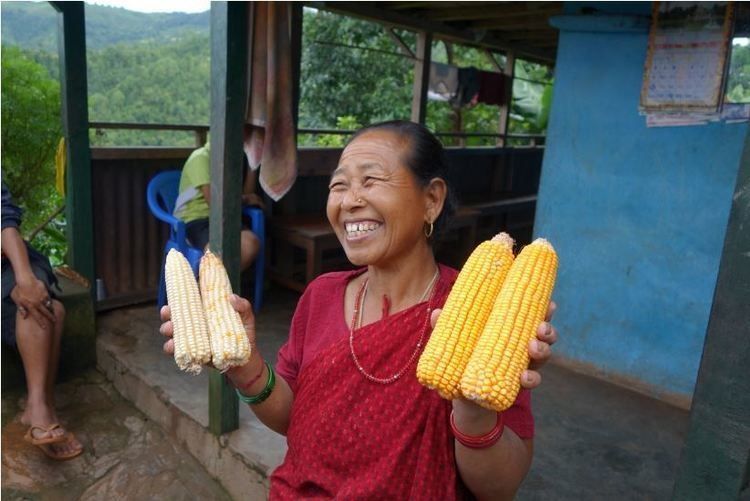
Despite more than a decade of intensive urbanization, Nepal remains heavily dependent on agriculture for domestic food security, rural livelihoods, and for the generation of employment opportunities in aligned service industries. At the same time, agricultural productivity remains, by many metrics, the lowest in the South Asia region. Development of the agri-food sector has benefited from a sustained period of relative political stability following the resolution of the Maoist insurgency in 2007. Nevertheless, the recent devolution of powers to the newly formed provinces following the adoption of the Constitution of 2015 has created a host of new coordination and administrative challenges. Furthermore, sustainable agricultural development in Nepal faces long-standing structural, technical and institutional barriers to change that are compound by factors such as intensifying climate variability, weak value chains, extreme levels of out-migration, and the lingering impacts of natural disasters such as the severe earthquakes that struck the country in 2015. In this retrospective presentation, I discuss some of the success and failures that have marked agricultural research and development investments over the last decade and offer insights into how new programming can be more effectively prioritized, targeted, and implement across the diverse agricultural landscapes of Nepal.
Andrew McDonald is Associate Professor in the Soil and Crop Sciences Section of the School of Integrative Plant Science at Cornell University, with a joint appointment in the Department of Global Development. He is a cropping systems ecologist who addresses global challenges to agricultural sustainability and food security through process-based agronomy, integrated systems analysis, development of decision frameworks, and by fostering innovation alliances to support sustainable rural development. Much of McDonald's current research program is anchored in South Asia where he previously led CIMMYT’s sustainable intensification program, including the eco-regional Cereal Systems Initiative for South Asia. At Cornell, McDonald is also a faculty fellow at the Tata-Cornell Institute as well as the Cornell Atkinson Center for Sustainability.
Additional Information
Program
Einaudi Center for International Studies
South Asia Program
Martin Gilbert

Associate Professor of Practice, Population Medicine and Diagnostic Sciences
Martin Gilbert is interested in pursuing health-related research that has direct relevance to the conservation of wildlife, particularly carnivores and scavengers. This includes approaches to understand how endangered species are impacted at a population level by infectious disease (such as canine distemper virus in free-ranging Amur tigers), as well non-infectious agents (such as the pharmaceutical diclofenac in Asian vultures).
Additional Information
Program
Role
- Faculty
- SAP Faculty Associate
- SEAP Faculty Associate
Contact
Email: m.gilbert@cornell.edu
Sing Me a Song

April 8, 2021
12:01 am
Ithaca Premiere>2019 > France/Germany/Switzerland > Directed by Thomas Balms
In Happiness (2014), filmmaker Balms chronicled 8-year-old Peyangki's initiation into a monastery and the arrival of electricity to his remote Bhutan village. In his new film, ten years have passed, and the filmmaker finds the teenage monk tied to his mobile phone, pursuing a romance over WeChat with a bar singer in Bhutan's capital. "...a fascinating tale of romantic melancholy played out against the peaceful, meditative backdrop of the Himalayas." (LA Times) In Dzongkha. Subtitled. More at participant.com/film/sing-me-song
1 hr 40 min
We will start taking reservations one week in advance of a film's first play date.
Reservations can be made here:
https://cinema.cornell.edu/virtual-cinema-order-form
Additional Information
Program
South Asia Program
Einaudi Center for International Studies
East Asia Program
Shiraz: A Romance of India

March 11, 2021
12:01 am
Ithaca Premiere>1928 > India > Directed by Franz Osten
Shiraz is a ravishing, romantic tale behind the creation of one of the world's most iconic structures: the Taj Mahal. Filmed on location in and around Jaipur with an all-Indian cast (including 50,000 extras, 300 camels and seven elephants), the film features stunning Islamic architecture and the landscape of Rajasthan. Shown in a recent digital restoration by the British Film Institute with a specially commissioned score by the Grammy Award-winning composer-sitar player Anoushka Shankar, performed by a traditional ensemble infused with strings and a Moog synthesizer. English intertitles. More at junofilms.com
1 hr 45 min
Additional Information
Program
South Asia Program
Apply for an MA in South Asian Studies
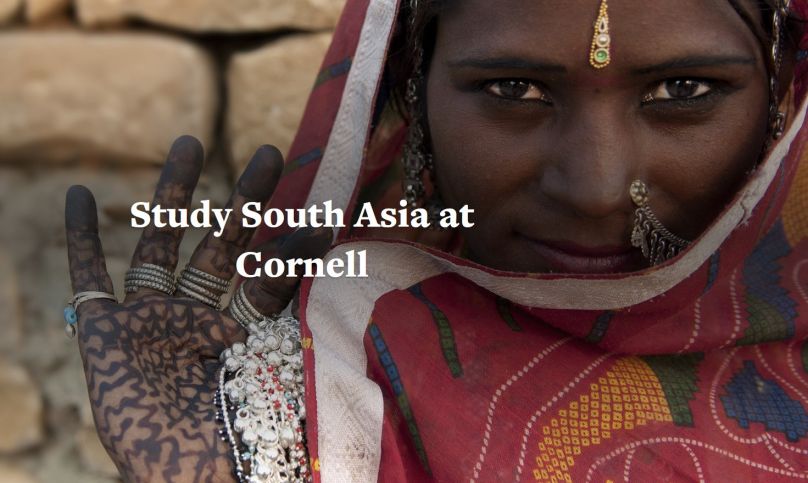
Applications for an MA in Asian Studies are now open through February 1
Additional Information
Info Session: Fulbright U.S. Student Program for Undergraduates

April 12, 2021
4:30 pm
The Fulbright U.S. Student Program supports college graduates conducting research or teaching in any field in more than 150 countries. Applications are due in the fall; students who wish to begin the program immediately after graduation are encouraged to start the process in their junior year.
United States citizens in any field of study are eligible.
Contact: fulbright@einaudi.cornell.edu, https://einaudi.cornell.edu/fulbright-us-student-program
Additional Information
Program
Einaudi Center for International Studies
Reppy Institute for Peace and Conflict Studies
East Asia Program
Southeast Asia Program
Latin American and Caribbean Studies
Institute for African Development
Institute for European Studies
South Asia Program