
Southeast Asia Program
FLAS Applications Now Open!
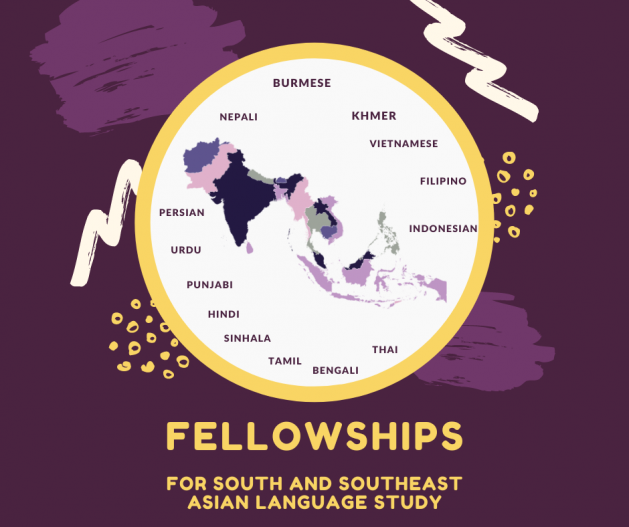
FLAS Applications Now Open!
Additional Information
Language Resource Center Speaker Series - Bill VanPatten
April 13, 2021
3:30 pm
"Barriers to Innovation in Language Teaching"
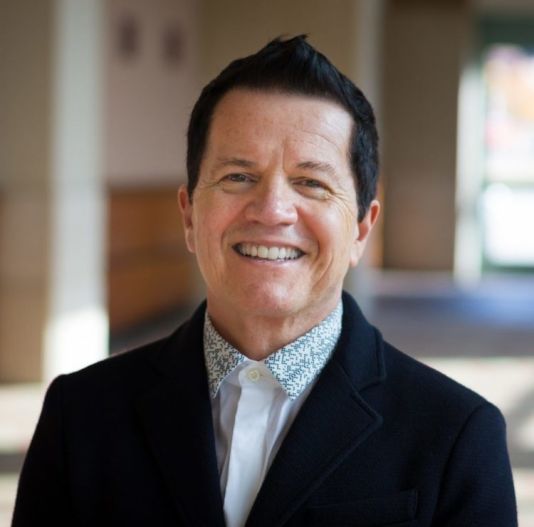
Bill VanPatten
We have all heard about revolutions in language teaching - big leaps in thinking that offer insights and new methods for the classroom (e.g., The Direct Method, ALM, Communicative Language Teaching). Yet, such revolutions wither quickly and never really take root. It seems that innovation in language teaching is difficult if not impossible. Why is this? In this talk, I will first differentiate between what I call "real innovation" and "pseudo-innovation," suggesting that the vast majority of what people call innovation in language teaching is actually pseudo-innovation. I will then outline five interrelated barriers to real innovation: knowledge, personnel, institutionalized education, power, and time. Each barrier suggests radical reformation of how we view the profession, perhaps explaining why real innovation is so difficult. I will conclude with a discussion of what I call "incremental innovation," focusing on whether such a thing is possible in lieu of real innovation.
Bio: Bill VanPatten (Ph.D., University of Texas at Austin) is an award-winning international scholar and teacher in the field of second language research, having published ten books, eight edited volumes, and almost 200 articles and book chapters. His most recent publications include Key Questions in Second Language Acquisition (Cambridge University Press) and The Nature of Language: A Brief Guide to What’s in Our Heads (ACTFL). He is also well known for his language teaching materials in Spanish and French. Currently, he is writing fiction full time and getting ready for his one-man show "ASFW (Almost Suitable for Work)" coming to a conference or event near you beginning 2021. Check him out at www.aliasbvp.com.
Join us live on Zoom.
Additional Information
Program
Einaudi Center for International Studies
Latin American and Caribbean Studies
Southeast Asia Program
The House that SEAP Built by Kaja McGowan
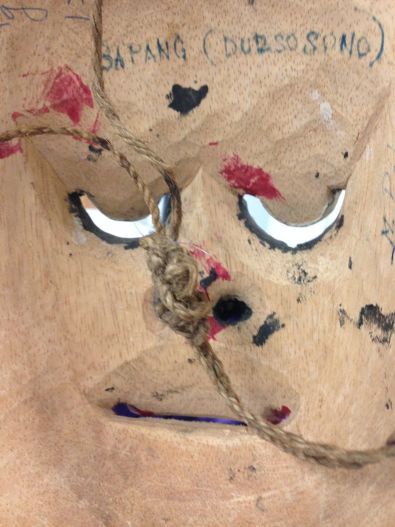
Check out this piece by Kaja McGowan, featured in the SEAP Fall 2020 bulletin!
Dancers wearing masks often speak of how limited vision establishes a way to separate from vision’s crucial role and to move towards an understanding of what essential “seeing” really is: the innate ability of the body to know of nearby objects without actually seeing them distinctly, what Merleau-Ponty calls the body-subject. Most important to notice from the “inner face” of this Bapang mask from East Java (Fig. 1) is that it is carved to be worn low on the face, so that for the dancer to be able to see in a limited capacity through the narrowly carved and down-turned eye-slits, he or she must tilt the head back while harnessing all the other senses in the process. Any dancer wearing a mask must be willing to forgo this visual limitation for an enhanced embodied experience. Key to this kinesthetic grasping of the surrounding performance space in Indonesia are makeshift built forms, temporary bamboo constructions that not only “house” the performative event, but that cue the visually constrained dancers’ placement in, and movement through a highly interactive, intimate, and potentially transformative sphere.
As a graduate of Cornell University, a professor in the History of Art and Visual Studies, and a former director of SEAP, I have come to think of space and the shaping of social relations in the Southeast Asia Program over the years as a similar makeshift structure, reminiscent of the popular British nursery rhyme, “This is the House that Jack Built.” Both the rhyme and the program are cumulative narratives that do not always divulge the details of their “houses” per say, or even who the cast of characters might be (Jack for one!) who provide the architectural planning. Instead, both reveal over the longue durée how each “house” is indirectly linked to other things and people –-i.e. “the horse, the hound and the horn that belonged to the farmer sowing his corn.” Each sentence in the nursery rhyme (or SEAP’s cumulative history) is an example of a deeply nested relative clause that reveals how everything is intimately interlinked. READ MORE
Additional Information
Program
Language Resource Center Speaker Series - Cassandra Glynn, Pamela Wesely, and Beth Wassell
March 17, 2021
4:00 pm
"Social Justice and the University Language Learner"
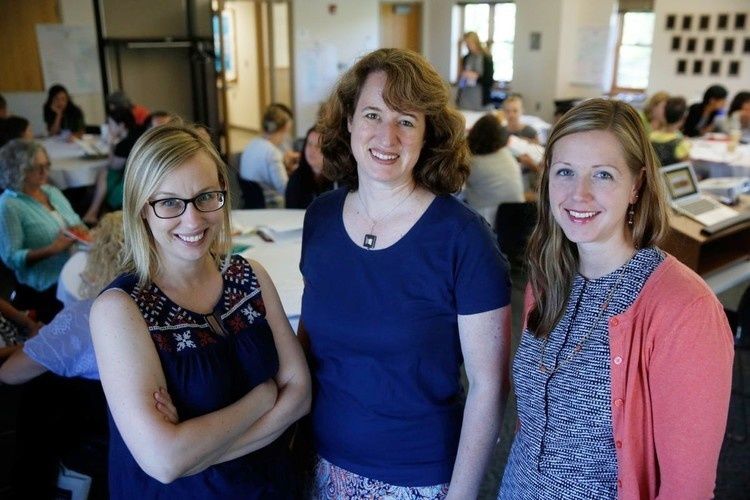
Cassandra Glynn (Concordia College), Pamela Wesely (University of Iowa), and Beth Wassell (Rowan University)
Teaching for and about social justice positively influences all students, yet integrating social justice education into the college language curriculum can be challenging. In this talk, Drs. Cassandra Glynn, Pamela Wesely, and Beth Wassell, the co-authors of Words and Actions: Teaching Languages Through the Lens of Social Justice (Glynn, Wesely & Wassell, 2018), will address the principles of social justice education, looking specifically at how those principles connect with the guidelines and standards in world language teaching and common instructional practices in language programs. Attendees will be provided with illustrations, examples, and models of how social justice can be integrated in the college language classroom, and they will be encouraged to reflect on their own interests and strengths in becoming language educators for social justice. Participants will leave this talk with clear ideas about how to integrate principles of social justice education into their language classes.
Bios:
Dr. Glynn is an Associate Professor of Education at Concordia College, Moorhead, MN. She also serves as Director of Graduate Education, overseeing the Master of Education in World Language Instruction in partnership with Concordia Language Villages and the Master of Education with a concentration in Teaching and Learning. She received her M.A. and Ph.D. in Curriculum and Instruction from the University of Minnesota with a focus in Second Languages and Cultures Education. Dr. Glynn's research interests center around the experiences of marginalized and underrepresented students in world language classes and on world language teachers' experiences as they take critical approaches to teaching languages and cultures. Her work has been published in journals such as the L2 Journal, The Modern Language Journal, Language Teaching Research, and the Journal of Curriculum and Pedagogy. She is co-author of Words and Actions: Teaching World Languages through the Lens of Social Justice (ACTFL, 2014, 2018). Prior to starting at Concordia College, Dr. Glynn taught middle school language classes and high school German, including dual credit, and worked in the German and French Villages at Concordia Language Villages.
Dr. Wesely received her Ph.D. in Curriculum and Instruction from the University of Minnesota in 2009, and she is currently an Associate Professor of Multilingual Education at the University of Iowa. She coordinates the World Language Teacher Education Program and serves as the Director of Graduate Studies and Associate DEO of the Department of Teaching and Learning. Dr. Wesely's scholarship and teaching examines K-12 world language education in the United States. Building on eight years of work as a middle school French teacher and 11 years working in the experiential learning environment of Concordia Language Villages in Minnesota, she studies the attitudes, motivations, perceptions, and beliefs of stakeholders in K-12 world language education using mixed methods, quantitative, and qualitative approaches to inquiry. Her work has been published in journals including Foreign Language Annals, The Modern Language Journal, Journal of Teacher Education, CALICO Journal, Language Teaching Research, and Journal of Mixed Methods Research. She is the co-author of Words and Actions: Teaching World Languages through the Lens of Social Justice (ACTFL, 2014, 2018). She recently (2018-2020) served as a member of the Board of Directors of ACTFL, and she is a former president of the Iowa World Language Association.
Dr. Wassell is a Professor in the Department of Language, Literacy and Sociocultural Education at Rowan University. Her research emphasizes the voices of students, teachers, and families and draws on critical and sociocultural frameworks to examine individuals' agency in reshaping the structures of teaching and teacher education in P-12 settings. She was a 2019 Fulbright Core Scholar to Spain and has published articles in journals such as Teaching and Teacher Education, Urban Education, TESOL Journal, Education and Urban Society, the Journal of Technology and Teacher Education, and Teacher Education and Practice. She is co-author of Words and Actions: Teaching World Languages through the Lens of Social Justice (ACTFL, 2014, 2018). Dr. Wassell received an Ed.D. in Teaching, Learning and Curriculum from the University of Pennsylvania, an M.A. in Spanish from the University of Central Florida, a graduate certificate in TESOL from the Pennsylvania State University, and a B.A. from Rowan University in Spanish and Secondary Education. Prior to coming to Rowan, she taught Spanish as a world language at the high school level in Florida and New Jersey and English as an Additional Language to adults in Philadelphia, PA.
Join us live on Zoom.
Additional Information
Program
Einaudi Center for International Studies
Latin American and Caribbean Studies
Southeast Asia Program
Language Resource Center Speaker Series - Dustin Crowther
February 16, 2021
4:00 pm
"Addressing Speech Comprehensibility in the Second Language Classroom: What 25 Years of Research Might Tell Us About Classroom Pedagogy"
Dustin Crowther
Assistant Professor of Second Language Studies, University of Hawaiʻi at Mānoa
In his 2005 publication, John Levis highlighted the importance of promoting intelligible rather than nativelike speech as a target for second language (L2) pronunciation learning (and, more broadly, L2 speaking development). Broadly speaking, intelligibility refers to how well listeners understand L2 speech (Levis, 2006). However, "understanding" has frequently been operationalized via two dimensions, firmly established in Munro and Derwing (1995). Intelligibility (here used in a narrow sense) refers to listeners' accuracy of understanding, frequently measured through learners' word- and sentence-level transcriptions. Comprehensibility refers to the effort required by listeners to understand L2 speech, primarily measured using Likert scale ratings. Though a focus on accuracy over effort may be initially tempting to L2 teachers and researchers, Kennedy and Trofimovich (2019) argue that L2 comprehensibility not only provides a practical and reliable approach to analyzing listeners' perception of L2 speech, it also takes into account listeners' in-the-moment understanding of and reactions to L2 speech. As such, it is not surprising that, in the 25 years since Munro and Derwing, we have seen an increased scholarly emphasis in L2 speech comprehensibility.
This presentation will provide a timeline of L2 comprehensibility research conducted in the 25 years since Munro and Derwing's (1995) seminal publication, with a strong emphasis on classroom implications. Though L2 comprehensibility research has focused primarily on L2 English speech, recent scholarship has extended to a range of world languages, including French, German, Japanese, Korean, and Spanish. To elaborate on recent scholarship, I will discuss four of my own studies (Crowther, 2020; Crowther et al., 2015, 2016, 2018), how they each fit into current trends in comprehensibility research, and how each can inform future pedagogical practices. Finally, I will consider how understanding comprehensibility can inform the larger practice of speaking instruction in the L2 classroom.
Bio: Dustin Crowther is an Assistant Professor in the Department of Second Language Studies at the University of Hawaiʻi at Mānoa. His primary research agenda emphasizes the attainment of intelligible speech for additional language speakers, inclusive of both speaker- and listener-based variables. Specifically, he takes into account the linguistic and intercultural considerations that define native-nonnative and nonnative-nonnative interaction. Given the increased global spread of English, much of his current research is informed by scholarship derived from Global Englishes. His research has been published in leading journals such as The Modern Language Journal, Studies in Second Language Acquisition, and TESOL Quarterly. As an experienced English language instructor, his long-term scholarly objective is to link research to pedagogy. Dr. Crowther additionally emphasizes the promotion of methodological rigor within applied linguistics research, as seen in recent publications in Language Learning and Studies in Second Language Acquisition. Dr. Crowther currently serves as the Editor for Research Dissemination for TESOL Quarterly.
Join us live on Zoom.
Additional Information
Program
Einaudi Center for International Studies
Latin American and Caribbean Studies
Southeast Asia Program
Information on a Balinese eave hanging
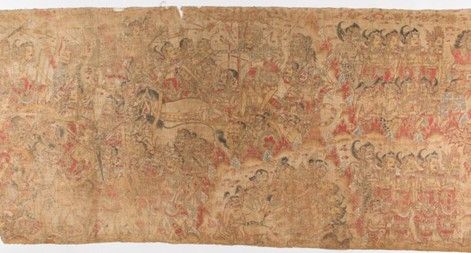
A crowd sourcing request for information on a Balinese eave hanging (ider-ider) depicting Mahabharata scenes from 102 West Avenue.
The SEAP 70th anniversary exhibition curatorial team is seeking any memories, photos and other experiences that SEAP alumni and other members of the SEAP community have of a Balinese artwork. This textile, also known as an ider-ider is an eave hanging that was on display in the 102 West Avenue location that served SEAP and the Cornell Modern Indonesia Project. This handspun textile is made from cotton, ink, and pigments and dates from the 18th or early 19th century. It is a narrative artwork that represents scenes from the Baratayuda (Great Battle) from the Mahabharata. This ider-ider was hung around a room in 102 where lectures and other events were held. The textile work as donated by Claire Holt and is now part of the Herbert F. Johnson Museum collection. We would love to hear any memories or accounts that you have of this object and photographs that include it are also very welcome.
Please send these to Astara at acl246@cornell.edu. Thank you!
Additional Information
Program
“Buddhism as Corporate Disruptor: Pre-Modern and Modern Perspectives” (Matthew D. Milligan, Trinity)

December 11, 2020
4:00 pm
Please join us for a virtual talk by Matthew D. Milligan, Visiting Assistant Professor at Trinity University. Professor Milligan researches Indian and Sri Lankan religious history, focusing on the social and economic history of religions in these regions. A specialist in epigraphy and material culture, Milligan reads Sanskrit, Pali, and Prakrit material cultural sources together with canonical and non-canonical religious literature.
This event is funded by the GPSA and generously co-sponsored by the Department of Asian Studies, the Department of History, the Religious Studies Program, the South Asia Program and the Southeast Asia Program. All are welcome to attend: please register through CampusGroups to receive the Zoom link.
Please contact Bruno at bms297@cornell.edu for any special arrangements you may require in order to attend this event.
Additional Information
Program
Southeast Asia Program
South Asia Program
Einaudi Center for International Studies
Thailand Protests at a Tipping Point
Tamara Loos, SEAP
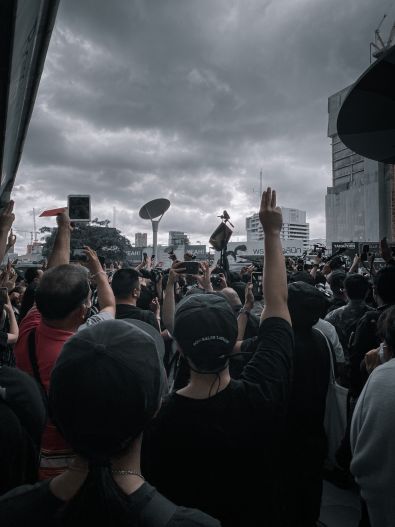
Tamara Loos, chair and professor in the Department of History, discusses why the current protests in Thailand are different from any the country has ever seen before.
Additional Information
Buddhist Nuns and Their Crusade for Recognition in Southeast Asia

Mary Kate Long, SEAP
Mary Kate Long, a doctoral candidate in Asian studies, explains Sri Lanka’s decision to be the first and only Theravada Buddhist country allowing for the full ordination of women.
Additional Information
Cornell Press US in the World: Authors in Conversation
Book Launch Webinar: The Philippines, the United States and the World
The editorial board of Cornell University press's United States in the World series, Benjamin Coates, Emily Conroy-Krutz, Paul Kramer, and Judy Wu, is happy to announce the next in its book launch webinar series featuring new books published in the series.
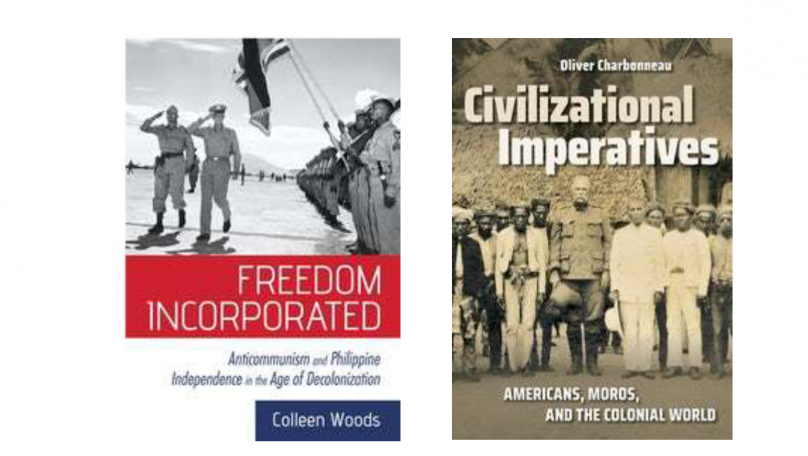
Their upcoming webinar, "The Philippines, the United States and the World in the 20th Century," will feature a discussion of two exciting new works exploring Philippine-American histories in the 20th century: Colleen Woods' Freedom Incorporated: Anticommunism and Philippine Independence in the Age of Decolonization, and Oliver Charbonneau's Civilizational Imperatives: Americans, Moros, and the Colonial World.
The event will take place on Friday, December 4th, from 12pm to 1:00pm EST. Paul Kramer will host.
To register, please sign up here. For more information, email Paul at paul.a.kramer@vanderbilt.edu.