
Southeast Asia Program
SEAP Outreach launches two new educational films on Vietnam
SEAP Outreach is pleased to offer two short documentary films available to watch on SEAP's eCommons archive on Vietnam and Vietnamese culture with accompanying curriculum guides. These engaging films are intended for use in middle school, high school, and undergraduate classrooms.
Students who view the films will benefit by learning about diverse communities and cultures in Vietnam. They will look at Vietnam and the controversies around US/Vietnam relations from multiple perspectives and synthesize conflicting views, broaden their understanding of Vietnam, and reflect critically on their own assumptions about Vietnam. This project was jointly funded by a National Resource Center grant awarded to SEAP from the US Department of Education and a Cornell Engaged Opportunity Grant awarded to SEAP Outreach.
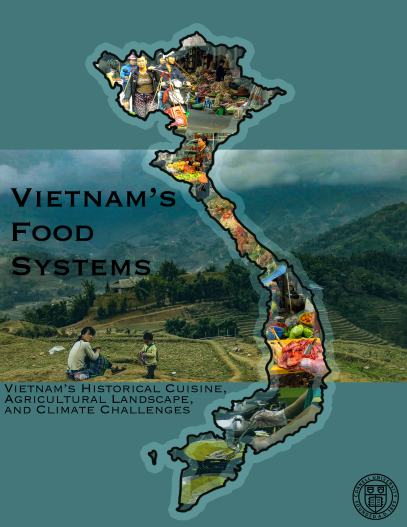
Vietnam’s Food Systems
This film explores Vietnam’s historical cuisine, agricultural landscape, and climate challenges.
Note from the filmmaker, Brenna Fitzgerald, SEAP Communications and Outreach Coordinator:
Before traveling to Vietnam, I knew about pho, the country’s infamous noodle soup. Each savory dish consists of rice noodles, herbs like basil and star anise, and thin-cut slices of beef held in a delicate golden broth. I knew about banh mi baguettes, a cultural fusion from when the French occupied Vietnam. Before my trip, a Vietnamese friend had drawn up a list of foods for me to try while in country: various noodle soups and rice dishes, spicy fish dishes and those with beef. He also urged me to try all the fruits like papaya and durian and the famous egg coffee of Hanoi. To my friend, sampling the foods and traversing the markets at any time of day—from dawn to midnight—was an integral part of experiencing Vietnam. This did not surprise me given that most Vietnamese events I had attended at Cornell before my trip centered around food and that Vietnam’s biggest exports are rice and coffee. The central role food plays in a culture cannot be underestimated. Food is not only necessary for survival, but also at the center of celebration and pleasure. It connects people and resources, regions and countries, farmers and restaurant owners. Food is a complex web. I spent much of my time in Hanoi and Ho Chi Minh City (Saigon) hunting, gathering, and eating. My daily itinerary was often bookended by food, by what market I would visit that morning and what kind of dish I wanted for dinner. I knew that in following the path from plantation to market to restaurant many stories worth capturing would unfold. Food wove through the lives of everyone I met: farmers close to the earth, knee-deep in wet rice paddies and those reaching up to the sky picking fruits; entrepreneurs at the market piling cinnamon sticks, dried shrimp, and mangos into perfect pyramids for a colorful and enticing display; delivery drivers carrying pounds of rice in boxes that teetered precariously on the backs of motorbikes; street vendors selling pineapple and papaya carved into spears; café owners enticing pedestrians with menus of dark espresso and light frothy lattes; and friends sharing drinks or steamy dishes in restaurants, laughing together.
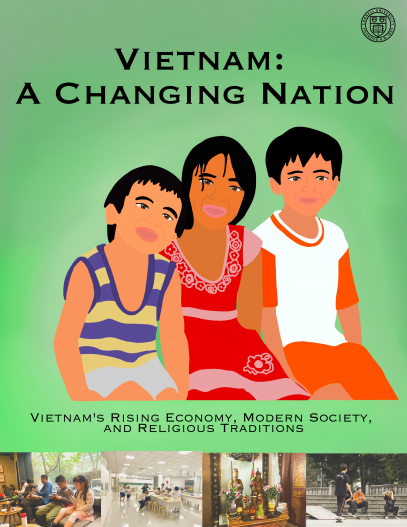
Vietnam: A Changing Nation
This film explores Vietnam’s rising economy, modern society, and religious traditions.
Note from the filmmaker, Brenna Fitzgerald, SEAP Communications and Outreach Coordinator: Vietnam is a young country with over half the population under age 25. There’s a youthful vitality pulsing through the air, especially in big urban centers like Hanoi and Ho Chi Minh City (Saigon). Youth fill the coffee shops, taking photos of frothy lattes on their phones and giggling at YouTube videos. I saw them skateboarding and scooting around with friends on motorbikes. Young Vietnamese study hard, going to places like the famous Temple of Literature in Hanoi to pray for good grades, passing exams, entrance to a college abroad. For youth, international education is a gateway into their dreams of wealth and good fortune. Curious students from elementary age to college were eager to engage with me, an English-speaking foreigner. They wanted to practice conversing in English, ask questions about the United States, and make global friendships and connections. They are driven, constantly creating and innovating, making change, working in every sector of society, propelling the rising economy. Vietnam is a country of creative entrepreneurs. The streets are alive with vendors selling fruits and to-go snacks and drivers ready to take you on a rickshaw ride for a small fee. Stores line city sidewalks decked with innumerable things for sale: bags, shoes, watches, clothing, shiny trinkets, coffees and teas, cell phone cases, handicrafts proudly displaying the label “made in Vietnam.” Vietnam moves to the hustle of capitalism, motorbikes whizz by stacked with anything and everything from food deliveries to refrigerators. Though the pace is fast, people take time for leisure—playing board games in the streets, stopping for coffee, sipping beer in little plastic chairs on the sidewalk, watching the world race by. And like the balance between movement and stillness, there’s a balance between new and old. Fancy hotels are being constructed next to old houses and ancient temples. Everywhere in Vietnam, the young and vibrant meets the old and established. In every home and shop, people make daily offerings of incense, fruits, and candles to ancestors, paying respect to their history and origins.
Additional Information
Program
Semi-Study Break: World Music of the Moment with Global Cornell

November 16, 2020
11:00 am
Celebrate International Education Week #IEW2020 with Global Cornell!
Join DJ Daniel Bass of WRFI's Monsoon Radio for world music of 2020—from coronavirus and mass incarceration, to migration, love, dancing, and beyond. Jonathan Miller of Homelands Productions cohosts.
For semi-finals: It's a semi-study break. See you there.
Registration is required.
Daniel Bass (South Asia Program) has been a radio DJ for nearly 30 years. As an undergraduate at Carleton College, he was music director of KRLX, the student-run radio station, and hosted a weekly show. In graduate school at the University of Michigan, he cohosted a weekly show of South Asian music on WCBN, the college/community radio station in Ann Arbor. In 2013, he started Monsoon Radio on WPKN in Bridgeport, Connecticut. He brought the show to Ithaca's WRFI in 2017. Monsoon Radio features music of South Asia, its influences and diasporas, branching out to music of the Indian Ocean and the Muslim world and fusions from all over the globe. Until the pandemic forced the show into hiatus, Monsoon Radio aired every other Tuesday night on WRFI, 88.1 FM, and wrfi.org.
Jonathan Miller's work as a journalist, writer, and editor has taken him to more than 20 countries in Asia, the Americas, Africa, Europe, and the Pacific. His radio and television reports have been broadcast on NPR, Marketplace, BBC, PBS NewsHour, and other outlets. As executive director of the journalism collective Homelands Productions, he has designed and produced multi-platform projects on cultural change, globalization and work, and the future of food. He serves as board chair of Ithaca City of Asylum. From 2016 to 2018 he was associate director of communication at the Mario Einaudi Center for International Studies.
Register here: https://cornell.zoom.us/webinar/register/WN_hjkj48IdQ7yEVetaG1QFlA
Additional Information
Program
Einaudi Center for International Studies
South Asia Program
Latin American and Caribbean Studies
Institute for African Development
Institute for European Studies
Reppy Institute for Peace and Conflict Studies
East Asia Program
Southeast Asia Program
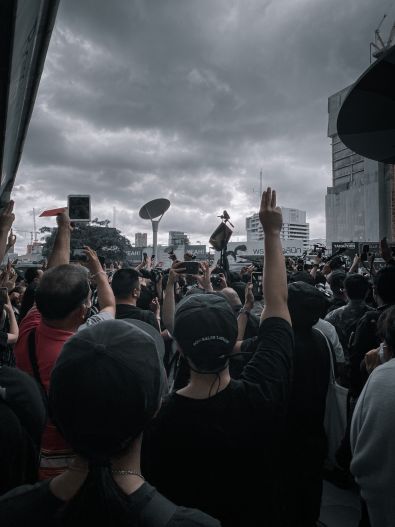
Thai Students Aim for Ambitious Political Change
Thak Chaloemtiarana, former SEAP director
"The current movement, while led by a handful of university students, has attracted younger students who have become politicized," said Thak Chaloemtiarana, a historian who has also been an administrator at Bangkok’s Thammasat University and Cornell University in the U.S.
Additional Information
“Agents of Unending Change: A Buddhist Approach to Identity” (Jonathan C. Gold, Princeton)

November 13, 2020
4:00 pm
Please join us for a virtual talk by Jonathan C. Gold, Associate Professor of Religion at Princeton University.
Buddhist thought provides a meta-identity theory. Doctrines such as dependent origination, emptiness, and karma can be used to theorize the ethics of adopting and ascribing socio-cultural identities. Professor Gold will argue in defense of a cultural reading of the doctrine of karma, and a karmic reading of culture. The cumulative, recursive, identity-forming nature of karmic causality under this view helps us discern otherwise occluded ethical implications of our actions. While we ordinarily think of ourselves as individual “agents,” a karmic perspective helps to enliven the idea of an “agent” as someone who “acts on behalf of” someone or something. It shows how, in all of our thoughts and actions, we are working on behalf of cultural forces that we often fail to see or understand. This provides a moral motivation for critical historical/cultural studies, which entails the exploration of the total assemblage of our karmic affordances and potentials, our “storehouse” (ālaya) of identities.
This event is funded by the GPSA and generously co-sponsored by the Department of Asian Studies, the Department of Religious Studies, the South Asia Program and the Southeast Asia Program. All are welcome to attend, and a Zoom link will be available upon registering through CampusGroups.
Please contact Bruno at bms297@cornell.edu for any special arrangements you may require in order to attend this event.
Additional Information
Program
East Asia Program
Southeast Asia Program
South Asia Program
Harry Dienes

Graduate Student
Degree Pursued: PhD
Anticipated Degree Year: 2026
Committee chair/advisor: Tom Pepinsky
Discipline: Government
Research Countries: Timor-Leste
Research Interests: Comparative and Historical Political Economy, State Institutions, Bureaucracy, and Development
Additional Information
Timothy Ravis

Graduate Student
Degree Pursued: PhD
Anticipated Degree Year: 2025
Committee Chair/Advisor: Jenny Goldstein
Discipline: Global Development
Primary Countries: Indonesia
Research Interests: The political ecology of energy, the political economy of the energy transition, state formation, environmental history
Additional Information
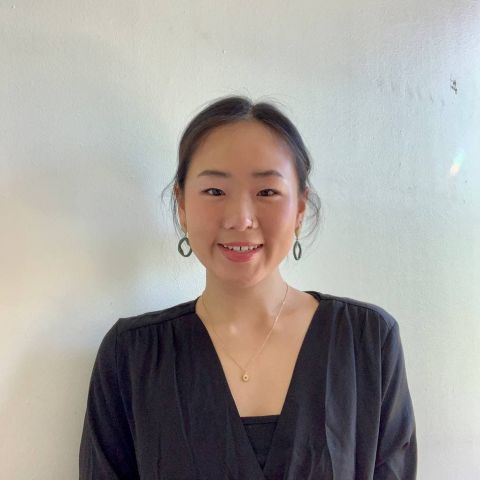
Neo Hui-Yuan
Graduate Student
Degree Pursued: PhD
Anticipated Degree Year: 2026-2027
Committee Chair/Advisor: Tom Pepinsky
Discipline: Government
Primary Countries: Indonesia
Research Interests: electoral Authoritarianism, democratic backsliding, contentious politics
Additional Information
Brian Sengdala
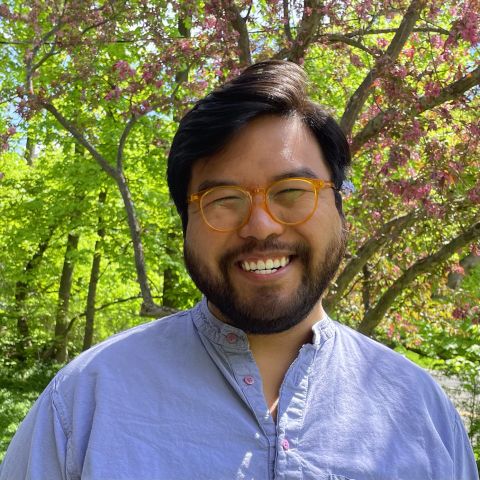
Graduate Student
Degree Pursued: PhD
Anticipated Degree Year: 2025-26
Committee Chair/Advisor: Arnika Fuhrmann & Nick Salvato
Discipline: Performing and Media Arts (PMA)
Primary Countries: Cambodia
Research Interests: Cambodian/Asian American art as memory work thinking through race, sound, music, performance, and disability
Additional Information
SEAP Bulletin Fall 2020

The stories in this issue serve as a tribute to SEAP’s strength and vitality over the past seventy years. Read about the history of Burma scholarship at Cornell; the history of Development Sociology and the study of agrarian-environmental change in Southeast Asia; carved wooden masks from a collection gifted to the Herbert F. Johnson Museum by the late Benedict R. O’G. Anderson; the SEAP Photography archive and much, much more.
Bulletin
Additional Information
GETSEA Consortium Picks Up Steam
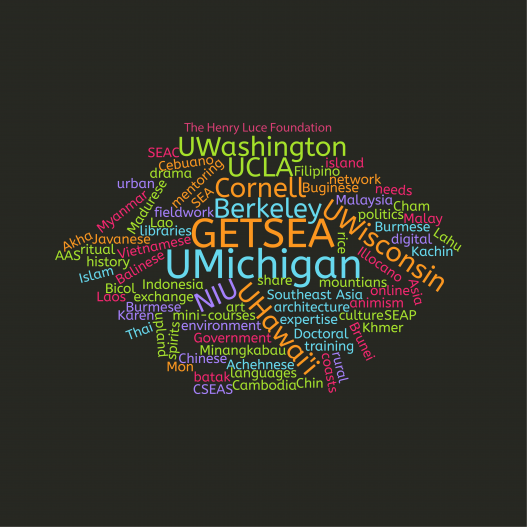
The consortium for Graduate Education and Training in Southeast Asian Studies (GETSEA) is getting underway!
GETSEA is a newly-established consortium supported by a grant from the Henry Luce Foundation through its Luce Initiative on Southeast Asia (LuceSEA). In collaboration with eight current National Resource Centers, GETSEA works to expand the collaborative infrastructure between the centers of Southeast Asian Studies.
This semester, GETSEA is supporting "A Workshop on Translation and Southeast Asian Studies," a six-part workshop on translating works from Southeast Asian languages into English. The workshop is run by Tyrell Haberkorn of the University of Wisconsin-Madison - a GETSEA consortium member - and offers graduate students a no-credit online opportunity to refine their work on translation for their intellectual/public/activist practice.
GETSEA continues to solicit proposals for similar “mini-course” proposals from faculty members at participating institutions for the winter and spring 2021.
Applications are also open for members of the Graduate Student Advisory Council, which offers graduate students at participating institutions an opportunity to influence the direction of the consortium. Work is beginning on the creation of a needs assessment to determine what faculty and graduate students at GETSEA institutions are most interested in addressing, including facilitating language instruction, cross-institutional mentoring, and more.
If you are interested in being involved in a focus group or in any other GETSEA initiative, please contact us at GETSEA@cornell.edu!