
Southeast Asia Program
Five Years After Sweden’s Gui Minhai was Kidnapped we Must Keep Fighting for His Release
Magnus Fiskesjö, EAP, SEAP, PACS
Magnus Fiskesjö, (EAP, SEAP, PACS) associate professor in anthropology, writes this opinion piece about the seizing of Swedish citizen Gui Minhai from Thailand by Chinese agents and its relevance for other countries that have seen their citizens seized by China.
Additional Information
Thai Pro-Democracy Demonstrations Persist in Face of Protest Ban
Tamara Loos, SEAP
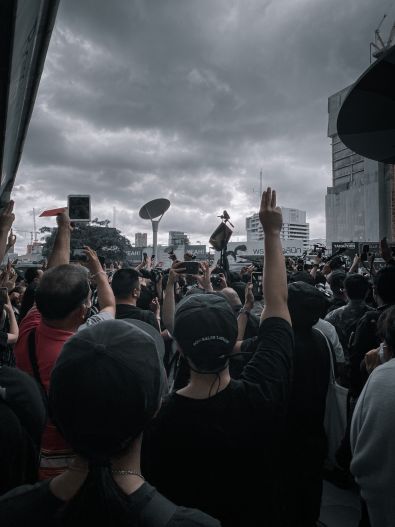
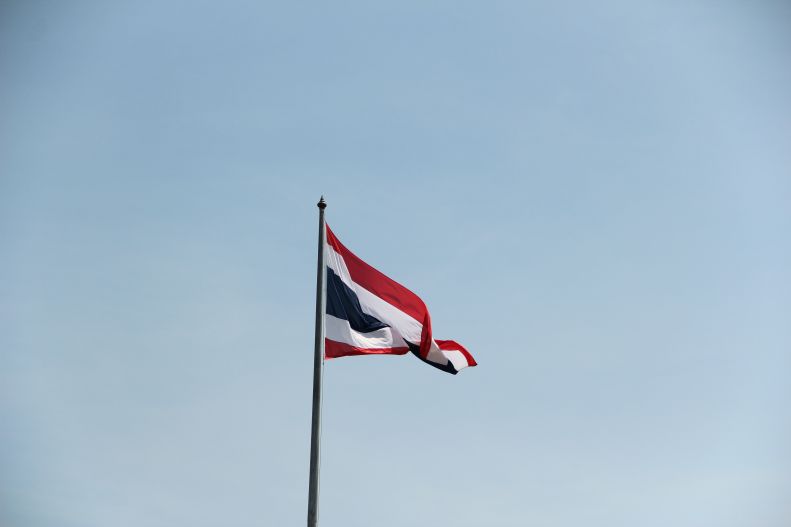
"The regime’s declaration of a state of emergency offers a pretext for a crackdown on protests not just in Bangkok, but in cities in the north, south and northeast,” says Tamara Loos, professor of history.
Additional Information
Uneasy Military Encounters: The Imperial Politics of Counterinsurgency in Southern Thailand

Uneasy Military Encounters presents a historically and theoretically grounded political ethnography of the Thai military's counterinsurgency practices in the southern borderland, home to the greater part of the Malay-Muslim minority. Ruth Streicher argues that counterinsurgency practices mark the southern population as the racialized, religious, and gendered other of the Thai, which contributes to producing Thailand as an imperial formation: a state formation based on essentialized difference between the Thai and their others.
Book
25.95
Additional Information
Program
Type
- Book
Publication Details
Publication Year: 2020
ISBN: 9781501751332
“Why Study Buddhism in a Liberal Arts Education?” (Jane Marie Law, Cornell University)

October 30, 2020
4:00 pm
Please join us for a virtual talk by Jane Marie Law, Associate Professor of Asian Studies here at Cornell University.
Professor Law's research explores the interface between living communities and religious ideologies and praxis, with fieldwork as a core methodology. Her early work focused on the ritual uses of human effigies in Japan, and explored how puppetry represents a kind of ritual logic. From this work, she became interested in issues of cultural memory and memorialization of atrocity. Recently, she has turned her attention to how religious communities participate in debates and actions concerning ecological healing or degradation, and movements toward or away from sustainable living. Her current writing explores the activities of marginal intentional religious communities presenting models of transition to ecologically sustainable living. The questions she is exploring are wide reaching, allowing a variety of cases and questions to be explored in her work: What ecological knowledge is the particular community protecting and developing? What religious ideas, ideologies and epistemologies are being employed to explain the reasons for the protection and development? Do these communities use this ecological knowledge and lens as an outreach to their broader lay religious contexts? Do these communities employ any languages of morality or ethics to enhance their conservation and protection? How do they translate what they are doing to a wider audience outside their religious communities? In the end, do these intentional communities have answers to questions of survival (food security, models of communal living, habitat conservation and resource management) that have not been adequately explored? In her research, she is committed to developing methodologies that enable scholars and communities to work together to find answers to shared questions.
This event is funded by the GPSA and generously co-sponsored by the Department of Asian Studies, the Department of Religious Studies, the South Asia Program and the Southeast Asia Program. All are welcome to attend; please register through CampusGroups to receive the Zoom link.
Additional Information
Program
East Asia Program
Southeast Asia Program
South Asia Program
Seeking Origins of the SEAP Brown-Bag Lectures

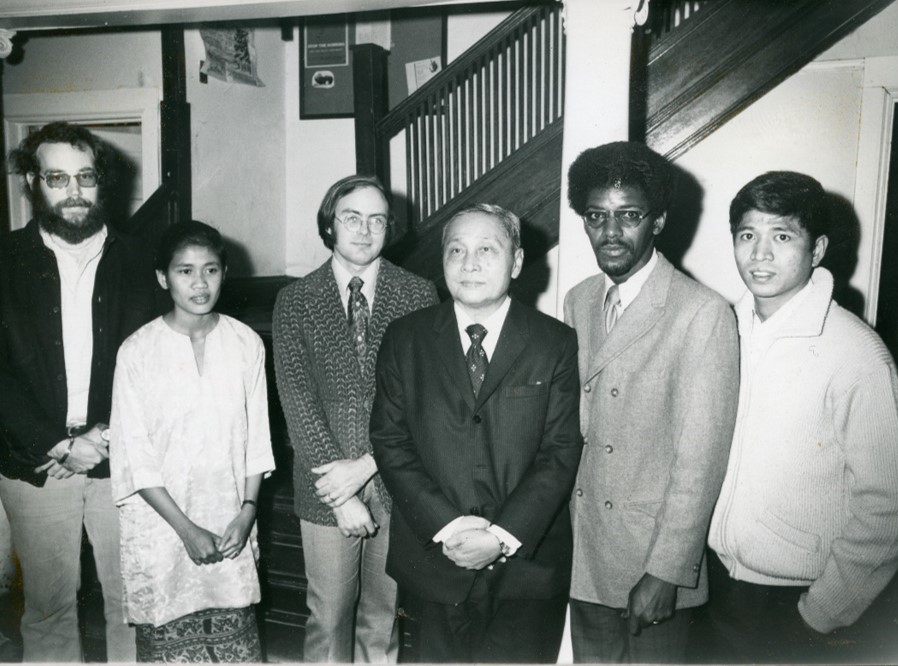
If you have any information about the brown bags from the early years and how they were organized, who spoke, or other details, we want to hear from you! Were you a member of the SEAP graduate student committee and can you tell us about how the group functioned during your era? Can you help us identify who is in photos taken at 102 West Avenue?
The Southeast Asia Program at Cornell is renowned for many things, not the least of which is the enduring and committed involvement of graduate students in the weekly lecture series. Speakers often mention feeling honored to present their work, and SEAP PhD candidates consider it a rite of passage.
For decades these were called "Brown-Bag Lunch Talks" and the name was still used long after food began to be served at the Thursday gatherings. The Brown Bags were renamed the "Gatty Lectures" in 2015 in honor of Ronald (PhD '57) and Janette (PhD '58) Gatty, whose endowment and generous bequest supports a number of graduate student-led activities. Despite the new name, and the shift to virtual talks due to the pandemic, the camaraderie and sense of intellectual community persists.
For SEAP's 70th anniversary a number of projects are underway to rediscover and celebrate SEAP's histories. One question that we are looking into is the origin of the graduate student committee and the brown bag talks. By the early 1970s both were an institutionalized part of SEAP and part of the weekly rhythm at 102 West Avenue. We have been reconstructing the names of student committee members and co-chairs, but are still missing information, especially from the earlier years. If you have any information about the brown bags from the early years and how they were organized, who spoke, or other details, we want to hear from you!
Were you a member of the SEAP graduate student committee and can you tell us about how the group functioned during your era? Can you help us identify who is in these two photos (and others we will be posting on SEAP's Facebook page)? We need your help. To send us materials digitally and give us permission to use your photos, stories, reflections on SEAP you may use this LINK. If you can identify individuals in the photos or have any questions, email us at seaphistories@cornell.edu.
Additional Information
Program
This Week: Covid-19 in Indonesia
Two events this week will focus on Covid-19 in Indonesia, with a third panel on language training in Indonesian. Register now for this week's Gatty Lecture and the 20th Northeast Conference on Indonesia this Saturday!
Gatty Lecture: Indonesia's Im/moral Turn: Drivers and Consequences, Especially in a Covid-19 World
Thursday, October 22, 2020 at 8:00pm EDT
Register now for this week's Gatty Lecture by Sharyn Davies, Associate Professor and Director of the Herb Feith Indonesian Engagement Centre at Monash University.
Indonesia is experiencing an im/moral turn. We see this in the push to make all sexual activity outside heteronormative marriage illegal. If that bill is passed, it would be a radical move for a country that’s never criminalised homosexuality, and that has for the most part considered private consenting adult sexual activities a matter for individuals not the state. Other examples of the im/moral turn include the 2016 ‘LGBT crises’ and the 2020 proposed Family Resilience bill. Such more are stark clues revealing the direction Indonesia is taking when it comes to punitive sexual surveillance. The antecedents of these moves—which we might collectively call Indonesia’s im/moral turn—are much deeper and can be traced to the early years of democratic reform.
This talk will explore the drivers and consequences of Indonesia’s im/moral turn, with reflection on the impact of Covid-19. In particular I will focus on the impact of Covid-19 and the increasing punitive surveillance of sexuality on the provision of healthcare.
"Panel Bahasa" Indonesian and Regional Language Trainings across the Nusantara Archipelago
Friday, October 23, 2020 at 8:00pm EDT
The Indonesian Programs at Cornell and Yale are going to host virtual Panel Bahasa Indonesian and Regional Language Trainings across the Nusantara Archipelago to commemorate the 92nd Youth Oath on Friday, October 23, 9-10:30 PM EST. The panel will be the pre- conference event for the 20th Northeast Conference on Indonesia, a bilingual conference hosted by Cornell and Yale since 2008. The conference will take place on Saturday, October 24, 9:00 AM - 05:00 PM EDT.
The panel will include presentations and information sharing from nine institutions representing three Indonesian time zones: Eastern Zone (Universitas Cenderawasih in Papua Province, Universitas Pattimura in Molucca Province, Universitas Nusa Cendana in Northeastern Islands Province); Central Zone (Mataram Lingua Franca Institute in Southwestern Islands Province, Universitas Lambung Mangkurat in South Kalimantan Province, Universitas Atma Jaya in South Sulawesi Province); and Western Indonesia (Universitas Satya Wacana in Central Java Province, Universitas Bung Hatta in West Sumatera Province, Universitas Sumatera Utara in North Sumatera Province). These institutions will present the Indonesian and local language trainings they offer to researchers and Indonesianists around the world who have done, are doing, and will be conducting research in the archipelago.
20th Northeast Conference on Indonesia: "Public Health and Well-Being in Indonesia: COVID-19 and Beyond"
Saturday, October 24, 2020 at 9:00am EDT
In cooperation with the Yale Indonesia Forum, the Cornell Indonesian Association will be hosting the 20th Northeast Conference on Indonesia on October 24, 2020 (Saturday) on the theme "Public Health and Well-Being in Indonesia: COVID-19 and Beyond." The keynote address, delivered by Siddharth Chandra from Michigan State University, will be held at 11am. This conference will be held as a part of the Southeast Asia Program's 70th Anniversary, a year-long celebration of SEAP.
Read more about the schedule and the speakers here, and please register for the conference. You may direct any questions to neconf20@gmail.com. We look forward to stimulating conversations about public health in Indonesia this Saturday!
COVID-19 and the responses to contain it have brought into sharp relief several health-related issues in Indonesia that encompass social, political, and economic concerns. The pandemic has highlighted, among other concerns, a reliance on foreign medical supplies, strained government resources, and a lack of healthcare providers in parts of the archipelago, prompting the Indonesian government to announce new efforts to bolster health security and stave off further economic decline. In response to this contemporary moment, the 20th Northeastern Conference on Indonesia, hosted by the Cornell Indonesian Association in cooperation with the Yale Indonesia Forum, will focus broadly on the state of health in Indonesia, whether in the past or in the present.
Additional Information
Program
Juno Salazar Parreñas

Associate Professor, Science and Technology Studies and Feminist, Gender and Sexuality Studies
Juno Salazar Parreñas is a feminist science studies scholar who examines human-animal relations, environmental issues, and efforts to institutionalize justice. Parreñas’ book, Decolonizing Extinction: The Work of Care in Orangutan Rehabilitation (Duke UP, 2018) received the 2019 Michelle Z.
Additional Information
The King's Money: Thailand Divided Over the $40 bn Question
Tamara Loos, SEAP
"The demands by protesters to audit the king’s finances are unprecedented,” says Tamara Loos (SEAP), professor of history. “But so is the way the king utilizes what were formerly state funds."
Additional Information
Realism as an Attitude as an Attitude
December 11, 2020
8:00 pm
Part of the Ronald and Janette Gatty series
Roger Nelson, Curator, National Gallery Singapore
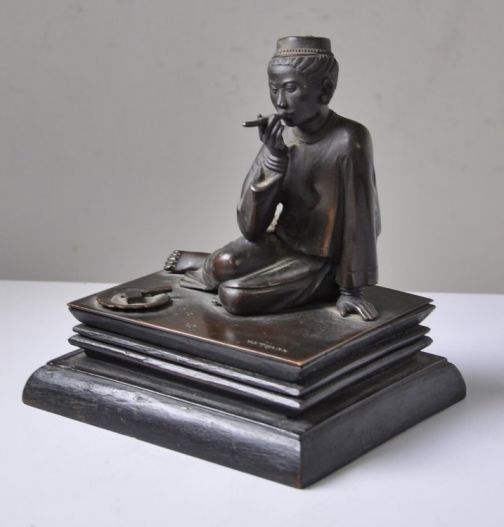
Image credit: Maung Tha Din. Not Titled (Seated Woman Smoking a Cheroot). c. 1920s-1930s. Bronze on wooden base. Collection of National Gallery Singapore.
A seated woman smoking a cheroot; a man chopping wood; a woman with a parasol: these are some common subjects found in cast metal figurines known as “Pegu bronzes.” Made in Bago, Myanmar in the 1920s and 1930s and shown in British imperial “handicrafts” exhibitions, “Pegu bronzes”—like many colonial-era “crafts”—have mostly escaped scholarly attention, and rarely been considered in relation to discourses of artistic modernity. But might “Pegu bronzes” reward closer scrutiny, for art historians studying the emergence of realism in the modern art of Southeast Asia? The figurines closely mirror compositions found in contemporaneous photographs made in Myanmar, and their finely detailed and lifelike forms emerged in parallel with Western-style representational painting in that context, which is often considered a milestone in histories of modern art in the region.
What might “realism” have comprised, in 19th and early 20th-century Southeast Asia? Curators of the 1994 exhibition Realism as an Attitude emphasised the importance of Asian artists in the 1990s “[taking] a stance that indicates a desire to actively interact with and express the reality in which they live.” This attitudinal realism was positioned in contradistinction to “realism in the narrow sense of the word, which denotes a formal style or the act of copying of something.” But might we now revisit the stylistic and mimetic forms of earlier realisms in the region?
This lecture asks if “Pegu bronzes” and other examples of metalwork, woodcarving, and other “crafts” might find a place within art-historical understandings of the emergence of Western-style naturalistic representation in Southeast Asian art. Drawing on curatorial approaches to the period at National Gallery Singapore, the lecture explores various intersections, including those between media, between representations in two and three dimensions, between Buddhist statuary and colonial commerce, between portraits and “types,” and between art and craft.
Additional Information
Program
Einaudi Center for International Studies
Southeast Asia Program
Tulisan Jawi: Decolonizing the “Modern” and the “Islamic” in Indonesian Art
December 3, 2020
12:40 pm
Part of the Ronald and Janette Gatty series
Anissa Rahadiningtyas, PhD candidate, History of Art and Visual Studies Department, Cornell University
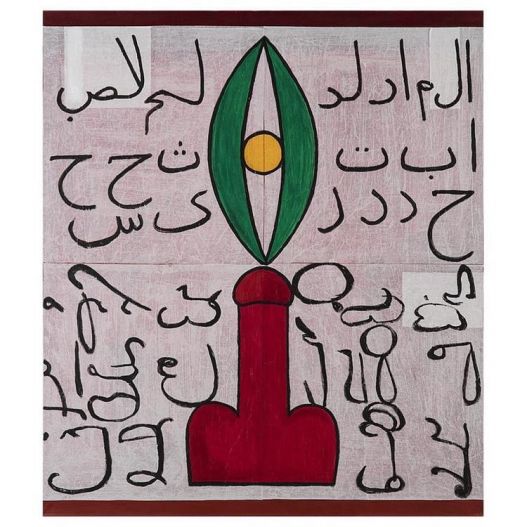
On a scattered typed up notes for an article or a talk in English, Ahmad Sadali (1924-1987) expressed his observation on the conditions that hindered the development of seni rupa Islam or Islamic art in Indonesia. Sadali identified that the loss of Arabic and its permutation of jawi as a writing script due to the colonial education system contributed to removing Islam further from the consciousness and daily practices of the people, intellectuals, and artists in Indonesia. Tulisan Jawi or jawi script is a localized writing system derived from Arabic that circulated in many parts of the Indo-Malay Archipelago. Jawi is the evidence of the adaptability of Islam and transmutability of Arabic script, and their profound influence in the archipelago since before the fourteenth century. In this paper, I will focus on the works of four artists: Ahmad Sadali, A.D. Pirous (b. 1932), Haryadi Suadi (1939-2016), and Arahmaiani (b. 1961), who explore the textual and artistic capacity of jawi in their contemporary artistic practices since the 1970s. I argue that each of the artists’ method and conviction have the potential to decolonize not only the practice of art-making but also the transmission of knowledge by reclaiming the tradition that was severely marginalized by the Dutch colonial education in the nineteenth and twentieth centuries. Furthermore, the artists’ engagement with jawi brings to the fore distinct memories and experiences as each proposes their heterogeneous reinterpretations of the notions of becoming “modern” and “Islamic.”
Additional Information
Program
Einaudi Center for International Studies
Southeast Asia Program