
Southeast Asia Program
The Social and Political Lives of G. William Skinner and Chinese Society in Thailand
November 20, 2020
8:00 pm
Part of the Ronald and Janette Gatty series
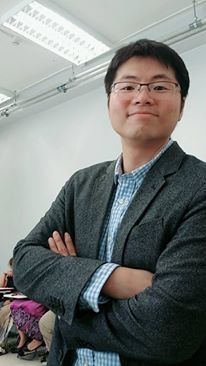
Sittithep Eaksittipong, Lecturer, Department of History, Chiang Mai University
In this talk, I propose the exploration of the social and political lives of G. William Skinner and his classic, Chinese Society in Thailand, in American, Thai and Chinese Academia. Unlike previous scholarship that tries to evaluate either the reliability of the book’s content or its argument on the assimilation of the Chinese in Thailand, this talk explores the political and social aspects of the book and its author. It explores how the book became an authoritative text in the studies of overseas Chinese and its role in creating perceptions toward overseas Chinese, particularly the Chinese in Thailand during the Cold War. Furthermore, I trace the uses and circulation of the book and the knowledge that it creates in American, Thai and Chinese academia to see how the book has created different meanings and played different roles among scholars.
Additional Information
Program
Einaudi Center for International Studies
Southeast Asia Program
Dirty Coffee: Scandal, Scrutiny, and Food Safety in Vietnam
November 12, 2020
12:40 pm
Part of the Ronald and Janette Gatty series
Sarah G. Grant, Assistant Professor of Anthropology, California State University, Fullerton
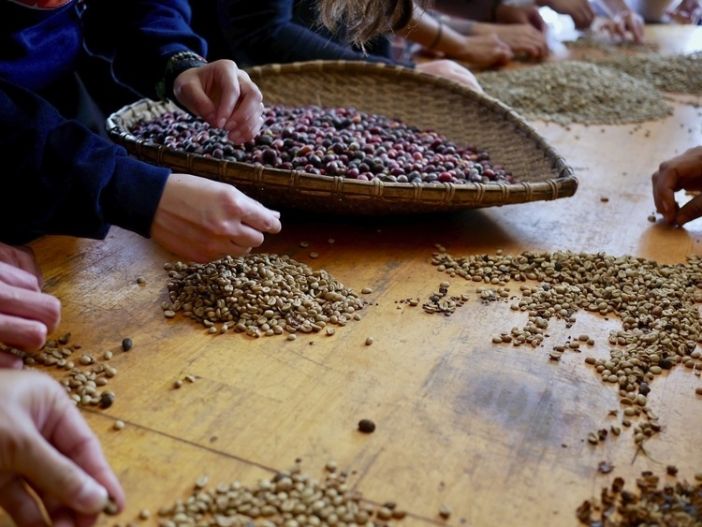
This talk traces the emergence of “dirty coffee” in Vietnam across the 1990-2000s coffee production and export boom. I use the term “dirty” to position several iterations of Vietnamese coffee in the past decade: green Robusta (Coffea canephora) coffee beans that commingle with twigs, pebbles, and other debris; “fake” coffee, or coffee that has been adulterated with additives such as corn, soybean, or manganese dioxide; and the microbial worlds of coffee where mycotoxins lurk, threatening farmer livelihoods and consumer health. I explore the ways in which industrial coffee production perpetuates food safety scandals while simultaneously maintaining regulatory systems of governance. Drawing upon ethnographic data, I argue that when coffee is subject to the scrutiny of the state, it is part of a dynamic governing logic, ultimately becoming a way for regulatory authorities to perform effective rule while reinforcing the notion that Vietnam produces clean and safe coffee for domestic and global consumption.
Additional Information
Program
Einaudi Center for International Studies
Southeast Asia Program
Health Sector Contestation in Cold War Laos, 1950-1975
November 6, 2020
8:00 pm
Part of the Ronald and Janette Gatty series
Kathryn Sweet, Social Development Advisor and Independent Scholar, Vientiane, Lao PDR
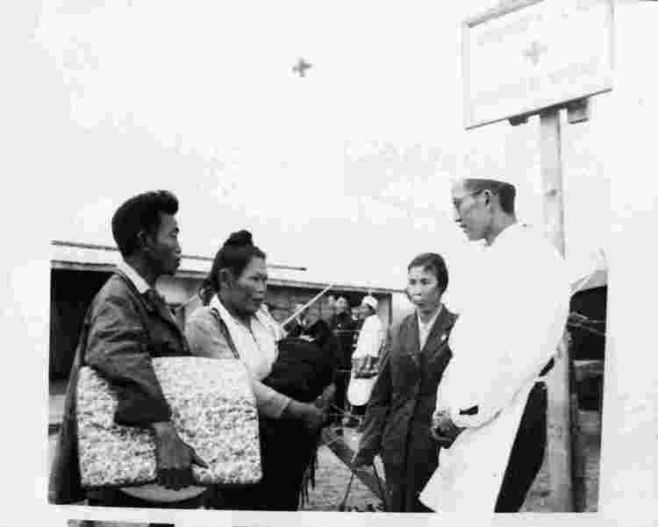
The presentation will explore the reasons for and the results of contestation within the Lao health sector during the initial decades of the Cold War from the early 1950s to 1975.
Laos’ small health sector diverged rapidly after the colonial health service transferred to the Royal Lao Government in April 1950. At least three civilian services and two military services, and a modest private sector, emerged in place of the colonial health service. The various new health services resulted not only from Laos’ post-colonial status but also from the nation’s position in the Cold War politics of Southeast Asia. In the Royal Lao Government’s zone, under the administration of the RLG and supported by the United States and other capitalist nations, civilian and military healthcare services separated by the late 1950s, and were supported by a US-funded, parallel and predominantly rural health network run by Filipino NGO, Operation Brotherhood. In the ‘Liberated Zone’, administered by the Lao Patriotic Front (often referred to as the Pathet Lao) and supported by its North Vietnamese neighbor, the Soviet Union, and other socialist nations, a civilian health service under the Central Health Committee split from its military counterpart in the mid-1960s. These various health services were motivated by different priorities, supported by different international donors, and employed different technical languages and standards of training and operation.
The presentation will provide much-needed context for the diverse health infrastructure, staffing, and professional and technical standardization inherited by the Lao PDR regime and the Ministry of Health’s challenges when confronted with the task of uniting these divergent health services into a uniform national healthcare system.
Additional Information
Program
Einaudi Center for International Studies
Southeast Asia Program
“Exploring Buddhist Manuscript Cultures of Thailand through the indigenous Vaṃsa Literature” (Peera Panarut, Universität Hamburg)

October 16, 2020
4:00 pm
Please join us for a virtual talk by Dr. Peera Panarut, a specialist in the epigraphic and manuscript culture of Thailand, including the Buddhist manuscript tradition. This event is funded by the GPSA and generously co-sponsored by the Department of Asian Studies, the Department of Religious Studies the South Asia Program and the Southeast Asia Program. All are welcome to attend, and a Zoom link will be available upon registering. Please contact Bruno at bms297@cornell.edu for any special arrangements you may require in order to attend this event.
Additional Information
Program
South Asia Program
Southeast Asia Program
Sharp Prize History
The establishment of the Southeast Asia Program’s Lauriston Sharp Prize sprang from a SEAP faculty meeting in October 1973, when George McT. Kahin suggested that funds be allocated to establish an internal prize for graduate students in honor of Goldwin Smith Professor of Anthropology and SEAP founder, Lauriston Sharp (1907-1993).
SEAP Celebrates 70th Anniversary
The Southeast Asia Program 1950-2020
SEAP recently launched a year-long celebration of the program's 70th anniversary.
Stay tuned for the video and the many upcoming exhibits, projects, and activities. The SEAP Fall Bulletin, coming in mid-October, will be feature articles related to this milestone. If you would like to contribute to any of these projects or update your data with SEAP for a new edition of the SEAP Directory, please contact seap@cornell.edu.
Additional Information
Program
Connecting Art Histories Across Africa and Asia
October 12, 2020
11:15 am
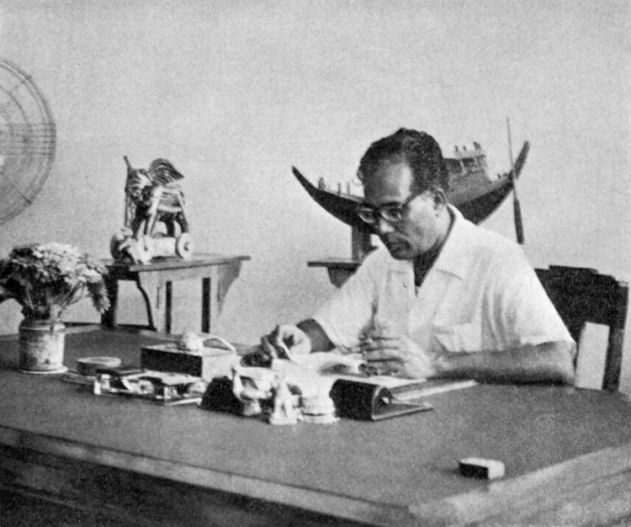
This presentation reflects on the Connecting Modern Art Histories in and across Africa, South and Southeast Asia (MAHASSA) project, which brought together a team of international faculty and emerging scholars to investigate the cultural histories of these regions. Shaped by shared developments, these regions are marked by similar experiences that include the rise of modern art practices associated with the withdrawal of colonialism and the consolidation of nationalism, the founding of institutions such as the art school and the museum, and increasing exchange with international metropolitan centers via travel and the movement of ideas through publications and exhibitions. MAHASSA emphasized a connected and contextualized approach to better understand both common developments as well as divergent trajectories, and included two intensive 10-day workshops, Hong Kong (Aug 2019), and Dhaka (Feb 2020).
MAHASSA is a partnership between Asia Art Archive, Dhaka Art Summit, and Cornell University’s Institute for Comparative Modernities, and has been generously supported by the Getty Foundation’s Connecting Art Histories initiative.
For more details on MAHASSA, see https://www.past.dhakaartsummit.org/connectingarthistories
This event is co-organized by the Institute for Comparative Modernities (ICM) and the South Asia Program (SAP).
Advanced Registration is Required.
Presenters include:
Diana Campbell Betancourt is a Princeton educated American curator working in South and Southeast Asia. Since 2013 she has served as the Founding Artistic Director of Dhaka-based Samdani Art Foundation and is Chief Curator of the Dhaka Art Summit, leading the 2014, 2016, 2018, and 2020 editions.
Iftikhar Dadi is Associate Professor and Chair of Cornell University’s Department of History of Art, Director of the South Asia Program, and Board Member of the Institute for Comparative Modernities. He researches art from a global and transnational perspective, with emphasis on questions of methodology and intellectual history.
Anissa Rahadiningtyas is a PhD candidate in the Department of History of Art at Cornell University. She received an MA from the Faculty of Art and Design, Bandung Institute of Technology in Indonesia. Her primary research area is the history of modern and contemporary art in Indonesia.
Muhammad Nafisur Rahman is a PhD student in Architecture at the College of Design, Architecture, Art, and Planning, University of Cincinnati, and Assistant Professor in the School of Design. His research focuses on Dhaka’s urban fabric and its complex visual amalgamation of building facades, images, symbols, and letterforms.
Amie Soudien is a curator, researcher and art writer from Cape Town, South Africa. Her interests include histories of slavery in Cape Town, archival studies, gender, sexuality, and emerging artists from Africa and the diaspora. Soudien is currently a PhD student at the University of the Witwatersrand.
Akshaya Tankha is an art historian working on modern and contemporary South Asian art and visual culture, with a focus on aesthetics and politics, postcolonialism, and Indigeneity in India. Tankha completed his PhD from the University of Toronto and will begin a postdoctoral fellowship at Yale University in November 2020.
John Tain is Head of Research at Asia Art Archive, where he leads a team in Hong Kong, New Delhi, and Shanghai. In addition to MAHASSA, he has organized several exhibitions, and is a series editor for Afterall Exhibition Histories. He was previously a curator at the Getty Research Institute.
Ming Tiampo is Professor of Art History, and co-director of the Centre for Transnational Cultural Analysis at Carleton University. She is interested in transcultural models and histories that provide new structures for understanding and reconfiguring the global. She has published on Japanese modernism, global modernisms, and diaspora.
Additional Information
Program
Einaudi Center for International Studies
South Asia Program
Southeast Asia Program
M.A. in Asian Studies

This program is designed for students who did not major in Asian Studies as undergraduates or who want more work in language and area studies before entering the professional, business, or Ph.D. fields. One to two years of study is required, depending on language proficiency.
The Field of Asian Studies has three concentrations, and each student will choose one: East Asian studies, South Asian studies, or Southeast Asian studies. Students are, however, welcome to work between these geographical boundaries as they attain mastery of the language(s) and culture of one.
See an overview of the Master of Arts in Asian Studies at Cornell; full details about the Master in Asian Studies and all of its requirements are available from the Department of Asian Studies.
Requirements
The Field of Asian Studies has three concentrations, and each student will choose one: East Asian studies, South Asian studies, or Southeast Asian studies. Students are, however, welcome to work between these geographical boundaries as they attain mastery of the language(s) and culture of one.
Language Competency
Language expertise is considered a prerequisite for doing competent research in any area of Asian Studies. Thus students should come to Cornell with that expertise or work toward it in the course of their academic training here. The Field expects all students to attain to a minimum of a second-year level competency by the completion of the M.A. degree. Most students will go beyond that level.
Coursework
A plan for appropriate coursework should be developed in consultation with one’s committee chair. All students must do at least two full-time semesters of coursework that usually includes 6–8 courses, and can consist of language classes, specialized courses in Asian Studies, disciplinary work outside of Asian Studies, seminars, and independent studies. Students must receive a grade of B or above in courses counted toward the degree.
Thesis
All students will submit a final thesis on a project developed in consultation with their committees. The thesis may be a more developed version of a seminar paper or papers that has been expanded and subjected to additional revision and review. Theses are typically 40-50 pages or more in length.
Additional Information
Anthropology Colloquium: Juno Salazar Parreñas
October 2, 2020
3:00 pm
“Lions, Apes, and a More than Human Anthropology against White Supremacy”
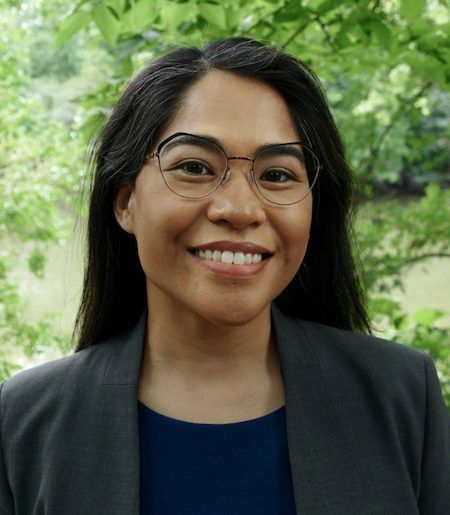
Juno Salazar Parreñas is a feminist science studies scholar who examines human-animal relations, environmental issues, and efforts to institutionalize justice. Parreñas’ book, Decolonizing Extinction: The Work of Care in Orangutan Rehabilitation (Duke UP, 2018) received the 2019 Michelle Z. Rosaldo Prize, biennially awarded by the Association for Feminist Anthropology for a first book, an honorable mention for the 2019 New Millennium Prize biennially awarded by the Society for Medical Anthropology, an honorable mention for the 2019 Diana Forsythe Prize jointly awarded by the Society for the Anthropology of Work and the Committee for the Anthropology of Science, Technology, and Computing, and an honorable mention for the 2020 Harry Benda Prize from the Association for Asian Studies. She is the editor of Gender: Animals (Macmillan Interdisciplinary Handbooks, 2017). Her article, “Producing Affect: Transnational volunteerism in a Malaysian orangutan rehabilitation center,” received the 2013 General Anthropology Division’s Exemplary Cross-Field Scholarship Prize. She is also a featured columnist in the Los Angeles based monthly magazine The Lesbian News.
Additional Information
Program
Southeast Asia Program
Global Challenges to Democracy: Perspectives from Europe, Asia, Africa, and Latin America

October 2, 2020
11:00 am
Over the past decade, democracy has been in retreat in a large number of countries in different regions, at least partially reversing the wave of democratization that swept across much of the world in the late 20th century. This webinar explores patterns of "democratic backsliding" in different world regions and their implications for democratic rule and its political resiliency in the face of autocratic challenges.
Panel: Valerie Bunce, Tom Pepinsky, Rachel Riedl, and Kenneth Roberts
Co-sponsored by the Mario Einaudi Center for International Studies, Latin American Studies Program, Institute for African Development, Institute for European Studies, and Southeast Asia Program.
Please register through the following link:
https://cornell.zoom.us/webinar/register/WN_PWKFidVjSgy3Pwxf7xmmXg
Additional Information
Program
Einaudi Center for International Studies
Latin American and Caribbean Studies
Southeast Asia Program
Institute for African Development
Institute for European Studies