
Einaudi Center for International Studies
Fallen Angels

March 18, 2021
12:01 am
1996 > Hong Kong > Directed by Wong Kar Wai
With Leon Lai, Michelle Reis, Takeshi Kaneshiro, Charlie Yeung
Wong Kar Wai's take on love and loss in a '90s, urban, neon-lit setting, but a darker film than its companion piece, Chungking Express. "An exhilarating rush of a movie. Go-for-broke visual bravura." (LA Times) In Cantonese & Mandarin. Subtitled. Cosponsored with the East Asia Program.
1 hr 36 min
We will start taking reservations one week in advance of a film's first play date.
Reservations can be made here:
https://cinema.cornell.edu/virtual-cinema-order-form
Additional Information
Program
East Asia Program
Einaudi Center for International Studies
The Cunning of Capital: Dalit and Queer Aesthetics of Resistance, by Nimanthi Perera-Rajasingham and Ani Maitra
March 8, 2021
11:00 am
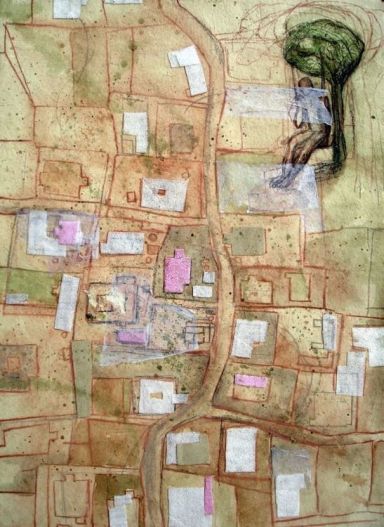
Rajasingham’s talk will draw from her book, Assembling Ethnicities in Neoliberal Times, to argue that Sri Lanka’s thirty-year ethnic war, and post-conflict contexts must be understood as shaped by the forces of global capitalism. She makes her arguments through an examination of ethnographic fictions— work invested in documenting the external world—to unpack how war and neoliberalism intersect. The talk will turn to the work of Shobasakthi, a Paris-based Dalit writer and actor, who fled the Tamil Tigers as a child soldier during Sri Lanka’s separatist war. In his novel Gorilla and the film Dheepan, he depicts life in Sri Lanka and Paris as conditioned by, “neoliberalism in the shadows,” an economic form deeply entangled in ethnonationalism and racism. The talk will explore, further, how the characters in novel and film resist racial capitalism through formal aesthetic experiments and embedded forms of witnessing.
Maitra’s talk will argue for the need to see queer identity politics in contemporary India as a multiply mediated fragmentation regulated by neoliberal capital. The first half of the talk will scrutinize the neoliberal logic of diversity shaping the rhetoric of a queer film festival in India—the KASHISH Mumbai International Queer Film Festival—and its strategic cinephilic alliance with the corporatized language of LGBTQ+ rights. The second half of the talk will examine how the film Devi (Karishma Dube, 2017) troubles this logic of inclusion through a sustained aesthetic attention to the gendered and classed inequalities mediating and splitting lesbian identity in the post-colony.
Nimanthi Perera-Rajasingham is associate professor of English and Women’s Studies at Colgate University. She teaches Marxism, Postcolonial Studies, Critical Race and Ethnic Studies and Feminism. Her book, Assembling Ethnicities in Neoliberal Times: Ethnographic Fictions and Sri Lanka’s War was published in the series, Critical Insurgencies, out of Northwestern University Press. She is presently working on her second book project on Global Apartheid and the War on Terror, which discusses the ongoing and recalibrated forms of segregation that the War on Terror has enabled.
Ani Maitra is associate professor of Film and Media Studies at Colgate University. His teaching and research interests span the fields of postcolonial and diaspora media cultures and gender and sexuality studies. His essays have appeared in edited volumes and journals like Camera Obscura, Continuum, differences, Film Quarterly, Jindal Global Law Review and World Records. Maitra is the author of Identity, Mediation, and the Cunning of Capital (Northwestern University Press, 2020).
Image: Thamotharampillai Shanaathanan, Grandma’s Courtyard II, 2004. Copyright © by Thamotharampillai Shanaathanan.
Additional Information
Program
Einaudi Center for International Studies
South Asia Program
Belgium to Congo: Colonialism Reparation and Truth & Reconciliation Commissions
February 24, 2021
10:30 am
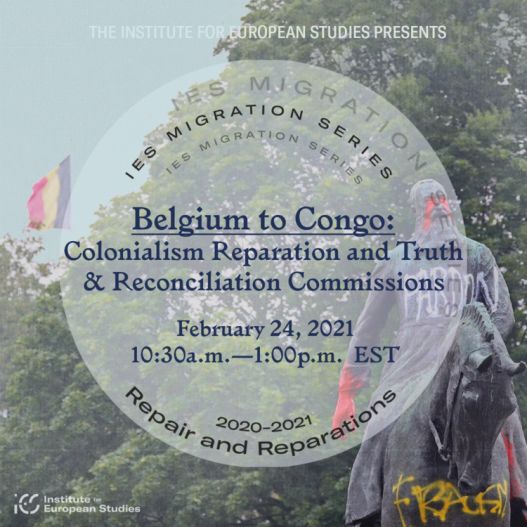
This panel will explore the theme of reparations and restitutions to bring justice to the residual inequalities caused by slavery and colonization. It will focus on the recent developments to institute a sort of a Truth and Reconciliation Commission in Belgium, which was approved in Summer 2020 in the form of a parliamentary Special Commission to scrutinize the country’s colonial past. The multidisciplinary panel puts into conversation scholars who will comment on the history of Belgium colonization in Congo, on the recent movements in conjunction with Black Lives Matter including the toppling of the King Leopard II Monument that sparked the demand for accountability, and on the current debate around truth and reconciliation in Belgium, as well as its place in other transitional justice processes around the world.
Speakers’ list:
Pablo de Greiff, New York University
Amah Edoh, Massachusetts Institute of Technology
Pedro Monaville, New York University Abu Dhabi
Liliane Umubyeyi, Avocats Sans Frontières
Moderated by Esra Akcan, Cornell University
The panel is sponsored by the IES of Einaudi Center for International Studies at Cornell University. It is organized as part of IES’ Migration Series for its AY 2020-21 theme Repair and Reparations. You may find information about the past events including their video recordings here: https://einaudi.cornell.edu/programs/institute-european-studies/events/…
Additional Information
Program
Institute for European Studies
Einaudi Center for International Studies
Institute for African Development
The First Political Order: How Sex Shapes Governance and National Security Worldwide

February 18, 2021
11:25 am
Valerie Hudson joins the Reppy Institute for Peace and Conflict Studies (PACS) for a discussion of her new book, "The First Political Order: How Sex Shapes Governance and National Security Worldwide" (Columbia University Press, 2020).
The author will join us for a discussion of their work. No formal presentation will be given; please read in advance. A link to the reading will be sent with the registration confirmation.
About the author
Valerie Hudson, University Distinguished Professor and George H.W. Bush Chair, Professor of International Affairs at Texas A&M University
Dr. Valerie Hudson, University Distinguished Professor, joined the faculty of the Bush School in 2012 as the holder of the George H. W. Bush Chair. An expert on international security and foreign policy analysis as well as gender and security, she received her PhD in political science at The Ohio State University and comes to Texas A&M University from a senior faculty position at Brigham Young University. Hudson directs the Bush School’s Program on Women, Peace, and Security.
In 2009, Foreign Policy named her one of the top 100 Most Influential Global Thinkers. Her coauthored book Bare Branches: Security Implications of Asia’s Surplus Male Population, and the research it presents, received major attention from the media with coverage in the Wall Street Journal, New York Times, Financial Times, Washington Post, BBC, CNN, and numerous other outlets. The book also received two national book awards. Another coauthored book, Sex and World Peace, published by Columbia University Press, was named by Gloria Steinem as one of the top three books on her reading list. A recent book, with Patricia Leidl, is The Hillary Doctrine: Sex and American Foreign Policy, published in June 2015. Her newest coauthored book is The First Political Order: How Sex Shapes Governance and National Security Worldwide (Columbia University Press, 2020). She was also recently named a Distinguished Scholar of Foreign Policy Analysis by the International Studies Association.
Dr. Hudson has developed a nation-by-nation database on women, the WomanStats Database (http://www.womanstats.org/), that has triggered both academic and policy interest (the latter includes its use by both the US Senate Foreign Relations Committee and various agencies of the United Nations). Using this data, Hudson and her co-principal investigators from the WomanStats Project have published a wide variety of empirical work linking the security of women to the security of states, with research appearing in International Security, American Political Science Review, Journal of Peace Research, Political Psychology, and Politics and Gender.
Dr. Hudson offers courses on women and nations (the foundations course for the Women, Peace, and Security concentration), foreign policy analysis, and a capstone on Women, Peace, and Security. Throughout her career, Dr. Hudson has demonstrated a strong commitment to collaboration with other scholars both in her own field and in other disciplines and has received significant research grants, including grants from the US Department of Defense’s Minerva Initiative and the National Science Foundation, to support her work in international affairs. Her research and teaching experience is also complemented by three major teaching awards and numerous research awards, and she has recently been awarded an Andrew Carnegie Fellowship. She was also a Fulbright Distinguished Chair at the Australian National University in early 2017.
Hudson served as vice president of the International Studies Association for 2011-2012. She is a founding editorial board member of Foreign Policy Analysis, and also serves or has served on the editorial boards of The American Political Science Review, Politics and Gender, the American Journal of Political Science, and International Studies Review. More information can be found on her professional website, https://vmrhudson.org.
Additional Information
Program
Einaudi Center for International Studies
Reppy Institute for Peace and Conflict Studies
World Economics Roundtable: Eliminating Deficits in the Understanding of Deficits

February 11, 2021
3:00 pm
This World Economics Roundtable event focuses on gross capital flows and their implications for financing trade deficits and for fiscal and financial stability. The World Economics Roundtable series is sponsored by the Mario Einaudi Center for International Studies, CRADLE, and Cornell Law School.
Global goods and services trade deficits and their financing have been an important subject of policy discussion. The pandemic again brings these issues into focus, as the pressing need for developed economies to increase spending could raise concerns about their ability to finance trade deficits.
National accounting methodologies and most mainstream economic theories have emphasized foreign real saving, or net capital flows, to finance and sustain trade deficits. At the same time, few economists and policymakers would dispute that large flows of foreign or domestic monetary financing, or gross capital flows, play a key role in determining international financing patterns and financial stability.
These two issues are typically not analyzed together in a coherent framework, with the real and the financial sides often kept apart for simplicity. The panelists will tackle the question of how developed nations’ trade deficits are financed by net and gross capital flows—and how we can understand the interactions of both categories of financing.
Panelists:
Maurice M. Obstfeld, former Chief Economist of the International Monetary Fund, Professor of Economics at U.C. Berkeley, and senior fellow at the Peterson Institute for International Economics
Authors of the 2020 Bank of England staff working paper, How Does International Capital Flow?: Michael Kumhof (BOE), Phurichai Rungcharoenkitkul (BIS), and Andrej Sokol (ECB)
Moderator: Binyamin Applebaum, New York Times
Additional Information
Program
Einaudi Center for International Studies
Rising Inequality: Oxfam’s Journey to Fight Inequality to End Poverty and Injustice, by Max Lawson and Amitabh Behar
February 22, 2021
11:00 am
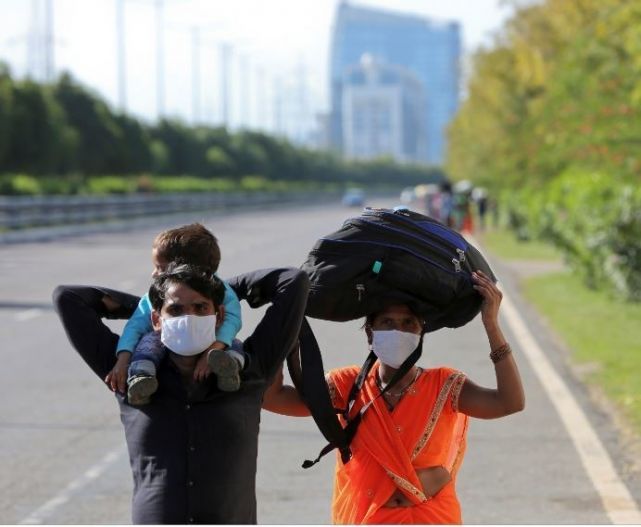
“The world’s ten richest men have seen their combined wealth increase by $540 billion during the pandemic, while the crisis threatens a lost decade in the fight against poverty,” revealed the Oxfam Inequality Report 2021, published on the opening day of the World Economic Forum’s ‘Davos Dialogues.' The India supplement of the Global Inequality Report highlighted “India’s 100 billionaires have seen their fortune increase by $178 billion since March 2020, enough to give every one of the 138 million poorest Indian people a cheque of $1,288."
Oxfam’s 2021 report “The Inequality Virus” found that Covid-19 has the potential to increase economic inequality in almost every country at once, the first time this has happened since records began over a century ago.
In this webinar Oxfam Inequality experts will talk about the journey of Oxfam’s Inequality work globally and in India, and whether it has been an effective strategy to advocate for a more just and sustainable society. Glimpses of Oxfam India’s work to address inequality will also be highlighted.
Max Lawson is Head of Inequality Policy for Oxfam International. He has previously Head of Policy and Campaigns at Oxfam Great Britain, and has helped author some of Oxfam’s most high profile papers. He also worked for Oxfam as governance adviser for some years, working in over 25 countries on budgets, governance and public spending. He moved to Nairobi in January along with Oxfam International’s whole headquarters.
Amitabh Behar, Chief Executive Officer of Oxfam India, is a global civil society leader, and an authority on tackling economic and gender inequality and building citizen participation. Mr. Behar currently serves as the Vice-Chair of the Board of CIVICUS, a global alliance of civil society organisations and activists dedicated to strengthening citizen action and civil society across the globe. He also serves on the boards of several other organisations, including the Centre for Budget and Governance Accountability, an Indian public policy think tank. Prior to Oxfam, Mr. Behar was the Executive Director of National Foundation for India and served as the Convener of National Social Watch Coalition and the Co-Chair of Global Call to Action Against Poverty, a network of over 11,000 civil society organisations.
Additional Information
Program
Einaudi Center for International Studies
South Asia Program
"Strange Fish" panel discussion

March 2, 2021
12:00 pm
Panel discussion with filmmaker Giulia Bertoluzzi
Film Overview:
Set primarily in Zarzis, Tunisia, and the waters of the Mediterranean Sea, Strange Fish tells the story of Tunisian fishermen who have been rescuing migrants and recovering the dead along the world's deadliest migration route since the early 2000s. The film’s title, a reference to Billie Holiday’s “Strange Fruit,” links the deaths of African migrants en route to Europe and the lynching of African Americans. In Strange Fish, as the camera moves between images of the sea, fishing livelihoods, and shipwrecks, viewers learn how local fishermen have been affected by and responded to this violence, including their work to maintain a migrant cemetery. The film is in French and Arabic, with English subtitles. Running time: 55 minutes. More information and streaming options.
Panelists:
Giulia Bertoluzzi is a journalist and co-founder of Nawart Press, a collective of independent journalists. Her film Strange Fish, which won the EU’s Media Migration award in 2017 and wasreleased in September 2018, has received awards in several international festivals and distribution in cinemas and on television. In 2016/2017, she co-wrote and co-directed Far Right: A New Frightening Normal, a documentary on the rise of the extreme right in Europe, broadcast by Al Jazeera. In 2016, she was nominated for the Doc/IT Women Award at the Venice Festival for A Kurdish Women’s Dream. In 2015, Rai Storia broadcast the itinerant project Railway Diaries: A Woman’s World, a long reportage on the Silk Road featuring women’s voices. In 2014, she collaborated on the documentary film Una storia sommersa(A Submerged Story), which won the Premio Morrione/Ilaria Alpi for investigative journalism.
Amade M’charek is Professor of Anthropology of Science at the Department of Anthropology, University of Amsterdam. She is the PI of the RaceFaceIDproject, an ERC-consolidator project on forensic identification and the making of face and race. Her work centres on the ir/relevance of race in science and society. She has published widely on genetic diversity, population genetics and forensic DNA practices, as well on biomedical practices. Through her current research on forensics and migrant death she has developed an interest into (post)colonial relations, circulations and extractions.
Eleanor Paynter is a Postdoctoral Associate in Migrations with Cornell’s Mario Einaudi Center for International Studies. Her research is in the area of critical refugee studies, specializing in asylum, testimony, and migrant rights. She focuses on Africa –Europe migration, with work on the Black Mediterranean and the necropolitics of border control that draws on ethnography and oral history, as well as writing, film, and visual media.
Panel moderator: Natasha Raheja, Assistant Professor of Anthropology at Cornell. Her current writing and film work explores questions of migration and citizenship along the India-Pakistan border.
This discussion is sponsored by Cornell Cinema, Migrations: A Global Grand Challenge (part of Global Cornell), and the Mario Einaudi Center for International Studies.
Additional Information
Program
Einaudi Center for International Studies
Institute for African Development
Institute for European Studies
Xingzhong Yu

Anthony W. and Lulu C. Wang Professor in Chinese Law
Xingzhong Yu's academic interests include Chinese law and legal history, social theory, comparative legal philosophy, constitutional law, and cultural studies of law.
Additional Information
Sarah Wolfolds
Assistant Professor, SC Johnson College of Business
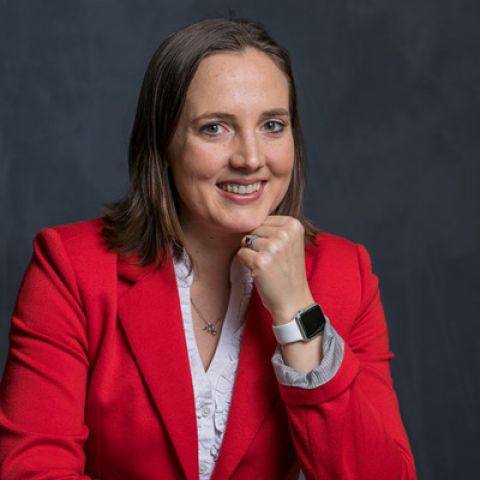
Sarah Wolfolds is the Andrew M. Paul Sesquicentennial Faculty Fellow and assistant professor in the Charles H. Dyson School of Applied Economics and Management. Wolfolds's research examines the interaction between for-profit and nonprofit organizations in industries where they coexist.
Additional Information
Sara Warner

Stephen H. Weiss Junior Fellow
Sara Warner is an associate professor of performing and media arts in the College of Arts and Sciences. The current director of Cornell's LGBT Studies Program, Warner is an affiliate faculty member in the Feminist, Gender, and Sexual Studies Program; Africana studies; American studies; and visual studies.