
Institute for European Studies
Meet Our New Program Directors

New Directors Take Helm at LACS, IES, SEAP
New program directors Ernesto Bassi, Mabel Berezin, and Tom Pepinsky share their programs' plans for this academic year.
Additional Information
Call for Presentation Proposals for Graduate Student Workshop for MENA Studies

Deadline – October 15th!
The Clarke Initiative for Law and Development in the Middle East and North Africa (MENA) invites Cornell graduate students to submit abstracts for an upcoming graduate student workshop to be held in November 2021. The workshop invites students from across the disciplines of arts, social sciences, and humanities with a geographic focus on the MENA region. Abstracts are expected to be between 150-250 words for papers or other works-in-progress related to the region. We encourage interdisciplinary research related -but not limited- to the following topics:
-
Women and Gender
- Legacies of Settler Colonialism, Transnationalism and Apartheid
- Social movements, Democratization and Urban Politics
- Militarization, Securitization, and the Deep state
- Critical Ottoman and Post-Ottoman Studies
- Secularism and Religious Violence
- 11 Years after the Arab Spring: Lessons and Reflections
- The Crisis of Neoliberalism: Alternative Ideologies?
Final submissions are not expected to be complete papers; we welcome rough drafts in the forms of presentations, conferences papers, drafts publications, or reports.
Co-organizer
This event organized in coordination with the Critical Ottoman and Post-Ottoman Studies Initiative at Cornell, directed by Mostafa Minawi.
Structure
Students whose submissions are accepted will be paired with a faculty member who will provide feedback on the student’s work and serves as a mentor. The organizing committee will attempt to pair students with faculty members whose work and expertise overlap.The workshop is expected to be held on a weekend day in mid-November in-person at Cornell if University health guidelines and regulations permit. If not, there is a possibility it will be held virtually.
Submit proposals by October 15th:
Please fill out the Doodle form and email your abstracts to clarkeinitiative@cornell.edu by October 15th!
Workshop Organizing Committee:
Youssef Aziz
BA Candidate, Sociology & Psychology
Research Fellow, Clarke Initiative
Radwa Saad
PhD Candidate, Africana Studies
Research Fellow, Clarke Initiative
Mostafa Minawi
Associate Professor of History
Director, Critical Ottoman & Post-Ottoman Studies
Chantal Thomas
Radice Family Professor of Law, Cornell Law School
Director, Clarke Initiative
Additional Information
Faculty: Apply Now

Seed Grant Applications Due Oct. 29
Einaudi's seed grants support faculty-led international research, activities, and events. Find out more.
Additional Information
IES Welcomes New Director, Mabel Berezin
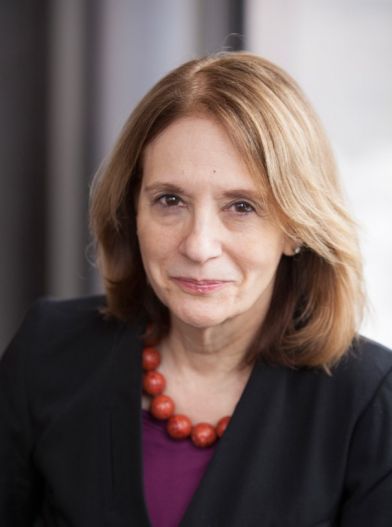
IES is pleased to announce the appointment of Mabel Berezin as the new director, effective July 1, 2021.
Additional Information
Migration in the Media

September 22, 2021
12:00 pm
In this moment of hyper-politicized border and migration issues, questions of representation are crucial. This roundtable of scholars, journalists, and practitioners will address the needs and challenges of producing stories about complex border issues along with the potential for different stories to effect real change. Our panelists are actively documenting, producing, circulating, and reflecting on migration stories through a range of media and will share from their own work, focusing especially on the contentious borderspaces of the southern U.S. and southern Europe. This discussion is organized by the Migrations initiative and co-sponsored by the East Asia Program, the Institute for European Studies, the Department of Sociology, Latin American and Caribbean Studies, and the School of Public Policy.
WHAT YOU'LL LEARN
Key questions that journalists, academics, and practitioners consider in producing and responding to stories and coverage of migration issuesHow different media shape what stories get told and who they reachHow the politicization of migration affects what stories do and do not get toldThe possibilities that different media and storytelling practices offer for challenging dominant narratives or providing more complex accountsThe role that images play in communicating migration and border issues to the public
Additional Information
Program
East Asia Program
Latin American and Caribbean Studies
Institute for African Development
Institute for European Studies
Welcome back, students!
Learn about Opportunities for You at Einaudi
Video: Join us! Whether you're a grad student or first-year, you'll find your community and a world of opportunities at Einaudi.
Additional Information
Info Session: Africa Undergraduate Research Internships
November 17, 2021
4:45 pm
The Institute for African Development (IAD) Summer Africa Internship program provides sophomores, juniors and rising senior undergraduate students with challenging practical fieldwork in Africa. Application deadline is February 28th. Internships are available in Ghana and Zambia. Those interested in applying must attend two seminars in the IAD Special Topic Seminar Series (CRP 4770) and a pre-departure meeting.
Contact: iad@cornell.edu
Additional Information
Program
Einaudi Center for International Studies
Reppy Institute for Peace and Conflict Studies
East Asia Program
Institute for African Development
Institute for European Studies
Latin American and Caribbean Studies
Info Session: Fulbright U.S. Student Program for Undergraduates
October 20, 2021
4:45 pm
The Fulbright U.S. Student Program supports college graduates conducting research or teaching English in more than 150 countries. Applications are due in the fall; students who wish to begin the program immediately after graduation are encouraged to start the process in their junior year.
Contact: fulbright@einaudi.cornell.edu
Additional Information
Program
Einaudi Center for International Studies
Reppy Institute for Peace and Conflict Studies
East Asia Program
Southeast Asia Program
Latin American and Caribbean Studies
Institute for African Development
Institute for European Studies
South Asia Program
Info Session: Laidlaw Scholars Program
October 13, 2021
4:45 pm
Learn about the Laidlaw Undergraduate Research and Leadership Program. Open to first- and second-year students, this 2-year program provides generous support to carry out internationally-focused research, develop leadership skills, engage with community projects overseas, and join a global network of like-minded scholars from more than a dozen universities. Join us to learn more about the program, its benefits, and the application process, as well as tips for approaching potential faculty research mentors and writing a successful application
Additional Information
Program
Einaudi Center for International Studies
Reppy Institute for Peace and Conflict Studies
East Asia Program
Southeast Asia Program
Latin American and Caribbean Studies
Institute for African Development
Institute for European Studies
South Asia Program
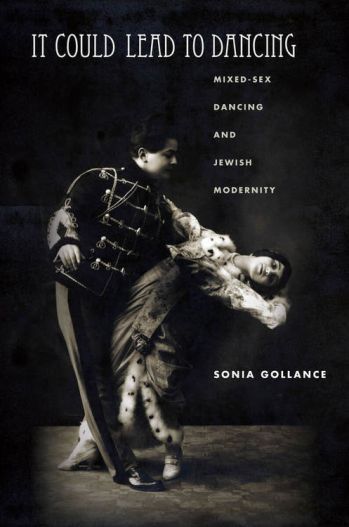
"It Could Lead to Dancing" by Sonia Gollance
November 10, 2021
4:30 pm
Digital book talk/discussion with Sonia Gollance about her new book “It Could Lead to Dancing: Mixed-Sex Dancing and Jewish Modernity.” Juan Manuel Muñoz (PMA) and Jonathan Boyarin (Anthro/NES) will be serving as interlocutors.
Book Description: Dances and balls appear throughout world literature as venues for young people to meet, flirt, and form relationships, as any reader of Pride and Prejudice, War and Peace, or Romeo and Juliet can attest. The popularity of social dance transcends class, gender, ethnic, and national boundaries. In the context of nineteenth- and twentieth-century Jewish culture, dance offers crucial insights into debates about emancipation and acculturation. While traditional Jewish law prohibits men and women from dancing together, Jewish mixed-sex dancing was understood as the very sign of modernity––and the ultimate boundary transgression.
Writers of modern Jewish literature deployed dance scenes as a charged and complex arena for understanding the limits of acculturation, the dangers of ethnic mixing, and the implications of shifting gender norms and marriage patterns, while simultaneously entertaining their readers. In this pioneering study, Sonia Gollance examines the specific literary qualities of dance scenes, while also paying close attention to the broader social implications of Jewish engagement with dance. Combining cultural history with literary analysis and drawing connections to contemporary representations of Jewish social dance, Gollance illustrates how mixed-sex dancing functions as a flexible metaphor for the concerns of Jewish communities in the face of cultural transitions.
About the author: Sonia Gollance is Lecturer in Yiddish at University College London. She is a scholar of Yiddish Studies and German-Jewish Literature whose work focuses on dance, theatre, and gender. She received her Ph.D. in Germanic Languages and Literatures from the University of Pennsylvania and has taught previously at the University of Vienna, The Ohio State University, and the University of Göttingen. Her first book, It Could Lead to Dancing: Mixed-Sex Dancing and Jewish Modernity, was published by Stanford University Press in May 2021.
Sponsored by Jewish Studies Program with co-sponsors Institute for German Cultural Studies, Department of Performing and Media Arts, and Institute for European Studies
Additional Information
Program
Institute for European Studies