
Latin American and Caribbean Studies
The Culture Trap: Ethnic Expectations and Unequal Schooling for Black Youth

April 30, 2024
5:00 pm
Uris Hall, G08
In The Culture Trap, Derron Wallace argues that the overreliance on culture to explain Black students' achievement and behavior in schools is a trap that undermines the historical factors and institutional processes that shape how Black students experience schooling. This trap is consequential for a host of racial and ethnic minority youth in schools, including Black Caribbean young people in London and New York City.
Since the 1920s, Black Caribbeans in New York have been considered a high-achieving Black model minority. Conversely, since the 1950s, Black Caribbeans in London have been regarded as a chronically underachieving minority. In both contexts, however, it is often suggested that Caribbean culture informs their status, whether as a celebrated minority in the US or as a demoted minority in Britain.
Drawing on rich observations, interviews and archives in London and New York City schools, Wallace suggests that the use of culture to justify Black Caribbean students’ achievement obscures the very real ways that school structures, institutional processes, and colonial conditions influence the racial, gender and class inequalities Black youth experience in schools. Wallace reveals how culture is at times used as an alibi for racism in schools, and points out what educators, parents and students can do to change the beliefs and practices that reinforce racism.
Derron Wallace is the Jacob S. Potofsky Chair in Sociology and Associate Professor of Sociology and Education at Brandeis University in Boston, USA. He is also a Research Fellow at the Centre on the Dynamics of Ethnicity at the University of Manchester. From 2022 to 2023, Wallace was a Fulbright Scholar in the Department of Sociology at Durham University. A sociologist of race, ethnicity and education, Wallace’s research focuses on structural and cultural inequalities in urban schools and neighbourhoods as experienced by Black youth. In 2023, Wallace received the American Educational Research Association’s Early Career Award for research on the social context of education. He also received the Doris Entwisle Early Career Award from the American Sociological Association for research on the sociology of education.
Additional Information
Program
Einaudi Center for International Studies
Latin American and Caribbean Studies
Agrarian Studies, Climate Change, and the Future of Work

April 26, 2024
9:00 am
Cornell University
This inter-disciplinary conference brings together experts on questions of climate change, agrarian transformations and labor to help us reflect on the future of work.
Overview
The future of work is hot. Literally. Unpredictable seasons, droughts, floods, warming temperatures, rising seas, and a host of other climatic factors are changing what work is, what it means, and what it does to the body. These effects are unevenly felt across geographies and forms of difference.
These effects spill out beyond the factories, fields, and construction sites scholars conventionally associate with legible acts of labor. Self-employed or “informal” workers in cities face new threats from the compounding factors of rising heat and air pollution. Ecotourism sectors have been reconfigured to make climate crisis, extinction, and other consequences of planetary change into sites for “disaster tourism” and consumption. A low-paid service industry coalesces around climate dystopia. The bodily effects of heat and work are newly burdening women, who disproportionately perform unremunerated, devalued reproductive labor in domestic spaces. Questions about the future of work in the context of climate crisis, then, are as much about techno-fixes as they are about home and family.
See the full list of speakers on the registration page.
Additional Information
Program
Einaudi Center for International Studies
Latin American and Caribbean Studies
South Asia Program
2024 Cornell EMI Mark Mobius Pitch Competition

October 31, 2024
9:00 am
Tata Innovation Center, Cornell Tech, TBD
Register to watch the final: https://emiconference.com/
Find more about competition: https://pitch.emiconference.com/
The Cornell EMI Mark Mobius Pitch Competition invites student entrepreneurs and recent graduates operating startups in emerging markets to network with fellow students, speak with expert mentors and pitch their startups to investors in the emerging markets annually.
The registration for startups competing at the 2024 Cornell EMI Mark Mobius Pitch Competition is NOW CLOSE. And the finalists are announced:
Coco Technologies Universidad EAFIT – Colombia
Medical booking platform to maximize collections and patient experience
KalPay Lahore University of Management Sciences – Pakistan
Convenient lending for the underbanked
AnTa ESADE Business School - Spain
E-commerce marketplace that aggregates the inventory of thousands of independent boutiques onto a single platform. Focus on Ghana and other Sub-Saharan African countries.
Pro Investing Universidad de los Andes - Colombia
Transforming Global Investing: Democratizing Access to Family Office
Investments
iOptiCrane The Hong Kong Polytechnic University – Hong
Kong
AI for Safe and Ideal Crane Layout in Construction
Find here Rules and Guidelines.
Special thanks to Mark Mobius, the sponsor of this event, and to the committee chairs: Osagie Oigiagbe, Ying Xue, and Carlos Bernos Amoros.
Additional Information
Program
Latin American and Caribbean Studies
South Asia Program
Panel Explores Rise of Nationalism Across the Globe
![U.S. Secretary of State Michael R. Pompeo participates in a signing ceremony for the CSL Lease Extension with Salvadoran President Nayib Bukele, in San Salvador, El Salvador, July 21, 2019. [State Department photo by Ron Przysucha/ Public Domain]](/sites/default/files/styles/extra_large/public/2024-02/48342167582_934208f597_c.jpg?itok=agDW4R-B)
Gustavo A. Flores-Macías, LACS
Gustavo A. Flores-Macías, professor of government (A&S), began a discussion with an analysis of the current situation in El Salvador, whose recently re-elected president Nayib Bukele has taken away civil liberties and installed a police state in an effort to address an overwhelming rate of violent crime.
Additional Information
2024 Art + Feminism Wikipedia Edit-a-thon!

April 19, 2024
10:00 am
Olin Library, 703
Join the Tompkins County Public Library and Cornell University Library for the 2024 Art + Feminism Wikipedia Edit-a-thon!
This year, our theme is Solidarity, with a focus on artists/art/art movements affected or displaced by violence. We’ll be meeting up in person on Friday, April 19, from 10am to 5pm in Olin Library room 703, and from 3pm to 6pm at the Tompkins County Public Library (Makerspace/Digital Lab). You can pitch in for just half an hour or the whole day, by writing an entry, adding a footnote, translating text, uploading images, or by looking up information for others.
Everyone is welcome—no matter your gender, and regardless of experience with editing. Unfamiliar with Wikipedia and Wikidata? We’ll walk you through the editing process. If you already have collectives, groups, artists, writers, or performers in mind (whether cis, transgender, or non-binary), great! If you don’t, just pick from our list.
Never edited Wikipedia or Wikidata before? See the following guide for resources to help you learn: guides.library.cornell.edu/artandfeminism/howtoedit.
All are welcome. In addition to Wikipedia editing, have fun with other creative activities–zine-making, button-making, and coloring.
Register for the edit-a-thon here!
*This event is co-sponsored by the Africana Studies and Research Center, American Studies Program, Department of Art, Feminist, Gender and Sexuality Studies Program, Gender Equity Resource Center, Herbert F. Johnson Museum of Art, Department of History of Art and Visual Studies, Department of Human Centered Design, Department of Literatures in English, Latin American and Caribbean Studies Program, Media Studies Program, Department of Romance Studies, and the Society for the Humanities.
Additional Information
Program
Latin American and Caribbean Studies
Everyone Who Is Gone Is Here: The United States, Central America, and the Making of a Crisis

May 1, 2024
1:00 pm
In this discussion, Marielena Hincapié, Distinguished Immigration Fellow and Visiting Scholar at Cornell Law School, interviews Jonathan Blitzer, staff writer at The New Yorker and immigration expert, on his recently published book Everyone Who Is Gone Is Here: The United States, Central America, and the Making of a Crisis. They will discuss how the politics and policy of immigration in the United States have been forged from the 1980s to the present.
The United States and Central America are deeply entwined — the result not just of American foreign policy but also of its domestic policy; the harder the U.S. government has tried to disentangle these worlds at the U.S.-Mexico border, the more thoroughly they’ve fused. This is a look at living history, told through individuals from El Salvador, Guatemala, and Honduras who’ve had to risk everything to save themselves and those around them. This conversation will focus on immigration policy, politics, and history, but, above all, the moral imperatives of storytelling.
Register in advance to attend.
Additional Information
Program
Latin American and Caribbean Studies
Runoff Histories: Fertilized Fields and Contaminated Water in Northern Mexico
April 29, 2024
4:45 pm
Uris Hall, Conference Room, 153
Latin American and Caribbean Studies Program (LACS) Seminar Series
The mid-1960s ushered in an era of the belief in technological fixes for many social ills. Chief among these was a push to end global hunger using designer seeds that could yield more and thus feed more people. These seeds, developed in Mexican experiment stations, were disease resistant in addition to high-yielding. Yet to fully function these seeds needed fertilizer—lots of it. In the hurried quest to find a solution to end global hunger neither the social nor ecological impacts were considered. This talk examines how Mexico became a leading producer of wheat germplasm, how it was instrumental in finding a solution to end global hunger in the mid-twentieth century, and how the decades-long use of fertilizer to produce more food has had devastating consequences today, including contaminated groundwater and the health issues of local people.
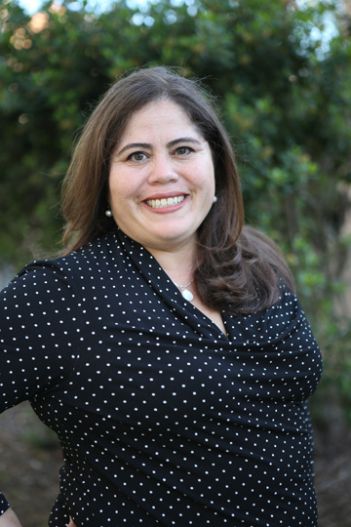
Gabriela Soto Laveaga is Professor of the History of Science and Antonio Madero Professor for the Study of Mexico at Harvard University. Her current research interests interrogate knowledge production and circulation between Mexico and India; medical professionals and social movements; and science and development projects in the twentieth century. She is currently the 2023-2024 Dibner Distinguished Fellow in the History of Science and Technology at The Huntington.
Her first book, Jungle Laboratories: Mexican Peasants, National Projects and the Making of the Pill, won the Robert K. Merton Best Book prize in Science, Knowledge, and Technology Studies from the American Sociological Association. Her second monograph, Sanitizing Rebellion: Physician Strikes, Public Health and Repression in Twentieth Century Mexico, examines the role of healthcare providers as both critical actors in the formation of modern states and as social agitators. Her latest book project seeks to re-narrate histories of twentieth century agriculture development aid from the point of view of India and Mexico.'
Additional Information
Program
Einaudi Center for International Studies
Latin American and Caribbean Studies
Muntz Metal and Shipping Building: How a Family Built an Empire
March 27, 2024
4:30 pm
Statler Hall, 291
Latin American and Caribbean Studies Program (LACS) Seminar Series.
This Seminar will be in Spanish.
Muntz Metal, an alloy of copper and zinc, remains a significant find in shipwrecks across the globe. In the 19th century, its introduction revolutionized maritime safety for the British Empire navigation by providing a cost-effective sheathing solution. Created by the Muntz family in Birmingham, the commercialization of the muntz metal links local resources such as copper with global commerce. In the process, the history of Muntz Metal Company also brings light into scientific inquiry, commercial rivalry, and the global landscape.
Through maritime archaeology and historical sources, this presentation aims to delve into the study of Muntz Metal Company. By using commercial records, material culture, and historical testimonies, we seek to understand the repercussions that the development of Muntz Metal had into navigation and commercial expansion.
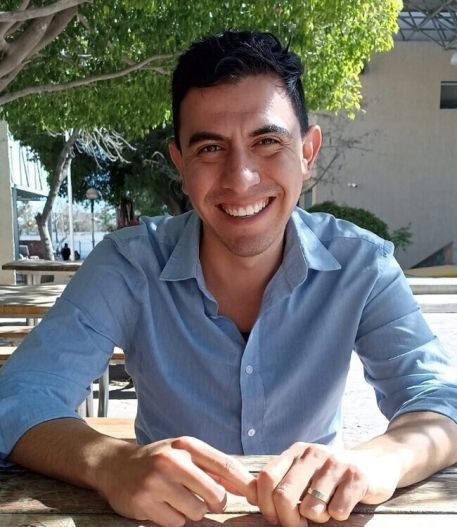
Andrés Zuccolotto is a doctoral candidate in History at the College of San Luis Potosí in Mexico. With a background as a conservator and maritime archaeologist at the Underwater Archaeology Directorate of the National Institute of History and Anthropology of Mexico, he specializes in the study and conservation of maritime heritage. His research is centered on fastening elements and copper-zinc alloy seathings of maritime vessels. Andrés has contributed to international research projects in Argentina, Mexico, and Colombia, furthering our understanding of maritime history and cultural preservation.
Additional Information
Program
Einaudi Center for International Studies
Latin American and Caribbean Studies
Living with Algorithms: Agency and User Culture in Costa Rica
April 12, 2024
12:20 pm
Statler Hall, 391
Latin American and Caribbean Studies Program (LACS) Seminar Series.
Co-sponsors: Departments of Communication, Information Science, and Science & Technology Studies
What does it mean to live in a “datafied” society? Life in media-saturated contexts implies the increasing transformation of people’s experiences, relations, and identities into data. To make sense of this process, scholars have focused mostly on how algorithms give rise to new forms of power and control. Alternatively, in this talk I ask not what algorithms are doing to society but rather what people are doing with algorithms. I present research on the use of such algorithmic platforms as Netflix, Spotify, and TikTok in an understudied region of the global south (Costa Rica). I develop the framework of “mutual domestication” by examining the personal relationships that have formed between users and algorithms as Latin Americans have integrated these systems into the structures of everyday life, enacted them ritually, participated in public with and through them, and thwarted them. In this way, I provide a new perspective on the commonalities and differences among users within a global ecology of technologies.
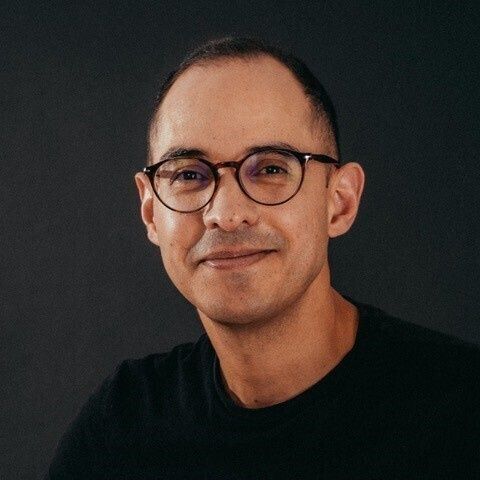
Ignacio Siles (PhD, Northwestern University) is a professor of media and technology studies in the School of Communication and researcher in the Centro de Investigación en Comunicación (CICOM) at Universidad de Costa Rica. He is the author of "Living with Algorithms: Agency and User Culture in Costa Rica" (MIT Press, 2023), "A Transnational History of the Internet in Central America, 1985–2000" (2020, Palgrave Macmillan) and "Networked Selves: Trajectories of Blogging in the United States and France" (2017, Peter Lang), along with several articles on the relationship between technology, communication, and society.
Additional Information
Program
Einaudi Center for International Studies
Latin American and Caribbean Studies
Getting to Climate Justice: A Global Approach
April 11, 2024
5:00 pm
Rockefeller Hall, Schwartz Auditorium, Room 201
Lund Critical Debate
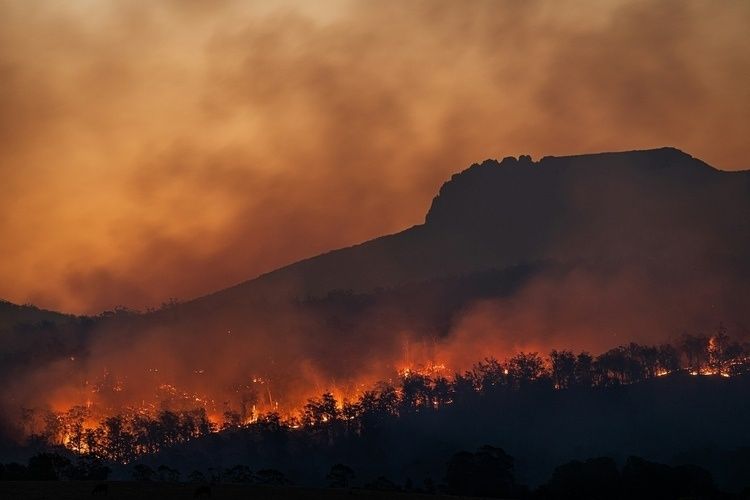
Climate change has a disproportionate impact on the world’s most vulnerable populations, yet climate crises also impact people across the full spectrum of wealth and power. How do we understand these varied impacts and design climate policy to maximize human well-being and justice on a global level?
As climate change accelerates, we see the rise of violent conflict and humanitarian emergencies in some places but not others. In some places but not others, we see disruptions in food security and forced migration. And around the world, debates rage about access to energy, the need to profit from valuable natural resources, and pressures to reduce extraction and consumption.
This year’s Lund debate from the Mario Einaudi Center for International Studies explores how citizens and policymakers worldwide can act to increase justice in our shared climate crisis. The panel will discuss key issues surrounding societies, governments, business, and labor and ways to share responsibilities globally to reduce emissions and mitigate climate change.
How can we imagine new strategies for reshaping global trade and finance, national and transnational security policies, and environmental protections that go beyond political borders? Join climate journalist Kate Aronoff and climate security expert Joshua Busby (LBJ School of Public Affairs, University of Texas) for a conversation on our climate’s state of emergency and how governments can help.
***
Livestream for National and International Viewers
Can't join in person? Register to attend virtually at eCornell.
***
Panelists
Kate Aronoff is a Brooklyn-based staff writer at The New Republic, covering climate and energy politics, and a fellow at the Roosevelt Institute. She is the author of Overheated: How Capitalism Broke the Planet and How We Fight Back (2021) and the coauthor of A Planet to Win: Why We Need a Green New Deal (2019). Aronoff serves on Dissent magazine's editorial board and the advisory board of Jewish Currents.
Joshua Busby is professor of public affairs in the University of Texas at Austin’s Lyndon B. Johnson School of Public Affairs. His research focuses on climate change, global health, transnational advocacy movements, and U.S. foreign policy. Busby was principal investigator on two multimillion-dollar climate and security grants from the U.S. Department of Defense. He served as senior advisor for climate at the U.S. Department of Defense from 2021 to 2023. His newest book is States and Nature: The Effects of Climate Change on Security (2022).
Moderator
Rachel Bezner Kerr is director of Einaudi’s Institute for African Development and professor of global development in the College of Agriculture and Life Sciences. She served as coordinating lead author for the United Nations’ Intergovernmental Panel on Climate Change sixth assessment report chapter on climate change impacts and adaptation of food systems.
***
About the Debate
The Lund Critical Debate is a signature event of the Mario Einaudi Center for International Studies. Established in 2008, Einaudi's Lund debate series is made possible by the generosity of Judith Lund Biggs '57.
Additional Information
Program
Einaudi Center for International Studies
Reppy Institute for Peace and Conflict Studies
East Asia Program
Latin American and Caribbean Studies
Institute for African Development
Institute for European Studies
South Asia Program