
Latin American and Caribbean Studies
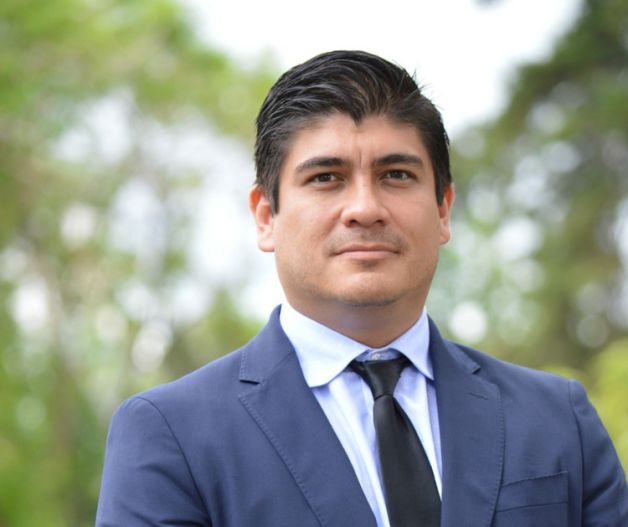
Carlos Alvarado Quesada: Fighting for Democracy and the Planet: Costa Rica's Case
March 22, 2023
6:00 pm
Alice Statler Auditorium
Bartels World Affairs Lecture In this year's Bartels lecture from the Mario Einaudi Center for International Studies, former president of Costa Rica Carlos Alvarado Quesada shares how conservation and sustainability are crucial for preserving democracy around the world. Costa Rica is one of the most biodiverse spots on the planet, with more than one-quarter of the nation's land protected in parks and preserves. As Costa Rica's leader from 2018 to 2022, Alvarado proposed a challenge for his country and the world: to make Costa Rica a decarbonized nation by 2050. During his visit to Cornell, Alvarado explores some of the questions that guided his administration: What roles do democracy and governance play in shaping environmental policies at the local, national, and global levels? And how can we meet the basic needs of the world’s ever-growing human population—equitably and democratically—without sacrificing the health of the planet and its other inhabitants? A reception with refreshments will follow the lecture. Lecture: 6:00–7:30 p.m. | Alice Statler AuditoriumReception: 7:30–8:30 p.m. | Park AtriumFree ticket required for in-person attendance. Reserve your ticket for the lecture and/or reception today! Join the lecture virtually by registering at eCornell. *** How did President Alvarado's policies protect Costa Rica's environment? Read a Bartels explainer by the Lab of O's Viviana Ruiz-Gutierrez. *** About Carlos Alvarado Quesada Carlos Alvarado Quesada was Costa Rica's 48th president, serving from 2018 until 2022. He was Costa Rica's youngest president in a century, taking office at age 38. Representing the Citizens' Action Party (PAC), Alvarado previously served as minister of labor and social security. Alvarado received the 2022 Planetary Leadership Award from the National Geographic Society for his commitment and action to protect the ocean. He accepted on behalf of his country the 2019 Champion of the Earth Award, the United Nations' highest environmental honor. A writer and political scientist, Alvarado is currently Professor of Practice of Diplomacy at Tufts University's Fletcher School in Massachusetts. *** About the Bartels World Affairs Lecture The Bartels World Affairs Lecture is a signature event of the Mario Einaudi Center for International Studies. Part of Einaudi's work on democratic threats and resilience, this year's lecture is cosponsored by Einaudi's Latin American and Caribbean Studies Program. The Einaudi Center’s flagship event brings distinguished international figures to campus each academic year to speak on global topics and meet with Cornell faculty and students, particularly undergraduates. The lecture and related events are made possible by the generosity of Henry E. Bartels ’48 and Nancy Horton Bartels ’48.
Additional Information
Program
Einaudi Center for International Studies
East Asia Program
Institute for African Development
Institute for European Studies
Latin American and Caribbean Studies
Reppy Institute for Peace and Conflict Studies
South Asia Program
Southeast Asia Program
LACS “Un-Charting Territories” Research Symposium, SAT, 18 Feb, 9am
February 18, 2023
9:00 am
Physical Sciences Building, 401
Saturday, February 18th, 2023 -- 9:00am-4:30pm (breakfast available at 8:30am) FULL SCHEDULE HERE
Physical Sciences Building (PSB) 401
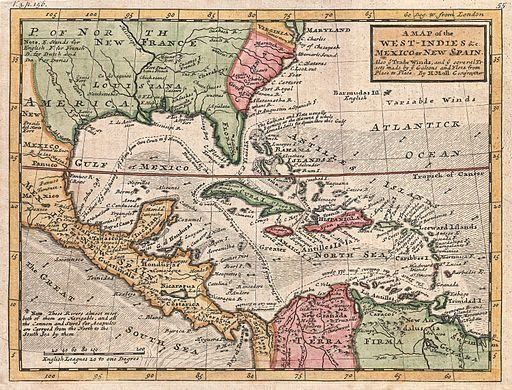
A territory, understood as a site to be defended, is anchored by parameters of exclusivity and control. Territory is often associated with physical land mass, attributing sovereignty to nations. It can describe sites of knowledge. We can also speak of disciplinary and discursive territories governed by methodologies and subjects of study. Yet, even as colonial powers attempted to delineate Latin America and the Caribbean territories, these sites continue to resist. The Andes and the Amazon, for example, defy human efforts to draw straight lines through natural environments. Indigenous communities that do not recognize colonial separation of their ancestral lands, migrate transnationally, challenging national imaginaries. In celebration of the 60th anniversary of the Latin American and Caribbean Studies (LACS) program, we invite the Cornell community to rethink the disciplinary, environmental, political, and discursive boundaries of Latin America and the Caribbean in our 2023 Research Symposium “Un-Charting Territories”.
To underscore the success of 60 years of programming and the expansion of the program to include the Caribbean, we strongly encourage proposals that explore the Caribbean, the hispanophone islands and the coastal regions of South and Central America. Additionally, we are including a special panel that highlights undergraduate students interested in developing research proposals focused on this year’s theme of “Un-Charting Territories” through interdisciplinary work.
Additional Information
Program
Einaudi Center for International Studies
Latin American and Caribbean Studies
LACS “Un-Charting Territories” Research Symposium FRI, 17 Feb
February 17, 2023
4:30 pm
Physical Sciences Building, 401
Friday, February 17th -- 4:30pm-7:30pm & Saturday, February 18th, 2023 -- 9:00am-4:30pm (breakfast available at 8:30am)
Physical Sciences Building (PSB) 401 FULL SCHEDULE HERE
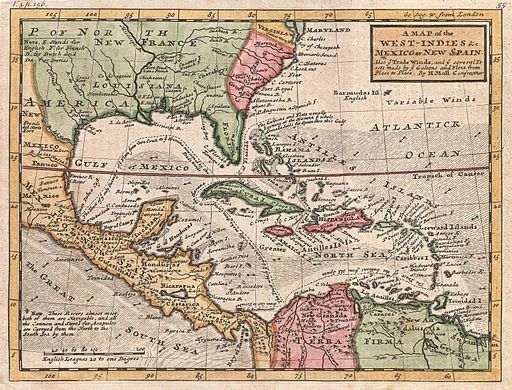
A territory, understood as a site to be defended, is anchored by parameters of exclusivity and control. Territory is often associated with physical land mass, attributing sovereignty to nations. It can describe sites of knowledge. We can also speak of disciplinary and discursive territories governed by methodologies and subjects of study. Yet, even as colonial powers attempted to delineate Latin America and the Caribbean territories, these sites continue to resist. The Andes and the Amazon, for example, defy human efforts to draw straight lines through natural environments. Indigenous communities that do not recognize colonial separation of their ancestral lands, migrate transnationally, challenging national imaginaries. In celebration of the 60th anniversary of the Latin American and Caribbean Studies (LACS) program, we invite the Cornell community to rethink the disciplinary, environmental, political, and discursive boundaries of Latin America and the Caribbean in our 2023 Research Symposium “Un-Charting Territories”.
To underscore the success of 60 years of programming and the expansion of the program to include the Caribbean, we strongly encourage proposals that explore the Caribbean, the hispanophone islands and the coastal regions of South and Central America. Additionally, we are including a special panel that highlights undergraduate students interested in developing research proposals focused on this year’s theme of “Un-Charting Territories” through interdisciplinary work.
Additional Information
Program
Einaudi Center for International Studies
Latin American and Caribbean Studies
Latina/o Studies Fridays with Faculty luncheon seminar

April 14, 2023
12:00 pm
429 Rockefeller Hall, 429
The Latina/o Studies Program Fridays with Faculty luncheon seminar offers an opportunity for Latina/o and non-Latina/o students of all levels and disciplines to meet faculty and administrators from across the university for informal conversation about their current research/work in progress. All are welcome!
Fridays at 12 noon.
February 3
Paul Ramirez Jonas
Chair and Professor
Department of Art
College of Architecture, Art, and Planning
February 10
Hector Aguilar-Carreno
Professor
Department of Microbiology and Immunology
College of Veterinary Medicine
February 17
William "Woodg" Horning
Director, Office of Academic Diversity Initiatives &
Student Opportunity Programs
March 10
Monica Cornejo
Assistant Professor
Department of Communication
College of Agriculture and Life Sciences
March 17
Karen Jaime
Assistant Professor
Latina/o Studies/Performing and Media Arts
College of Arts and Sciences
April 14
Shannon Gleeson
Professor, Department of Labor Relations, Law and History
School of Industrial and Labor Relations
This series made possible with support from the College of Arts Sciences Dean's Office.
Additional Information
Program
Latin American and Caribbean Studies
Professional Directions: A Conversation with Gabriella Moses

February 16, 2023
5:00 pm
Schwartz Center for Performing Arts, Film Forum
Join us for a Professional Directions: A Conversation with Gabriella Moses on Thursday, Feb 16 at 5pm in the Film Forum, Schwartz Center for the Performing Arts. (430 College Ave.)
Free and open to the public. Co-sponsored by the Latina/o Studies Program
Gabriella A. Moses is an award-winning director, writer, and production designer based in Brooklyn, NY. She is a graduate of New York University's Tisch School of the Arts. Her production design work has been featured across top film festivals across the globe including Sundance, Toronto, Tribeca and SXSW.
Her work as a writer/director has received support from the Sundance Institute’s Creative Producing Lab, Tribeca Film Institute’s All Access Lab and Creators Market, IFP (The Gotham) No Border’s Film Market and the Los Cabos Gabriel Figueroa Film Fund programs. She has participated in the the Sundance Screenwriter's Intensive, the NYWIFT "From Script to Pre-Production" Workshop, Tribeca and Chanel Through Her Lens, AT&T Untold Stories program and the annual Black List Screenwriter’s Lab. Most recently she was selected for the inaugural WScripted Cannes Screenplay List, LALIFF & Netflix Inclusion Fellowship and The Black List Latinx List. Her screenplay EL TIMBRE DE TU VOZ won Fresh Voice’s Best Drama screenplay including recognition through their Diversity & Inclusion and our Culture & Heritage Spotlight Awards.
Her directorial debut feature film Boca Chica produced by Selene Films and filmed in the Dominican Republic is playing the 2023 festival circuit. She believes in sharing stories with underrepresented protagonists that test viewer’s perceptions of identity and their imaginations.
Additional Information
Program
Latin American and Caribbean Studies
Emerging Markets Theme Research Seminar: Mushfiq Mobaraq
April 10, 2023
3:00 pm
Mann Library, 102
Registration Link: https://cglink.me/2cm/r2042284
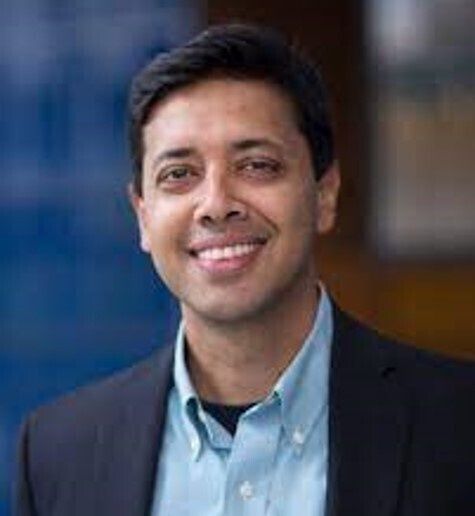
The Cornell S.C. Johnson College of Business Emerging Markets Theme, in collaboration with China Institute for Economic Research (CICER), the Cornell China Center, the Emerging Markets Institute, and SBE, brings together scholars to provide thought leadership on the role of emerging markets – and emerging market multinationals – in the global economy.
On 4/10, Mushfiq Mobaraq, Yale University
Additional Information
Program
Einaudi Center for International Studies
Latin American and Caribbean Studies
Emerging Markets Theme Research Seminar: Scott Rozelle
March 24, 2023
4:30 pm
Sage Hall, 131
Registration Link: https://cglink.me/2cm/r2042282
The Cornell S.C. Johnson College of Business Emerging Markets Theme, in collaboration with China Institute for Economic Research (CICER), the Cornell China Center, and the Emerging Markets Institute, brings together scholars to provide thought leadership on the role of emerging markets – and emerging market multinationals – in the global economy.
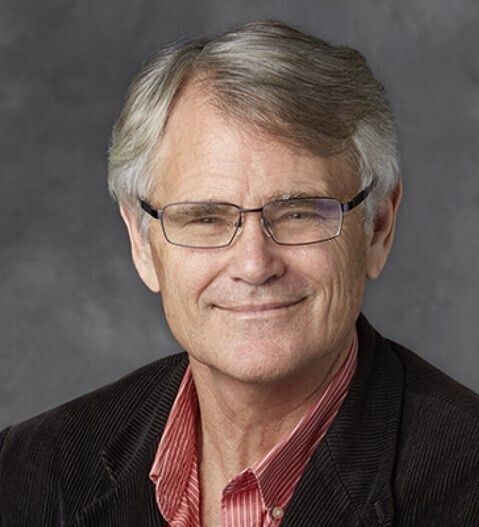
On 3/24, Scott Rozelle, Stanford University
Additional Information
Program
Einaudi Center for International Studies
Latin American and Caribbean Studies
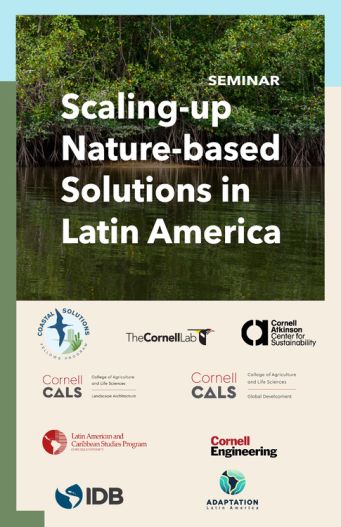
Scaling-up Nature-based Solutions in Latin America
February 23, 2023
9:00 am
Willard Straight Hall, Memorial Room
We invite the Cornell community to participate in the Special Seminar and Poster Session Scaling-up Nature-based Solutions in Latin America to bring together Cornell faculty, scientists and students, international fellows, experts from Latin America, and finance specialists to find joint solutions for challenges on climate change, biodiversity conservation, water, infrastructure, and financing.. Our speakers include:
Sergio Campos - Water and Sanitation Division Chief, Inter-American Development Bank
Diana Ulloa - Hubert H Humphrey Fellow at Cornell University / Co-Founder of Adaptation Latin America
Josh Cerra - Department Chair, Landscape Architecture, Cornell University
Edgar Mora Altamirano - Director, Center for Transformative Action, University for International Cooperation, Costa Rica
Johann Delgado - Coastal Solutions Fellow and PhD student at Cornell University / Co-Founder of Adaptation Latin America
The seminar is co-sponsored by the Coastal Solutions Fellows Program at the Cornell Lab of Ornithology, Cornell Global Development, Department of Landscape Architecture, Department of Civil & Environmental Engineering, the Mario Einaudi Center for International Studies, the Atkinson Center for Sustainability and Adaptation Latin America.
Please register to participate by visiting our website.
As part of the seminar, we will host a Poster Session. We will discuss the different strategies in which Nature-based Solutions (NbS) are being implemented for conservation, sustainability, resiliency, and adaptation across Latin America. Calls are open for Cornell for Cornell scientists and students to participate with a poster presentation.
To submit your proposal to present a poster, please follow this link.
Register now, we have limited spaces!
Additional Information
Program
Einaudi Center for International Studies
Latin American and Caribbean Studies
LACS Film Series: Elena
April 20, 2023
7:30 pm
Uris Hall, G08
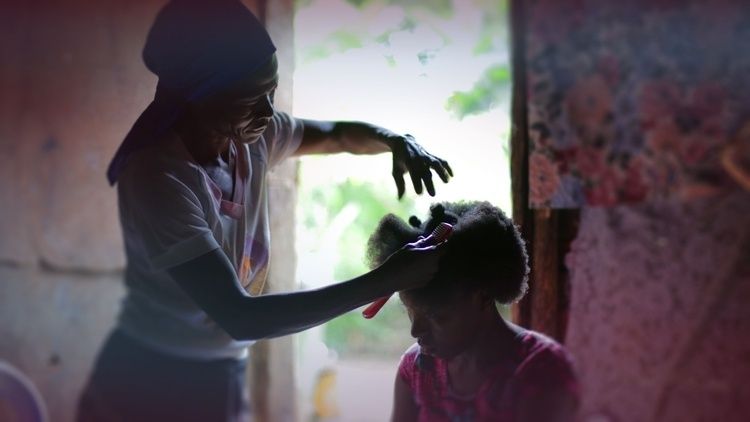
Director Michèle Stephenson’s documentary follows Elena and her family through their despair and small joys, as they struggle to remain in the country they’ve called home for generations. In 1937, tens of thousands of Haitians and Dominicans of Haitian descent were exterminated by the Dominican army, on the basis of anti-black racism. Fast-forward to 2013, the Dominican Republic’s Supreme Court stripped the citizenship of anyone with Haitian parents, retroactive to 1929, rendering more than 200,000 people stateless.
Elena, the film's young protagonist, and her family stand to lose their legal residency in the Dominican Republic if they don’t get their documents in time. Negotiating a mountain of opaque bureaucratic processes and a racist, hostile society, Elena becomes the face of the struggle to remain in a country built on the labor of her father and forefathers.
***
Pizza will be served.
About the Film Director
Filmmaker, artist, and author, Michèle Stephenson pulls from her Haitian and Panamanian roots to think radically about storytelling and disrupt the imaginary in non-fiction spaces. She tells emotionally driven personal stories of resistance and identity that are created by, for, and about communities of color and the Black diaspora. Her stories intentionally reimagine and provoke thought about how we engage with and dismantle the internalized impact of systems of oppression. She draws on fiction, immersive and hybrid forms of storytelling to build her worlds and narratives.
Her feature documentary American Promise was nominated for three Emmys and won the Jury Prize at Sundance. Her current documentary Stateless has been nominated for a Canadian Academy Award for Best Feature Documentary. Most recently, Stephenson collaborated as co-director on the magical realist immersive series on racial terror, The Changing Same, which premiered at Sundance Film Festival’s New Frontiers and won the Grand Jury Prize at the Tribeca Film Festival 2021. Along with her writing partners Joe Brewster and Hilary Beard, Stephenson won an NAACP Image Award for Excellence in a Literary Work for their book Promises Kept.
She is a member of the Academy of Motion Picture Arts and Science, a Guggenheim Artist Fellow, and a Creative Capital Artist.
*****
We are happy to credit Kanopy for using the film, Elena, including its title and film image, on our website and for promotional posters across campus.
Additional Information
Program
Einaudi Center for International Studies
Latin American and Caribbean Studies
"Recalling CLR James: Decolonization, Socialism, and the Good Life" by Gary Wilder
March 2, 2023
5:00 pm
Uris Hall, G08
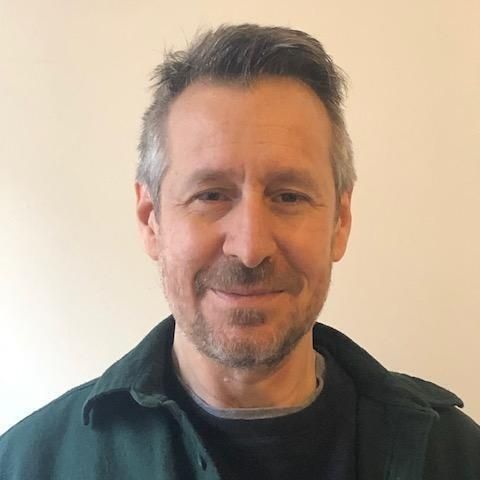
Gary Wilder is a Professor in the Ph.D. Program of Anthropology, with cross-appointments in History and French, at the Graduate Center of the City University of New York, where he is also Director of the Committee on Globalization and Social Change.
Professor Wilder is the author of Concrete Utopianism: The Politics of Temporality and Solidarity (Fordham University Press, 2022), Freedom Time: Negritude, Decolonization, and the Future of the World (Duke University Press, 2015) and The French Imperial Nation-State: Negritude and Colonial Humanism Between the World Wars (University of Chicago Press, 2005). Other publications include Theses on Theory and History, an open-source digital publication, co-authored with Ethan Kleinberg and Joan Wallach Scott and two co-edited volumes, The Fernando Coronil Reader: The Struggle for the Life is the Matter (Duke University Press 2019 and The Postcolonial Contemporary: Political Imaginaries for the Global Present (Fordham University Press, 2018). He is currently working on a manuscript provisionally entitled “Revolutionary Refractions: CLR James for Our Times”
Additional Information
Program
Einaudi Center for International Studies
Latin American and Caribbean Studies