
South Asia Program
World Watches in Disbelief and Horror as U.S. Nears Possible Default

Eswar Prasad, SAP
“It is perceived as an extraordinarily high level of dysfunction in an economy that provides the largest number of safe assets to the world," says Eswar Prasad, professor of international trade policy, "and is in principle seen as the most important cog in the global financial system.”
Additional Information
China’s Economy Is ‘Sputtering’ after Roaring Back to Life, Professor Says

Eswar Prasad, SAP
Eswar Prasad, professor of international trade policy and economics, joins CNBC to discuss China's economy.
Additional Information
Welcoming Refugees: A Conversation About Refugees in Ithaca and Beyond

October 3, 2023
5:00 pm
Uris Hall, G08
Cornell Welcomes Refugees and the Advocacy Project present
Welcoming Refugees: A Conversation About Refugees in Ithaca and Beyond
Who are refugees? What is life like for them in America? And how can we, as Ithaca residents, advocate for refugees? In this talk, we will tackle these important questions in order to further understand refugees who live among us.
Speakers include Professor Saida Hodžić, Associate Professor of Anthropology and Feminist, Gender and Sexuality Studies, Thamora Fishel, Associate Director of the Southeast Asia Program, and Mursal Rahim, an Afghan refugee and an MPA student.
This event is co-sponsored by the Mario Einaudi Center for International Studies.
Additional Information
Program
Einaudi Center for International Studies
Southeast Asia Program
South Asia Program
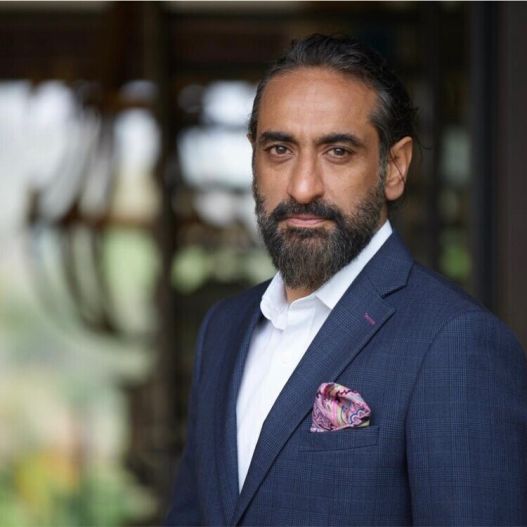
Fireside Chat with Anupam Thareja
September 26, 2023
6:00 pm
Sage Hall, B05
Emerging Markets Institute and Students From Emerging Economies Professional Association at Cornell (SEEPAC) bring
Anupam Thareja
Founder & Managing Partner at Phi Capital
Registration Link: https://cglink.me/2cm/r2221724
As an investor and turnaround expert in the corporate world, Anupam has traversed the road less travelled to entrepreneurial success.
Because of his passion for motorcycling and focus on operational excellence, Anupam took up an entrepreneurial role at Royal Enfield, where he was part of the team that was instrumental in scripting a well-documented success. This was replicated in a retail lending NBFC, TVS Credit. These experiences culminated in the founding of Phi Capital.
With him as Managing Partner, Phi has transformed a wide portfolio of businesses across retail, tech, lifestyle brands, automotive, finance, telecom, healthcare and more. Owing to the exceptional trail of successes in the corporate world, he is better known as the ‘turnaround man’ today.
He has been on over two dozen boards and strategic committees and plays an indulgent role in social services in both policy and deployment. A former national level athlete, he is passionate about motorcycling and adventure sports. When outside the boardroom, you’ll find him enjoying poetry and plays or devouring books from strategy to philosophy.
Additional Information
Program
South Asia Program
Hozoori Examines the Collapse of Democracy in Afghanistan

Sharif Hozoori, SAP
"Afghanistan is a country of ethnic minorities. No one can claim to be part of a majority," said Sharif Hozoori at a September 21 event on "Ethnocentrism and Democracy Failure in Afghanistan."
Hozoori is a visiting scholar at the South Asia Program (SAP), an Institute of International Education Scholar Rescue Fund fellow, and an expert on Afghanistan politics.

At the event, Hozoori analyzed the historical and social reasons behind the collapse of Afghanistan’s 20-year experiment in democracy which began in 2001. He noted the numerous overlapping reasons for the collapse of democracy in Afghanistan but focused primarily on the ethnocentrism exhibited by generations of Afghan leaders, who had consolidated power among their fellow Pashtuns.
While not the numerical majority, Pashtun leaders—as the largest ethnic and linguistic community—have gradually asserted their dominance in Afghanistan since the 1880s. Hozoori explained how "state and nation-building from the start was problematic," and was not solely the result of recent wars and intervention by great powers.
Hozoori also argued that the country was ripe for a federal system and had opportunities to do so in the early 2010s. Afghan leaders’ corruption and disinclination to share power let those chances slip away, he said.
In response to questions from students in the audience about the role of world powers in Afghanistan, he replied, "the U.S., Russia, and China all want to use Taliban for self-interest, which is unfortunately not in the benefit of Afghan people, particularly women of the country."
The event was hosted by SAP and the Reppy Institute of Peace and Conflict Studies, part of the Mario Einaudi Center for International Studies.
Additional Information
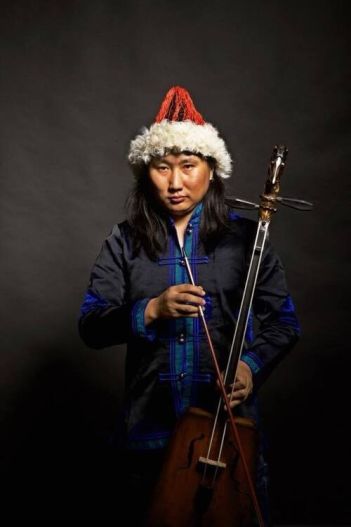
Instrumental and Vocal Styles from Mongolia and Tuva: CU Music
October 2, 2023
12:30 pm
Lincoln Hall, B20
A conversation with Assistant Professor of Music Joe Lerangis and Tamir Khargana, lead singer of Tuvergen Band. Tamir will discuss musical styles from Tuva and Mongolia, as well as his own creative processes in blending those styles into a more contemporary sound, drawing inspiration from American blues, bluegrass, and modern electroacoustic music. Tamir will give an introduction into throat-singing (khöömii), and his two main instruments, the horse-head fiddle (morin khuur), and tovshuur, a lute-like instrument common to Western Mongolia and Tuva.
Additional Information
Program
Einaudi Center for International Studies
East Asia Program
South Asia Program
Tamir Hargana in Concert: CU Music
October 1, 2023
7:00 pm
Barnes Hall
A native of Hulunbuir, Inner Mongolia, throat-singer and multi-instrumentalist Tamir Hargana will perform songs from Mongolia, Inner Mongolia, and Tuva, highlighting diasporic crossover of Mongolian singing, sounding, and playing styles. His band, Tuvergen, aims to create a "modern nomadic music," blending Mongolian sounds with American folk idioms.
Please note: the elevator at Barnes Hall is currently out of service due to repairs. We apologize for the inconvenience.
Additional Information
Program
Einaudi Center for International Studies
East Asia Program
South Asia Program
Public Governance and Innovation as Pillars of Development
October 14, 2023
9:30 am
Klarman KG70
Join us for a talk by Narayana Murthy, founder of Infosys Limited. Murthy is celebrated for his visionary leadership in shaping Infosys and India's emergence as a major player in the world's information technology sector. He brings a wealth of knowledge and experience, having steered Infosys since its inception in 1981 until his retirement in 2011.
In this public lecture, Murthy will discuss the intersection of effective public governance and entrepreneurship as key drivers of development. His theme, "Creating and Fostering a Culture of Innovation in Companies to Enhance National Prosperity," will draw on Infosys as a case study to illustrate how fostering innovation can benefit organizations and the prosperity of nations.
The talk is for all those interested in a deeper understanding of India's developmental journey through the eyes of an IT industry pioneer to participate.
This lecture is a part of the INDIA Conference 2023: India's Economy in a Changing Global Landscape, which will bring several distinguished economists, policymakers, and corporate leaders to Cornell's campus to delve into the state of India's economy and the challenges ahead.
In-person attendees in person are welcome to join us for coffee and informal conversation following the lecture.
Note: Registration is not required for in-person attendance.
Livestream
The lecture will be livestreamed. Register to join by livestream.
Additional Information
Program
Einaudi Center for International Studies
South Asia Program
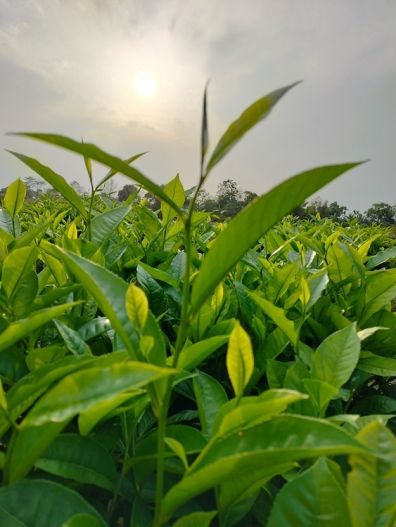
"Axom Deshor Bagisare Sowali": Tracing the History and Memory of Migration of Tea Plantation Labour through Jhumur Songs
November 27, 2023
12:15 pm
Uris Hall, G08
Talk by Devika Singh Shekhewat
'Axom Deshor Bagisare Sowali' attempts to trace the history and memory of the migration of tea plantation workers in Assam through music. The session would focus on Folk songs and music of plantation communities of Assam and engage with Jhumur songs as oral histories of various communities and tribes brought to Assam by the colonial project of growing tea. The talk engages with the memory of indenture among tea plantation workers and places the workers' role in shaping the history and culture seen in folk songs and music. The history of plantations in Assam has often been told through the colonial archives; the talk attempts to shift the conversation by exploring how memory, history, and identity are kept alive through Jhumur music, songs, and oral histories, which live as testimonies of the lives of tea plantation workers of Assam. The talk also traces the gendered, cultural, social, and economic politics in the migration history, which produced the fractured positionality of women tea plantation workers in Assam. Jhumur songs hold an important place in history as an oral tradition that tells the story of a community that has been long forgotten and sidelined.
Devika Singh Shekhawat is a writer, educator, and researcher from India. Her research interests lie at the intersection of gender and labor studies, public health, migration studies, and developmental issues. She is currently a joint Visiting Fulbright Fellow at the School of Industrial and Labor Relations and the South Asia Program at Cornell University. Her research explores how health and labor operate in the tea plantations of Assam. Her work engages with the nature of work, the production process that affects the health of the worker, and the conditions for ailments and diseases created for the worker within the plantation economy. She has written on the history and memory of indenture in tea plantations in Assam and published her work on the Ecological Crisis of Shrimp Aquaculture and discourses of migration and infiltration in Coastal Odisha. Devika has been a part of multiple projects that study the rural public healthcare infrastructure, ecological conservation, and labor relations in northeast India. She completed her Masters in Sociology from Jawaharlal Nehru University, New Delhi, and her undergraduate studies in History and Political Science from St. Stephens College, University of Delhi. Devika is a current PhD research scholar at Dr. B.R. Ambedkar University, New Delhi.
Additional Information
Program
Einaudi Center for International Studies
South Asia Program
Information Session: Travel Grants & Global PhD Research Awards

November 15, 2023
4:45 pm
Uris Hall, G02
The Mario Einaudi Center for International Studies funds international graduate student research!
Research travel grants provide international travel support for graduate and professional students to conduct short-term research or fieldwork outside the United States. Global PhD Research Awards fund fieldwork for 9 to 12 months of dissertation research.
Contact einaudi_center@einaudi.cornell.edu for more information.
Register for the information session.
***
The Mario Einaudi Center for International Studies hosts info sessions for graduate and for undergraduate students to learn more about funding opportunities, international travel, research, and internships. View the full calendar of fall semester sessions.
Additional Information
Program
Einaudi Center for International Studies
Reppy Institute for Peace and Conflict Studies
East Asia Program
Southeast Asia Program
Latin American and Caribbean Studies
Institute for African Development
Institute for European Studies
South Asia Program