
South Asia Program
Displaced Detained Undeterred: A Creative/Critical Symposium

April 22, 2023
9:00 am
Scholars, artists, and organizers who understand the violence of displacement deeply and intimately narrate and theorize how borders, militarized imperialisms, and their colonial genealogies shape people’s lives and foreclose right to both home and refuge. Featuring presentations, performances, films, installations, conversations, and dialogues that reimagine connections between here and there, the past and present, personal and political.
This is an in-person symposium with a hybrid keynote. Register in advance to save your spot in person!
Thursday, April 20, 2023, 4.30pm, Physical Sciences Building 401: Opening Keynote
Opening Remarks
Saida Hodžić (Cornell University)
4.45 KEYNOTE DIALOGUE
On Refugee Grief: An Intergenerational Remembrance
Yến Lê Espiritu (University of California, San Diego)
Evyn Lê Espiritu Gandhi (University of California, Los Angeles)
This intergenerational remembrance is a portal to a discussion on refugee grief, not as a private or depoliticized sentiment but as a resource for enacting a politics that confronts the conditions under which certain lives are considered more grievable than others.
Moderator: Carla Hung (Cornell University)
6.15 pm Reception: Word of Mouth
To join the keynote virtually, register in advance.
Panels on Collaborations, Enclosures, Routes, Lives and Deaths, and Borders
FRIDAY April 21, AD White House
8.30am Breakfast: Cornell Express
9AM COLLABORATIONS: JOINING FORCES
Identity and the Search for Belonging: From Palestine to Syria, to Europe, and Back
Nell Gabiam (Iowa State University); Abu Salma Khalil and Adam Khalil (Toulouse, France)
A conversation about a documentary film about the journey of Palestinian refugees from Syria to Europe, narrating the experience of displacement of the Khalil family and that of other Palestinian refugees who shared this journey.
Letters from Inside U.S. Detention
Jane Juffer (Cornell University) and Carla
A dialogue that situates the letters Carla wrote Jane from inside immigration detention as a part of the genre of the testimonio.
Collaborative Advocacy against Toxic Land Use and Migrant Detention
Emma Shaw Crane (Columbia University) and Guadalupe De La Cruz (American Friends Service Committee)
A presentation about two collaborative research projects in South Florida investigating the intersection of confinement and environmental racism and a reflection on possibilities for just collaboration between researchers and organizers to end migrant detention.
Moderator: Chantal Thomas (Cornell University)
10.45am Break
11AM ENCLOSURES: MOVEMENTS
Re-Placing Memories through Land Based Practices
Troy Richardson (Cornell University)
A presentation on the layered histories of violence toward Indigenous peoples in the US southeast orchestrated to deny Indigenous peoples access to their homelands and the ongoing struggles for and successes in maintaining land-based practices for Indigenous resilience and resistance.
Barzakh as Method, Barzakh as Process: Making Sense with the In-between in the Strait of Gibraltar
A. George Bajalia (Wesleyan University)
Building from ethnographic work in Tangier, Bajalia presents on forms of being-in-common that exist outside of, or adjacent too, categories of belonging such as migrant, immigrant, refugee, and asylum-seeker.
Migrant Encounters in Bihać: Anthropologies of Dislocation, Extraction, and Refusal
Azra Hromadžić (Syracuse University)
A reflection on multiple dislocations –the migrants’, the locals’, and the author’s —to illuminate knowledge production, ethnographic extraction, and refusal in the Balkans and beyond.
Records in Limbo: On the Lore of Crossing Borders
Amir Husak (The New School)
A work-in-progress narrated/live documentary cinema performance about the experiences of refuge and displacement - including Husak's own - as a thorny body of knowledge in constant need of rethinking.
Short Film: The Stitch (2018, 8 min)
Asiya Zahoor (Cornell University)
This silent film portrays a challenging topography of a Kashmiri village near the Line of Control, a de facto border between India and Pakistan, as traversed and observed by a girl who engenders an alternative reality and cartography via her art.
Moderator: Masha Raskolnikov (Cornell University)
1.15pm Lunch: Angkor Cambodian
3PM ROUTES: KNOWLEDGES
Old Benjamin the Refugee
Vinh Nguyen (University of Waterloo)
A narration of Nguyen’s physical retracing of Walter Benjamin’s 1940 escape route via the Pyrenees across the French-Spanish border to explore Benjamin’s refugee experience, and in turn, the import of his thought for refugee studies.
Wanted: Refugee Returns to Germany
Saida Hodžić (Cornell University)
A reflection on the different meanings of the terms “wanted” and “return,” exploring refugees as deportable and criminalized legal subjects and former refugees/new precarious migrants as desired essential workers in the context of the German state and Bosnian post-war refugee returns.
Departure Scene: Redacted Intimacies among UnCitizens in Jordan
Eda Pepi (Yale University)
A reflection on the redaction of intimacies that arose during Pepi’s sudden departure from her fieldwork in Jordan, where dependent nationality forbids women, but not men, from passing their citizenship to children they have with foreigners.
The Place of Liminality in Writing Experiential History
Mostafa Minawi (Cornell University)
A reflection on liminality of existence as a multi-generational refugee and the author’s resulting interest in researching and writing about historical characters living inhabiting a liminal space.
Moderator: Nicole Thuzar Tu-Maung (Cornell University)
Defiant Dreams
Sharifa Elja Sharifi (Cornell University)
A depiction of multiple displacements from Afghanistan and the artist's defiant dreams.
Moderator: Nicole Thuzar Tu-Maung (Cornell University)
5.15PM GHOSTS: FILM SCREENING AND CONVERSATION WITH DIRECTOR
Jeff Palmer (Cornell University)
Ghosts tells the story of three Kiowa boys’ daring escape from a government boarding school in Anadarko, Oklahoma in 1891, to attend a ghost dance ceremony at a distant Kiowa encampment.
Moderator: Ami Yayra Tamakloe, Cornell University
6.15 Dinner: Asempe Kitchen
SATURDAY, April 22, AD White House
8.30am Breakfast: Gimme Coffee
9AM LIVES AND DEATHS
Stories No One Wants to Hear: Refugeehood and Diasporic Unbelonging in Bosnian Chicago
Larisa Kurtović (University of Ottawa)
A series of sketches of diasporic life of Bosnian refugees—including petty cigarette smugglers, truck drivers, and those taken by the precursors of what is today known as the opioid epidemic—in the late 1990s Chicago, asking what is left of the refugee experience in the absence of a happy end.
K’s Suicide
Milad Odabaei (Princeton University)
A narrativization of K.’s story of return to Iran and suicide relating the limits of language and legibility to the queer experience of refugees.
The Feeling of Interruption
Abosede George (Barnard College)
A reflection on the recurrent feeling of life being interrupted that was the author’s condition as an undocumented person.
Proactive Grief (A Second Installment)
Eman Ghanayem (Cornell University)
A reflection on how Palestinians grieve and anticipate death through the author’s personal reflections on family and community.
Moderator: Brian V. Sengdala (Cornell University)
11am Break
11.15AM BORDERS: ANCESTORS
Leave Not What You Carry: Reflections on Kinship, Belonging, and Identity at the Haitian-Dominican Border
Karina Edouard (Cornell University)
A reflection on the author’s grandparent’s migration and her experience at the Haitian-Dominican border exploring the contradictions, tensions, and afterlife of border crossing as an entry point into what it means to be of a community, not simply in one.
Un/Settling: Living Borders, Materializing Elsewheres
Aradhana Sharma (Wesleyan University)
An autoethnographic meditation on unsettled and disarticulated life alongside borders, examining family lore and ethnographic vignettes that emerge out of the division of Punjab and the construction of India and Pakistan in 1947, illuminating the condition of ongoing displacement and un/settlement in a world of ever-evolving borders.
An Un/Official Archive: Passports, Phone Diaries, and Prints
Natasha Raheja (Cornell University)
A reflection on how my Sindhi refugee grandmother's personal archive from the 1947 India-Pakistan Partition speaks to the ways nations, states, and families come together and fall apart across colonial borders in South Asia.
Connected Fields: Embodying Ethical Dhaqan in Canada
Hannah Ali (Cornell University)
A presentation on Somali-Canadians in the Greater Toronto Area who turn to dhaqan – an embodied African philosophy that prioritizes connections to ancestral land, elders, and the Somali language – to navigate social exclusions and craft ethical futures of community, family, and friendship that contest the modern Canadian state.
Moderator: Sarah R. Meiners (Cornell University)
1.15 pm Lunch: Loumies
2.15 PM WRITING SESSION FOLLOWED BY A CONVERSATION: YOUR PRESENTATION MAKES ME THINK OF
3.30 pm Symposium End
INSTALLATIONS
AD White House Room 109
Friday 9am-8pm; Saturday 9am-3.30pm
Refugees Know Things: Podcast Launch and Installation
Saida Hodžić (Cornell University)
Listen to podcast episodes featuring conversations with refugee scholars, artists, and activists.
“Refugee Patriots, Refugee Punks,” with Mimi Thi Nguyen (University of Illinois at Urbana Champaign)
“Building Power: Hope is a Verb,” with Zrinka Bralo (Migrants Organise, London)
“Critical Refugee Studies,” with Sabrina You and Yến Lê Espiritu (University of California San Diego)
Transnational Network and Conversations about Salvadoran/Central American Migration: Podcast Installation
Sofia Villenas (Cornell University) and Patricia Rodriguez (Independent Scholar and International Analyst/Advocate, Earthworks: Ending Oil & Gas Mining Pollution)
Listen to podcast episodes featuring stories of migration and the right to stay. A collaboration between Cornell University, Ithaca College, US-El Salvador Sister Cities, the Association for the Development of El Salvador (CRIPDES), and WRFI Community Radio in Ithaca.
Video Performance: Saltwater at 47 (2016, 5min 46 sec)
Selma Selman (Resident, Rijksakademie Amsterdam)
A video performance about a Roma woman getting her first passport and going on her first seaside vacation at age 47; addressing themes of dispossession, un/citizenship, and family love.
Video Performance: Haram (2019, 10 min)
Selma Selman (Resident, Rijksakademie Amsterdam)
Haram speaks of religion and waterboarding. No matter which God I believe in - as a woman who disobeys social rules that I’m subjected to, I am constantly making sins. In order to clean myself of my accumulated sins, I am washing myself with pure water. This work is also related to state practices of waterboarding and the struggle to maintain oneself while drowning in a foreign land as both refugee and immigrant.
Short Film: Sindhi Kadhi (2018, 8 min)
Natasha Raheja (Cornell University)
A short film about the intimate relationship between the filmmaker and her Partition refugee grandmother as they cook a traditional Sindhi recipe, recalling the quality of lotus root and other ingredients in Pakistan.
Cosponsored by Anthropology, Feminist, Gender, & Sexuality Studies, the Society for the Humanities, South Asia Program, Southeast Asia Program, History, Asian American Studies, American Studies, European Studies, Reppy Institute, Migrations Inititiative, Government, Performing and Media Arts, the Institute for Comparative Modernaties, the South Asia Program, the Latin American and Caribbean Studies Program, the American Indian and Indigenous Studies Program, Africana Studies, Near Eastern Studies, and the Latina/o Studies Program.
MITWSrg originated in the mid-1980s as a faculty caucus in the English Department. It is now a research group that includes faculty, graduate students, and undergraduate students in the humanities and the social sciences from various departments in the College of Arts and Sciences – and beyond. For more information, please email mitws@cornell.edu if you would like MITWSrg to be the sole or primary sponsor for an event you are planning to organize in minority, indigenous, or third world studies, please send a brief proposal to MITWS’s faculty coordinators Professor Helena Maria Viramontes at hmv2@cornell.edu, or Professor Satya P Mohanty, at mohanty@cornell.edu.
This is an in-person symposium with a hybrid keynote. Register in advance to save your spot in person! To join the keynote virtually, register here.
Additional Information
Program
Southeast Asia Program
Reppy Institute for Peace and Conflict Studies
Institute for European Studies
South Asia Program
Einaudi Center for International Studies
Latin American and Caribbean Studies
The Death of Globalization? You Won’t Find It in New Orleans

Eswar Prasad, SAP
“Corporations do seem convinced still of the benefits of globalization, but what they’re trying to do is mitigate some of the risks,” says Eswar Prasad, professor of economics and international trade policy. “What you’re really looking at is changes in the pattern of globalization, rather than overall volumes of global trade or financial flows.”
Additional Information
Rahaab Allana, The South Asian Imaginary: Exploring the region through image-making practices

April 17, 2023
4:45 pm
Goldwin Smith Hall, G22
The South Asian Imaginary: Exploring the region through image-making practices
A lecture by Rahaab Allana, curator and publisher at Alkazi Foundation for the Arts, New Delhi, to introduce the foundation's latest reader, Unframed: Discovering Image Practices in South Asia, co-published with HarperCollins India, 2023. An indispensable new volume for students and enthusiasts of contemporary photography and lens-based media from South Asia, this edition provides recent interviews and essays that reflect the depth and complexity of lens-based practice in India, Pakistan, Bangladesh Sri Lanka, Myanmar and Nepal. Allana will also introduce the Alkazi Foundation's recent work in exhibition-making and publishing, working collaboratively in India and abroad over the last two decades, establishing the Foundation as committed archivists and researchers of image-making practice across the region.
Rahaab Allana is Curator/Publisher, Alkazi Foundation for the Arts, New Delhi. A Charles Wallace grant awardee and Fellow of the Royal Asiatic Society (UK), he received his MA in Art History from the School of Oriental and African Studies, London and was Honorary Research Associate in the Department of Visual Anthropology at University College, London. He was Founding Editor of PIX, a themed digital publication that focuses on South Asian lens-based practices and production, and Founder of ASAP|Art (Alternative South Asia Photography/Art), the region’s first app for presentation and discussion of contemporary creative work. Allana works nationally and internationally with museums, archives, cultural initiatives and institutions, universities and festivals. He recently served as Guest Editor for a Delhi-themed issue of Aperture (Summer 2021). He is on the editorial board of Trans-Asia Photography, the advisory committees of the India-Europe Foundation for New Dialogues (Rome), and the Arts and Culture committee, Asia Society (India Chapter). His forthcoming edited volume with Tulika books (Delhi) and West Heavens (Shanghai) is based on photography in India since the 90s.
This event is co-sponsored by the Department of History of Art & Visual Studies and South Asia Program.
Additional Information
Program
South Asia Program
Einaudi Center for International Studies
Global Hubs Provide Benefits

Einaudi Directors Defend Hubs, Academic Freedom
Rachel Beatty Riedl and program directors: "Global Hubs seek to build partnerships and create spaces that advance knowledge and understanding.”
Additional Information
As Economy Falters, China’s New Premier Tries to Boost Business Confidence

Eswar Prasad, SAP/Einaudi
“This raft of appointments seems to at least partially buck the narrative that demonstrated fealty to Xi Jinping will trump technocratic competence in assigning top-level government positions,” says Eswar Prasad, professor of economics and international trade policy.
Additional Information
"An attempt to reconcile the disputing parties? The Burmese Saṅgharāja Ñeyyadhamma’s letter to the non-confusionists in Sri Lanka."
April 14, 2023
10:00 am
Please join us for a virtual lecture by Petra Kieffer-Pülz (Academy of Sciences and Literature, Mainz).
Between 1803 and 1813 five ordination lineages were introduced from Burma to Sri Lanka that formed the Amarapuranikāya. In 1851 a dispute concerning the legal validity of the monastic boundary (sīmā) of Balapiṭiya in the southwest of Sri Lanka arose amongst two of them. This was a serious matter, since a sīmā is the basis for all administrative and legally binding activity of a Buddhist monastic community (saṅgha), including ordination. Since the parties were not
able to resolve the conflict themselves, and since their ordination lineage was ultimately based on a Burmese ordination tradition, they turned for help to the highest authority of the Burmese Buddhist monastic community, the Saṅgharāja, who at that time was Ñeyyadhamma. The group who considered the sīmā of Balapiṭiya confused with the village boundary, and, hence, legally invalid, sent the first delegation (1857–1858). The Saṅgharāja agreed with their legal
opinion and in his letter, called “Explanation of the judgment concerning the dispute about the monastic boundary” (Sīmāvivādavinicchayakathā) he quoted from the commentary and sub-commentaries to the Vinaya as justification. The opponents, who considered the monastic boundary not confused and legally valid, assumed that the Saṅgharāja had been misinformed by the first delegation, and sent their own delegation (1859–60). But the Burmese Saṅgharāja stuck to his original judgment. However, he wrote a letter to this party that shows special empathy and devotion, and even contains personal notes to four of the Sinhalese monks of this party. The letter is quite unique among the writings exchanged in the context of this dispute, and might have been an attempt to reconcile the opponents with his judgment.
Additional Information
Program
Southeast Asia Program
South Asia Program
China Says Its Economy Will Expand About 5 Percent, A Cautious Target

Eswar Prasad, SAP/Einaudi
“This growth target, while modest from the perspective of recent decades but moderately ambitious relative to last year, indicates the return of growth as the lodestar for economic and financial policies,” says Eswar Prasad, professor of economics and international trade policy.
Additional Information
Biophobia Symposium: Roundtable
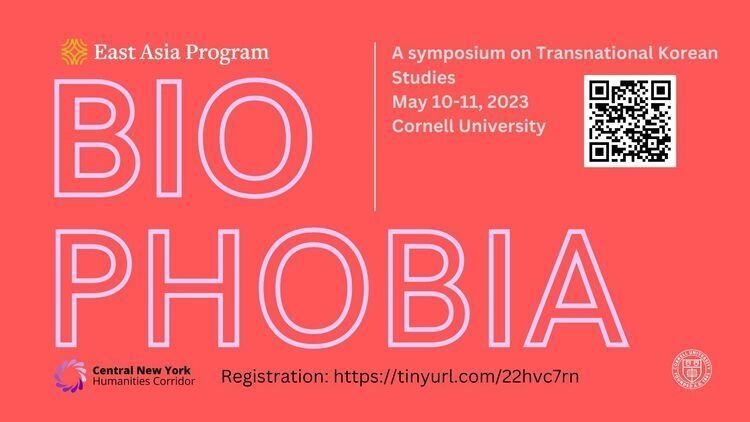
May 11, 2023
10:30 am
Savage Hall, 200
The keynote of the day:
"Biophilia Now: Time for Imagining Alternatives to Techno- and Bio-Orientalism" by Rachel Lee, Professor of English, Gender Studies, and the Institute of Society and Genetics, UCLA.
Are you attending in person? If so, you must rsvp here. Space is limited.
We encourage in-person participation but for those who are unable to make it, please see virtual registration below.
The title of this lecture draws inspiration from what feminist historians call the Wages for Housework movement. Despite their express slogan around “wages,” the utopian desire carried forward by Selma James and Maria dalla Costa involves less the free-market payment for raising kids, caring for the elderly, tending to the sick, preparing food, etcetera, and more an almost unimaginable “time for what we will.” This “time for what we will” is not already blocked out for usefulness—e.g., to serve one’s side hustle--or even for rest and recovery from the depletions of neoliberal capital. Rather, it bespeaks an unassigned time to fritter away, to dally and daydream, and to fantasize about what might happen in the idyll of becoming (non-pejoratively) idle. Significantly, Wages for Housework construed this “time for what we will” as what is owed to—rather than simply granted to or contractually specified as compensation for—reproducers (aka reproductive laborers). The danger for the status quo in this demand—this “time for what we will”--lies in its holding space to proliferate plural and counterfactual (i.e., postwork) imaginings of present society.
Humanities scholar Rachel Lee points to artwork choreographed around smelling, singing, and sensorily dwelling in and around loss, grief, and toxic landscapes as, counterintuitively, positive sketches for types of actions that might be indulged in--and which might save lives--if we could entertain and flex our daydreaming (rather than doom-scrolling) muscles. Rather than ask how do we heal from resurgent biophobia and its catalyzing of anti-Asian violence, this talk proposes the plural and oftentimes conflicting imaginings of Chang Rae Lee, Anicka Yi [and possibly also “the Daniels”—aka Kwan & Scheinert) as hopeful alternatives to the toggle between techno-orientalism and bio-orientalism characterizing our post-/still- Covid-19 moment.
Bio: Rachel C. Lee, Professor of English, Gender Studies, and the Institute of Society and Genetics, UCLA, is the author of The Exquisite Corpse of Asian America: Biopolitics, Biosociality and Posthuman Ecologies (2014), editor of The Routledge Companion to Asian and Pacific Islander Literature (2014), and a founding editor of Catalyst: Feminism, Theory, Technoscience. Currently, Lee is PI on Oral Histories of Environmental Illness: a collection of 80+ interviews of individuals who have, treat, or advocate on behalf of those with “contested illnesses” (e.g. multiple chemical sensitivity, chronic Lyme, mold-related fibromyalgia, heavy-metal intoxication, chronic fatigue and the like).
Thursday, May 11, 10:30 a.m.
Keynote: "Biophilia Now: Time for Imagining Alternatives to Techno- and Bio-Orientalism" by Rachel Lee, Professor of English, Gender Studies, and the Institute of Society and Genetics, UCLA.
Session 1 “Sensoria” 1:00-2:30 p.m.
Katie Yook (Curator, NY): “Sensoria: Evoking the Intangible”Se Young Au (Artist, CA):“Olfaction, Embodiment, and Perception”KimSu Theiler (Artist, NY):“Orientally Challenged”Skye Jin (or Jette Hye Jin Mortensen) (Artist, Writer, Curator, Copenhagen): “Hidden Epigenetic Trauma & Art as Site for Healing and Ritual"Jung Joon Lee (Rhode Island School of Design, Society for the Humanities fellow at Cornell University): discussant Session 2 “Transnational and Transmedial Approach to the Body Issues” 3:00-4:30 p.m.
Walter Byongsok Chon (Ithaca College): “Theatricalized Bodies on the Post-Dramatic Stage”Bonnie Chung (Cornell University): “The Songs of Two Islands of East Asia: Collaborative Listening and Counterarchival Impulses in Green Island (2016) and The Mermaid from Jeju (2019)”Abel Song Han (Cornell University): “Healing with Poison and Metaphor: On Bio-mimesis Horror”Paul McQuade (Cornell University): "A Dreamed Biology: Soni Kum’s ‘Morning Dew’ and Jayro Bustamante’s ‘La Llorona’”Jomy Abraham (Visiting Scholar, Cornell University): “Walking with their Dead: Biophobia and Public Protests of Farmers in India”Jun Matsuda (Visiting Scholar, Cornell University): “Police/Military Violence and Biophobia: The Intersectionality of "Asian Bodies" and Colonialism”About the Biophobia Symposium
Aversion to certain groups or statuses of the body is not just an emotion but a richly social, cultural, and political phenomenon, as it, by invoking bodily responses, functions to patrol social boundaries and norms, such as righteousness and cleanliness. The feeling’s immediacy to the body is the basis of its social power. In The Cultural Politics of Emotion(2014), Sara Ahmed situates disgust (“bad taste”) in the colonial context where the colonized bodies were subject to the imperialist politics of “what gets eaten,” and are, at the same time, regarded to stoke the “fear of contamination” to the European white bodies. Ahmed’s politicizing of negative emotions still holds strong relevance, especially regarding the recently exacerbating hate crimes based on gender, race, ethnicity, religion, health condition, and political orientation, which often tag along a profound sense of disgust and essentialist rhetoric on body types. Notably, the #IAmNotAVirus campaigns against the anti-Asian hate crimes entailed by the recent pandemic exemplify how the feelings of terror and disgust effectively turned Asian bodies into a composite of a submicroscopic agent, the “origin” of the disease, and the repugnant bodies.
This symposium proposes biophobia (aversion to bodily matter) as a critical framework to unravel the complex relationship between negative emotions and post/colonial body politics in Asian and transnational contexts. Biophobia, as a composite word, embodies an acute connectivity between body issues and the public anxiety that is often symptomatic of a given society’s constraints over the notions of the healthy and the normal, which has proved to be a global phenomenon. Accordingly, while the symposium’s case studies and materials come from Korean and diasporic Korean cultural situations, biophobia helps recognize the inter-disciplinary, inter-regional, and inter-medial facets of disability studies that identify and questions the notion of healthiness as a product of the dynamics between political, institutional, medical, and cultural entities.
Additional Information
Program
East Asia Program
Einaudi Center for International Studies
South Asia Program
Corruption Plots: Stories, Ethics, and Publics of the Late Capitalist City
April 28, 2023
3:00 pm
Warren Hall, B73
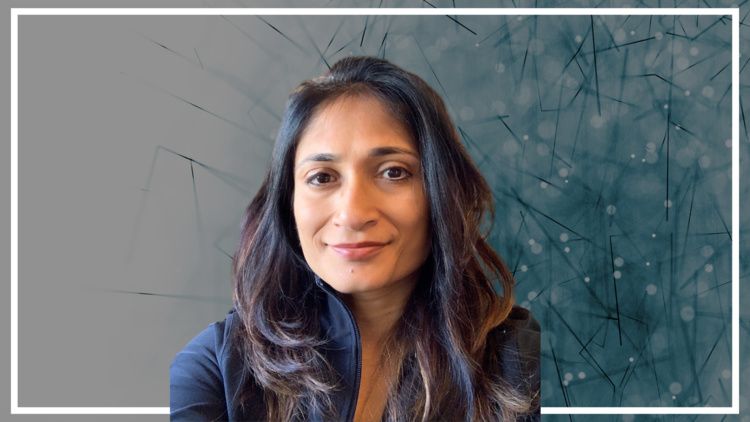
The millennial city of the global South is a charged setting for allegations of corruption, with skyscrapers, land grabs, and slum evictions invoking outrage at deepening economic polarization. This talk, based on a newly published book Corruption Plots: Stories, Ethics, and Publics of the Late Capitalist City, rethinks commonsense notions that equate corruption with bribery. It illuminates instead how corruption is fundamental to a global storytelling practice about how states and elites abuse entrusted power both inside and outside the law. Drawing on ethnography in Bengaluru and Mumbai and a cross-section of literary and cinematic stories of corruption from cities around the world, Malini Ranganathan and coauthors David L. Pike and Sapana Doshi pay close attention to the racial, caste, class, and gender location of the narrators, spaces, and publics imagined to be harmed by corruption. Corruption Plots demonstrates how, in this moment of late capitalism and rightwing populism, corruption talk is leveraged to make sense of the unequal stakes of rapid urban change; it is equally used opportunistically by those who are themselves implicated in wrongdoing. Offering a wide-ranging analysis of urban worlds, the authors reveal the ethical, spatial, and political stakes of storytelling and how vital it is to examine the “corruption plot” in all its contradictions.
About the speaker:
Malini Ranganathan is Associate Professor in the School of International Service and a faculty affiliate of the Department of Critical Race, Gender, and Culture Studies at American University. An urban geographer and political ecologist by training, her research in India and the U.S. studies land, labor, and environmental injustices animating urban social movements, as well as global histories of anticaste, abolitionist, and anticolonial thought. Her coauthored book, Corruption Plots: Stories, Ethics and Publics of the Late Capitalist City, will be out with Cornell University Press in April 2023. She is co-editor of Rethinking Difference in India through Racialization and has authored several journal articles, including in the journals Antipode, Ethnic and Racial Studies, and the Annals of the American Association of Geographers. Dr. Ranganathan is a 2017-2019 recipient of an Andrew Mellon-American Council of Learned Societies fellowship and a 2021 faculty awardee for outstanding contributions to Diversity, Equity and Inclusion at American University.
Critical Development Studies Seminar Series:
The series is organized by faculty and Ph.D. students in the Department of Global Development and the Graduate Field of Development Studies. You are encouraged to take part in these invigorating discussions in-person in Warren Hall B73 or via Zoom.
This seminar is co-sponsored by Cornell Global Development, the Polson Institute for Global Development, the Department of City and Regional Planning, and the Graduate Field of Development Studies.
Additional Information
Program
Einaudi Center for International Studies
South Asia Program
Democracy and Its Opposites: Challenges in a Global World

April 24, 2023
5:00 pm
Alice Statler Auditorium
Lund Critical Debate
Democracies worldwide—even many wealthy democracies long considered safely consolidated—are at risk today. Governments, policymakers, and voters face new conflicts over democratic institutions, checks and balances, which citizens can compete for office or deserve representation, and what rules of accountability apply.
This year's Lund debate from the Mario Einaudi Center for International Studies examines the threats democracies around the world are confronting, both from external forces and from within—and what governments and citizens can do to fight back.
Join Thomas Garrett of the Community of Democracies and Damon Wilson of the National Endowment for Democracy for a conversation on democratic backsliding, strategies for resilience, and the conditions and practices that undermine democracy: democracy ... and its opposites.
A reception with refreshments will follow the conversation.
Lund Debate: 5:00–6:30 p.m. | Alice Statler AuditoriumFree ticket required for in-person attendance. Reserve your ticket today! Join the lecture virtually by registering at Cornell.
Reception to follow.
***
Panelists
Thomas E. Garrett is secretary general of the Community of Democracies, a global intergovernmental coalition comprised of the Governing Council member states that support adherence to the Warsaw Declaration's common democratic values and standards. Garrett previously worked for the International Republican Institute for 12 years overseas in Ukraine, Mongolia, and Indonesia, returning to Washington, DC, in 2005 as director of Middle East programs and then as vice president for global programs.
Damon Wilson is president and CEO of the National Endowment for Democracy (NED), a nonprofit grant-making foundation supporting freedom around the world. Prior to joining NED, he helped transform the Atlantic Council into a leading global think tank as its executive vice president. He previously served as special assistant to the president and senior director for European affairs at the National Security Council. Wilson also served at the U.S. Embassy in Baghdad as the executive secretary and chief of staff, where he helped manage one of the largest U.S. embassies during a time of conflict.
Moderator
Rachel Beatty Riedl has served as the Einaudi Center's director since 2019. She is the Einaudi Center's John S. Knight Professor of International Studies and professor in the Department of Government and Cornell Jeb E. Brooks School of Public Policy. Her research interests include institutional development in new democracies, local governance and decentralization, and authoritarian regime legacies in Africa.
***
About the Debate
The Lund Critical Debate is a signature event of the Mario Einaudi Center for International Studies. This year's dialogue is part of Einaudi's work on democratic threats and resilience. Established in 2008, Einaudi's Lund Critical Debate series is made possible by the generosity of Judith Lund Biggs '57.
Additional Information
Program
Einaudi Center for International Studies
Reppy Institute for Peace and Conflict Studies
East Asia Program
Southeast Asia Program
Latin American and Caribbean Studies
Institute for African Development
Institute for European Studies
South Asia Program